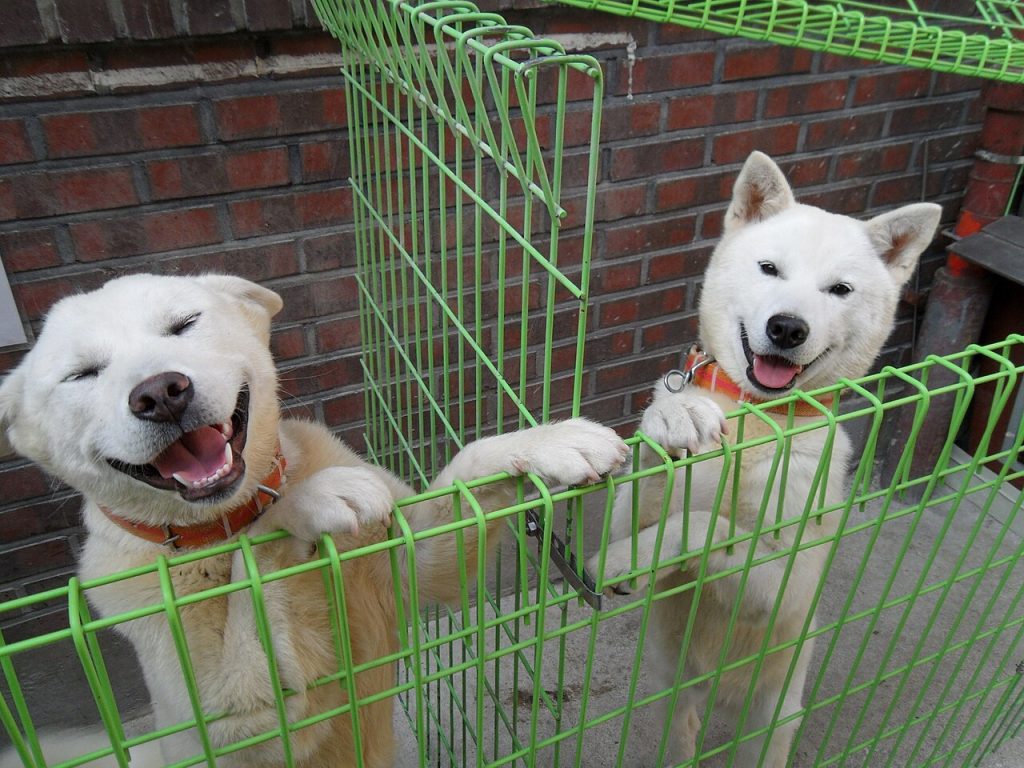
The Pungsan(풍산개) is a rustic and tenacious Korean spitz-type hunting dog, bred for centuries in the cold mountains of the peninsula. Little known outside Asia, it is one of the most unique breeds in the canine world: National symbol of North Korea, protagonist of diplomatic exchanges between the two Koreas and famous for combining an iron perseverance in the hunt with a serene and noble character at home. If you want to get to know the Pungsan in depth – its temperament, care, history, and why it is so rare – here is the complete guide.
Is the Pungsan for you?
First of all, let’s be realistic: The Pungsan is a very rare breed outside of Korea and virtually impossible to acquire by normal routes. But if you’re fascinated by this breed and want to understand its profile, here’s what it brings and what it demands from a dog like this. He is a mountain hunter with high energy, great independence and a very sharp instinct, wrapped in a calm and loyal character to his family. It’s not a dog for anyone looking for a purely sedentary, complacent pet.
In favour .
- Very cold resistant and rustic, bred for harsh mountain climates.
- Famous for good health and resistance to disease from isolation breeding.
- Noble and balanced temperament at home: loyal to his owner and not much for barking or fighting for no reason.
- Exceptional perseverance and courage; a working dog with tremendous instinct.
- Dense fur that protects it from the elements.
To be taken into account
- Extremely rare breed: almost impossible to get outside Korea.
- Strong hunting and prey instinct; reserved with strangers.
- It needs a lot of exercise and space; it doesn’t fit in small floors.
- Independent and tenacious: requires consistent education and early socialization.
- There is little official documentation (standard, figures) outside the Korean sphere.
Character and temperament

The Pungsan’s personality is one of the things that most draws the attention of the breed. According to Korean tradition, what made this dog exceptional as a hunter was not its brute strength, but its toughness: an extraordinary perseverance and patience. The Pungsan cornered the prey and waited, relentlessly, for the hunter to come to finish it off. That stamina defines his character both on the mountain and at home.
Interestingly, despite his hunting instinct, he is described as a noble temperament, comparable – traditional descriptions say – to that of a scholar or a sage. Unlike other dogs that cannot contain their aggressiveness and can attack indiscriminately, the Pungsan is generally very calm and does not play with the weakest. It is said that he rarely barks or seeks a fight for no reason. In short: It chases prey with relentless instinct during hunting, but in daily life it is a well-behaved dog and deeply loyal to its owner.
That contrast – controlled ferocity in the face of prey, serenity and loyalty at home – is the essence of the Pungsan.
Coexistence: children, other pets, flat and loneliness
With the family. The Pungsan is loyal and balanced with the people in its core. His home-bound nature makes him, on paper, a good household companion, provided his working dog nature is respected. He can get along well with children if he grows up with them and receives education and socialization from a puppy; still, being a strong dog with character, interaction with the little ones must be supervised.
With strangers. is reserved and observant towards strangers, which coupled with his loyalty makes him a good natural guardian.
With other pets. Here you have to go with caution: we are talking about a hunter with a highly developed prey instinct. Coexistence with dogs of the same household is possible with good socialization, but with small animals (cats, rodents, birds) their instinct can be activated. Early and gradual introduction is key.
Flat and lonely. is not a city dog. It needs space, activity and stimulation; locked up and without exercise, such an energetic and independent dog can become frustrated. It tolerates life at home with terrain or in a rural environment better. Like any working dog, it prefers company and occupation to long hours of solitude.
Education and training
The Pungsan is intelligent, but also independent and tenacious: it is not the typical dog that obeys for pleasure, but one that cooperates when it understands and respects its guide. This requires a consistent, patient and non-harsh education, based on bonding and positive reinforcement.
The early socialization is a must: controlled exposure to people, environments, noises and other animals from puppyhood to channel their natural reserve with strangers and their prey instinct. As a hunting dog with a strong motivation for tracking and chasing, activities that tap into his sense of smell and instinct – search games, nose work, purposeful obedience – are more rewarding than mechanical repetition. Consistency and clear rules from the start make a difference with this breed.
Exercise and activity
We are dealing with a dog bred in the mountains to hunt for hours on end in rough terrain, so his need for exercise is high. A short walk is not enough for him: he needs daily and intense physical activity – long walks, running, exploration – and also mental stimulation to occupy his head.
Its tremendous physical strength and cold tolerance make it ideal for outdoor activities in cold climates or in the mountains. Hiking, trail running and any sport that combines physical exertion with the use of smell fit wonderfully with its nature.
Care: fur and hygiene
The Pungsan wears a double and dense coat, typical of the Nordic and spitz breeds, designed to insulate from the cold. The woolly inner layer and the harder outer layer form an effective barrier against the elements. This coat requires regular brushing to keep it healthy and remove dead hair, with special attention during seasonal seedlings, when the dog sheds abundant undercoat and it is advisable to brush it more often.
Other than that, it is a rustic dog and a sensible maintenance: baths only when really necessary so as not to damage the natural protection of the coat, regular inspection and cleaning of the ears, control of the growth of the nails and regular dental hygiene.
Foodstuffs
As an active working dog with an athletic build, the Pungsan needs a complete and quality food, adjusted to its activity level, age and weight.
The general guidelines for canine nutrition also apply here: Food should be divided into several servings per day, fresh water should always be available, excess prizes should be avoided, and physical fitness should be monitored. If there is any doubt about the quantity or type of diet, it is best to follow the instructions of a veterinarian, especially if it is a rustic and unstandardised breed for which there are few specific references.
Health and life expectancy
The Pungsan has a reputation for being a strong and healthy dog. Raised in mountainous regions and for a long time isolated from other populations, the Pungsan has developed remarkable physical endurance, great resistance to cold and good resistance to disease. Both its innate temperament and physical condition make it especially suitable for outdoor life in harsh climates.
There are no comprehensive official statistics on longevity or a consolidated list of hereditary diseases, precisely because it is a rare and poorly documented breed outside Korea. As an anecdotal reference, the two specimens given to South Korea in 2000 lived to be 13 years old. With the basic care of any dog – vaccination, deworming, proper feeding and veterinary checkups – the Pungsan is, as far as is known, a robust and long-lived dog within the expectation of a dog of its size.
Physical appearance
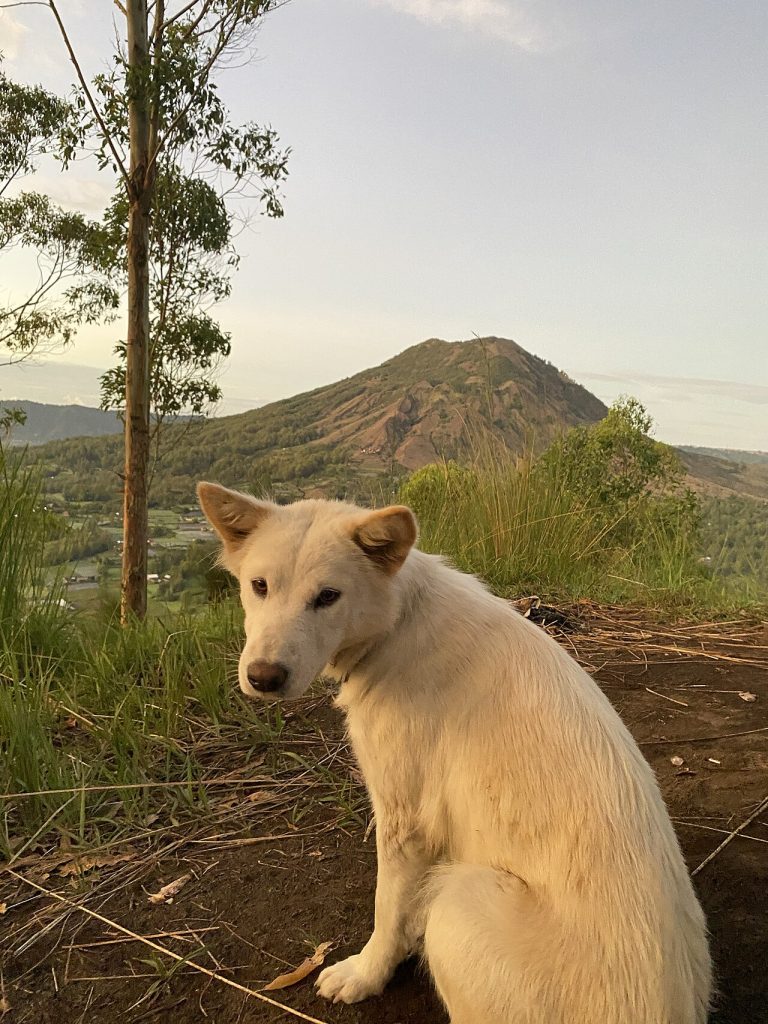
The Pungsan is a medium-sized spitz type dog with a rustic and well-balanced appearance. It has the characteristic silhouette of the Nordic breeds: upright ears, defined snout, wakeful gaze and a tail that is usually curved over the back.
The most striking feature is its double and dense coat, usually white in color, which gives it a noble appearance and protects it from the cold. International kennel clubs have described it, rather disparagingly, as a local spitz variant related to the Siberian husky, albeit of smaller size. Beyond that comparison, the Pungsan has an identity of its own forged by centuries of isolated breeding in its region of origin.
Origin and history
The Pungsan takes its name from the county of Kimhyonggwon, formerly called Pungsan County, where it originated. It was bred in the Kaema highlands, in what is now North Korea, and used traditionally as a hunting dog. For generations it was raised isolated from other provinces, which fixed its features and character. An ancient story, handed down from generation to generation, tells that by releasing three Pungsan dogs, one could hunt a tiger; a probably exaggerated legend – similar to the one attributed to the Jindo – but reflecting the breed’s reputation for endurance and bravery.
According to the Encyclopedia of Korean Culture, the Pungsan was first recognized as the national symbol of the peninsula during the Japanese colonial period. The breed was also used in Russia to hunt tigers, bears and wild boars.
The Pungsan is also the protagonist of the inter-Korean diplomacy. At the 2000 summit, North Korean leader Kim Jong-il gave two Pungsan dogs to South Korean President Kim Dae-jung, who corresponded with two Jindo (associated with the South). Those Pungsan, born in Pyongyang’s central zoo, were first named Dangyol (Unity) and Jaju (Independence), and then Uri (Us) and Duri (Two); they lived with the status of state guests and had 15 puppies before dying at age 13. At the 2018 Pyongyang summit, Kim Jong-un gifted two other Pungsan to President Moon Jae-in: the male Songkang and the female Gomi, who gave birth to six puppies in two months and starred in the “peace puppies” photos.
Curiosities
- It is also known as Phungsan, Korean Phungsan or Poongsan, depending on the transcription of Korean.
- It is such a valued and protected breed in North Korea that, being rare, it is sometimes taken from smuggling across the border with China.
- Specimens such as the top-level diplomatic gifts have been exchanged between the two Koreas, with animals treated as state guests.
- She starred in a North Korean children’s animated film, Story of the Pungsan Dog(2010), and a novel, Pungsan Dogs(2017).
- canine exposures celebrations are dedicated exclusively to the race.
- The legend that three Pungsan can kill a tiger is related, in the popular imagination, to the South Korean Jindo.
If you’re interested in hardy, strong-willed Nordic and Spitz dogs, you might want to check out other related breeds: the Akita, the energetic Husky Siberiano, the sleek Samoyedo and the quirky Chow Chow, all of which share with the Pungsan that ancestral air and strength forged in cold climates.
Frequently Asked Questions about Pungsan
Is the Pungsan a dog suitable for living in a flat?
It is not their ideal environment. The Pungsan is a mountain hunting dog with a lot of energy and a strong need for space and activity. It can adapt to a wide floor if it goes out several times a day and gets intense exercise, but fits much better in a house with a garden or in a rural environment where it can move around. It is a rare breed outside Korea, so this situation is rarely raised.
The Pungsan is aggressive?
Not indiscriminately. According to traditional descriptions, the Pungsan is tenacious and brave in the face of danger, but in everyday life it is attributed a noble and calm character, compared to that of a scholar. It is said that he rarely barks or fights for no reason and that he does not attack the weakest. Still, he is a reserved dog with strangers and with strong instincts, so he needs socialization from puppyhood.
Where does Pungsan originate from?
The Pungsan originates from Kimhyonggwon County, formerly called Pungsan County, in the Kaema Highlands, in what is now North Korea.
Is Pungsan the same as Jindo?
The Jindo is associated with South Korea and the Pungsan with North Korea. In fact, at inter-Korean summits, specimens of both breeds have been exchanged as a symbolic gesture between the two countries.
How long does a Pungsan live?
As a guide, the Uri and Duri, given as a gift to South Korea in 2000, lived to be 13 years old. It is a rustic dog, raised in the mountains, with a reputation for good resistance to cold and diseases.
Does the Pungsan get along with children?
With a family that he knows and respects, he is usually loyal and balanced. His calm temperament at home is in his favor, but he is a strong hunting dog with character, so coexistence with small children should always be supervised and based on good socialization and education from puppyhood.
Is it hard to find a Pungsan?
Yes. It’s a very rare breed. It’s bred mostly in North Korea, where it’s a protected national symbol, and sometimes smuggled across the border into China. Outside the Korean Peninsula it’s virtually impossible to get by normal routes.
Why is the Pungsan a national symbol?
It was declared a natural monument of North Korea in April 1956 and the national dog of the DPRK in 2014. Its image has been promoted in North Korean popular culture, for example in the children’s animated film Story of the Pungsan Dog (2010) and the novel Pungsan Dogs (2017).