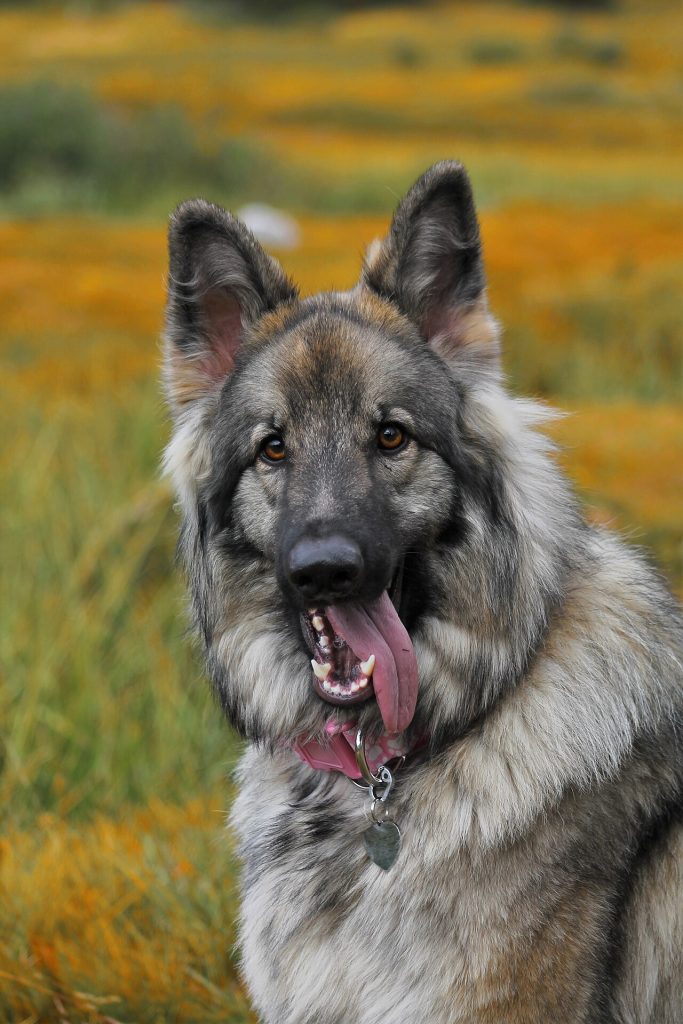
The Shepherd of Shiloh(in English, Shiloh Shepherd) is a large, wolf-looking dog, created in the United States as a bulkier, quieter version with better hip structure than the classic German shepherd. If you are looking for an imposing family companion on the outside but remarkably docile and affectionate on the inside, the Shiloh Shepherd is one of the most interesting choices within the varieties derived from the German Shepherd. It is a rare breed, still uncommon outside North America, so it is good to get to know it well before you start looking for a puppy.
Is the Shepherd of Shiloh for you?
Before you fall in love with his good-natured wolf demeanor, you should be honest about what it means to live with a dog of this size and energy. The Shepherd of Shiloh fits wonderfully in some homes and fatally in others. These two boxes summarize the essentials of deciding with your head and not just your heart.

Yes, I did.
- You want a big, well-balanced, family-oriented dog.
- You have a house with a garden or space, and time for daily walks and games.
- You’re looking for a softer and less “nervous” character than the working German shepherd.
- You like positive training and active outdoor life.
- You don’t mind the frequent brushing or finding hair at home.
I’d rather not, if…
- You live in a small apartment with no possibility of long exits.
- You spend a lot of hours outside and the dog would be alone most of the day.
- You’re upset about the baldness and you can’t devote time to the fur.
- You want a common breed, easy to find and cheap.
- You’re looking for an aggressive watchdog: this is more of a gentle watchdog.
Character and temperament
If anything defines the Shiloh Shepherd it is his temperament. He was selected precisely to be calmer, more outgoing and docile than the modern German shepherd, without losing the intelligence and work capacity he inherits from his ancestor. The result is a large dog with the character of a “good-natured giant”: confident, stable and very attached to his people.
Unlike the German Shepherd’s work lines, which can be intense and reactive, the Shiloh tends to remain calm. It is a sensitive dog, which reads the emotions of the family very well and usually seeks physical contact and constant companionship. It is not an animal to have in the yard and forget about it: it needs to feel part of the family nucleus.
Their intelligence makes them easy to train, but it also means that they get bored if they don’t have any stimuli. A mentally idle Shiloh may develop annoying behaviors out of sheer frustration.
Coexistence: children, other pets, flat and loneliness
With children: The Shiloh Shepherd is great with children. His patient and affectionate temperament, coupled with his tolerance, makes him a good family dog. However, due to his size and weight, it is advisable to supervise play with the youngest to avoid accidental pushes or falls, and teach children to respect their rest and their food.
With other pets: has been well socialized since puppyhood, usually coexisting with other dogs and even cats without problems.
On the floor: is not the ideal breed for a small flat. Its size and need for movement demand space and frequent outings. It can live in a spacious apartment if it is guaranteed enough daily exercise, but is much more comfortable in a house with a garden.
Soledad: is a lonely dog. Being so attached to his family, it does not tolerate spending many hours alone and may develop separation anxiety. It is not a recommended breed for those who spend the whole day outside the house.

Education and training
The Shiloh Shepherd is a very intelligent and pleasant dog, which makes it one of the easiest to train large dogs. It learns quickly and responds very well to positive reinforcement: rewards, caresses and a cheerful voice work much better than harsh corrections, which can also damage its sensitive character.
Early socialization is key. Exposing the puppy to people, other animals, noises and different environments during its first months shapes a confident and sociable adult. It is advisable to start as early as possible with the basic orders of obedience and with the rules of coexistence at home.
Because of its versatility, this dog excels in such activities as obedience, shepherding, assisted therapy, and dog sports.
Exercise and activity
Although it is calmer than the German Shepherd, the Shiloh is still a large, athletic dog that needs to move.
In addition to physical exercise, it appreciates mental stimulation: intelligence toys, olfactory games, short training sessions or dog sports. A Shiloh that burns energy and uses its head is a relaxed and well-balanced dog at home. Lack of activity, however, is the main source of behavior problems in the breed.
Care: fur and hygiene
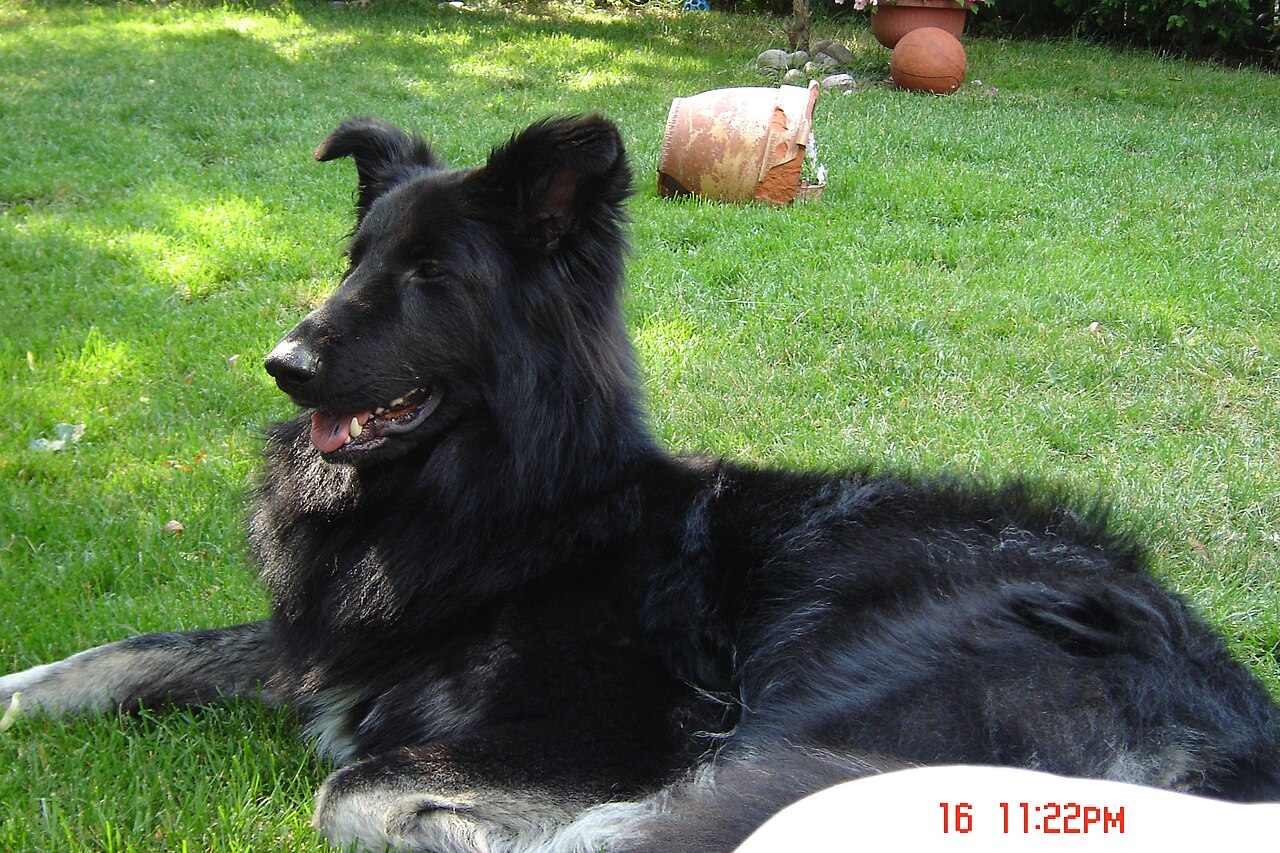
The coat of the Shiloh Shepherd is longer and more plentiful than that of the German Shepherd, with a double coat that protects it from the cold. There are specimens with smoother hair and others with denser and grayer hair.
It is advisable to avoid too frequent baths and drastic cuts, which spoil the insulating function of its double layer. Bathing him only when he’s really dirty is enough. The rest of the hygiene is the usual for a big dog: Check and clean your ears, brush your teeth regularly, and trim your nails when necessary. Watching the pads and skin after field trips helps prevent problems.
Foodstuffs
Since it is a large dog, the Shiloh Shepherd’s diet should be adapted to its weight, age and activity level by providing a quality feed or diet, formulated for large breeds, that takes care of its joints and provides the right amount of energy without favouring overweight.
An important point in large, deep-chested breeds like this is the risk of gastric dilation-torsion (swelling of the stomach). To reduce it, it is advisable to divide food into two daily servings instead of one large one, and to avoid strenuous exercise just before and after eating. Having fresh water available at all times and controlling weight with regular checkups completes a healthy diet.
Health and life expectancy
One of the goals of those who created the breed was precisely to improve the health of the German Shepherd, especially the structure of the hips.
- Dysplasia of the hip: although the selection seeks to reduce it, it is still a point to watch in dogs of this size.
- Panosteítis: bone inflammation that may appear in the growth phase and cause temporary lameness.
- Megaesófago: esophageal disturbance that makes it difficult for food to pass through and may require veterinary management.
- Gastric dilation and torsion: severe urgency typical of large breeds with deep breasts, requiring immediate attention.
The Shiloh Shepherd’s life expectancy is roughly between 9 and 14 years, a reasonable range for a dog of his size. Choosing a serious breeder who performs breeder health checks, along with regular veterinary checkups, good nutrition, and proper exercise, is the best way to keep him in good shape for many years to come.
Physical appearance
The Shiloh Shepherd is an imposing dog that conveys nobility, strength and elegance. It is larger than the German Shepherd, with a powerful, muscular and well-proportioned body, and an intelligent and attentive expression.
According to the breed standard, specimens reach about 71 to 76 cm in height at the withers. In terms of weight, the males are usually between 45 and 59 kg, and the females between 36 and 45 kg, which gives an idea of their size. The coat may come in several colours, often combined: black, brown, silver, grey and red, among others. The ensemble is reminiscent of a large and elegant wolf, but with a sweet look that betrays its amiable character.
Origin and history
The Shiloh Shepherd is a relatively young breed of American origin. Its roots go back to the 1960’s, when German Shepherd breeders began working in a different line, seeking to correct both certain behavioral problems and conformational defects that had become established in the modern German Shepherd. The figure of Tina Barber, in New York, is closely linked to the beginnings of this selection.
The objective was clear: A dog with a larger size, longer back, better hip structure and, above all, a more balanced and familiar temperament. In the breeding process, different crosses were used to determine the desired type and size. The work crystallized in the late eighties, and in 1990 the variety was formally separated from the German Shepherd as its own breed. The Shiloh Shepherd has since been recognized by the American Rare Breed Association, although it remains a rare and little-known breed internationally.
Curiosities
- Despite its wolflike appearance, the Shiloh is famous for being a true “blandengue”: affectionate, sensitive, and very attached to its family.
- Its name comes from the English Shiloh Shepherd; “Shiloh” is a biblical toponym, not a description of the race.
- He is often described as a larger, softer, healthier version of the German Shepherd.
- It is a versatile dog that excels in assisted therapy thanks to its calm and affectionate nature.
- Since it is a rare breed, finding one may require patience and resorting to specialized breeders, often in North America.
If you are attracted to the Shiloh Shepherd, you will surely be interested in other large, intelligent, work- or family-oriented breeds. You can compare it to the Pastor Alemán, from which it directly descends; the nimble and brilliant Border Collie; the versatile Pastor Australiano; or the hardy and sociable Husky Siberiano, another wolfhound.
Frequently Asked Questions About the Shepherd of Shiloh
Is the Shiloh Shepherd the same as the German Shepherd?
The Shiloh Shepherd is a breed derived from the German Shepherd, bred in the United States to be larger, quieter and with better hip structure.
How tall and how much does a Shepherd of Shiloh weigh?
It is a large dog, reaching approximately 71 to 76 cm in height at the withers, with males typically weighing 45 to 59 kg and females 36 to 45 kg.
Is he a good family dog?
Yes, it was selected precisely as a family companion, it is docile, affectionate and patient, gets along well with children and, well socialized, coexists without problems with other pets.
How long does a Shepherd of Shiloh live?
Their life expectancy is about 9 to 14 years, a reasonable range for a large dog with good care.
How much exercise do you need?
About 60 minutes of physical activity a day, spread out over walks, games and runs, plus mental stimulation.
Do you lose a lot of hair?
Yes, it has a double coat, long and plentiful, with marked moles, and it is recommended to brush it at least five times a week and avoid frequent baths and drastic cuts.
What health problems do you have?
As large breeds, they may present with hip dysplasia, panosteitis, megaesophagus and gastric dilation-torsion.
Is it an easy breed to find?
It’s a rare breed, not widely distributed outside North America, so getting a puppy usually requires going to specialized breeders and some patience.