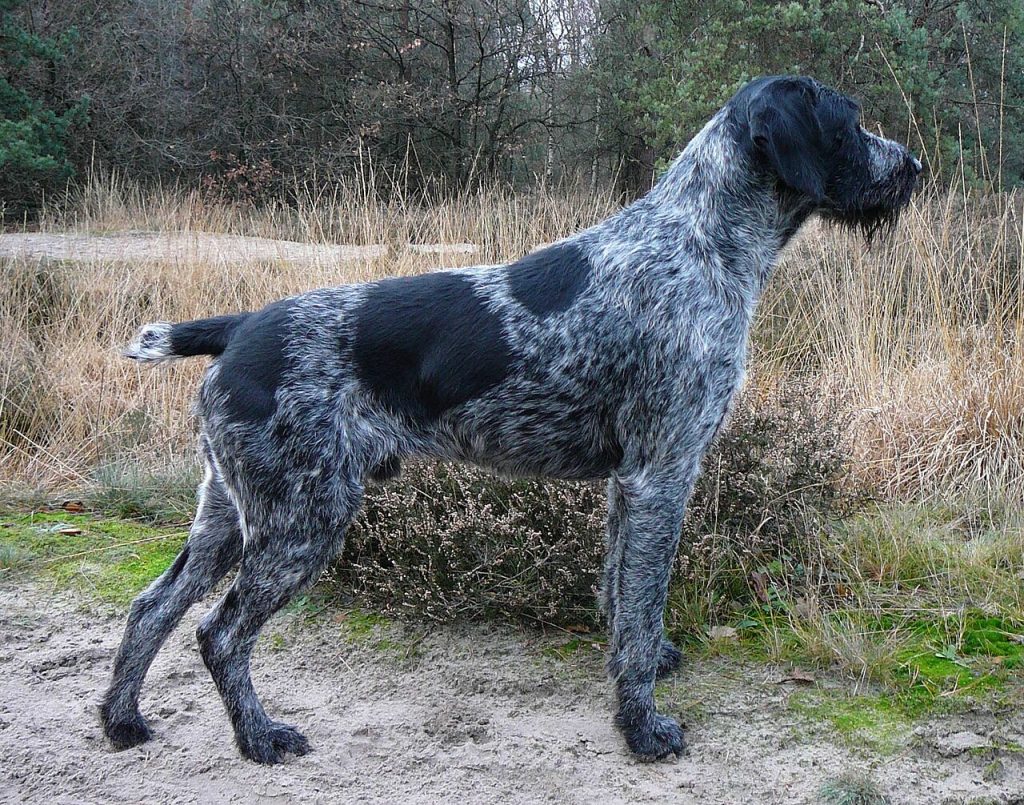
The Hard-haired German braco(known in its country of origin as Deutsch Drahthaar and in English as German Wirehaired Pointer) is one of the most complete and versatile show dogs that German kinetics has given. A tireless hunter, intelligent and nervous as steel in the countryside, he transforms into an affectionate and balanced companion inside the house. Its hallmark is that hard, wire-like hair that protects it from the brush, water, and cold. If you’re looking for a four-legged athlete to demand, and you’re willing to give back hours of work and exercise, the hard-haired German Shepherd can be the dog of your life.
Is the hard-haired German Braco for you?

Before you fall in love with its rustic appearance, be honest: the German Shorthaired Pointer is a working dog with a need for tremendous activity. It shines with sporting owners, hunters or dog sports enthusiasts, and goes out with anyone looking for a quiet pet on the floor. These boxes help you decide at a glance.
In favour .
- Extremely versatile: tracks, crawls on land and water, and displays with mastery.
- Very intelligent and very capable of learning.
- Loyal, loving and protective of his family.
- Resilient coat that requires little washing and withstands bad weather.
- A long-lived and generally healthy breed.
- Excellent companion for hunting, hiking and dog sports.
To be taken into account
- He needs a lot of daily exercise; he gets frustrated without it.
- Strong hunting instinct: risk with cats and small animals.
- Independent and stubborn; he requires constant guidance.
- It can be reserved with strangers.
- Not fit for a sedentary life or to be left alone for long hours.
- The coat needs periodic stripping to maintain its texture.
Character and temperament
The International Kennel Federation standard sums up the character of the German Hardhaired Braco in a few words: “firm, self-confident, balanced, unafraid of the hunt, neither timid nor aggressive”. That description well captures his double nature. In the countryside it is an energetic dog, determined and with an impressive concentration; at home it becomes kind, serene and deeply attached to its people.
It’s a dog that thinks. Their intelligence is accompanied by a remarkable independence inherited from hunter-gatherer work, where they must solve situations away from the hunter. That makes him fascinating, but it also means he doesn’t obey for the sake of obeying: You need to understand why and trust your guidance. He greatly enjoys the company of the children in the family and shows much affection for his owner, although with strangers he is usually reserved and vigilant, which also makes him a discreet alarm dog.
This intense attachment has a counterpart: it suffers from loneliness. The hard-haired German Shepherd wants to be with his own and participate in family activities. Relegated to the garden or left alone for long hours, it develops anxiety, barking, and destructive behaviors.
Coexistence: children, other pets, flat and loneliness

With children: is an excellent companion for families with active children. Tolerant and playful, it enjoys running and playing with the little ones in the house.
With other pets: usually gets along well with other dogs if it has been socialized since puppyhood. The real challenge is small animals. Its hunting and chasing instinct is very high, so cats, rabbits, poultry or rodents can activate their hunting drive. Coexistence with a cat is possible if they grow up together, but requires careful introductions and supervision.
On the floor: is not its natural habitat. It can adapt to an apartment only if the owner guarantees it several hours of intense exercise a day outside the house. It fits infinitely better in a house with land and an outdoor lifestyle.
Soledad: is a bad companion for this breed. If your day involves long daily absences with no one at home, this is probably not your breed.
Education and training
Training a hard-haired German Shorthair is both rewarding and demanding. On the one hand, its intelligence and desire to please make it learn very quickly. On the other hand, its independence and stubbornness test the owner’s perseverance. The key is to start early, be consistent and make it fun.
The early socialization is non-negotiable: the more people, dogs, environments, noises and situations he knows as a puppy, the more balanced he will be as an adult. In parallel, the work of the called and the remote control must be an absolute priority, because a dog with this hunting instinct and without a reliable call is a loose danger in the field.
It responds dramatically to positive reinforcement (rewards, play, praise) and closes completely with harsh or incoherent methods. Since it is a dog that needs a purpose, channeling its mental energy with hunting training, work tests, tracking or canine sports prevents it from getting bored and seeking out its own, almost always undesirable entertainments.
Exercise and activity
Here is the heart of the breed. The German Shorthaired Pointer was bred to hunt for days on end in any terrain and in any weather, and that machinery needs gasoline. We’re talking about a minimum of one to two hours a day of physical and intellectual exercise, and the more varied, the better.
He needs freestyle in safe environments, and he loves activities such as swimming (he is a magnificent swimmer with his palmed legs), collecting objects, tracking, mantrailing, canicross or agility.
A well-exercised hard-haired German Shepherd is a quiet, home-bred dog. One who is deprived of activity is an inexhaustible source of problems: wrecking, barking, hyperactivity, and anxiety. Exercise is not a luxury with this breed, it is a medical necessity.
Care: fur and hygiene
The jewel of the hard-haired German Braco is its coat. It is a straight, rough and curled hard wire type hair, about 2 to 4 cm long, accompanied by a woolly undercoat that in winter insulates from the cold and in summer almost disappears. It is a functional coat: weather resistant and water repellent, with marked eyebrows, beard and mustache that give the breed its characteristic rustic expression.
The maintenance is moderate. A weekly brushing is enough to remove dead hair and dirt. A couple of times a year it is advisable to do a stripping or manual pulling of dead hair, which is the correct way to preserve the texture and color of the coat.
The rest of the hygiene is the usual: checking and cleaning the ears frequently (the breed is prone to otitis), regular tooth brushing, nail trimming and eye control.
Foodstuffs

As a medium to large-sized, athletic dog with a very high energy expenditure, the German Shorthaired Pointer needs a high-quality diet well-adjusted to its activity level.
A high-end complete feed, with good protein intake and quality fats to support musculature and endurance, is a solid foundation. Divide the food into two daily servings instead of one: In deep-breasted breeds like this, heavy meals followed by exercise are associated with an increased risk of gastric dilation-torsion. For the same reason, you should avoid strenuous exercise just before and after eating.
Keep a close eye on your weight – an overweight, hard-haired German Shorthair loses agility and overloads its joints, especially in a breed prone to hip dysplasia. Adjust the amounts with your veterinarian according to age, activity and fitness, and always have fresh water available.
Health and life expectancy
Overall, the German Shorthair is a rustic and healthy dog, and also long-lived for its size: a British study from 2024 placed its median longevity around 13 years old, above the general canine average.
That said, some lines are prone to certain problems that you should be aware of:
- Dysplasia of the hip: joint malformation common in medium and large breeds; choosing breeders who X-ray the breeders reduces the risk.
- Otitis and ear infections: for its droopy ears and its fondness for water; checking and drying the ears well is essential.
- Hereditary eye diseases: as cataracts or retinal atrophy; ophthalmological testing of the parents helps to prevent them.
- Skin problems: including some skin tumors, more common in depigmented areas.
The best prevention is to buy from a responsible breeder who performs health tests, keeps the dog at his weight, exercises him sensibly, and has regular veterinary checkups.
Physical appearance
The German Shorthaired Pointer is a muscular, medium-sized to large dog with a distinctive, well-balanced appearance and robust build.
Its most distinctive feature is the wire fur, along with the facial “furniture”: Crowded eyebrows, beard and mustache that give him an intelligent and somewhat severe expression. Supported colors are liver (brown) and white, white and black (usually with spotted or solid spots) and solid liver, with or without a white spot on the chest. Like the rest of the German fighters, he has a palmed legs that makes him an excellent swimmer. The tail, traditionally cut to two-fifths of its length in countries where it is permitted, must reach the corvettes where caudectomy is prohibited.
Origin and history
The German Shorthaired Pointer is a relatively young breed, the result of a very deliberate project. Its breeding began at the end of the 19th century in Germany, in a context in which hunters were looking for a truly versatile sample dog: able to search, show, collect on land and water and track wounded piece, all with a hardy hair that would withstand weeds and climate.
To achieve this, breeders carefully mixed several working breeds: the gryphon korthals, the German shorthaired braco, the hardhaired griffin and the poodlepointer. From this combination was born the Deutsch Drahthaar(“German wire hair”), which combined the protective texture of the mantle with the sampling and charging abilities of the pointers. Within a few years it had established itself as one of Germany’s most prized hunting dogs. The Fédération Cynologique Internationale finally accepted it as 1954, placing it in Group 7 (sample dogs). Today he is still hugely popular in his country: Between 2010 and 2024, more than 45,000 new specimens were registered in Germany, with an annual average of more than 3,000.
Curiosities
- Its German name, Deutsch Drahthaar, literally means “hair of German wire”, in reference to the characteristic texture of its mantle.
- It is one of the four great German shearwaters, along with the short-haired German shearwater, the long-haired German shearwater and the large Münsterländer, all related.
- His palmed legs makes him an exceptional swimmer, very useful for charging birds in the water.
- It is sometimes confused with the Italian Spinone, the korthals griffin or the hard-haired griffin because of its rustic appearance and beard.
- In some countries a distinction is made between lines of work (more hunting-oriented, with aptitude tests) and lines of exposure.
- Their average longevity, close to 13 years, is remarkable for a dog of their size.
If you are drawn to the world of show dogs and versatile working dogs, you may want to compare the German Shepherd with other breeds of similar ability. Take a look at the Pointer, the sleek Weimaraner, the energetic Vizsla and the multifaceted Pastor Alemán, all intelligent and very active dogs that share many of the Braco’s virtues and demands.
Frequently Asked Questions About the German Hardhaired Braco
Is the German Shepherd a good family dog?
Yes, as long as the family is active. At home it is a loving companion, very attached to its own and sociable with the children with whom it lives. The FCI standard itself describes it as balanced, safe and non-aggressive. Now, it is not a couch dog: it needs to discharge a lot of energy daily to show that calm face inside the home.
How much exercise do you need a day?
At least one to two hours of physical and intellectual activity spread out over several outings, and ideally free running, swimming, tracking or collecting. A hard-haired German Shepherd who only takes short walks with a leash ends up frustrated and usually develops destructive behaviors or barking.
Can you have it on one floor?
It is not the ideal option. It can live in a flat if the owner guarantees several hours of intense exercise outside the house every day, but it fits much better in a house with land and in the hands of people who practice hunting, canicross, mantrailing or dog sports.
What is its coat like and how much care does it require?
It has a wire-like hard hair, dense and water-resistant, with woolly undercoat. Maintenance is moderate: weekly brushing and a stripping (manual pulling of dead hair) once or twice a year to preserve the texture.
How long does a hard-haired German Shepherd live?
It is a long-lived dog for its size. A British study from 2024 placed the median longevity of the breed at around 13 years, above the general canine average. With good nutrition, adequate exercise and frequent veterinary checkups, many specimens exceed that figure.
Is it easy to educate?
It is very intelligent and learns quickly, which facilitates training, but it is also independent, stubborn and has a very strong hunting instinct. It responds wonderfully to positive reinforcement and consistent guidance; with harsh or incoherent methods it closes. Early socialization and call work are essential.
Do you get along with other dogs and pets?
The problem is with small animals: their instinct for collecting and chasing is very high, so cats, rabbits, birds or rodents can awaken their hunting instinct.
What health problems does the breed have?
Overall, it is a robust dog, but some lines are predisposed to hip dysplasia, otitis and ear infections, hereditary eye diseases, and skin problems.