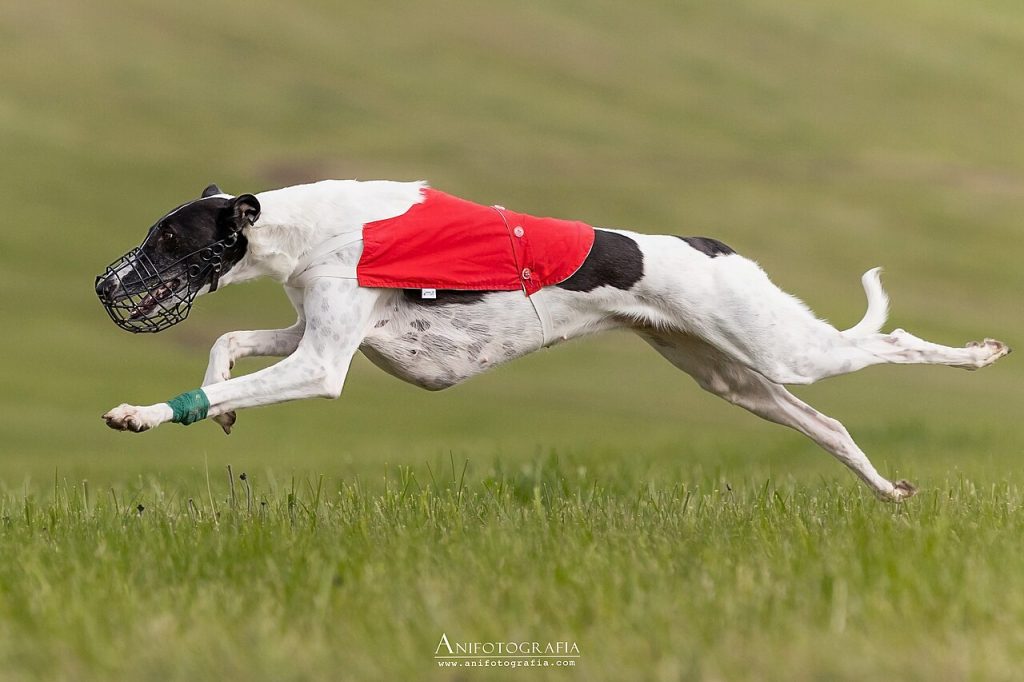
The Polish Greyhound(chart polski) is one of the oldest and most unknown greyhounds in Europe: a large, robust, strong-tempered hare that the Polish nobility used for centuries to hunt hares, avatars and even wolves. Unlike the stylized English Greyhound, the Polish Lebrel combines speed with a territorial and protective character that makes it both a hunter and a keeper. If you’re looking for an athletic, loyal dog with a history, but you’re willing to socialize it thoroughly and give it space to run, this rare breed may fascinate you.
Is the Polish Lebrel for you?
The Polish Greyhound is no ordinary greyhound. It is more territorial and suspicious than most greyhounds, with a very marked hunting and guarding instinct. It shines with active and experienced owners who can give it intense exercise and serious socialization.

Points in favour
- Loyal and very close to his family, with deep ties.
- Spectacular athlete: fast, tough and elegant in the race.
- Good natural guardian, attentive and territorial.
- Quiet and clean indoors; loves to rest.
- Short coat and easy to maintain.
- A rustic breed, with no major known genetic problems.
Points to Consider
- Territorial and reserved with strangers: requires intense socialization.
- High prey instinct; difficult coexistence with cats and small animals.
- It can be stubborn – not ideal for first-time owners.
- He needs to really run, not just walk.
- He doesn’t always take in new dogs.
- Minority breed: hard to find and breed well.
Character and temperament
The Polish Greyhound has the personality of a classic greyhound wrapped in a firmer temperament and guard. Like all greyhounds, at home it is serene and lazy: it is not a particularly active dog to be, like chasing a prey.
What sets it apart from other hares is its territorial character and protective ability. He was bred to fight wolves, and that determination is reflected in a dog that is confident, brave and wary of strangers. With his family, on the other hand, he is affectionate and builds very strong bonds, some of which are so strong that they find it difficult to accept strangers in their home. It also has a strong herd instinct, which influences how it interacts with other dogs.
Coexistence: children, other pets, flat and loneliness

With children: bred alongside them, the Polish Lebrel is usually affectionate and tolerant of the children in his family.
With other pets:‘s hunting instinct is strong, so cats, rabbits or rodents will arouse his interest as prey if he has not grown up with them. With other dogs he may be territorial and, due to his herd instinct, does not always accept a newcomer willingly. Early socialization is negotiable.
On the floor: can adapt because indoors it is quiet, whenever outside it receives long walks and opportunities to run at full speed.
Soledad: because of its strong family bond, it does not do well to spend many hours alone.
Education and training
It is an intelligent, obedient dog and relatively easy to train when it understands what is asked of it, but it can also be stubborn and disobedient if it decides it is not suitable for it.
The absolute priority is socialization: Exposure to people, environments, noise and other animals from puppyhood onwards and repeatedly to soften their territorial tendency. Positive reinforcement works well, better with short, motivating sessions than monotonous repetitions. Like all hares, the call (to return when called) is the critical point: With the prey in sight, his instinct can outweigh the order, so you have to work hard and be careful with the loose.
Exercise and activity
The Polish Lebrel enjoys a regimen with a good amount of exercise. Daily walks are the basis, but what really fills it is running. It loves to gallop at full speed and, if it cannot be used for hunting (prohibited in many places for this breed), finds its perfect outlet in game sports such as courses and greyhound racing.
Outside of those moments of intensity, it is a dog of low energy maintenance in the day-to-day: what it likes best is to rest lying on couches and beds. The ideal formula alternates free-running outbursts in closed and safe environments with long periods of calm at home. Without that escape route for its athletic motor, it becomes frustrated.
Care: fur and hygiene

The Polish Lebrel has a short coat, somewhat denser and rougher than that of a Greyhound, with an undercoat that thickens in winter to insulate it from the cold.
The rest is the basic hygiene of any large dog: checking and cleaning the ears, cutting the nails when they don’t wear out on their own, taking care of dental hygiene with regular brushing and bathing only when really needed, so as not to dry out their skin.
Foodstuffs
As a large, muscular greyhound, it needs a complete, high-quality diet with good protein intake to maintain its muscle mass and activity level.
Due to its deep breast morphology, the Polish Lebrel belongs to the group of breeds with a higher risk of if the test chemical is used, the test chemical shall be used.. To reduce it, it is advisable to divide the food into two daily intakes instead of one large one, prevent it from eating with anxiety and not offer it intense exercise just before or after meals.
Health and life expectancy
It is a rustic breed and, in general, healthy: it is not known to have widely documented genetic disorders, something unusual and very valuable.
That said, cases of cancer and some heart disease have been described within the breed, so regular veterinary checkups and heart care are recommended. Added to this is the risk of gastric torsion typical of deep-breasted dogs (see feeding). Like all hares, it has little body fat, is sensitive to anesthesia (a veterinarian familiar with greyhounds is advisable) and appreciates protection from cold. Buying from responsible breeders who care about the genetic variability of this small population is key to their long-term health.
Physical appearance
The Polish Lebrel is a large greyhound with long lines and a muscular build, stronger and more marked bone than the English Greyhound, without losing the aerodynamic silhouette of greyhounds.
Her hair is short and somewhat rough, with a double coat: The sublayer thickens in winter to insulate it. It accepts a wide variety of colors, with black, tan, azure, and beige being common, as well as jagged and jasper (grizzle) layers. A characteristic feature is the tail: long and sickle-shaped, curved up at the tip. The head is strong and elongated, with a decided expression, and its long legs betray the innate runner it carries within.
Origin and history
The Polish Lebrel is one of the oldest greyhound breeds and is linked to the history of Poland. The first references to the existence of hare in the country date back to the time of the chronicler Gallus Anonymus, and appear cited in Polish literature and hunting art since the 13th century. It is believed to share ancestors with the Hortaya Borzaya and the Borzoi (Russian greyhound), and probably descends from the Asian saluki-type greyhound; it does not come from the English Greyhound, despite what its name suggests in some languages.
It was the favorite dog of the Polish nobility, who used it to hunt hares, greyhounds and wolves. After World War II, their breeding in Poland virtually disappeared. In the 1970s, a group of enthusiasts undertook its recovery, and modern breeding was promoted by Stanisław Czerniakowski. In 1981 a preliminary book of origins was opened. It was granted provisional recognition by the Fédération Cynologique Internationale (FCI) on 13 June 1989 and final recognition on 1 March 2001.
Curiosities
- Its Polish name, chart polski, is roughly pronounced “jart polski”.
- Despite being called “greyhound” in English, it is not a direct relative of the Greyhound: it is a hare of its own lineage, closer to the greyhounds of eastern Europe and Asia.
- It was bred to fight wolves, which explains its bravery and guarding character, rare in a greyhound.
- It was on the brink of extinction after the war and owes its survival to a handful of Polish amateurs.
- In many countries it is forbidden to use it for royal hunting, so its instinct is channeled today into coursing and racing.
- Outside Poland it is still a minority and very rarely seen breed, prized by canine collectors.
If you are attracted to the Polish Greyhound’s athletic demeanor and intense bond, you may also be interested in other greyhounds and strong-willed dogs. Compare the Greyhound, the quintessential speed greyhound; the Whippet, its smaller and more adaptable version; the nimble and responsive Vizsla; or the sleek Weimaraner, another athletic hunter with a strong family bond.
Frequently Asked Questions about the Polish Greyhound
Is the Polish Lebrel aggressive?
Not for nothing. The Polish Greyhound is territorial and wary of strangers because it was bred to hunt and guard wolves, but with its family it is affectionate and balanced. The key is early, extensive and constant socialization from puppyhood. Without that work it can become overly reserved or reactive to unfamiliar people and dogs.
How tall and how much does a Polish Lebrel weigh?
It is a large hare. The males usually measure about 70-80 cm at the withers and the females 68-75 cm, with an approximate weight of 27-32 kg. It is more robust and stronger bone than an English Greyhound, without losing the slender silhouette and aerodynamic typical of greyhounds.
How long does a Polish Greyhound live?
Their life expectancy is around 10 to 12 years, and some well-kept specimens reach up to 15 years. It is a rustic breed with no widely documented genetic disorders; the care of a large greyhound (control of gastric torsion and heart health) helps to accompany it for many years.
Is he a good dog for beginners?
It is not the easiest choice for a novice owner. It is intelligent and learns quickly, but it can also be stubborn, independent and very territorial. It needs a firm, consistent and experienced guide who knows how to socialize it well.
Can he live in a flat?
It can, as long as it receives daily long walks and opportunities to run in safe areas. Indoors it is quiet and loves to lie on the couch or bed. The problem is not the indoor space but to cover its need to gallop: without physical outlet it becomes frustrated. A floor with access to canopods or open fields works better than an isolated one.
Do you get along with children and other pets?
With the children of his family he is usually affectionate and patient if he has been raised with them, although due to his size it is advisable to supervise the game with the smallest. With other dogs he can be territorial and does not always accept newcomers.
How much exercise do you need?
He needs at least one or two long walks a day and, above all, the ability to run at full speed in a closed and safe environment. He enjoys coursing and greyhound racing a lot where they are allowed. A Polish Lebrel that only walks around the city on a leash is not covering his athletic nature.
Is this a rare breed?
Yes, it is rare even in Poland. After World War II it almost disappeared and was rebuilt from the 1970s. The FCI gave it provisional recognition in 1989 and definitive in 2001.