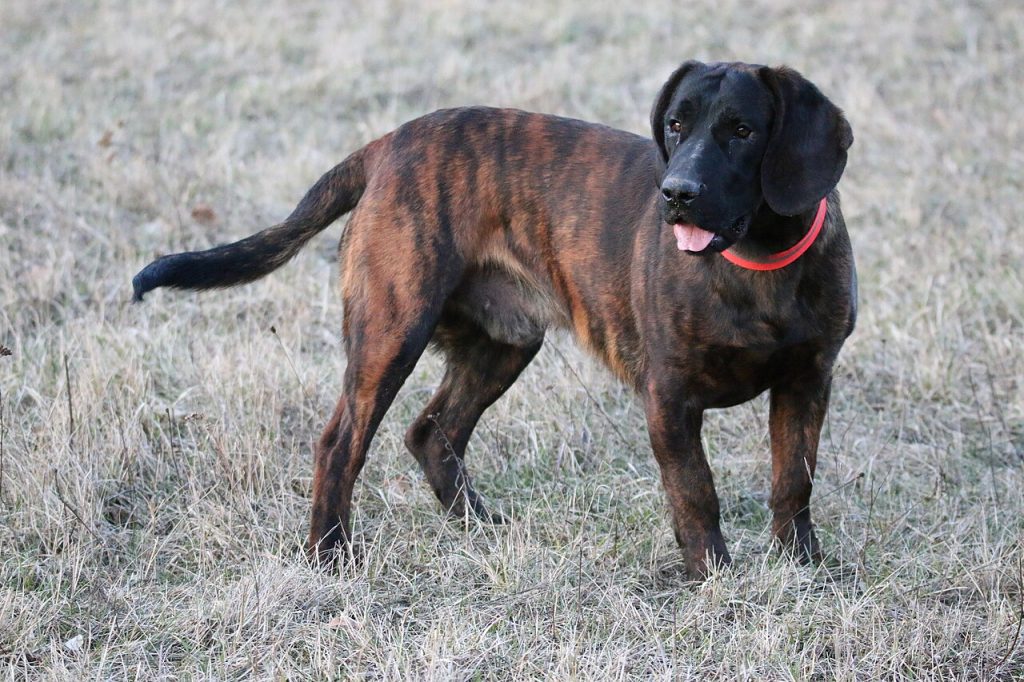
The Hound of Hanover is one of the oldest and most specialized blood trackers in Europe: A large, serene working dog with a prodigious sense of smell, bred for centuries to track wounded big game. It is rarely seen outside the hunting environments of Germany and Central Europe, and that exclusivity is part of its character. If you’re looking for a quiet couch dog, this is not your breed; if you’re fascinated by a serious, hardy hound with an almost legendary tracking instinct, read on.
Is it the Hound of Hanover for you?

The Hanoverian Hound is an extraordinary dog, but very demanding and not very versatile as a city pet. Before you consider one, be honest about your way of life: this breed was designed to work in the forest, not to accompany you to coffee. Here’s an honest summary of the pros and cons.
In favour .
- Exceptional sense of smell and tracking ability, among the best in the canine world.
- A calm, safe and balanced temper at home.
- Very loyal and attached to his family and his guide.
- Rustic dog, robust and resistant, with few problems if well bred.
- Sociable and kind to other dogs.
Against
- It needs a lot of exercise and a real homework assignment; it’s not worth a short walk.
- Unsuitable for the city and apartments.
- Stubborn and very independent when he’s following a trail.
- It’s not a race for first-time owners.
- Very hard to find: rare breed and linked to hunting.
Character and temperament
As a good working dog, the Hound of Hanover has a temperament that combines calm and determination. At rest he is a calm dog, self-confident and not nervous: He doesn’t bark at anything and he doesn’t live in tension. That placidity changes completely when you get to work. Tracking becomes persistent, stubborn and absolutely focused, able to follow a trail for hours without distraction. That “one idea” mindset is just what makes him so valuable in the field.
With its family it is a loyal and affectionate dog, although not effusive. With strangers it tends to be reserved and prudent, it keeps to its own without seeking contact, which does not mean that it is aggressive.
Coexistence: children, other pets, flat and loneliness

With children: is a balanced and patient dog with the family he knows. His size and strength advise to supervise the treatment of small children, and his reserved character makes a good socialization key from puppyhood.
With other pets: gets along well with other dogs, something unusual in such territorial breeds. With small animals you have to be careful: their tracking and hunting instinct is very strong, so coexistence with cats or other small animals requires early introduction and control.
Floor and city: here is its big limitation. It’s not a dog for urban life or for apartments. It needs space, outings and an active life; city life bores and frustrates it.
Soledad: is a dog attached to his guide and his work. Many hours alone, without activity or stimulation, does not feel good. It fits with families or hunters who spend time outdoors and give it a function.
Education and training
The Hanoverian Hound is intelligent and learns well, but its independence and stubbornness require an experienced guide. When it catches a trail, its brain focuses on that above almost any order, so you have to build a solid foundation of obedience and bond before you give it freedom in the field.
It works much better with positive reinforcement, consistency, and patience than with harshness. Early socialization with people, dogs, and different environments is critical to softening their natural reserve with strangers. It is not the most suitable breed for someone who has never had a dog: it requires an owner who understands a working dog and knows how to channel their instinct instead of repressing it.
Exercise and activity
This is the point that decides if the race is viable for you. The Hound of Hanover was selected to traverse miles of rough terrain following a trail of blood, and that physical endurance drives her inside. It needs plenty of exercise and, above all, olfactory work: tracking, search games, long walks in the mountains. A simple walk around the block doesn’t even come close to meeting your needs.
Mental exercise is as important as physical exercise. Giving him a task that involves his nose tires and satisfies him more than any aimless run. Without that relaxation, a dog of this breed becomes restless and difficult to handle. It is, in essence, a long-distance athlete specialized in smell.
Care: fur and hygiene

The maintenance of the coat is simple. The Hound of Hanover has short, dense hair attached to the body, which only requires a weekly brushing to remove the dead hair and keep it shiny.
Its ears, high, wide and low, do deserve attention: When hanging, they retain moisture and dirt, so they should be checked and cleaned regularly to prevent infection, especially after going out in the countryside. Like any active dog, it needs to have its nails, teeth, and pads checked, and its skin checked after every day in the mountains for ticks, spikes, or small wounds.
Foodstuffs
Since it is a medium to large-sized dog and very active when working, the feeding should be adjusted to its actual energy expenditure. A dog that tracks frequently needs a caloric and protein intake commensurate with that effort, while a more sedentary dog must eat less so as not to gain weight, something that would overload its joints.
It is advisable for dogs with deep breasts to avoid vigorous exercise immediately after eating, as a precaution against digestive problems.
Health and life expectancy
The Hanoverian Hound is, in general, a rustic and healthy dog. Having been bred for centuries with strictly functional and working criteria, and being a low-mass breed, it does not carry the burden of hereditary problems of other very popular breeds.
It is advisable to monitor the health of the joints, take care of the weight so as not to overload them and keep the ears clean because of their sloping shape. Regular veterinary checks, deworming and up-to-date vaccinations are the best guarantee. As a general reference for dogs of this size, life expectancy is around 10 to 14 years, very much conditioned by care, activity and feeding.
Physical appearance
The Hanoverian Hound is a solidly built dog, with a heavy structure and a powerful but harmonious appearance. The males measure between 50 and 55 cm at the withers and the females between 48 and 53 cm, with a weight ranging from approximately 25 to 40 kg depending on sex and specimen.
The head is large, with strong jaws and a slightly wrinkled forehead; the skull is wider between the ears and somewhat rounded. The ears are born tall, broad and smooth, and usually end in a rounded tip. The tail is of high insertion, long and barely curved. The hair is short and its color ranges from light reddish to dark, with a characteristic tapered appearance and, sometimes, a darker mask on the face.
Origin and history
The origins of the Hound of Hanover go back far, to the Celtic peoples of Central Europe around 500 BC. C. From those Celtic hounds descended the so-called trail dog or lead hound, which retained a great tracking ability and a powerful constitution. Since the time of Charlemagne, this trail dog has played a prominent role in hunting, employed to locate robust deer and wild boars.
The advent of firearms changed hunting forever: Now we needed dogs that could track wounded prey that didn’t die on the spot. The tracking dog, with its sense of smell and tenacity, was perfect for the task, and so it became specialized as a blood tracking dog. In 1885 it received the name “Hannover’s blood sausage”, and the Hirschmann Association took over the task of preserving and fixing the breed.
In 1912 the Hanoverian Hound was crossed with a lighter and more agile tracker, giving rise to the Bavarian Mountain Hound, better adapted to steep terrain. The International Kennel Federation (FCI) officially recognized the breed in 1964, within the group of hounds and related breeds, and the United Kennel Club of America did so in 1996. It was introduced to France in the 1980s and, even today, remains a scarce breed.
Curiosities
- Its original German name is Hannoverscher Schweisshund: Schweiss(“blood” in hunting language) betrays its specialty as a blood tracking dog.
- The popular Bavarian Mountain Hound was born directly from him, looking for a lighter version for the mountain.
- Its lineage is related to the medieval St. Hubert’s hound (Bloodhound), another tracking giant.
- It was one of the breeds whose breeding was formally organized in the 19th century so as not to lose its working qualities, through the Hirschmann Association.
- It is so specialized that, outside the world of big game, it is almost impossible to see it: its rarity is also its hallmark.
If you are drawn to the world of hounds and tracking dogs, you may also be interested in other breeds with a great sense of smell or similar temperament. You can continue to explore the Bloodhound, a classic tracking ancestor; the Basset Hound, another portentous-nosed hound; the tireless Beagle; or the sleek Pointer, another great hunting dog.
Frequently asked questions about the Hound of Hanover
Is the Hound of Hanover a good dog to live in a flat?
It’s not their ideal environment. The Hound of Hanover is a working dog bred to track for hours in the woods, with a very high need for exercise and stimulation. Locked in a floor, with no long outings or homework to do with its smell, it tends to get frustrated. It fits much better in a house with land and with owners who give it serious daily activity.
Is this a rare breed?
The Hanoverian Hound is a very rare breed outside the hunting circles of Germany and Central Europe. It was introduced into France in the 1980s and is still rare.
Does the Hound of Hanover get along with children?
With a family that knows and respects it, it is a calm, loyal and balanced dog. It is not an aggressive dog, but its size, strength and reserved character with strangers make it advisable to supervise with small children and early socialization. It is not a companion stuffed animal: it is a serious tracker.
Do you need a lot of exercise?
It’s built to follow a trail of blood over miles of rough terrain. A short walk is not enough for it: it needs long walks, olfactory work and, if possible, a function to perform. Without that physical and mental outlet, a dog of this breed is not at ease.
Is it easy to train?
It is intelligent and very capable, but also persistent and stubborn, especially when it has caught a trail. It responds well to positive, consistent and patient training, with a firm guide. It is not the most recommended breed for someone who has his first dog.
How long does a hound live?
As a working breed, it is usually a rustic and healthy dog. As a general reference for medium-sized hounds, the life expectancy is around 10 to 14 years, depending on care, feeding and exercise.
What’s the difference between the Hanoverian Hound and the Bavarian Mountain Hound?
The mountain Bavarian was born precisely from the crossing of the Hanoverian Hound with lighter dogs, looking for a more agile tracker for mountain terrain. The Hanoverian is bulkier and heavier; the Bavarian is smaller and more manageable.
What is this breed used for?
It is a blood tracking dog (Schweisshund): its job is to locate injured big game animals by following the trail they leave, even hours later and in complicated terrain.