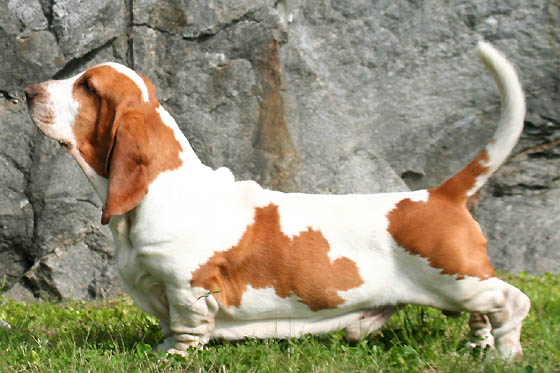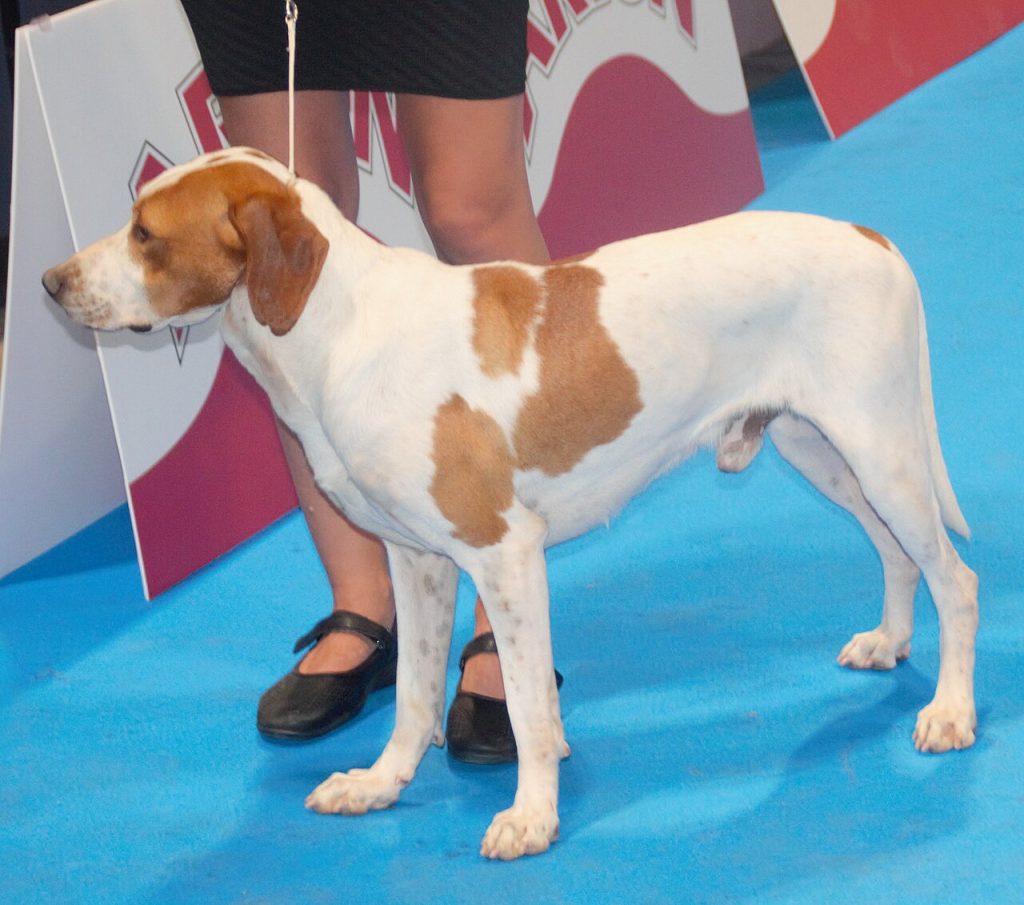
The Short-haired Istrian hound is one of the oldest hounds in the Balkans: a Croatian hunting dog, white with orange spots, bred for centuries on the Istrian peninsula to follow the trail of the fox and the hare through mountainous terrain.
Is the short-haired Istrian Hound for you?

Before you fall in love with that nice face and those droopy ears, you better be honest: The short-haired Istrian Hound is primarily a working dog. In its native Croatia it is almost never kept as a pet, but as a hunter. That sets everything else apart. It needs plenty of exercise, space, and an outdoor life, and in return it will give you a balanced, rustic, sociable companion. These are its lights and its shadows:
In favour .
- A docile and quiet temper at home when he’s well exercised.
- Sociable with other dogs because of their tradition of hunting in packs.
- Rustic and tough, no serious health problems documented.
- Short coat, easy to maintain.
- Excellent tracker, with remarkable sense of smell and stamina.
- Manageable medium size, neither small nor giant.
Against
- Huge need for exercise: not good for a sedentary lifestyle or a small flat.
- Very strong prey instinct: it comes out shot after a trail.
- A powerful, persistent voice that can bother you if you get bored.
- Independent and stubborn – obedience is not his priority.
- Very rare breed outside Croatia: difficult to find and breed.
- Little oriented to be a living room dog: he’s a worker, not a decorator.
Character and temperament
The breed standard describes a docile and quiet character at rest, which transforms into alive and enthusiastic during the hunt.
It is a balanced and not aggressive dog, bred for generations to work side by side with the hunter and other dogs. It’s not a nervous or reactive dog, but it is independent: Like all hounds, when it hooks a trail, it goes into working mode and its attention goes completely to the nose. This autonomy, essential for tracking alone in the mountains, is translated into a dog with its own criteria that does not obey to please.
Its great engine is the smell. The Istrian Hound lives by and for the trail. Understanding this is the key to living with it: it is not stubbornness or disobedience, it is hunter genetics. With an active life and an owner who respects its nature, it is a noble and quiet companion.
Coexistence: children, other pets, flat and loneliness

With children:‘s docile nature and medium size make it a good companion for active families. It is tolerant and sociable, although its energy and strength advise supervising play with the little ones and teaching children to respect their rest times.
With other dogs: usually gets along well. It is a breed designed to hunt in groups, so canine sociability is part of its DNA. Coexistence with several dogs is not strange to it, rather the opposite.
With cats and small animals: here is the most careful. Your prey instinct is very strong., and a running cat or rabbit can activate the chase impulse. Cohabitation with a cat that you have been raised with since puppyhood is possible, but you should never trust with small strangers.
Floor and solitude: is not a floor dog. It needs space, long outings and, preferably, a rural or semi-rural life. It does not tolerate loneliness and boredom: an Istrian Hound without work or exercise barks, howls and looks for ways to expend its energy. In a suitable environment, with garden and field days, it is a stable and happy dog.
Education and training
Training an independent hound is not the same as training a shepherd dog eager to obey. The Shorthaired Istrian Hound is smart, but he works for himself., not to please you. That requires patience, constancy and realistic expectations.
- Positive reinforcement and motivation: high-value prizes and short sessions work better than monotonous repetition.
- Early socialization: exposing him as a puppy to people, dogs, environments and noises consolidates his natural balance.
- The call, always pending: when it’s following a trail, it stops hearing you, it works the call very early on, in controlled environments, and it assumes that in open field without fencing the risk of it going after a piece is real.
- Channeling the smell: tracking and searching games are gold for this breed.
Exercise and activity
This is the non-negotiable point. The Istrian Hound was bred for trawling for hours over mountainous terrain, and that physical endurance is still intact. No street walk is enough for it. It needs long and intense daily exercise: walks in the countryside, running, exploration and, above all, opportunities to use its nose.
A dog with these characteristics that does not expend its energy becomes a problem: it barks, becomes frustrated and can become destructive. The ideal is a life with access to the field, tracking activities or, of course, the hunting for which it was conceived. If you do not hunt, replace that work with canine olfactory sports, long walks and frequent outings to natural environments.
Care: fur and hygiene

Here the breed is comfortable. Its coat is short, smooth, shiny and hard, and its maintenance is one of the simplest that exists. All it takes is a weekly brushing to remove the dead hair and distribute the natural grease that gives it that shine, and some extra brushing on the seasonal seedlings.
- Baño: only when it’s really dirty.
- Orejas: their ears dropped and stuck to the head retain moisture and debris. check and clean them regularly to prevent infection, especially after going out in the field.
- Nails and teeth: cut nails when needed and periodic dental hygiene.
- Parásitos: for its outdoor life, extreme prevention of ticks and fleas, and checks pads and skin after every day of hunting.
Foodstuffs
As an active, medium-sized working dog, the Shorthaired Istrian Hound needs a quality and balanced diet, with a good protein intake that supports its muscle mass and energy expenditure.
He divides food into two doses a day and avoids vigorous exercise just before or after eating. Watch his weight: he is an athletic dog with a slender figure, and overweight affects both his performance and his joints. Fresh water is always available, especially after field days. If you have any doubts about the quantities or type of feed, it is best to consult with your veterinarian.
Health and life expectancy
The short-haired Istrian Hound is a rustic and sturdy dog. No specific health or hereditary problems specific to the breed have been documented, something logical in a small population, bred for work and without extreme aesthetic selection.
This does not mean neglecting it: you need the usual veterinary calendar(vaccinations, internal and external deworming) and special attention to your droopy ears, which tend to accumulate moisture. For their life in the countryside, parasite prevention and checking of skin and pads are essential. There are no official longevity figures for this minority breed, but because of its medium size and hardiness, it is reasonable to expect a long life within the expectation of a well-groomed hound.
Physical appearance
The Shorthaired Istrian Hound is a medium size and well muscled body dog, with the athletic demeanor of the hunter.
- Manto: short, smooth, shiny and hard, white with scattered orange spots.
- Cabeza: fairly wide and flat on top, no bulging of the skull.
- Orejas: triangular, sloping and relatively short for a hound, glued to the head.
- Legs and tail: long legs and long tail, consistent with his running body.
Origin and history
Although the name points to the Istria peninsula, the breed was also forged into the Croatian coast and in Dalmatia. It is descended from a very ancient hound type, and in fact Istrian hounds are considered the oldest in the Balkan region.
There is a description of the Bishop of Đakovo, Petar Bakić, from 1719, which places these dogs in history centuries ago. Breeding was formally organized with the creation of a book of origins in 1924, which documented which specimens were considered to be of the breed. The FCI recognized it in 1949, although the first official standard was not published until 1973, was drafted by its home country as appropriate. Today it is included in the group 6 of hounds (FCI No 151) and is also recognized in North America by the United Kennel Club.
The shorthaired and hardhaired hounds were used to hunt in the mountainous terrain of Istria, while the Posavina hound did so in the Sava valley.
Curiosities
- He is considered, along with his Croatian relatives, one of the oldest hounds in the Balkans.
- Its voice during hunting is described as persistent and sharp: a highly valued quality for the hunter to follow the piece without seeing it.
- In Croatia it is still, above all, a working dog; seeing it as a salon pet is the exception, not the norm.
- Its close relative, the Hard-haired Istrian hound, shares type and origin but is somewhat larger and rougher-coated.
- Outside Croatia it is a rarity, sometimes promoted precisely as an unusual breed for those looking for an unusual dog.
If you are drawn to the world of hounds and tracking dogs, you may be interested in other breeds of scent and work with which you share a hunter’s spirit. You can take a look at the classic Beagle, the unmistakable Basset Hound, the quintessential tracker Bloodhound or the energetic Pointer, all with that passion for tracking that also defines the Shorthaired Istrian Hound.
Frequently asked questions about the Istrian Shorthaired Hound
Is the shorthaired Istrian Hound a good companion dog?
It is a hunting dog bred for centuries to work independently on the trail, not a show dog. In its native Istria it is almost always kept as a working dog and not as a pet. It coexists well in the family if it receives a lot of exercise, space and an active life; in a small and sedentary apartment it becomes frustrated.
How tall and how much does the Shorthaired Istrian Hound weigh?
The standard fixes an ideal height of about 50 cm at the withers and an approximate weight of 18 kg in the male; females are somewhat smaller in both parameters.
What color is the short-haired Istrian Hound?
Their coat is short, smooth, shiny and hard, with a white background with scattered orange spots, especially on the head and ears and some spread throughout the body.
Does he bark or howl a lot?
Like a good hound, it warns of the room with a persistent, high-pitched barking or howling as it tracks.
Is it a healthy breed?
No specific or serious health problems have been documented specific to the breed. Being a small, rustic population and bred for work, it tends to be a robust dog.
How long does the short-haired Istrian Hound live?
There are no official longevity figures for this minority breed, but because of its medium size and hardiness, it is reasonable to expect a long life within the normal range for healthy greyhounds, always with good nutrition, exercise and veterinary care.
Do you get along with children and other dogs?
Its standard temperament is docile and calm at home, and lively and enthusiastic in hunting. It is usually sociable with other dogs because it traditionally works in packs. With children it can be a good companion if coexistence is respectful; it is advisable to supervise for its energy. With small animals one must be cautious for its very strong prey instinct.
Is this a rare breed?
It is one of the oldest dog breeds in the Balkans, but very rare outside Croatia. The FCI recognizes it with the number 151 and it is hardly seen outside Istria, the Croatian Coast and Dalmatia, where it is still used to hunt fox and hare.