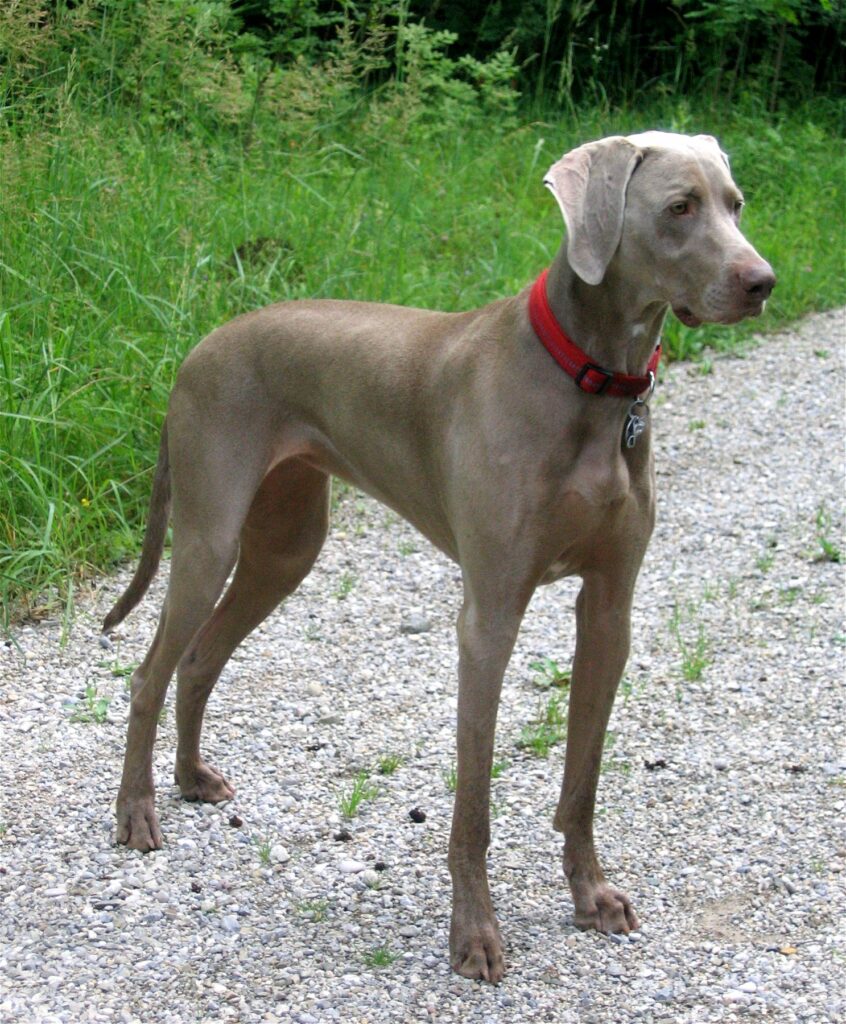
The Arm of Weimar, also known as the Weimaraner, is a medium to large sized German hunting dog, unmistakable for its elegant silver-gray coat and amber eyes. He is energetic, intelligent and extremely attached to his family, to the point of being nicknamed “the silver ghost”. If you are looking for an athletic, alert companion who wants to be close to you, this breed interests you; if you expect a quiet, low-maintenance dog, read on before deciding.
Is the Weimar Arm for you?
Before you fall in love with his image, be honest: the Weimar Hound is a working dog with a lot of energy and an almost obsessive need for companionship. It is not a dog to have in the garden and forget about it. Here you have the good and what you should value calmly.
In favour .
- Very smart and easy to train when he’s well motivated.
- Extremely loving and loyal; he lives for and for his family.
- Versatile and athletic: ideal for sporty and active people.
- Short hair that barely needs a hairdresser.
- A good warning dog warns of the presence of strangers.
To be taken into account
- High energy level: you need intense exercise daily.
- I’m prone to separation anxiety if you’re alone for too long.
- Reserved with strangers; requires early socialization.
- If he gets bored, he can become destructive and very barking.
- It’s not the best option for a sedentary lifestyle or a small apartment with no exits.
Character and temperament
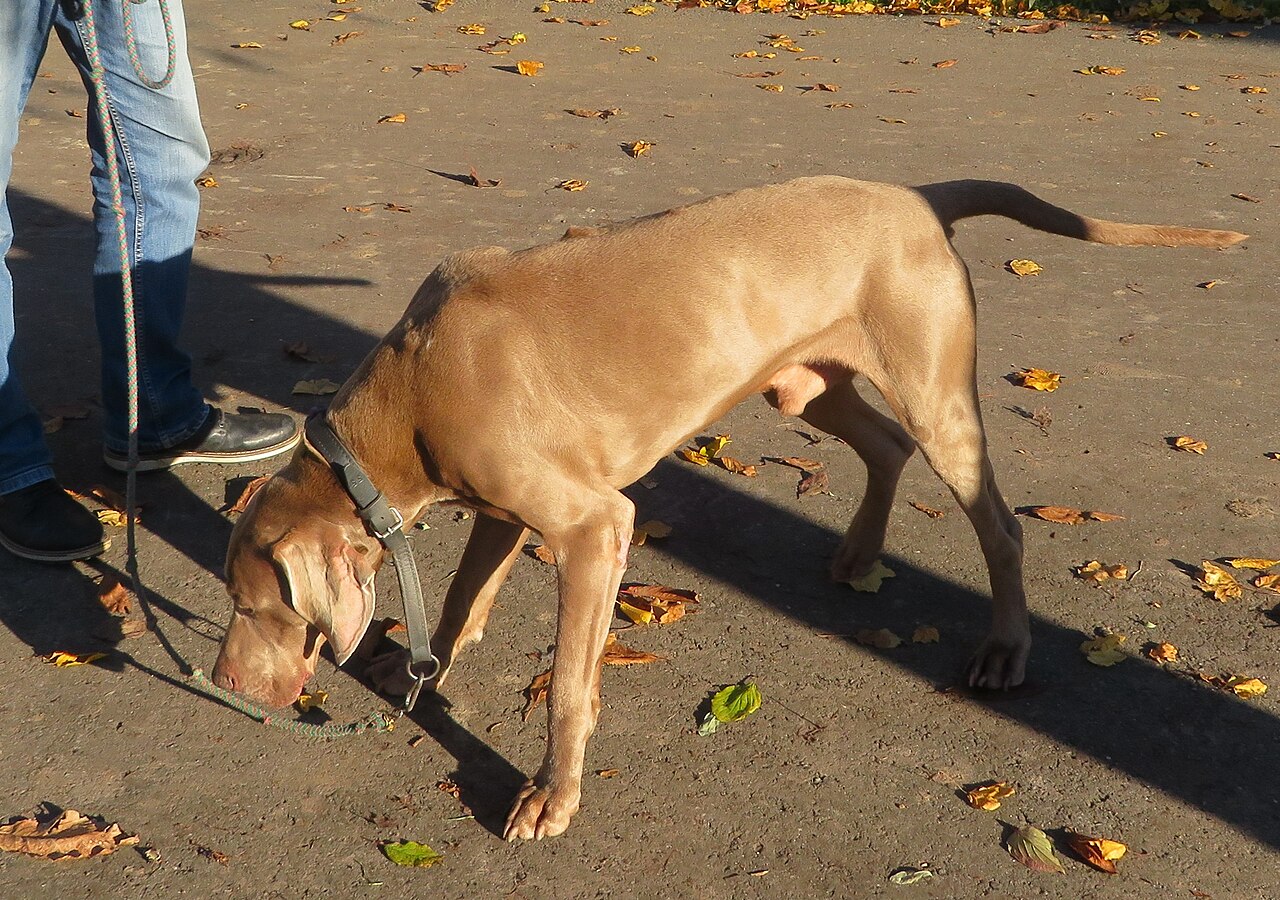
The Weimar Braco combines two defining traits: remarkable intelligence and a deep attachment to its people. It is a balanced, manageable and not aggressive dog, but also energetic and passionate in everything it does. In the countryside it deploys a systematic and enthusiastic search; at home it transforms into a shadow that follows you from room to room.
That devotion has a less comfortable side: The Weimaraner wants constant physical contact with its owners and is not good with loneliness. That’s why it fits perfectly with families who spend time at home and integrate it into their daily lives, and much worse with those who are away for many hours. With strangers he is usually reserved and barks to warn, although he rarely leaves if he has been well socialized.
It’s an alert, curious, and highly excitable dog. Bored and without stimulus, it gets frustrated easily, and a frustrated Weimaraner is a Weimaraner that digs, barks, and messes up. Well channeled, that energy makes it a brilliant companion.
Coexistence: children, other pets, flat and loneliness
- With children: is affectionate and playful, a good companion for active kids.
- With other dogs: is sociable if accustomed from puppyhood, although its dominant character may emerge.
- Coexistence is possible if they grow together, but their drive to chase small prey should not be underestimated.
- On the floor: can live on the floor as long as it covers its exercise needs abundantly; what it cannot support is inactivity, live wherever you live.
- In the face of loneliness: has a tendency to have separation anxiety, so you have to get him used to being alone gradually from puppyhood.
Education and training
Few breeds learn as quickly as the Weimar Braco. Its intelligence and desire to please make basic training easy, as long as it is worked on positively. This breed responds fatally to harshness: historically it is described as sensitive, and a rough treatment only gets a fearful and blocked dog.
Aim for positive reinforcement, short, varied sessions, and a lot of consistency. Early socialization (with people, dogs, noises and environments) is non-negotiable to soften their natural reserve. And given how smart he is, I think it’s best to give him homework: olfactory games, advanced obedience or canine sports that keep your head occupied. A Weimaraner without mental stimulation invents his own hobbies, and you’ll almost never like them.
Exercise and activity
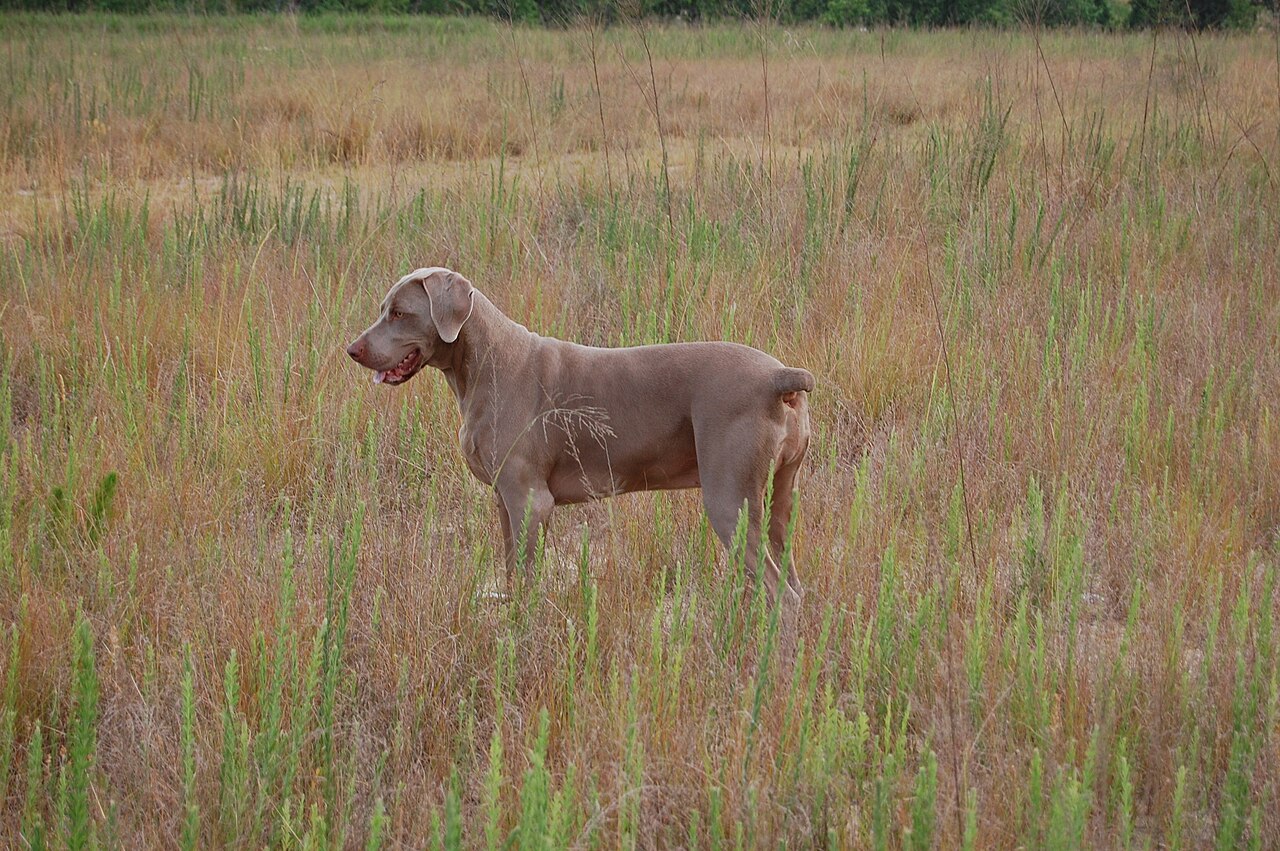
If there’s one section that doesn’t allow shortcuts in this breed, it’s this one. The Weimar Braco was bred to spend whole days hunting in the countryside, and retains enormous endurance and speed. It needs intense daily exercise: long walks, runs, find-and-bring games, and time to run free in a safe space.
It is an excellent companion for running, hiking or mountain biking, and excels in canine sports such as agility, mantrailing or charging tests. The ideal is to combine physical exhaustion with mental challenges: A dog tired in body but bored in mind keeps giving trouble. As a rule of thumb, think of at least a couple of hours of activity spread throughout the day, not a short commitment walk.
Care: fur and hygiene
In the short-haired variety, the most common, the Braco de Weimar is low-maintenance. Its short and dense coat is kept with occasional brushing to remove dead hair and enhance shine; it does not need hairdressing or cuts.
The point that does require attention are the ears: when they fall, they retain moisture and are poorly ventilated, which favors ear infections. It is advisable to check and clean them regularly. Complete hygiene with periodic nail cutting, tooth brushing and baths only when really needed, so as not to dry your skin.
Foodstuffs
As a large, active, deep-chested dog, the Weimar Braco needs a quality diet tailored to its considerable energy expenditure. Divide your daily allowance into two or more meals instead of one large meal, and avoid strenuous exercise just before and after meals: its conformation makes it prone to gastric torsion (dilatation-volvulus), which is a serious veterinary emergency.
If you have any questions about rations, diet or supplements, it is best to consult your veterinarian.
Health and life expectancy

The Weimar Braco is, in general, a robust and healthy dog, but like any breed it has predispositions that are worth knowing. The most characteristic, because of their droopy ears, are ear infections. Hip dysplasia, gastric torsion, eye problems such as entropy and alterations of the third eyelid, and cryptorchidism in males are also described with some frequency. The veterinary literature also includes some less common neurological and ocular conditions with some genetic basis.
As for longevity, a British study from 2024 placed the median lifespan of the breed at about 12.8 years, a figure very much in line with the average for purebred dogs. Good prevention (veterinary checkups, weight control, careful handling of food to reduce the risk of twisting and ear care) helps you reach that age in good shape. Choosing breeders who perform health tests on breeders makes a big difference.
Physical appearance
The Weimar Braco is a medium to large sized hunting dog, with harmonious lines and powerful musculature. The males measure between 59 and 70 cm at the cross (with 66 cm as the ideal size) and weigh 30 to 40 kg; the females measure 57 to 65 cm (62 cm ideal) and weigh between 25 and 35 kg. The set transmits vigor and elegance to equal parts.
Its most famous feature is the color: Different shades of gray (silver gray, deer gray or mouse gray) have earned him the nickname ghost gray. Very small white marks on the chest and fingers are acceptable. The coat may be short (most common), long or, in some specimens, hard. The head is dry and proportionate, with broad, long, sloping ears, and a powerful snout. And the eyes are a sign of identity: puppies are born with them blue, turn to a turquoise-green hue and end up in a characteristic amber color.
Origin and history
The Braco de Weimar takes its name from the city of Weimar, in the former Saxony-Weimar-Eisenach (now state of Thuringia, Germany), and from the court of Grand Duke Charles Augustus, a great lover of hunting, to whom the fixation of these grey dogs at the beginning of the 19th century is linked. Silver-gray-coated dogs are depicted in 17th- and 18th-century paintings, fueling the mystery of their true origins.
For a time, from 1879, the Weimaraner was considered a bluish variant of the German shorthaired breed and was listed in the Kurzhaar club’s book of origins. In 1880 fourteen specimens of three different types were exhibited at an exhibition in Berlin. The breed was recognized as such in 1891, its standard was drafted in 1896 and in 1897 the club dedicated to its pure breeding was founded in Erfurt. After near extinction during the First World War, it was rebuilt from the few surviving specimens and was definitively accepted by the International Cinological Federation (FCI) in 1954. After World War II, numerous specimens were exported to the United States, where the breed experienced a real boom.
Curiosities
- The silver ghost: the nickname originated among American soldiers, who watched these grey dogs move with almost ghostly elegance through the German fields.
- Changing eyes: puppies are born with blue eyes that go through turquoise tones before settling on the adult amber.
- Muse of art: American photographer William Wegman became world famous for his compositions with Weimaraners dressed and posing.
- Dogs of famous people: have accompanied figures such as Grace Kelly, Dwight D. Eisenhower or Brad Pitt.
- Hunter first: in its native Germany, the breed club considers it primarily a hunting dog rather than a companion, and prioritizes placing puppies with hunters.
If you are attracted to the Weimar Braco for its energy and versatility as a show dog, you will be interested in meeting its relatives and other breeds with a similar profile. The closest is the Short-haired German Bracho, of which the Weimaraner came to be considered a variant. The Hungarian Vizsla and the classic English Pointer share this athletic and versatile character, while the Hard hair sample griffin offers a different mantle with a very similar hunting vocation.
Frequently asked questions about the Weimar Armoury
Is the Weimar Hound a good dog for beginners?
It is not the easiest choice. It learns quickly and is very affectionate, but its very high energy, sensitivity and tendency to separation anxiety require a constant, active and timely owner. For someone who is athletic and committed, it is a wonderful dog; for a first sedentary dog, it can be overwhelming.
How much exercise does a Weimar Brace need?
A lot. At least a couple of hours of intense activity a day, combining long walks, running and games, plus mental stimulation. It’s an ideal companion for running, hiking or dog sports like agility.
Can you stay home alone?
The Weimaraner is very attached to its family and tends to suffer from separation anxiety. It can learn to stay alone for reasonable periods if it is accustomed to it gradually from puppyhood, but it is not a breed to spend many hours alone daily.
Do you get along with children and other animals?
With children it is usually affectionate and playful, although it is advisable to supervise its size and enthusiasm.
How long does a Weimar Brack live?
A British study from 2024 placed the median lifespan of the breed at around 12.8 years, in line with the average of purebred dogs.
Why do they call it “the silver ghost”?
The nickname (silver ghost or grey ghost) was popularized by American soldiers who came to know the breed in Germany.
Does it need a lot of coat care?
In the short-haired variety, only an occasional brushing is enough to remove the dead hair. What does require constant attention are their fallen ears, prone to infection, which should be checked and cleaned regularly.
What color are the eyes of the Weimar Brack?
Interestingly, the puppies are born with blue eyes and go through turquoise-green tones before settling on the definitive amber.