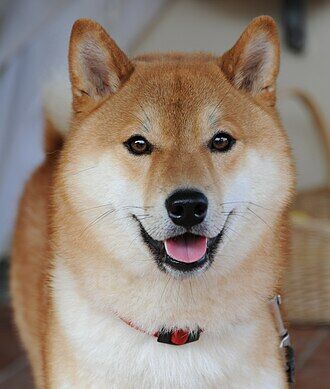
The Shiba Inu is the smallest of Japan’s native dogs and possibly the strongest in character. Behind that fox face and that reddish fur is a millenary hunter, independent and proud, who falls in love at first sight but demands patience, constancy and a lot of respect for the way he is. In this comprehensive guide, we review what the Shiba Inu really is like, who it fits in with, and what it needs to live happily.
Is the Shiba Inu for you?
The Shiba Inu is not a dog for everyone, and it’s good to know that before you get carried away just by its adorable appearance. He is clean, healthy, discreet inside the house and very close to his family, but he is also stubborn, reserved with strangers and not given to obey “because yes”. If you’re looking for a companion who follows you everywhere and does whatever you ask without hesitation, this probably isn’t your dog. If, on the other hand, you value independence, elegance, and a bond that must be earned, the Shiba can be a fascinating breed.
In favour .
- Small-to-medium size, comfortable on the floor or in the house.
- Very clean, almost no dog smell and easy to keep tidy.
- He barks little inside the house; he’s discreet.
- Healthy and long-lived, with one of the highest life expectancies among races.
- Loyal and affectionate to his family, good warning dog.
- Intelligent and autonomous, he doesn’t need constant attention.
To be taken into account
- Stubborn and independent: obeys when he’s rewarded.
- Strong hunting instinct; hard to let go without a leash.
- Reserved with strangers; needs early socialization.
- She changes her hair very abundantly twice a year.
- It can be possessive with food, toys or territory.
- The famous “shiba scream”: a high-pitched scream when angry or frustrated.
Character and temperament
If we had to sum up the Shiba Inu’s character in one word, it would be independence. It is an alert, courageous and enormously intelligent dog, but with a will of its own that distinguishes it from most Western companion breeds. The Japanese standard describes his temperament with three hard-to-translate concepts: can’i(a serene and safe audacity), ryōsei(natural goodness, fidelity) and what is it?(a naturalness without artifice). Together they draw a dignified dog, balanced and not servile.
The Shiba is deeply affectionate with his family, although he shows it in his own way: he is rarely a lap dog. He usually chooses a reference person, watches what happens at home and warns of news, which makes him a good watchman despite his size.
That same strength of character has its counterpart. Expert surveys describe it as a breed with a high tendency to reactivity and stubbornness, and in fact it is genetically closer to the wolf than many domestic dogs in other countries. He can be possessive of his resources – food, toys, his place – and tends to express his discontent with the characteristic shiba scream, a sharp, dramatic scream he lets out when something doesn’t go his way (from a bath to a nail cut). It ‘s not aggression . It’s the shiba theater.
Coexistence: children, other pets, flat and loneliness
Well socialized from puppyhood, the Shiba Inu adapts to almost any home, but its way of being sets some rules for coexistence:
- With children: gets along well with the kids in the house as long as they respect it. It’s not a dog that tolerates being bullied, hugged excessively, or taken from its food, so it works best with older kids who understand their limits.
- With other pets: can get along well with other dogs, especially if they grow up together, although some individuals – especially males – can be dominant.
- The On the floor: is perfectly suited to apartment living thanks to its compact size and the fact that it barks little at home.
- Soledad: is more independent than many breeds and tolerates being alone reasonably well, but boredom or lack of exercise can lead to anxiety and destructive behaviors.
Education and training
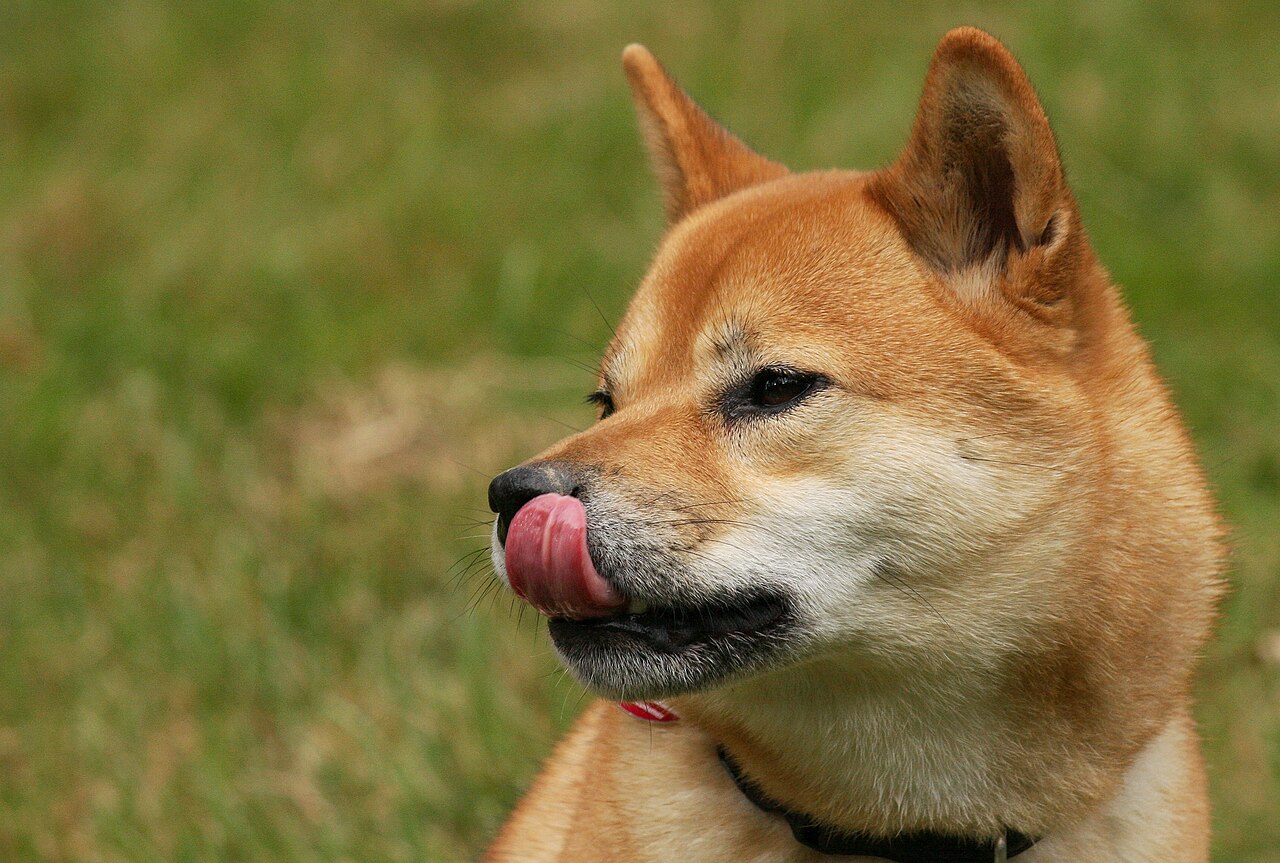
Training a Shiba Inu is an exercise in humility. It is very intelligent – it understands perfectly what you are asking of it – but, unlike a Border Collie or a Labrador, it does not live to please you. It decides for itself whether the order is worth it. That is why it is considered a medium-trainability breed and, above all, one that punishes the owner’s mistakes.
The key is in the positive reinforcement and motivation. High-value rewards, short games and short, fun sessions work much better than repetition or imposition. The Shiba closes in on hard methods: if you force it, it ignores you or protests. Patience and consistency are worth more than brute firmness.
Two absolute priorities from puppyhood: the early socialization, so that it naturally accepts people, dogs and new situations, and the called. Because of its hunting instinct and independence, many Shiba never become fully reliable loose, so it is advisable to work the call to conscience and, in unfenced areas, keep it on a long leash.
Exercise and activity
The Shiba Inu is an agile, athletic and hardy dog, bred to move on mountainous terrain. It is not an elite athlete that needs daily kilometers, but it does require regular exercise and, above all, mental stimulation. Its high intelligence requires the head to work as much as the legs.
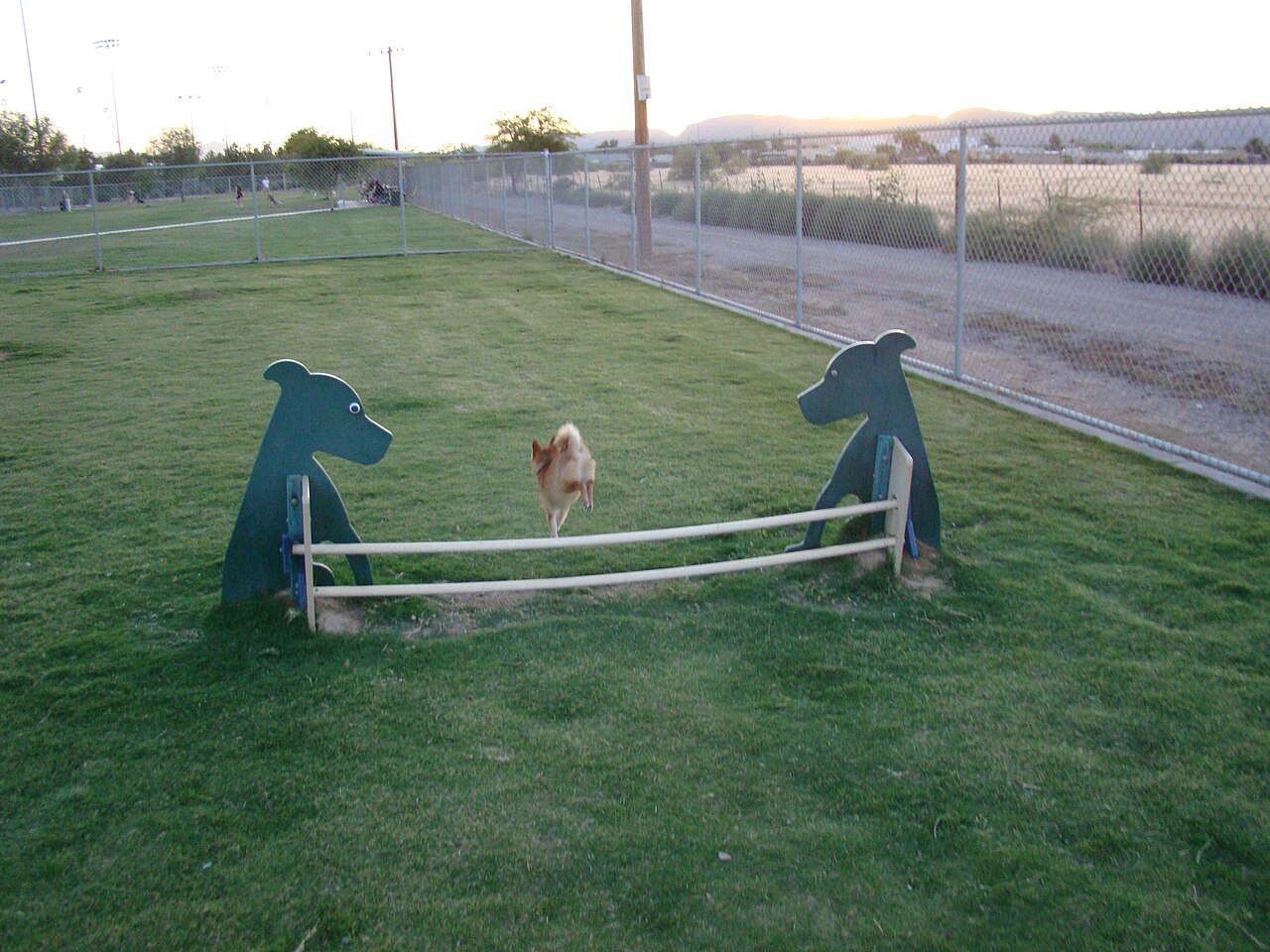
With one or two good walks a day, some play and opportunities to sniff and explore, an adult Shiba is satisfied. It enjoys hiking – it moves around the mountain like a fish in the water – and can excel in canine sports such as agility, provided the handler knows how to motivate it. A bored Shiba or with accumulated energy is a Shiba who gets into trouble: scratches, bites or develops tail-chasing behaviors.
Care: fur and hygiene
The Shiba Inu wears a double coat: an outer coat of hard, straight hair, and a soft, dense, abundant undercoat that insulates it from cold and heat.
The story changes twice a year. During seasonal change(spring and autumn), the Shiba releases the undercoat spectacularly: it literally looks like it’s falling apart into locks. During those weeks, it needs to be brushed daily, ideally with a cardboard brush and a rake, to remove the dead hair and prevent it from upholstering the entire house.
The rest of the care is the usual: baths only when really needed (it is a very clean dog), checking and cleaning of ears, periodic nail trimming and regular dental hygiene.
Foodstuffs
The Shiba Inu does not have exotic dietary demands, but it is advisable to take care of the quantity. Being a small and muscular dog, it gains weight easily if overfed or rewards are abused, and overweight especially punishes its joints. A complete and balanced diet, adapted to its age, size and activity level, and divided into measured rations, is the best basis.
Many Shiba are picky eaters and “tiquismiquis”: They don’t eat anything, which paradoxically helps them control their weight. Watch out for his tendency to protect food, too; teaching him from a young age that hands near the feeder bring good things, not threats, prevents problems with possessiveness. Fresh water is always available and, if you have any questions about diet or quantities, consult your veterinarian.
Health and life expectancy
The Shiba Inu is, as a whole, a robust and very long-lived dog. Studies attribute to it one of the highest life expectancies among all breeds: around 14-16 years, with data in Japan reaching an average of 15.5 years and a British study from 2024 placing the figure at 14.6 years, clearly above the average of purebred dogs.
Even so, it is good to know the ailments to which you are prone:
- Dislocation of the patella: is relatively common in the breed; a Japanese study on small breeds placed the Shiba among the most affected.
- Glaucoma: the breed shows a notable predisposition to this eye disease, associated with several genes.
- Atopic dermatitis in dogs: is prone to allergies and skin problems.
- This is Vogt-Koyanagi-Harada syndrome. an autoimmune disease that also appears in the Akita and has been described in the Shiba.
Going to responsible breeders who perform health tests, maintaining veterinary checkups, and monitoring weight and joints are the best tools for a Shiba to enjoy that long life in full shape.
Physical appearance
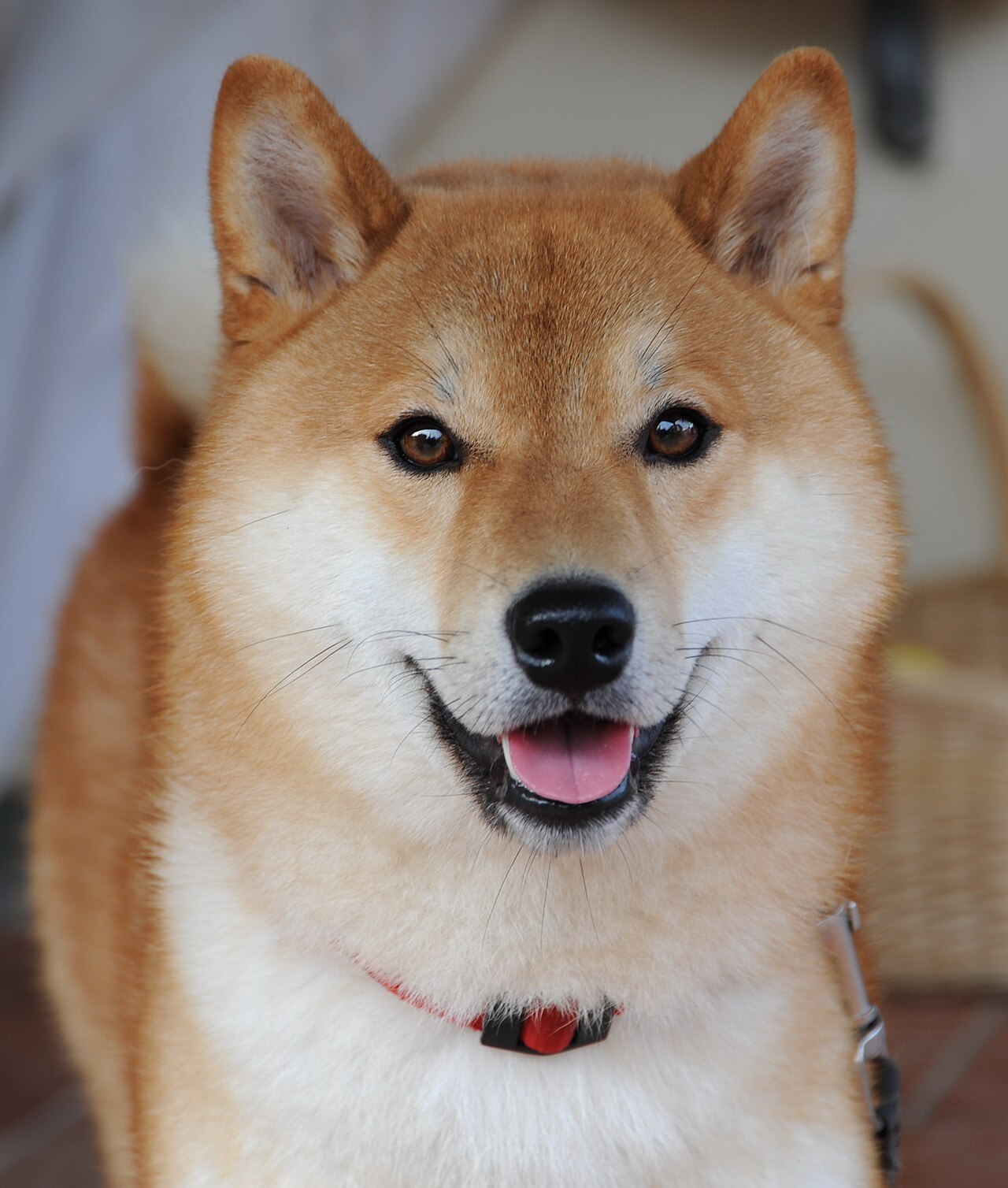
The Shiba Inu is a small, compact and well-proportioned dog with a rustic and energetic appearance: It’s kind of like a miniature Akita. According to the FCI standard, males measure about 40 cm to the cross and females about 37 cm high(with a tolerance of about 1.5 cm). The body is muscular, with the back straight and short, the chest deep and the belly gathered, transmitting agility and balance.
Its head is one of its most recognizable features: a broad skull, a moderately pointed snout, small, dark brown, triangular eyes, and small, upright, triangular ears slanted slightly forward.
As for color, the standard accepts red, sesame (red with black tips), black sesame, red sesame, black and fire and cream. Everyone must present the urajiro: characteristic cream to white markings on the sides of the snout, cheeks, inside of the ears, throat, chest, belly, inner face of the legs and lower part of the tail. It’s that contrast that gives the Shiba its clean and elegant finish.
Origin and history
The Shiba Inu is one of the oldest existing dog breeds. It is a baseline dog, predating the modern breeds that emerged in the 19th century, and similar-looking dogs were already represented in figures from the prehistoric Jōmon period of Japan. Genetically, it is among the closest to the wolf breeds.
It was bred for hunting and raising minor game– birds and small mammals – in the rugged mountains of the Chūbu region in central Japan. His name reflects it: one of the most popular interpretations translates “shiba” as “bush” or “disease”, so that Shiba Inu would come to mean something like “bush dog”, for the terrain where he worked (other theories link it to the reddish color of the weeds in autumn or to an ancient meaning of “small”).
The race was twice on the brink of extinction. In the late 19th and early 20th centuries, the importation of Western breeds and crossbreeding almost wiped out the pure Shiba. A group of hunters and intellectuals then began to work for its preservation. World War II, food shortages, and the worm outbreaks of the 1950s and 1960s decimated it again: All present-day Shiba are descended from only three bloodlines that survived, the Shinshu, the Mino and the San’in.
Those three lines were unified into one race. The first Japanese standard, the Nippo standard, was published in 1934, and in December 1936 the Shiba Inu was declared Natural Monument of Japan, a recognition of the country’s commitment to preserving its native breeds. It arrived in the United States in 1954, had its first litter registered there in 1979 and was recognized by the American Kennel Club in 1992. Today, he is, according to the AKC, Japan’s number one pet dog.
Curiosities
- The dog from the meme: The Shiba Inu is probably the most famous dog on the internet. The meme “Doge”, starring a Shiba named Kabosu, even gave its name to the cryptocurrency Dogecoin, and another cryptocurrency is directly named after the breed.
- Cheems: another viral Shiba, known as Cheems, conquered networks during the COVID-19 pandemic and became a global icon.
- The “shiba scream”:‘s high-pitched, melodramatic scream at baths, brushing, or frustration is legendary among those who live with the breed.
- Clean as a cat: the Shiba grooms himself, avoids puddles and keeps his coat spotless with very little help.
- Doubly primitive:‘s origins come from several genetic pathways, which makes it closely related to other Japanese dogs and gives it that “wild” character.
- National treasure: has been a Natural Monument of Japan since 1936, a distinction reserved for what the country considers living heritage.
If you are attracted to the Shiba Inu’s independent nature and primitive air, you may be interested in other breeds of the same family and temperament. You can continue exploring with the Akita, its larger Japanese relative; the imposing and reserved Chow Chow, another Asian breed genetically close to the wolf; the spectacular Husky Siberiano, an equally independent Nordic spitz; or the unmistakable Shar Pei, with whom it shares one of the greatest genetic affinities to the wolf.
Frequently Asked Questions About the Shiba Inu
Is the Shiba Inu a good dog for beginners?
It is not the easiest choice. Its independent and stubborn character tests one who is inexperienced. It can work with a very committed beginner, willing to be informed, socialize well and work the training with patience and positive reinforcement, but it is not a dog that simply obeys.
Why does the Shiba Inu scream?
The “shiba scream” is a sharp and very dramatic scream that the breed releases when it feels frustrated, upset or uncomfortable, for example during a bath or a nail cut. It is not pain or aggression: it is their way of protesting.
Does the Shiba Inu shed a lot of hair?
In everyday life, not much: a weekly brushing is enough. But it has a double coat and changes the undercoat very abundantly twice a year, in spring and autumn. In those weeks it is advisable to brush it daily to control the amount of hair that falls out.
Can you have a Shiba Inu on a floor?
Yes. Its small-to-medium size and the fact that it barks little at home make it suitable for apartment living. The condition is to meet your daily needs for walking, exercise and mental stimulation; indoor space is no substitute for going out and exploring.
Does the Shiba Inu get along well with children and other pets?
With children who respect it, yes; it works better with older children than with very small ones. With other dogs it can coexist, especially if they grow together, although some males are dominant. With cats and small animals you have to be careful because of their strong hunting instinct.
How long does a Shiba Inu live?
It is a very long-lived breed: its life expectancy is around 14-16 years. Studies place it among the longest-living breeds, with an average of 14.6 years in a British study from 2024 and 15.5 years according to data collected in Japan.
Is it easy to train a Shiba Inu?
He is very intelligent, but not very obedient by nature: he has average trainability. He learns quickly what interests him and closes himself to imposition. He works with short, motivational sessions and positive reinforcement. Socialization and calling must be worked on from puppyhood.
Can the Shiba Inu stay home alone?
It tolerates loneliness better than many breeds because of its independence, but it should not be abused. If it is bored or lacks exercise, it may develop anxiety and destructive behaviors.