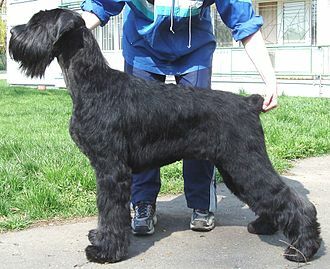
The Schnauzer Gigante(in German, Riesenschnauzer) is the largest of the three breeds of schnauzer: a German working dog, robust, intelligent and deeply loyal. Born as a farm guardian and cattle driver, today it stands out as a police dog, sportsman and family companion.
Is that the Giant Schnauzer for you?
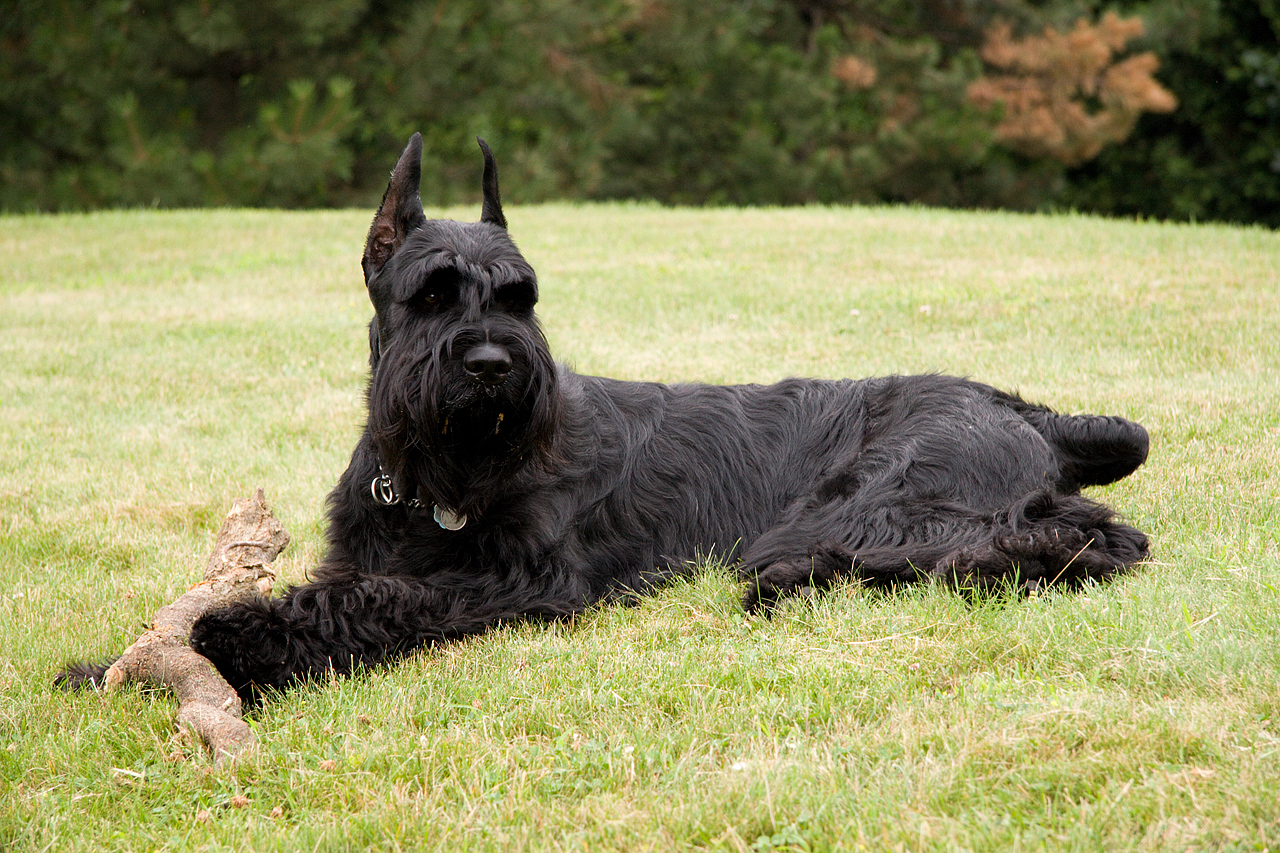
The Giant Schnauzer is a magnificent dog, but demanding. It needs an owner with time, perseverance and a desire to move. Before you fall in love with that imposing pattern, look honestly if it fits into your life. Here’s a summary.
In favour .
- Very smart and easy to train: learns fast and enjoys working.
- Natural guardian, brave and devoted to his family.
- Huge loyalty. He bonds intensely with his people.
- Versatile: serves for obedience, agility, search and rescue, mantrailing or defense sport.
- Hair that barely loosens if it’s kept well.
To be taken into account
- Lots of energy: Boredom leads to destructive behavior.
- Distrustful of strangers and territorial: early socialization is mandatory.
- He doesn’t tolerate loneliness or lack of mental stimulation well.
- Hard coat requires periodic trimming or stripping.
- It’s not advisable as a first dog for someone inexperienced.
Character and temperament
If we had to describe the Giant Schnauzer in three words it would be intelligent, loyal and protective. It’s a sharp-headed dog, very attentive to its family and with a guarding instinct that has been etched into its genes since its days as a farm dog and factory guard.
With his own, he’s affectionate, balanced and surprisingly calm inside when he’s spent his energy. With strangers, however, he is reserved and suspicious: It’s not gratuitous aggression, but the prudence of a guardian. Once you accept a new person or situation, you usually integrate easily. That same firmness of character implies that, like any breed bred for defense, it needs an owner who sets clear boundaries and a serious socialization from puppyhood so that its distrust does not lead to reactivity.
It’s also a tremendously intelligent dog, and that has a B-side: it gets bored easily. A Giant Schnauzer without mental work or physical wear and tear invents its own hobbies, and you’ll rarely like them. The good news is that that intelligence, well channeled, makes it one of the most rewarding dogs to train.
Coexistence: children, other pets, flat and loneliness

- With children: usually gets along well with the children in the house, whom he usually protects.
- With other dogs and pets: coexistence is possible, especially if you grow up with them, but their dominant character and instinct can generate friction with dogs of the same sex.
- On the floor: can live in a flat as long as it gets out enough and gets daily stimulation. It’s not a garden dog that entertains itself; it needs activity and companionship, not square footage.
- In the face of loneliness: is one of the sensitive spots, it’s not good to spend many hours alone, boredom and lack of contact with your family translates into barking, tearing and anxiety.
Education and training
This is where the Giant Schnauzer shines. It is an easy dog to train, eager to learn and with a working capacity that has led it to such serious tasks as police or military service. Not in vain, in several European countries, including Germany, specimens must first pass a work test (Schutzhund) before they can qualify for beauty championship: A race is valued above all for what it can do.
To get the most out of it, keep a few keys in mind:
- It starts soon. Socialization and basic obedience from puppyhood are non-negotiable in this breed.
- Positive reinforcements. responds much better to motivation and play than to harshness; punishment only creates distrust in a dog so sensitive to its owner.
- Varied and purposeful sessions. As he gets bored quickly, you have to avoid monotonous repetition and give him challenges: tricks, scent-seeking, canine sport.
- Consistent leadership. Needs clear, stable rules; rules that change every day baffle a dog who wants to understand what is expected of him.
Exercise and activity
This is a purebred working dog, and its energy level reflects that. A short walk is not enough: the Giant Schnauzer needs intense daily exercise combined with mental stimulation. We’re talking about long walks, running, search games and, above all, activities that make it think.
It is an ideal candidate for canine sports: agility, competition obedience, mantrailing, shepherding or sports protection disciplines. A Giant Schnauzer that has a “job” is a happy, balanced dog; one that spends the day without stimuli ends up channeling that energy into barking, digging, and wrecking. Calculate at least one or two hours a day of quality activity, not just letting it out in the garden.
Care: fur and hygiene

The coat of the Giant Schnauzer is dense, hard and weather resistant, a heritage of the German winters for which it was bred.
Regular grooming is part of the routine. If the dog participates in exhibitions, its coat is worked with a technique called stripping, which involves hand pulling the dead hair out every two to four weeks according to the competition calendar.
Special attention to the beard: it is a sign of the breed’s identity, but it collects food and water remains, so it is advisable to clean it frequently.
Foodstuffs
As a large and active dog, the Giant Schnauzer needs a quality diet, adjusted to its size, age and, above all, to its actual level of activity. A specimen that trains or competes spends much more than one that leads a quiet life, and the ration must be adapted to avoid both thinness and overweight.
As a deep-breasted breed, it is advisable to take precautions against gastric dilation-torsion: divide food into two daily servings instead of one, and avoid strenuous exercise just before and after eating.
Health and life expectancy
The Giant Schnauzer is, in general, a strong dog. Its life expectancy is around 11 to 12 years: a British study from 2024 estimated an average of 12.1 years for the breed, while a previous Kennel Club survey pointed to somewhat lower figures.
- Hip and elbow dysplasia: common joint problems in dogs his size.
- Eye problems: Dry keratoconjunctivitis, glaucoma, cataracts, retinal dysplasia and progressive atrophy of the retina.
- Skin disorders including: seasonal alopecia of the flank, vitiligo and follicular cysts.
- Cáncer: with a higher incidence in dark-colored specimens, especially melanomas of limbs and fingers and squamous cell carcinoma.
- Otros: cases of hypothyroidism, central diabetes insipidus, cobalamin malabsorption and seizure disorders, as well as sensitivity to certain medicinal products have been reported.
Purchasing from responsible breeders who carry out health checks on breeders and maintaining regular veterinary checks are the best tools to reduce risks.
Physical appearance
The Giant Schnauzer is a large, strong, square-shaped dog, practically an enlarged version of the standard schnauzer.
- Altura: males measure between 65 and 70 cm at the withers; females, between 60 and 65 cm.
- Peso: approximately 32 to 45 kg, depending on sex and build.
- Cuerpo: square shaped and well muscled; the head measures about half the length of the back.
- Pelaje: dense, hard and tough, with three recognized color varieties: salt and pepper, black solid and black and silver.
- Cabeza: with the characteristic beard and thick eyebrows that give the schnauzer its unmistakable expression.
Origin and history
The Giant Schnauzer was developed in southern Germany – in the regions of Swabia, Bavaria and Wurtemberg – from the 17th century onwards. It emerged as the hard-haired variant related to the German pinscher, and its origin is thought to mix contributions from different breeds, including the German Shepherd, the Rottweiler, the Doberman, the Boxer, the Flanders Boyer and the standard schnauzer itself.
Its original function was as a multi-purpose farm dog: He protected property and drove the cattle to the market. At the turn of the century he moved to the city and began working as a guard in factories, breweries, butcheries and stables throughout Bavaria. It remained virtually unknown outside that region until it was used as a military dog in World War I and World War II, which shot up its fame.
The first examples arrived in the United States in the 1930s, but did not become popular until the 1960s. The word “schnauzer” comes from the German schnauze(“hockey”, “mouth”), in reference to that prominent beard that defines the breed.
Curiosities
- Its German name, Riesenschnauzer, literally means “giant schnauzer”.
- It is the largest of the three varieties of schnauzer, along with the standard (medium) and the miniature (small).
- In Europe it is valued more as a working dog than as an exhibition dog; in countries like Germany you need a working title before you can be a beauty champion.
- She shines in nose work or smell detection, a discipline in which her sense of smell and concentration stand out.
- Its instinct and demeanor made it a military dog in both world wars and, today, a regular of the police forces.
- The Russian black terrier, another working breed, has the Giant Schnauzer among its ancestors.
If you are interested in the Giant Schnauzer, you will surely enjoy getting to know its relatives and other related working breeds: the Schnauzer Estándar, the Schnauzer Miniatura, the Pinscher Alemán and the small, bearded Affenpinscher, all members of the same large pinscher-schnauzer family.
Frequently Asked Questions about the Giant Schnauzer
Is the Giant Schnauzer a good family dog?
Yes, it can be an excellent family dog – it is loyal, affectionate, and protective, but it needs early socialization, daily exercise, and an active family to spend time with.
How much exercise does a Giant Schnauzer need a day?
At least one to two hours a day of quality activity, combining physical exercise (long walks, running, play) with mental stimulation.
Does the Giant Schnauzer shed a lot of hair?
Instead, it requires regular maintenance – brushing, trimming, or stripping of dead hair every few weeks, and frequent cleaning of the beard, which tends to accumulate food debris.
Is it difficult to train the Giant Schnauzer?
On the contrary: it is very intelligent and easy to train, one of the most capable breeds. The key is to start early, use positive reinforcement and plan varied sessions that avoid boredom. It needs a consistent owner who sets clear rules.
How long does a Giant Schnauzer live?
Their life expectancy is around 11 to 12 years. A British study from 2024 estimated an average of 12.1 years for the breed. Good genetics, proper nutrition and regular veterinary checkups help them live healthier longer.
Can you have a Giant Schnauzer on a floor?
Yes, as long as you get out enough and have daily mental stimulation. You don’t need a huge garden, but activity and companionship. What’s worse is not the small space, but spending many hours alone and nothing to do.
Does the Giant Schnauzer get along with other dogs?
It can coexist with other dogs and pets, especially if bred with them, but its dominant nature can generate friction with dogs of the same sex.
How tall and how much does a Giant Schnauzer weigh?
The males measure between 65 and 70 cm at the withers and the females between 60 and 65 cm. The weight is approximately between 32 and 45 kg depending on the sex and constitution of the specimen.