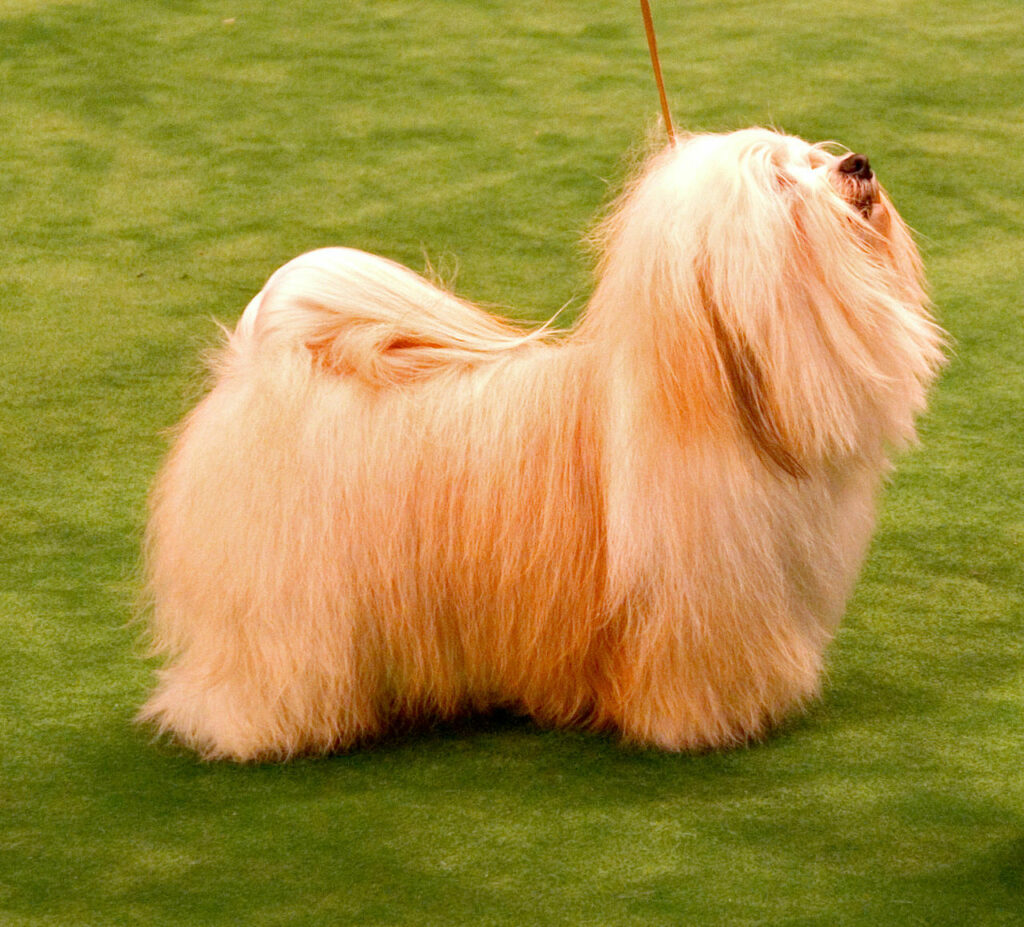
The Bichón Habanero is the only dog native to Cuba and one of the most cheerful and sociable companions there is. Small, hairy and with an unmistakable silky coat, he lives close to his family and adapts wonderfully to a flat. If you’re looking for a dog that’s affectionate, easy to train and barely sheds hair, this breed has a lot of ballots. In this guide, we take a detailed look at their character, care, health, and curious history so that you can make an informed decision.
Is the Bichon Habanero for you?
Before you fall in love with his face, you should be honest about your lifestyle. The Habanero is a companion dog in the most literal sense: he needs to be with his people and does not take long solitude well. Instead, he asks for little space and little intense exercise. Here is an honest summary of his lights and shadows.
In favour .
- Sociable and affectionate, ideal for families and seniors.
- Small size: perfect for flooring.
- Very little silt; considered suitable for allergy sufferers.
- Smart and easy to educate, without excessive stubbornness.
- Good with kids and other animals if you socialize.
- He doesn’t need large doses of exercise.
To be taken into account
- He suffers from loneliness: he’s not a dog for empty houses all day.
- The long coat requires brushing almost daily.
- It tends to cause tear staining, especially in white layers.
- He can bark at strangers if he hasn’t been working since he was a puppy.
- Predisposition to problems with the kneecap, liver and eyes.
- He needs mental stimulation so he doesn’t get bored.
Character and temperament
If we had to summarize the Habanero Bichón in one word, it would be happy. It is an alert, playful and clownish dog that amuses the whole family. Its nature is completely human-oriented: it loves to follow its owners around the house, participate in what they do and earn a caress without becoming a heavy or possessive dog.
Despite its sweet character, it is not a silly or purely decorative dog. The breed’s own standard insists that it should be a playful and functional dog, not an ornament. That liveliness also makes him a good alarm dog: It warns when someone’s coming, although it rarely passes by. With strangers, you may be somewhat reserved at first, but proper socialization prevents such caution from leading to shyness, nervousness, or excessive barking.
It is a well-balanced dog that is unlikely to behave aggressively if it has grown up well accompanied. Its confidence and attachment make it ideal as a life partner, but also explain its Achilles heel: it needs to feel part of the group and does not tolerate being alone for many hours.
Coexistence: children, other pets, flat and loneliness
The Bichon Habanero is one of those dogs that fits into almost any home, as long as there is company.
- With children: is excellent. It is patient, playful and manageable in size, which reduces the risk of accidents.
- With other pets: usually gets along well with other dogs and cats if socialized as a puppy.
- On the floor: is practically the perfect apartment dog. Its small size and moderate exercise needs allow it to live happily in small spaces.
- In the face of loneliness: here is its biggest limitation. It is a very attached dog that can develop separation anxiety if left alone for too many hours. It works best in homes with frequent presence.
Education and training
Few small breeds are as grateful to educate as the Habanero. It is intelligent, attentive to its people and enjoys learning, a combination that greatly facilitates training. It responds wonderfully to positive reinforcement: rewards, caresses and play yield much more than any harsh correction, which could also make it retreat.
The two priorities during the first year are socializing and tolerance for loneliness. Gradual and positive exposure to different people, dogs, noises and environments prevents distrust of strangers. At the same time, you should gradually get him used to being alone for short periods of time to prevent separation anxiety. Its ease of learning and its taste for pleasing make it suitable for obedience and canine sports, where it shines for its disposition.
Exercise and activity
The coat is the great protagonist of the maintenance of this breed. The Bichon Habanero wears a long, soft and silky double coat, almost fresh to the touch, which can be smooth or wavy. The good news is that it changes very little; the bad, that this fine hair entangles easily if not cared for.
The standard includes only a small cut around the legs, so that the foot does not become round, and another discreet around the eyes for hygiene; any other cut is badly seen in exhibition.
The rest of the hygiene is the usual in a small dog, with two points to watch: ears, which should be checked and cleaned at least once a week to remove excess wax and dirt, and toenails, which are usually cut every three to four weeks. It’s good to get the puppy used to handling from the beginning. Attention also to tear staining: This brown tint under the eyes is very noticeable in white specimens and is controlled by regular facial cleansing.
Foodstuffs
Since it is a small breed of dog, the Bichon Habanero needs a quality diet adjusted to its size and activity level. The ideal is to divide the daily ration into two intakes and choose a complete and balanced food, be it feed or moist diet, suitable for its stage of life (puppy, adult or senior).
Weight control is important: small dogs easily gain weight if rewards or table scraps are abused, and excess weight puts a strain on already delicate knee joints. For reference, an adult Habanero weighs between 3.6 and 6.8 kg, so the quantities are modest and should be measured. Fresh water is always available and, if you have any questions about special rations or diets, it is best to consult your veterinarian.
Health and life expectancy
The Habanero Bichon is, in general, a long-lived and robust dog. Its life expectancy is around 14 to 16 years; in fact, a British study from 2024 placed its average longevity at 14.5 years, above the average of purebred dogs. Responsible breeding, with health testing of breeders, is key to maintaining those figures.
That said, the breed is predisposed to some specific problems that you should be aware of:
- Dislocation of the patella: one of the most typical orthopedic problems in small dogs.
- Hepatic disease and portosystemic shunt: The Habanero has a marked predisposition to this liver vascular malformation compared to mixed-breed dogs.
- Cardiopatías: several cardiac problems described in the breed.
- Eye problems: cataracts and retinal dysplasia are among the most common.
- Adenitis of the sebaceous glands, a skin condition he’s predisposed to.
- Tear staining: more aesthetic than serious, because of the frequent crying.
Regular veterinary checkups, weight control, and good eye and dental hygiene help this breed to enjoy a long and healthy life.
Physical appearance
The Bichon Habanero is a small dog, of the toy category, slightly longer than tall, which gives it a compact and harmonious silhouette. Its height at the cross goes from 22 to 29 cm, with an ideal around 23-27 cm, and its weight is between 3,6 and 6,8 kg. Despite its size, it transmits solidity and moves with a lively and elastic trot very characteristic.
The head is of medium length, with a rather flat skull, large, dark almond-shaped eyes and a friendly expression. The ears, rather high in insertion, fall to the sides covered with long hair.
The mantle, as already mentioned, is long, double and silky. As for color, the modern standard supports virtually all shades and patterns: from solid white to lions in all ranges, the characteristic Habanese colour (red-brown tobacco), black or chocolate, with or without stains. All specimens must have black truffles and dark pigment around the eyes, except for chocolate-coloured specimens, which may have brown pigment.
Origin and history
The Bichon Habanero is the national dog of Cuba and the only one native to the island, but its roots are European. It belongs to the bichon family, small white companion dogs whose ancestors are associated with the island of Tenerife and the Mediterranean. These dogs arrived in Cuba aboard Spanish and Italian ships and soon became devoted companions of the colonists and favorites of the nobility.
The breed as we know it descends from the now extinct Blanquito from Havana, which in turn came from the also extinct Tenerife bichon. Over time, the Blanquito was crossed with other bichons, including the poodle, to give rise to the current Habanero.
The 20th century almost cost him his existence. With the Cuban Revolution, many wealthy families were exiled to the United States, but few could take their dogs with them. When American breeders became interested in this rare breed in the 1970’s, the number of dogs available was just eleven. From that handful, and with the addition of some animals from other countries, the breed experienced a spectacular recovery. The American Kennel Club officially recognized it in 1996 and, since then, it has become one of the fastest growing breeds in popularity.
Curiosities
- It’s the the only national dog of Cuba, even though its ancestors came from Europe.
- It was on the brink of extinction: the entire modern lineage in America started from just eleven copies.
- The “Havana Silk Dog” is not exactly the same: it is considered a separate breed bred according to the original Cuban standard.
- Their mantle can be worn “strung”, forming cords similar to human tracks.
- On display it is practically uncut; its tail, moreover, is not amputated.
- Thanks to its character and its sense of smell, it is used as a therapy dog, as an assistance dog for deaf people and even in the detection of termites and mold.
If you are attracted to this sympathetic dog, you may also be interested in other breeds of the same family or of a similar spirit. Take a look at the Bichón Frisé, a close cousin with the same characteristic coat; the Bichón Maltés, another small silky-coated companion; the elegant Manufacture in which all the materials used are classified within a heading other than that of the product, also of the dog family; or the Shih Tzu, another friendly, long-haired companion dog.
Frequently Asked Questions About the Bichon Habanero
Does the Bichon Habanero shed a lot of hair?
No, it is a very light-mute breed and is considered suitable for allergy sufferers, but its long, fine hair is easily tangled and needs brushing almost daily.
Is he a good dog to live on?
His small size and moderate exercise needs allow him to live happily in an apartment, provided he has company and some daily walks.
How long does a Bichon Habanero live?
Their life expectancy is around 14 to 16 years. A British study from 2024 placed their average longevity at around 14.5 years, above the average of purebred dogs.
Do you get along with children and other pets?
He’s patient and playful with children, and gets along with other dogs and cats if socialized as a puppy.
Can you stay alone for many hours?
It’s not advisable. It’s a very close family dog that can develop separation anxiety. It works best in homes with frequent presence.
Do you need a lot of exercise?
With a couple of daily walks and playtime, it covers his needs, but what he does appreciate is mental stimulation and constant companionship.
Where did the Bichon Habanero come from?
It is the national dog of Cuba, although its bichon ancestors came from Europe, specifically from the area of Tenerife and the Mediterranean, aboard Spanish and Italian ships.
What health problems does the breed have?
It is a robust dog, but with a predisposition to knee dislocation, liver disease and portosystemic shunt, heart disease, cataracts, retinal dysplasia and sebum adenitis.