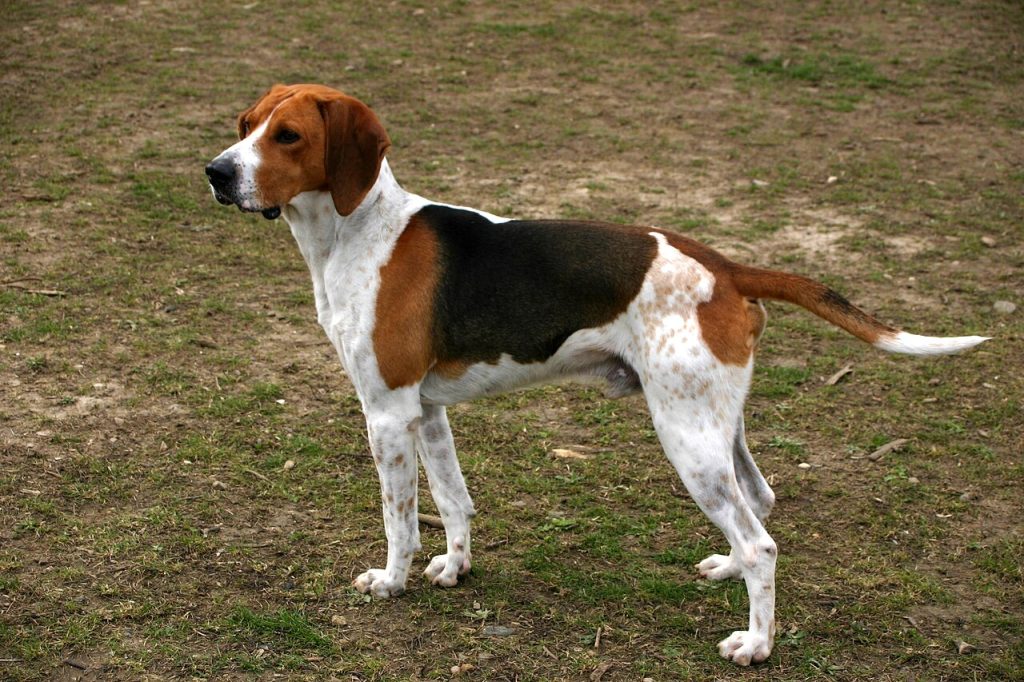
The Anglo-French from Little Monterey(in French, Anglo-French from petite vénerie) is a pack dog originating from France, bred for generations for one thing only: hunting smaller game following the trail with an extraordinary sense of smell. It is the smallest of the Anglo-French hounds, a medium-sized dog, athletic and tireless, much happier running in the field with other dogs than living as a house pet. If you are looking for a hardy hunting companion who is sociable with his fellows, this breed has few rivals; if you are looking for a quiet city dog, it is almost certainly not for you.
Is the Anglo-French of Little Monterey for you?
Before you fall in love with its tricolor hound pattern, it’s good to be clear what kind of dog it is. The Anglo-French Little Monterey is, first and foremost, a working dog: a live hunting tool, selected for its nose and endurance, not for its behavior at home. That doesn’t make it better or worse, it just makes it very specific. Here are its lights and shadows at a glance.
In favour .
- Exceptional smell and stamina for small game.
- Very sociable with other dogs: it is a pack dog.
- Balanced and non-aggressive, with a sweet expression.
- Short coat that barely needs maintenance.
- Rustic and healthy, no documented hereditary diseases.
- Smart and fast learning the tracking job.
Against
- It’s not a company dog or a city dog.
- He needs a lot of daily exercise; he gets bored easily.
- Strong voice and tendency to bark when tracking.
- Very strong prey instinct with small animals.
- When a scent follows, disconnect from the call.
- Very rare outside France; hard to find as a pet.
Character and temperament

The FCI standard does not describe an “official” character for the breed, something common in working dogs, where nose and paws are valued more than saloon temperament. Even so, anyone who knows these dogs fits into a fairly clear portrait: The Anglo-French of Little Monterey is lively, alert and tenacious, with an energy that seems to never run out. His large, brown eyes convey a sweet expression that contrasts with the determination he shows as soon as he gets to work.
It is a hardy dog, built to withstand long days, and at the same time sociable and non-conflicting. He is neither a watchdog nor a territorial dog; his world revolves around smell and herd. That same passion for tracking is what defines his most complicated side: When it catches an interesting scent, everything else disappears, including its owner’s voice. It’s not stubbornness or malice, but pure instinct, deeply engraved by centuries of selection as a hunting dog.
Coexistence: children, other pets, flat and loneliness
Where the Little Montería Anglo-French really shines is among other dogs. bred to live and work in packs, it is most sociable with its congeners and rarely seeks a fight; in fact, it usually takes loneliness badly and thrives much better in the company of other dogs than as a single dog.
With the children it is tolerant and of good background, without the aggressiveness of a defense dog. Of course, its energy and its medium size require supervision with the smallest, not for bad nature, but for pure impulse.
As for the floor and the city, let’s be honest: it’s not his place. His sonorous voice, his need for movement and his always-on smell make urban life seem small and frustrating to him.
Education and training

The Small Montería Anglo-French is smart and learns fast, but what? learns easily: Everything to do with hunting, tracking and teamwork. That’s what he’s naturally gifted for and he responds wonderfully. General obedience, on the other hand, is another story. Not because it lacks capacity, but because its primary motivation is smell, and an interesting smell weighs more than almost any order.
So, the key with this breed is to work the called and control from a puppy, with a lot of patience, positive reinforcement and consistency. Short, varied sessions always associated with something motivating work better than rigid repetition. Early socialization with people, environments, and other dogs is also important for the adult to be balanced. What you shouldn’t expect is the docility of a pet dog: Here you’re raising a hound, and that requires assuming that instinct will always be there.
Exercise and activity
If there’s one non-negotiable part of this race, it’s this. The Little Monterey Anglo-French was bred to run for hours after a hare or fox, and that need to expend energy doesn’t go away by having it at home. He needs daily, intense exercise. Ideally real hunting or tracking, and failing that long runs, strenuous walks and sniffing games that put your nose to work.
A short walk around the block doesn’t do him any good. A dog of this breed without physical or mental wear and tear gets bored, gets in a bad mood and develops annoying behaviors like barking nonstop or trying to escape to follow a trail. Designed for the chasse-à-tir and pack hunting, it does its best when it has a real task for its body and its smell.
Care: fur and hygiene
Good news for practicality: maintenance is minimal. The Anglo-French Little Montería’s hair is short, thick and smooth, so a weekly brushing to remove dead hair is enough. Baths, only the necessary ones; an excess dries the skin.
The real care is in the ears. Because they are fallen and thinly inserted, they retain moisture and vegetation debris, and the area underneath is prone to infection, a problem common to all hang-ear breeds. They should be checked and cleaned regularly, especially after each day in the field. Complete the routine as usual: checking and cutting nails, checking pads after running on rough terrain and maintaining good dental hygiene.
Foodstuffs
As an endurance sport dog, the Anglo-French Little Monterey needs a high-quality diet, rich in protein and with enough energy to sustain its activity level.
The most sensible thing to do is to divide the food into two servings a day and avoid vigorous exercise just before or after eating, a prudent precaution in deep-breasted and active dogs. Fresh water always available, weight control to keep it athletic and never overfed, and adjustments according to age and time of year complete a routine without major complications.
Health and life expectancy
The Little Monterey Anglo-French is a rugged, rustic dog. It has no specific documented hereditary diseases, something logical in a breed selected for its functionality and kept as a working dog rather than an exhibition animal. Their main point of surveillance, as already mentioned, are droopy ears and their tendency to ear canal infections if they are not kept clean and dry.
As a good hunting dog, you should check after each outing for ticks, spikes, small wounds, or limp marks. The standard does not set a specific longevity, but a medium-sized, active and well-kept dog like this usually enjoys a long life, in the neighborhood of twelve to fourteen years. A balanced diet, plenty of exercise, veterinary checkups and up-to-date vaccinations and deworming are the best recipe for a healthy arrival.
Physical appearance
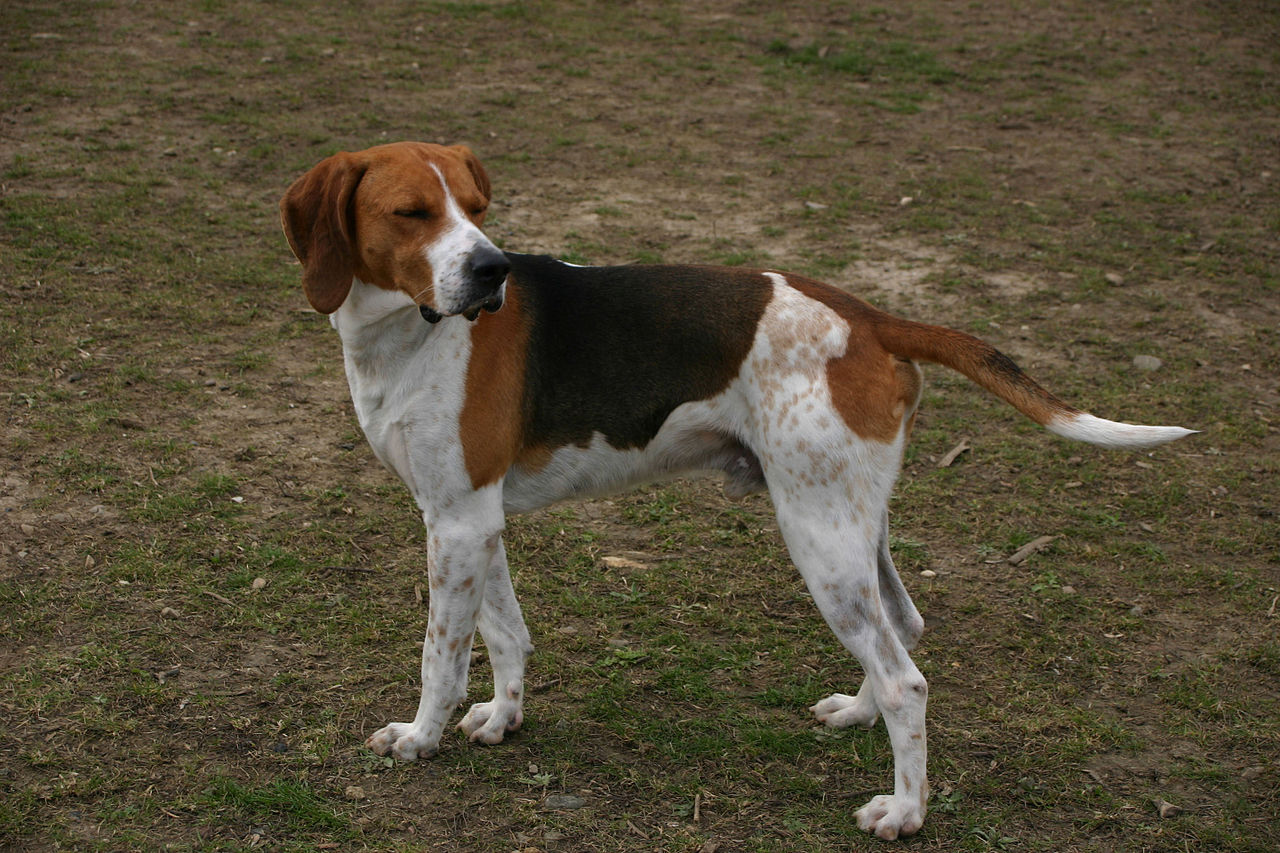
The Little Monterey Anglo-French is a medium-sized, balanced and solidly built, but unheavy, courant dog. Their crossing height ranges from 48 to 56 cm in both males and females, and the weight, not strictly fixed by the standard, is usually around 16 to 20 kg. It is, therefore, the smallest of the Anglo-French hounds, with an athletic silhouette that betrays its running vocation.
The head is elongated and not too wide, with a moderately long snout and somewhat sharp appearance. The eyes are large and brown, of sweet and lively expression. The ears, of fine insertion below the eye line, are flexible and slightly twisted, and reach at least two fingers from the birth of the truffle.
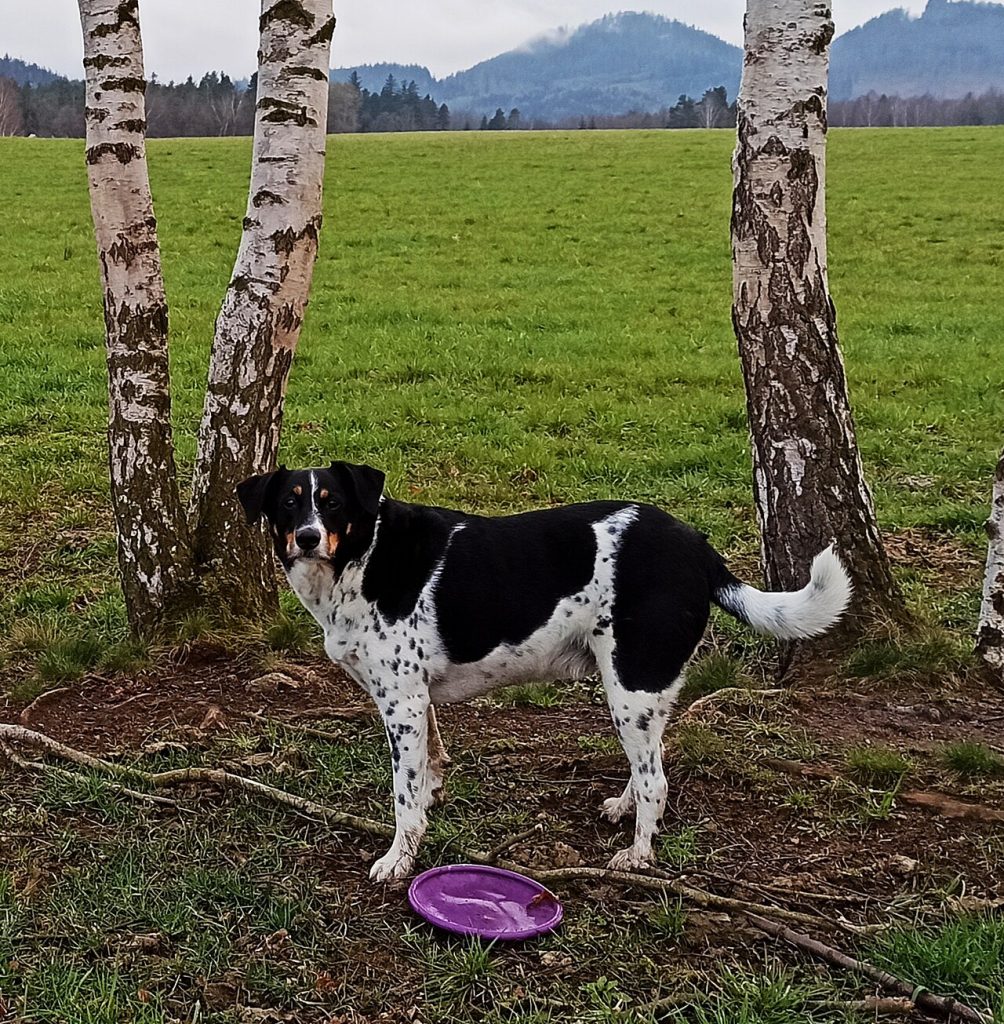
The hair is short, tight and smooth. As for the coat, three variants are accepted: tricolor(white and black with live fire), tricolor with pale fire and two-tone(white and orange). The truffle is black, except in the white and orange specimens, where it acquires a tobacco tone.
Origin and history
The Little Monterey Anglo-French is a relatively recent breed. It was developed in France around the fifties of the twentieth century by crossing old Anglo-French hounds with breeds such as the English Harrier(related to the Beagle), the Poitevin, the Petit Gascon-Saintongeois, the Porcelaine and the Petit Bleu de Gascogne. The idea was to combine the best of both worlds: the strength and vigor of the English foxhounds with the finest nose and style of the French hounds.
Until 1978 the breed was simply known as Petit Anglo-Français(“little Anglo-French”), for being the smallest of the hounds of this type. That year, when its standard was deposited, it adopted its definitive name, Anglo-French from petite vénerie, where “petite vénerie” does not allude to the size of the dog, but to the hunting of small parts. The Société Centrale Canine recognized it in its country of origin, and the Fédération Cynologique Internationale admitted it at the international level in 1983, within Group 6 (hounds and similar breeds), under standard no. 325.
In France it is bred and kept almost exclusively as a hunting dog, not as a pet or exhibition dog. It has also reached North America, where the United Kennel Club recognizes it within its group of hounds.
Curiosities
- The name is misleading: “petite vénerie” does not mean that the dog is small, but is intended to hunt small game(rabbit, fox), in front of the “great vénerie” of the larger pieces.
- It is the smaller of the three Anglo-French hounds, along with the medium-sized and the large Anglo-French.
- Despite its French name, it bears English blood: part of its running character comes from the British foxhounds and harriers.
- It is used in chasse-à-tir, a modality in which the pack – or sometimes a single dog – surrounds the piece and leads it back to the betting hunter.
- It is such a work-bound breed that the FCI standard does not even describe a “type” temperament: it is taken for granted that it is, first and foremost, a hunting dog.
If you are attracted to this French hound but want to compare it with other hunting and tracking breeds of similar character, take a look at the Beagle, Basset Hound, Bloodhound and Pointer, all of them sniffer and field dogs with which the Anglo-French de Petite Monterie shares much of its essence.
Frequently Asked Questions about the Anglo-French Little Monterey
Is the Little Monterey Anglo-French a good companion dog?
It is a pack dog bred in France almost exclusively for hunting, and it feels much better working and living with other dogs than as a house pet. It can live with an active, rural family that gives it hunting, tracking or lots of exercise, but it is not a breed designed for the couch or for those looking for a quiet city dog.
How much exercise do you need a day?
Very. It is a very hardy dog, bred to run for hours following a trail. It needs at least a couple of long hours a day of intense activity: running, hunting, tracking or sniffing work. Without that wear and tear, it gets bored, barks and can become difficult to handle.
Can he live in a flat?
His powerful voice, his energy and his tracking instinct don’t really fit with a flat in the city. He’s much more in his place in the country, with space, and especially with other dogs and a real outlet for his hunting instinct.
Does he get along with children and other dogs?
With other dogs, excellent: it is a pack breed, sociable with its congeners and used to working in a group. With children it is usually tolerant and not aggressive, although its energy and size require supervision. With small animals you have to be careful: its very strong prey instinct can shoot before a cat or a rabbit.
Is it hard to train?
It is intelligent and learns quickly what has to do with hunting and tracking, which is what it is made for. The difficulty comes with general obedience: when it catches a smell, it tends to follow it and disconnect from its guide. It needs patient, consistent training and a lot of calling work, without waiting for the docility of a companion dog.
What care does your fur need?
The most important part of their hygiene is their ears: when they fall, they retain moisture and dirt and are prone to infection, so they should be checked and cleaned regularly, especially after going out in the field.
How tall and how much does he weigh?
The standard does not fix an exact weight; the adult specimens are usually around 16 to 20 kg. It is, therefore, the smallest of the Anglo-French hounds, of medium size and solid construction but without weight.
What health problems do you have?
It is a rustic and healthy dog, with no documented hereditary diseases peculiar to the breed. Its weak point are the ears: as in all dogs with dropped ears, the area below retains moisture and can become infected if not watched. With good ear hygiene, exercise and proper feeding it usually enjoys a long life for a dog of its size.