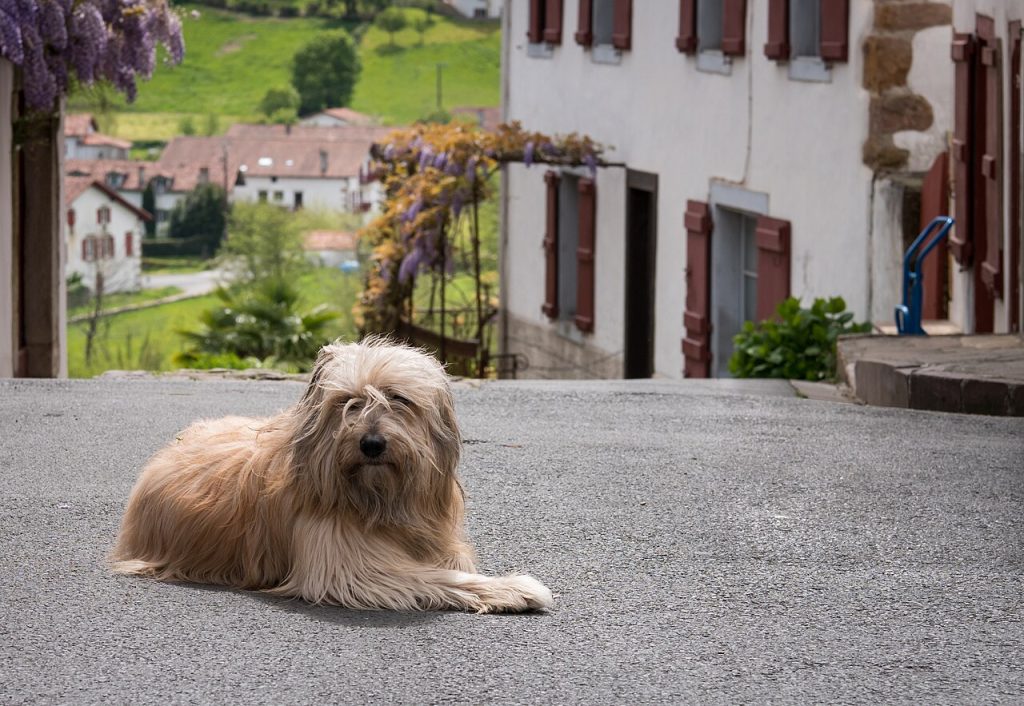
The catalan sheepdog(gos d’atura català) is one of the great unknowns among herding dogs, and yet it brings together almost everything that is required of a working dog reconverted into a companion: intelligence, endurance, a faithful and balanced character, and that endearing aspect of long hair and beard that leaves no one indifferent. Born in the Pyrenees of Catalonia to lead herds during transhumance, today the Catalan shepherd dog shines both in the field and in dog sport and on the couch of an active family.
Is the Catalan shepherd dog for you?
Before you fall in love with its mane, be honest with yourself: the Catalan Shepherd Dog is a working dog with a lot of energy and head, not a decorative stuffed animal. It fits wonderfully with active people and families, but can become frustrated in a sedentary life. Here is the straightforward summary.
In favour .
- Very smart and easy to train: he learns fast and enjoys working.
- Faithful and loving, he’s very attached to his family.
- Rustic and hardy, adapted to harsh mountain climates.
- Excellent warning dog and natural watchdog without being aggressive.
- Medium size and manageable, versatile for dog sport.
To be taken into account
- He needs plenty of physical exercise and mental stimulation daily.
- Its long coat requires frequent brushing and becomes tangled.
- He tends to bark and warn; he needs to be nurtured like a puppy.
- Reserved with strangers: needs early socialization.
- It retains herding instinct and may try to group children or pets.

Character and temperament
If we had to sum up the character of the Catalan Shepherd Dog in one word, it would be the balance. It is a faithful, loving, obedient dog and deeply attached to its family, able to move from absolute calmness at home to total concentration when there is a task at hand. That double nature is a direct inheritance from his past as a herdsman: A good herding dog must know how to wait quietly for hours and, the next moment, react decisively.
He is remarkably intelligent and always aware of what is happening around him. With his own people he is sweet and sociable, but with strangers he is usually reserved and cautious, without becoming aggressive. That measured distrust makes him an excellent warning dog: It barks to signal anything that seems out of the ordinary and warns the family, but it’s not a guard dog or a nervous dog. Of course, his sensitivity and attachment make prolonged loneliness hard to bear.
Coexistence: children, other pets, flat and loneliness
The Catalan Shepherd Dog is a family dog by vocation. It gets along well with children, with whom it is usually patient and playful, although it is advisable to supervise the games because its shepherding instinct can push it to “group” the smaller ones by chasing or surrounding them.
With other pets the coexistence is usually good, especially if they grow up together or if they are socialized from puppyhood.
As for housing, its ideal place is a house with outdoor access in an active family. It can live in a flat as long as it is compensated with plenty of daily exercise and mental stimulation, but it is not a dog to be left alone for many hours: its attachment and energy make prolonged loneliness weigh on it and can lead to barking or restless behavior.

Education and training
Few breeds are as grateful to educate as the Catalan Shepherd Dog. Its intelligence and eagerness to collaborate make it learn quickly and genuinely enjoy working together. As a good shepherd dog, it responds wonderfully to positive reinforcement, short and varied sessions, and a consistent guide who sets clear guidelines.
Two points deserve special attention. The first is the early socialization: If the puppy is kept away from strangers, it should be exposed to people, animals, noises and different environments from the time it is a puppy so that its natural prudence does not become timid or reactive. The second is the control of barking: being watchful and alert, it must be taught early when it is right to warn and when to be silent, especially if you live in a city. A well-behaved and sufficiently active Catalan shepherd dog is a calm and manageable companion.
Exercise and activity
Here is the key to the happiness of this race. The Catalan Shepherd comes from a job that involved moving for hours over rough terrain, so he needs much more than a round the block. We’re talking about several long walks a day, runs and, very importantly, mental stimulation: A herding dog that gets bored is a dog that invents its own “jobs”, almost never to our liking.
He is a versatile athlete who excels in dog sports such as agility, obedience or dog dancing, and who also enjoys the work of smell and long walks in the mountains. If you give him a purpose and enough physical and mental wear and tear, you will have a balanced and relaxed dog at home. Otherwise, the barking, anxiety and restlessness will appear.

Care: fur and hygiene
The coat of the Catalan shepherd dog is one of its most characteristic features: long, smooth or slightly wavy hair, rough to the touch and with a dense undercoat, especially on the back of the body. His face has a beard, mustache, mustache and eyebrows that give him that unmistakable look. All that abundance comes at a price in care: need frequent brushing, ideally several times a week, to avoid knots and tangles on the beard, legs and buttocks.
This breed also has a peculiar molt that occurs in two phases: First the hair falls from the front of the body and then from the back, so that for a while the dog appears to have two different coats until it becomes uniform again. At such times it is advisable to intensify brushing. Bathrooms should be spaced so as not to spoil the natural texture of the hair, and as with any breed, care for ears, teeth and nails should not be forgotten.
Foodstuffs
As a medium, active and rustic dog, the Catalan shepherd dog needs a complete and quality diet, adjusted to its high energy expenditure when working or playing sports, and moderate in the stages of less activity. The wise course is to divide your daily allowance into two portions, choose a food appropriate to your age and exercise level, and monitor your weight to avoid being overweight, which is especially bad for your joints.
Any change in diet should be made gradually, and if you have any doubts about the quantity or type of food, it is best to consult your veterinarian, who will be able to adjust the guideline to each individual.
Health and life expectancy
The Catalan Shepherd Dog is, in general, a rustic and resistant dog, the result of generations selected to survive and work in harsh mountain conditions.
The most documented health problem in the breed is hypoplasia of the hip, a joint developmental disorder common in many medium and large dogs. It is therefore important to choose responsible breeders who carry out the relevant breeder testing, keep the dog at an appropriate weight and avoid overly demanding exercise during growth. Regular veterinary checks, deworming and a daily vaccination schedule complete the basic care of your health.
Physical appearance
The Catalan Shepherd Dog is a medium-sized, well-proportioned and rustic looking dog. Males measure between 47 and 55 cm at the withers and weigh about 20 to 25 kg, while females are between 45 and 53 cm and 17 to 21 kg. The head is robust, slightly convex and broad at the base, with a straight, truncated pyramid-shaped snout and high, thin, triangular, pointed ears.
Its hallmark is the cloak: long, flat or somewhat wavy hair, rough and with abundant undercoat. Seen from a distance, it appears to be a single color, but up close, the hue is a mixture of lionskin, reddish-brown, gray, and black hairs, resulting in layers ranging from lionskin and sand to light and dark gray. The tail, of low insertion, may be long or naturally short. There was also a variety of short hair, now virtually extinct.
Origin and history
The Catalan shepherd dog is a genuinely Spanish breed, born in the valleys and foothills of the Pyrenees of Catalonia, with presence also in Andorra. It comes from the ancient and varied population of long-haired shepherd dogs of the Pyrenees, from which also descend close relatives such as the Pyrenean shepherd or the Basque shepherd (euskal artzain txakurra). For centuries it accompanied shepherds in transhumance, driving and guarding flocks of sheep and horses up the mountain.
The breed was recognized at the beginning of the 20th century, with the creation of the Royal Central Society for the Promotion of Canine Races in Spain in 1911. The first standard was drafted in 1929 from two copies, Tac and Iris, winners of a competition. The International Cinological Federation (FCI) finally recognized it in 1954. Then came the decadence: With the boom of tourism in the Pyrenees and the entry of foreign breeds, the Catalan Shepherd was undervalued, abandoned and mixed, until a new standard in 1982 and the founding of the Club del Gos d’Atura Català in 1984 boosted its recovery.
Curiosities
- Cobi was one of them. The mascot of the 1992 Barcelona Olympics, created by Javier Mariscal in cubist style, is precisely a Catalan shepherd dog.
- Einstein, the dog of Dr. Emmett “Doc” Brown in Back to the future, is a Catalan shepherd during the events of 1985.
- It inspired a Pokémon. Greavard, a ghost-type Pokémon introduced in the ninth generation, is inspired by the Catalan Shepherd Dog.
- It changes in two beats. Its two-phase mute feature makes it appear to wear two different cloaks at once for a time.
If you are attracted to this intelligent and versatile herding dog, you may be interested in other herding breeds with a similar profile in energy and character. Take a look at the Border Collie, Pastor Australiano, Shepherd of Shetland and Collie, all brilliant herding dogs that share with the Catalan shepherd dog the intelligence, the need for work and a strong bond with their family.
Frequently Asked Questions About the Catalan Shepherd Dog
Is the Catalan Shepherd Dog a good family dog?
Yes. It is a loyal, affectionate and very attached dog that enjoys being part of the daily life of the house. It gets along well with children and is a balanced companion whenever it receives enough exercise and companionship.
How long does a Catalan sheepdog live?
Their average life expectancy is between 12 and 14 years, a typical longevity for a medium-sized, rustic dog.
Does the Catalan shepherd dog bark a lot?
It is a watchful and alert dog by nature, so it tends to bark to signal what it considers out of the ordinary. It is not a meaningless barking, but it is advisable to channel it from puppyhood with socialization and education so that it does not become an annoying habit on a floor.
How much exercise does the Catalan Shepherd Dog need?
It comes from a working breed used to moving for hours in the mountains, so it needs several long walks a day and, above all, mental activity: games, obedience, agility or olfactory work.
Can the Catalan Shepherd Dog live in one apartment?
It can adapt to a flat if it is guaranteed plenty of daily exercise and stimulation, but it is not ideal for a sedentary life.
Is the coat of the Catalan shepherd dog a lot of work?
Its long, rough coat needs regular brushing, ideally several times a week, to avoid knots and tangles, especially on the beard, legs and hindquarters.
Where did the Catalan Shepherd Dog come from?
It is a Spanish breed developed in the valleys and foothills of the Pyrenees of Catalonia, with a presence also in Andorra.
Does the Catalan Shepherd Dog get along with other animals?
It is a dog used to working with cattle, so it can coexist with other pets, although it retains herding instinct and sometimes tries to group or chase what moves, something that is corrected with education.