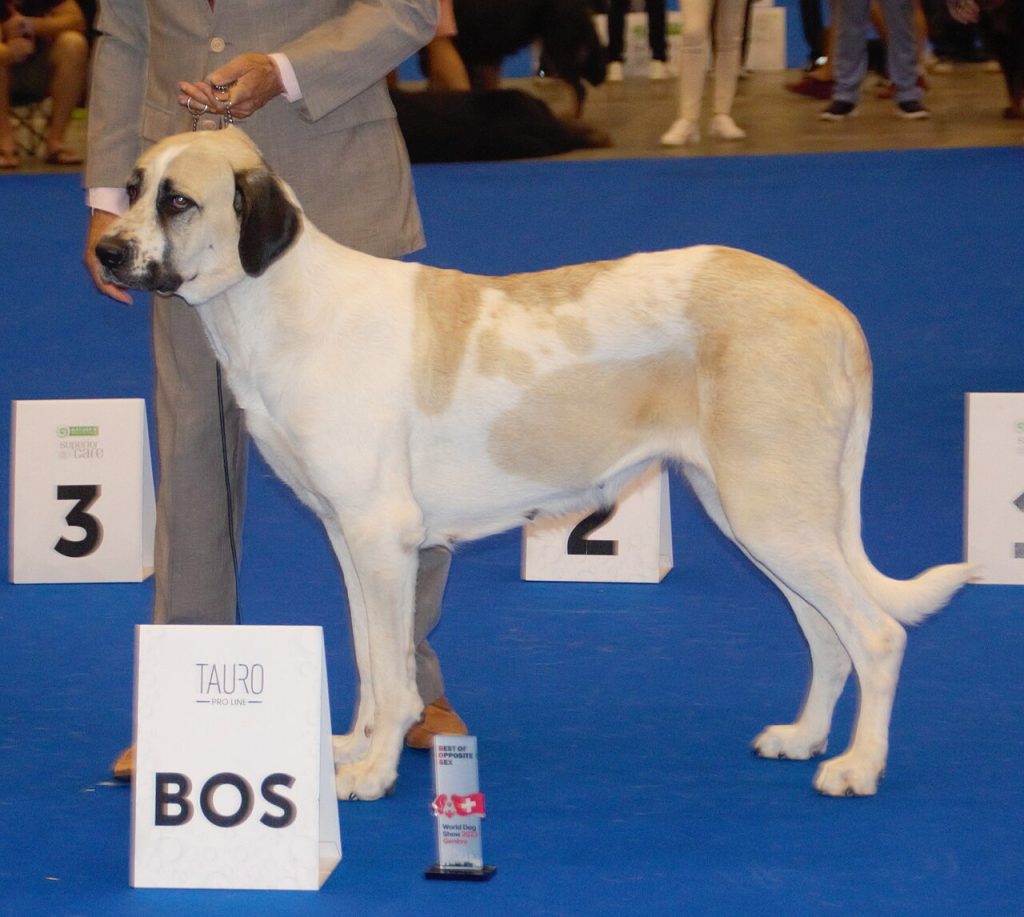
The Mastín Transmontano(Cão de Gado Transmontano) is the largest of the Portuguese dogs: a mountain mastiff bred for centuries in Trás-os-Montes to stand up to the Iberian wolf and guard flocks of sheep at 2,000 metres altitude. It is neither a living room dog nor a decorative watchdog, but a rustic, independent and imposing-sized worker that only fits into homes with space, experience and a clear purpose. In this guide you’ll find everything you need to know before you consider living with a Transmontane Mastiff: character, care, education, health and their fascinating history linked to Iberian transhumance.
Is the Transmontane Mastiff for you?
Before you fall in love with his image, be honest: this is a pure livestock guard breed, not an urban pet. Its size (males up to 85 cm at the cross and 75 kg), territorial instinct and independent character make it a wonderful dog for a few people and a serious problem for many. Weigh these points calmly.
It’s a good fit if…
- You live in the country, with a fenced estate and lots of space.
- You’re looking for a serious guardian for a property or a herd.
- You have experience with big, dominant dogs.
- You can spend time socializing and educating from a puppy.
- You value a dog that’s calm, well-balanced and barks little for no reason.
- You accept an independent partner who thinks for himself.
Think about it if…
- You live in a flat or no land of your own.
- Either it’s your first dog or you have no guard experience.
- You want a dog that’s instantly obedient and very sociable with strangers.
- You can’t afford the cost and logistics of a giant animal.
- You expect to leave him chained or isolated: he’d have a bad time, frankly.
- You’re looking for an easy-to-find breed with nearby breeders.
Character and temperament

The temperament of the Transmont Mastiff can only be understood in the light of its trade: for generations it has been selected to live alongside the herd, away from the shepherd, making decisions on its own when a predator appears.
It is a calm, reserved and thoughtful dog in the face of threats. It is not a nervous dog that barks at everything that moves; it observes, evaluates and acts only when necessary, a moment in which it displays remarkable courage.
Along with that calm is a strong territorial and protective instinct. He’s dominant and very attached to “his” person, besides being jealous and possessive with his food, his toys and his space. That is why he needs firm, consistent guidance that will earn his respect without resorting to force. One of his most prized virtues is being an excellent night watchman: When night falls and the predators move, the Transmontano is in his element.
It is also a independent dog, able to work in a mixed pack with whole males and females, something not easy among dogs of its size.
Coexistence: children, other pets, flat and loneliness
With the family. Well socialized, the Transmontane Mastiff is balanced and loyal to its owners, and can be a good companion dog within its context. Females are usually somewhat more treatable and manageable than males. He is patient and protective of the children in the house, but because of his enormous size, it is always advisable to monitor contact with the youngest: An unintentional push of 70 kg is the death of anyone.
With other pets. is its specialty. It is genetically programmed to integrate and protect sheep, goats and other animals of the herd, so that coexistence with cattle and other dogs of the group is natural for it. With dogs other than the same sex, however, it can emerge its dominant character, so the introduction should be gradual.
Flat and lonely. This is the red line. The Transmontano he’s not cut out to live in a flat. does not want to be chained or isolated. It needs large spaces to patrol and, by nature, it likes to move around freely, dig holes to shelter from the heat and guard its territory. Depriving it of that creates frustration, destructive behavior and an unhappy dog.
Education and training
The good news is that it is a highly adaptable and receptive to positive reinforcement dog. The bad news is that it has a long memory, does not forgive unfair treatment and he doesn’t respond well to punishment.: forcing or frightening it only makes it suspicious and closes.
Socialization and early education are essentials. From puppyhood he must know people, noises, animals and varied situations to channel his protective instinct without becoming a suspicious and reactive guardian.
The keys to this breed are consistency, patience, and mutual respect. Short sessions, clear rewards, stable rules from day one, and a leader who doesn’t need to shout. Like a good one-owner dog, it’s best that it’s always the same person who sets the guidelines. Don’t expect obedience from competition: look for an educated, sociable, and reliable companion in your environment.
Exercise and activity
Despite its moose-like build, the Transmontane Mastiff is a high energy dog and a mountain athlete: it is designed to travel miles on steep terrain, day and night, protecting the herd.
He needs plenty of daily exercise and, most of all, space. Long walks, freedom to patrol a farm, and the ability to exercise your natural function – guarding and protecting – are the best recipe for keeping you physically and mentally fit. Of course, he’s a background worker, not an explosive worker: It manages its efforts intelligently and knows how to rest in the shade when the heat is tight. During the puppy’s growth, high-impact exercise should be avoided to protect joints that are still forming.
Care: fur and hygiene

The Transmontano Mastin wears a short to medium coat with thick undercoat, perfectly adapted to the hot and dry climate of Trás-os-Montes. A weekly brushing is sufficient for most of the year to remove dead hair and keep the skin healthy; during spring and autumn mowing it will have to be intensified because it releases a lot of undercoat.
It does not require frequent bathing: with bathing it only when it’s really dirty is enough, so as not to damage the natural protection of its skin. The rest of the care is the usual for a large breed: checking and cleaning the ears, checking for nail wear, maintaining good dental hygiene, and paying attention to the folds of the bellies and paw. Like all molluscs, it may drool a little, especially in the heat or after drinking.
Foodstuffs
A dog of this size needs a quality diet, tailored to their life stage and activity level. The puppy phase is especially delicate: a fast-growing giant must receive a specific feed for large breeds, with the proper balance of calcium and phosphorus, so that bones and joints develop without overload.
In the adult, divide the daily ration into two meals instead of one and avoid strenuous exercise just before and after eating. It is an important precaution in large, deep-chested breeds to reduce the risk of gastric dilation-torsion. Always keep fresh water available – especially in summer – and control your weight: Obesity punishes the joints of an animal that already supports a lot of mass. Any change in diet should be made gradually.
Health and life expectancy
The Transmontane Mastiff is first and foremost a rustic and resistant dog. As an indigenous breed little modified by intensive selective breeding – practically a landscape breed (landrace) shaped by its environment – it has retained remarkable robustness and a healthy genetic pool.
That said, he shares the precautions of giant and molosoid dogs, which should be watched even if they are not breed-specific ailments:
- Hip and elbow dysplasia: frequent problem in large breeds; controlled growth and not overloading the puppy help prevent it.
- Distribution of meals and avoidance of exercise around them reduces the risk.
- Joints and weight: Maintaining a proper weight is key to preserving hips, elbows and knees over the years.
- Heat stroke: although well adapted to dry heat, its size makes it sensitive to high temperatures with humidity; shade and water always available.
Regular veterinary checks, a daily schedule of vaccination and deworming, and the choice of a serious breeder who monitors the health of the breeders are the best investment in their welfare.
Physical appearance
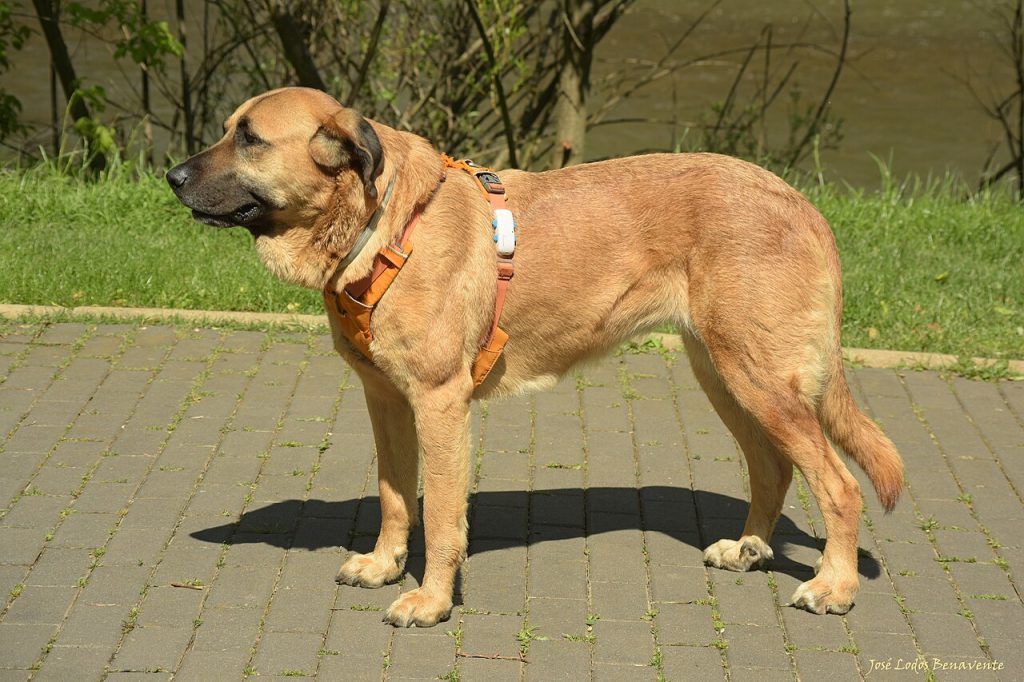
the biggest dog in Portugal: a powerful, muscular and functional mole with a large head and a wide snout, transmitting strength without falling under the weight, because above all it is a working dog able to move with agility on the mountain.
Tamaño. Males measure between 75 and 85 cm at the withers and weigh 60 to 75 kg; females, 68 to 78 cm and 50 to 60 kg.
Coat and color. The hair is short to medium with dense undercoat. The most typical is the white with large spots coat black, yellow, lions, tiger or wolf gray, although the solid color in lions, yellow, wolf gray or tiger tones is also supported.
Origin and history

The history of the Transmontano Mastiff is intertwined with that of all Iberian Mastiffs and goes hand in hand with the transhumanity on the peninsula.
Adapted to a landscape of steep pastures and difficult roads, and to the sheep, goats and cows that grazed in the region, the Transmontano was shaped as a true breed-landscape.
Until the second half of the 20th century the region was essentially pastoral. The policy of crop rotation reduced grassland, but much of that land eventually returned to livestock use. Today the breed still keeps extensive flocks of sheep: more than 95% of the specimens are working. effectively in that job. The Montesinho Natural Park keeps a record of the breed and facilitates the placement of dogs to protect herds, and the conservation association Grupo Lobo promotes their use as a way to reduce the conflict between ranchers and a wolf that in Portugal is a protected species: Dogs that, while protecting sheep, also help preserve the wolf.
Officially, the FCI recognized the breed provisionally in 2020(standard no. 368, within Group 2 of molosoids) is a rare breed, still concentrated in its region of origin, although its effectiveness against large predators has aroused interest beyond Portugal.
Curiosities
- It is the biggest dog in Portugal, above the Rafeiro do Alentejo and the Cão da Serra da Estrela.
- He traveled to the United States: specimens were imported to Oregon and Montana for official studies on the use of “larger and bolder” dogs against predation by wolves, after the return of the wolf to the northwest of the country.
- Their work has an ecological twist: by protecting the herds, they reduce attacks and, with them, human retaliation against the Iberian wolf, contributing to the conservation of a threatened species.
- It is capable of working on mixed herd, with whole males and females collaborating on guard duty, something uncommon among dogs of this size.
- He loves digging holes for shelter from the transmontane summer heat.
If you are attracted to this giant guardian of the Iberian mountains, you may be interested in other large, protective breeds, such as the English Mastiff, the imposing Cane Corso, the noble San Bernardo, and the elegant Gran Danés, dogs that share the Transmont Mastiff’s enormous size and need for a prepared family.
Frequently asked questions about the Transmontane Mastiff
Is the Transmont Mastiff the same as the Transmont Cattle Dog?
Yes. “Transmontano Mastiff” is the name by which the Cão de Gado Transmontano is known in Spanish, its original Portuguese name. It is also called Transmontano Mastiff in English. It is the same breed of cattle guard dog from northeastern Portugal.
How tall and how much does a Transmontane Mastiff weigh?
It is the largest dog in Portugal. The males measure between 75 and 85 cm at the withers and weigh 60 to 75 kg; the females, between 68 and 78 cm, with a weight of 50 to 60 kg.
Is the Transmont Mastiff a good family dog?
It can be in the right environment. Well socialized, it is balanced, loyal and protective of its own, and females are usually somewhat more manageable. But it is a dominant and independent keeper that needs space and experience; it is not a recommended pet for living on the floor or for first-time owners.
How long does a Transmontane Mastiff live?
Its life expectancy is about 12 years, a remarkable figure for a dog of its size, thanks to its rustic character and a genetic pool little punished by intensive breeding.
Can you live in an apartment or in the city?
It is not advisable. The Transmontane Mastiff needs large spaces to patrol and move freely, and does not tolerate enclosure, chain or isolation well.
Is it hard to train?
It is intelligent and very receptive to positive reinforcement, but also independent, domineering and long-term memory, and does not respond to punishment. It requires early socialization and education, consistency and an experienced guide. Do not look for blind obedience, but a polite and reliable dog in its context.
What’s the Transmontane Mastiff for?
It is a livestock guard dog. Its millenary function is to protect herds of sheep and goats from predators, especially the Iberian wolf. More than 95% of the specimens still perform that job in Trás-os-Montes.
Is it officially recognized?
The FCI recognized the breed provisionally in 2020, with standard no. 368 within Group 2 (molosoids).