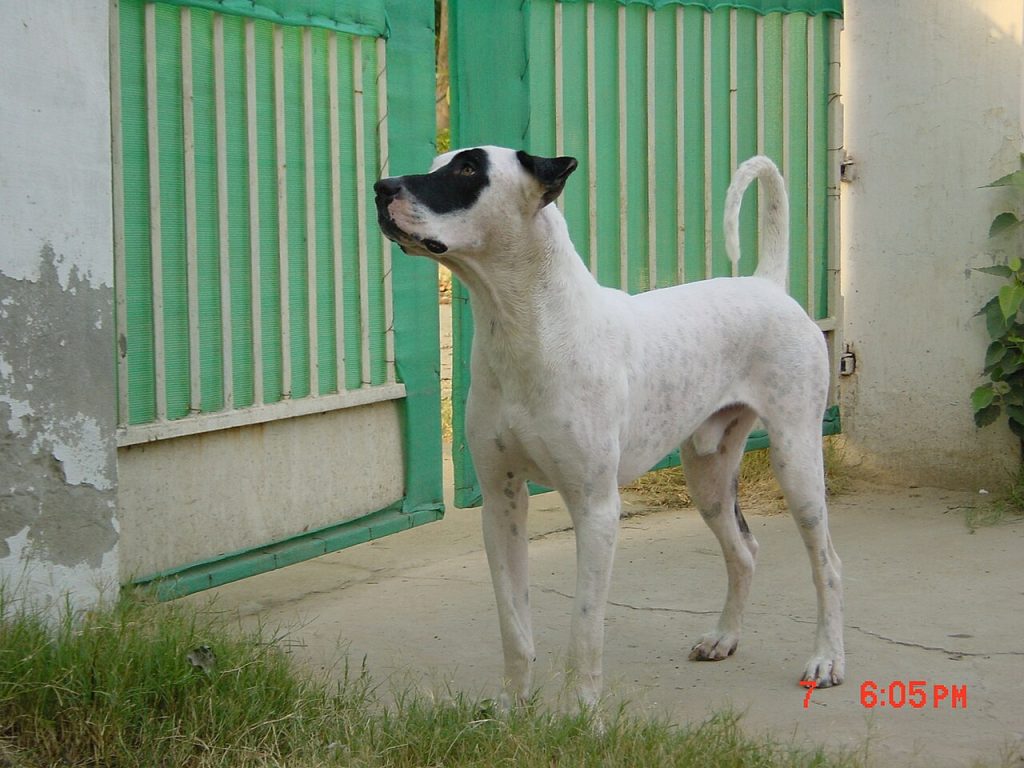
The Bully Kutta– also known as the Pakistani Mastiff, Indian Mastiff or Alangu – is one of the most imposing guard dogs of the Indian subcontinent: a giant, territorial and enormously strong colt, bred for centuries in the Punjab and Sindh regions for hunting and cattle herding. It is not a race for just anyone, and understanding its character well is the first step before considering sharing life with one.
Is the Bully Kutta for you?
Before you fall in love with his aristocratic demeanor, you should be very honest: the Bully Kutta is an advanced management dog. Its guide is not measured in affection, but in experience, space and commitment. These two boxes summarize, bluntly, the pros and cons.
In favour .
- Exceptional guardian: keeps watch on farm and cattle with a deep territorial instinct.
- Very attached and loyal to his family; protective of his own.
- Intelligent, alert and receptive when he’s well-behaved.
- Rustic and resistant, adapted to warm weather and outdoor work.
- Short coat, easy to maintain.
Against
- Dominant and sometimes aggressive: only suitable for owners with real experience.
- Giant size (up to 90 kg): does not fit on floor or in small spaces.
- He needs intense early socialization or he can become unmanageable.
- Without FCI/AKC recognition and with legal restrictions in several countries.
- Marked suspicion of strangers and other dogs of the same sex.
Character and temperament
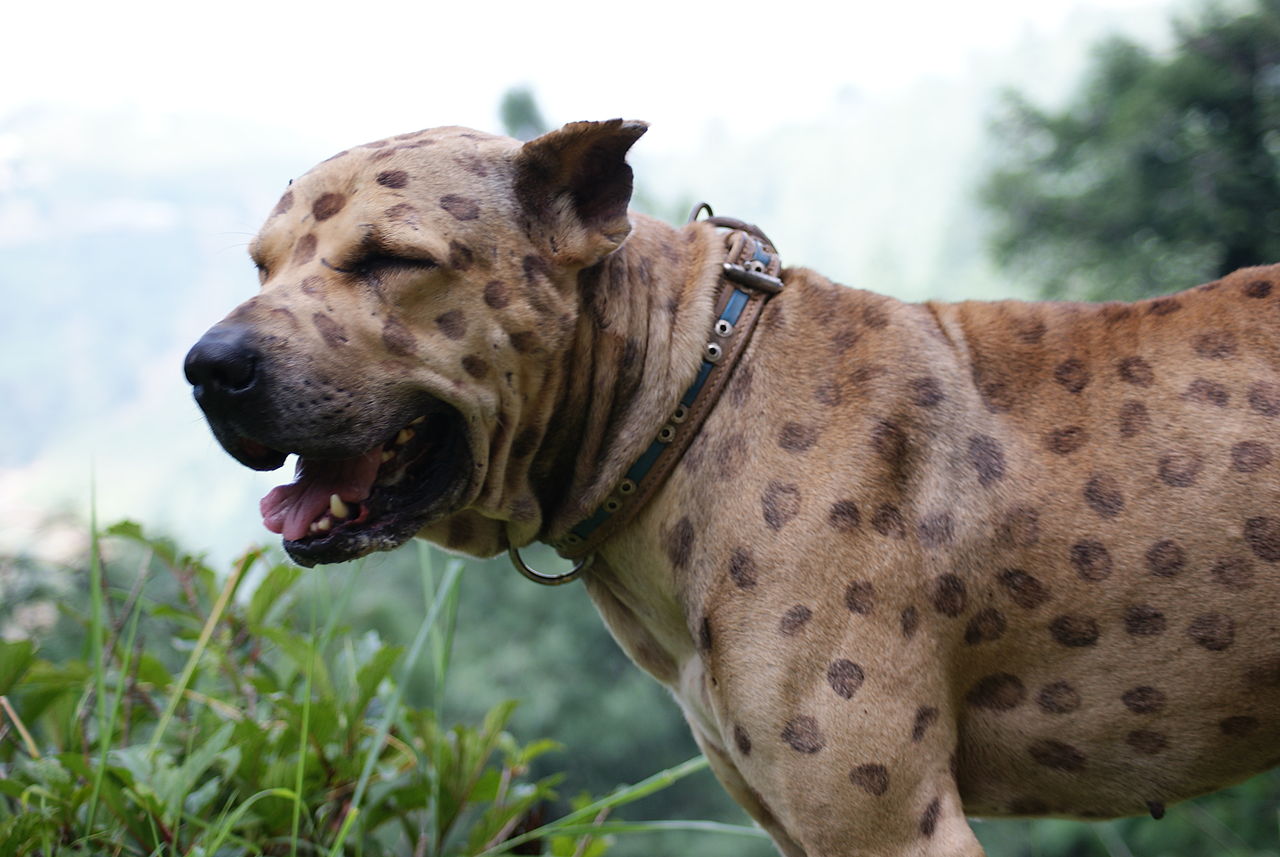
The Bully Kutta is described as an intelligent, alert, responsive and hugely energetic, but also dominant dog. It’s not a calm lymph node like a Neapolitan Mastiff: Here’s the nerve, the determination and the self-confidence that, if mismanaged, leads to serious problems. Veterinarians in the area of origin insist that it is a dominant dog that should only be handled by people with proven experience.
With his family he tends to be loyal and affectionate; with strangers, reserved and suspicious. Their tolerance threshold for other dogs – especially of the same sex – is low, a direct inheritance from their past as hunting and guard dogs. None of this makes him a “bad” animal: It’s a functional dog, programmed to watch and defend, that needs a calm, consistent, steady leader who channels that temperament from a puppy.
Coexistence: children, other pets, flat and loneliness
Niños. With children in his own home he can be tolerant and protective, but his mere physical strength requires constant supervision: an 80 kg dog knocks down a child without malice, just playing.
Other pets. Here is its great weakness. Suspicion of other dogs and its prey instinct make coexistence with small animals complicated. Socialization from puppyhood helps, but rarely turns a Bully Kutta into a sociable dog with unfamiliar congeners.
Flat and lonely. Forget the apartment. It is a farm dog, bred to patrol land and guard livestock; it needs space, a solid fence and a task. It does not tolerate social isolation: it is not a garden dog that is ignored, but a watchdog that wants to be close to its people even though it lives outdoors.
Education and training
The Bully Kutta’s education is not optional: it’s the difference between a balanced guard and an 80-pound problem.
- Early and intense socialization: exposing him as a puppy to people, noises, animals and situations, always in a controlled and positive way.
- Positive reinforcement and coherence: physical punishment is counterproductive and dangerous in a dog of this character; the clear, serene and constant limit works best.
- Leadership without confrontation: needs a guide he can trust, not a rival to measure.
- Professional help: having a trainer with experience in guard moles is highly recommended, ideally before the dog reaches adolescence.
It is not a candidate for competitive obedience sports or for first-time owners. It is, above all, a working dog that performs when it understands what its place is and what is expected of it.
Exercise and activity

The Bully Kutta is energetic and moves with great strides, but its need for exercise must be understood with the head. It requires daily activity – long walks, exploration, olfactory work, and surveillance tasks – to keep you physically and mentally stimulated. A dull, uncommitted Bully Kutta is a frustrated dog, and frustration in an animal of this size and character is no good counselor.
At the same time, it is advisable to avoid strenuous, high-impact exercise during growth. Like any rapidly developing giant bone dog, its joints are vulnerable: no repetitive jumping, strenuous running or puppy ladders. Better quiet walks and controlled play until the skeleton matures.
Care: fur and hygiene
In this the Bully Kutta is grateful. Its coat is short and glued to the body, which translates into a simple maintenance: a weekly brushing is enough to remove the dead hair and distribute the natural fat of the skin.
It is advisable to pay attention to their belts and wrinkles: since they have prominent lips and, in some specimens, loose skin on the face, it is necessary to monitor the cleanliness of the creases to avoid irritation.
Foodstuffs
A dog that can weigh more than 80 kg needs to be fed at height, but above all, it needs to be fed well.The key in giant moles is not quantity, but balance: a high-quality diet, rich in protein and adjusted to their activity level, divided into several servings a day to reduce the risk of gastric torsion, a frequent urge in deep-breasted dogs.
In the puppy stage it is essential to control the growth rate with a suitable feed for large/giant breeds: too rapid growth overloads the joints and promotes bone problems. You should avoid being overweight throughout your life and consult your veterinarian about the amounts, because an excess of energy or calcium in growth takes its toll. Water always fresh and available, especially in hot weather.
Health and life expectancy
Because it is a non-standard autochthonous type, there is no official chart of hereditary diseases or recognized longevity figures. This does not mean that it is risk-free: it shares the typical vulnerabilities of giant molluscs. The joints – with hip and elbow-to-head dysplasia – the heart and the already mentioned gastric torsion are the points that deserve more surveillance.
Their life expectancy, as a guideline and in line with other dogs of their size, is usually around 8-10 years; giants, as a rule, live less than small dogs.
Physical appearance

The Bully Kutta imposed at first glance: large proportions, aristocratic demeanor and a muscular body built for strength. The males measure between 76 and 84 cm at the cross – some sources raise the figure to 80-90 cm – and weigh from 70 to 90 kg, while the females remain somewhat below.
It has a long back, broad chest, and prominent bellies that give it that prey mastiff air. The coat is short and the color range, wide: white, black, red, maroon, hawksbill and herring, often with white spots on the chest and black snout.
Origin and history
The Bully Kutta is a dog with centuries of history behind it. It originated in the Indian subcontinent – specifically in the regions of Punjab and Sindh, now divided between India and Pakistan – and its trace goes back at least to the 16th century. It was developed as a versatile working dog: a non-specialized hunter and, above all, a guardian of property and livestock.
His prestige reached even the royals. In Thanjavur it was a favourite pet of ruling families, and it is said that the Mughal emperor Akbar had a Bully Kutta which he used for hunting. The race also crossed borders: The so-called “Indian Mastiff” was exhibited at the Second International Canine Exhibition at Islington Agricultural Hall, London, in May 1864, and the previous year the Prince of Wales and Princess Alexandra had presented one at the same competition. In 1884, the magazine Littell’s Living Age reported that, historically, kings used a “great Indian Mastiff” to hunt beasts.
It is also worth noting the bitter side of its recent history: in some areas it has been used illegally in dogfights, a cruel practice that the authorities and numerous NGOs are actively combating.
Curiosities
- His name has nothing to do with “bully”:“Bully” comes from “bohli” (very wrinkled) and “kutta” means dog in Punjabi. The literal translation would be “very wrinkled dog”.
- The Mughal Akbar, one of the great figures in Indian history, had one to hunt.
- Many names, one dog: Pakistani Mastiff, Indian Mastiff, Alangu, Sindh Mastiff, Pakistani Bully… they all designate the same type.
- It’s not a “paper race”: being not recognised by the FCI, there is no international standard; its identity is held in tradition and local records of India.
- Flight restrictions: due to its size and character, some airlines include it among the breeds that do not allow in the cabin or hold.
If you’re drawn to the world of large moles and guard dogs, on RacesPerro you can continue to browse profiles of related breeds and compare characters before deciding. Check out the Cane Corso, the imposing Mastiff, the Rottweiler and the versatile Gran Danés to better understand what it means to live with a large or giant size dog.
Frequently Asked Questions about Bully Kutta
Is the Bully Kutta a dangerous dog?
There are no dangerous breeds by definition, but there are powerful dogs that demand responsible handling. The Bully Kutta is a giant, territorial and dominant moose, bred for centuries as a guard and prey dog. In inexperienced hands it can be unmanageable, and in several countries it is on lists of potentially dangerous breeds or with air transportation restrictions. It’s not a dog for beginners or anyone looking for a low-maintenance family pet.
Is it recognized by the FCI or the AKC?
I’m not going to. The Bully Kutta is not recognized by the International Kennel Federation (FCI) or the American Kennel Club. It is an indigenous type (landrace) of the Indian subcontinent, not a standardized breed. In India it is recognized by local organizations such as the Indian National Kennel Club and the Indian Mastiff Registry, but there is no international morphological standard, hence the huge variation between specimens.
How tall and how much does a Bully Kutta weigh?
It is a giant-sized dog. Males usually measure between 76 and 84 cm at the withers – some sources speak of up to 90 cm – and weigh 70 to 90 kg; females are around 75-80 cm and 60-70 kg.
Does it serve as a family dog?
It may be loyal and attached to its people, but it is not the typical family dog choice. Its size, guarding instinct and dominant character require an expert owner, very serious early socialization and a controlled environment. With children it requires constant supervision for its sheer physical strength, although it coexists well with those in its home.
Why is Bully Kutta associated with dog fighting?
Unfortunately, in some parts of India and Pakistan, it has been used illegally in dogfights. It’s a cruel and persecuted practice: In 2018, the Indian Punjab police filed their first formal complaint against organizers of fights, and several NGOs are working to stamp them out. The Bully Kutta’s true historical role is that of hunting dog and guardian of livestock and property, not gladiator.
What does ‘Bully Kutta’ mean?
In Punjabi, ‘kutta’ means dog. ‘Bully’ comes from the root ‘bohli’, which refers to very wrinkled skin, and is also related to ‘bull’ (lips in Punjabi) for its prominent bellies. The literal translation would be something like ‘very wrinkled dog’.
How long does a Bully Kutta live?
There are no official figures as it is a non-standardised type. As with giant moles, their life expectancy tends to be relatively short in comparison to small dogs, being orientationally around 8-10 years. Good nutrition, moderate exercise during growth and veterinary control help to take care especially of joints and heart.
Do you need a lot of space and exercise?
Yes to the first and measured to the second. It is a field dog, designed for farms with patrol area; it does not fit on a floor. It needs daily exercise – long walks and mental work – but without overloading the joints, especially as a puppy, given its rapid and enormous bone development.