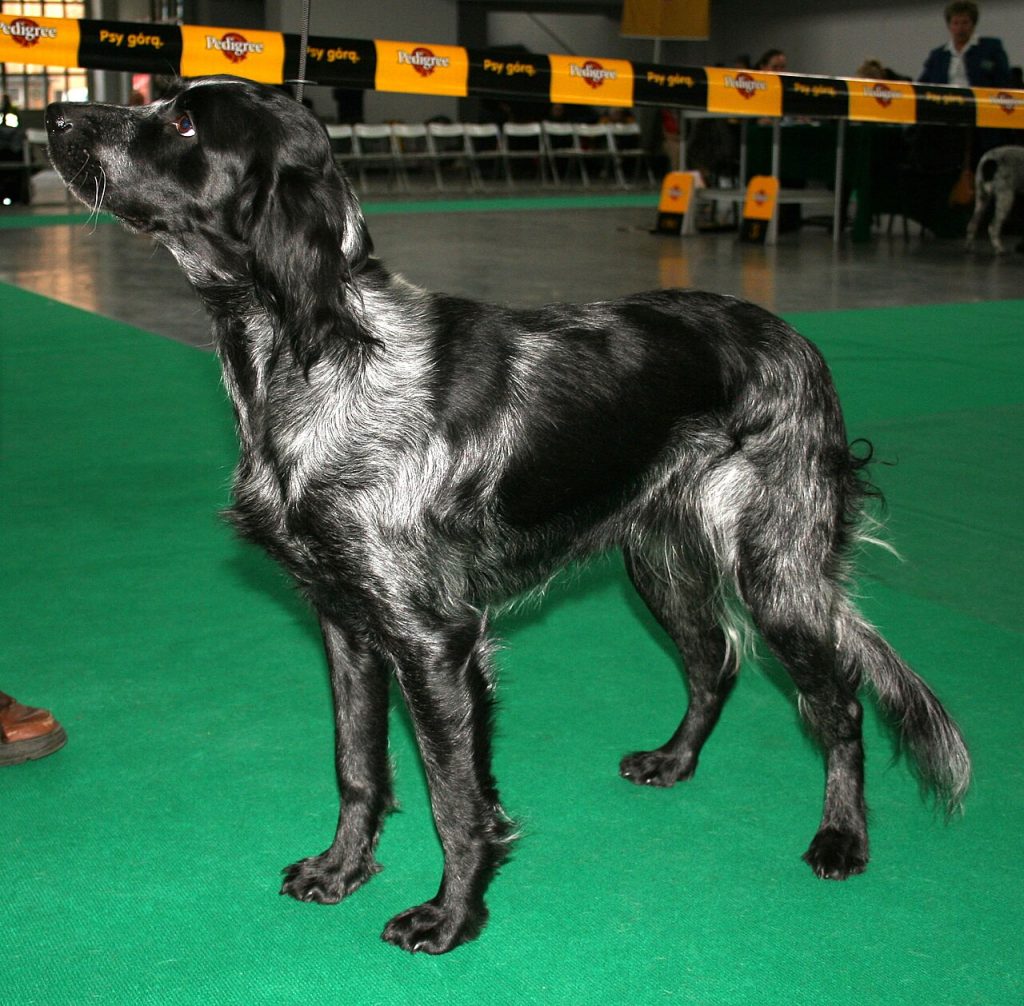
The Blue Spaniel of Picardy is a French show dog, elegant and of sweet character, instantly recognizable by its mottled gray and black coat that, in the light, acquires that unmistakable bluish reflection. Born to hunt waterfowl in the marshes of the River Somme, today he is above all a serene, balanced and extraordinarily good companion with children. If you’re looking for a sporty but quiet dog at home, the Picardy Blue Spaniel deserves your attention.
Is the Blue Picardy Spaniel for you?
Before you fall in love with its beautiful blue coat, it’s good to know what kind of dog you’re up against. The Picardy Blue Spaniel is a working dog with a runner’s engine tucked into a gentle, homey body.
In favour .
- Quiet and quiet inside the house.
- Exceptional with children and very sociable.
- Obedient, attentive and easy to raise positively.
- Resilient, ideal for active people who love the countryside.
- Deep attachment to his family; great companion.
To be taken into account
- He needs plenty of daily exercise; sedentary lifestyle is not worth it.
- Poor carrier of loneliness: suffers if he spends hours alone.
- Fur with freckles that requires regular brushing.
- Long ears prone to infection if neglected.
- Rare breed: getting a puppy can be expensive.
Character and temperament

If the character of the Picardy Blue Spaniel were to be summed up in one word, it would be the balance. It is a remarkably calm, sweet and sensitive dog, combining domestic calmness with overflowing enthusiasm when it comes time to go out in the field. It is neither nervous nor barking, but neither is it an apathetic dog: it simply knows how to be.
It is a deeply sociable animal that lives for human company. It enjoys contact, seeks the closeness of its people and responds with a natural attention and obedience that surprise those who meet it for the first time. That docility is not submission: it is the attitude of a dog that trusts and wants to collaborate.
Its sensitivity is its most defining trait and it is advisable to have it always present. It captures the tone of voice, the atmosphere of the house and the mood of its owners. Well treated, it blossoms; with harshness or screams, it shuts down and becomes insecure. It is, in essence, a dog made to live with people who value its nobility.
Coexistence: children, other pets, flat and loneliness
Few breeds deserve as much of the family dog label as this one. The Picardy Blue Spaniel is especially good with children: patient, tolerant and playful without abruptness, it fits perfectly in homes with small children. As always, it is good to teach children to respect the dog and supervise first encounters, but its natural disposition makes it very easy.
With other dogs it usually gets along well; it is a gregarious animal, historically accustomed to working in company. With cats and small pets we must remember that it is a hunting and show dog: an early and well-done socialization solves most cases, but its instinct can surface before an animal that runs.
As for the living on the floor, it is perfectly possible thanks to its tranquility and that it is not barking, as long as it is compensated with abundant daily exercise. Where it is weak is in the loneliness: a dog so attached suffers when left alone for many hours, and that discomfort can translate into anxiety or destructive behaviors.
Education and training
Here the Picardy Blue Spaniel shines. It is an intelligent, attentive, and eager to please dog, making it one of the most grateful pupils among show dogs. It quickly learns basic routines and responds wonderfully to commands when training is based on positive reinforcement, rewards, and play.
Their sensitivity marks the method: no harsh corrections or aggressive tone. It works much better with short, cheerful and constant sessions, where the dog feels it is right. Early socialization – people, noises, other animals, varied environments – is the best investment for having a safe and balanced adult dog.
Because of his hunter-gatherer roots, the work of smelling and collecting are activities he enjoys and help channel his mental energy.
Exercise and activity
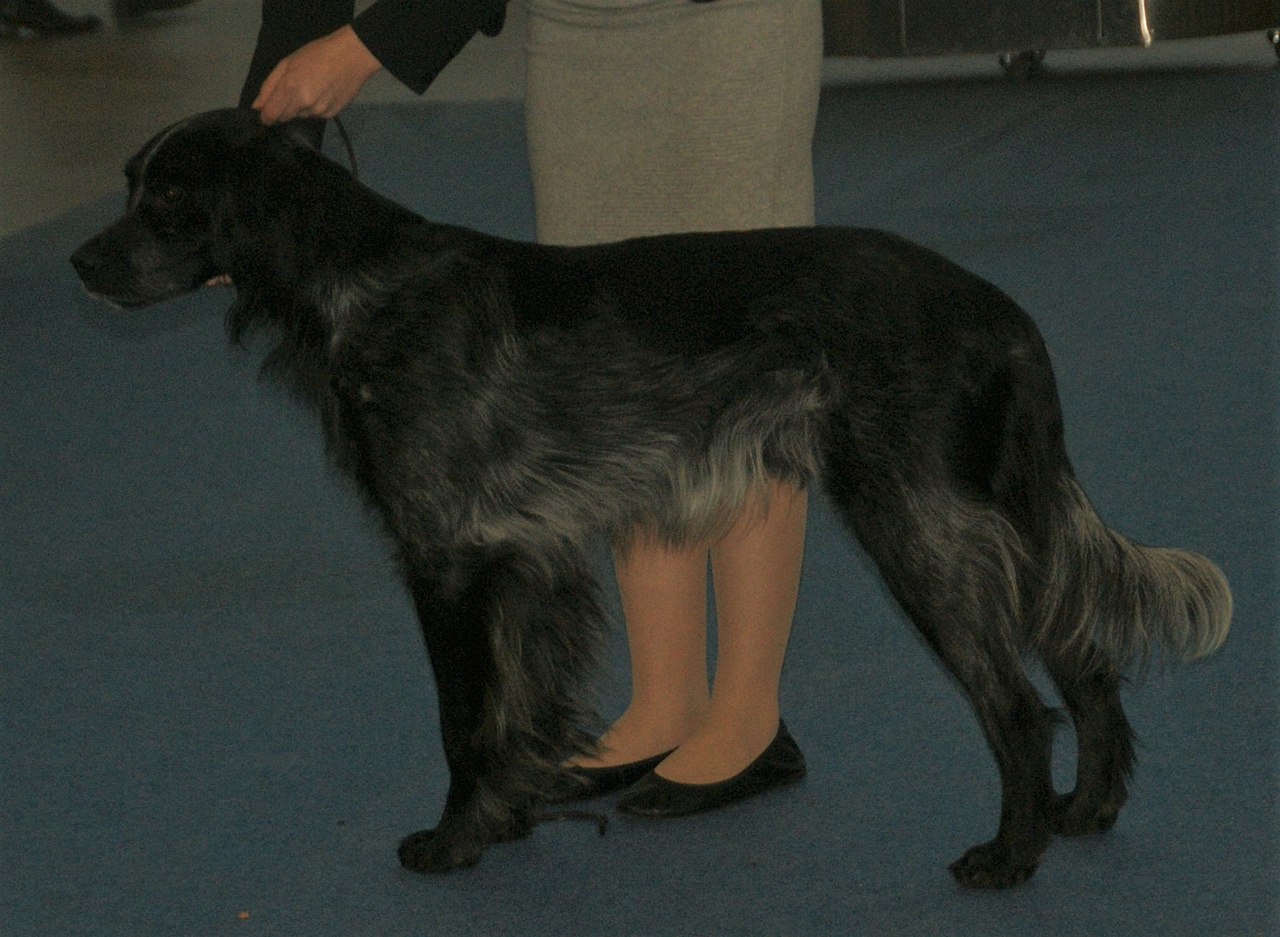
The idea that it is quiet at home should not confuse us: we are facing a hunting dog with considerable resistance, bred to spend whole days in the marsh. It needs daily and vigorous exercise, not a simple walk around the block.
He is passionate about water and the open field, a direct inheritance of his past as a waterfowl collector. Swimming, tracking and exploring are his favorite activities. Disciplines such as canicross, tracking or field trials feel great and satisfy both his body and his mind.
A well-exercised Picardy Blue Spaniel is a model dog: calm, balanced and happy. One who is spared exercise, instead, accumulates frustration that sooner or later comes out somewhere.
Care: fur and hygiene
Its coat is medium-length, smooth or slightly wavy, with longer fringes on the ears, back of the legs, belly and tail. To keep it in good condition requires a brushed two to three times a week, which becomes almost daily in moult season.
The point that demands the most attention are the ears: long, fallen and covered with silky hair, they create a warm and humid environment in which infections proliferate easily, especially if the dog swims or works in water.
Complete the routine as usual for any dog: cut nails when they don’t wear out on their own, periodic dental hygiene, and check pads after field trips.
Foodstuffs
The Picardy Blue Spaniel needs a complete and balanced diet, adjusted to its average size and, above all, to its actual activity level. A specimen that hunts or exercises intensively requires more energy input than one with a more relaxed life; it always adjusts the ration to its expenditure to keep it at its ideal weight.
Divide the food into two daily servings better than one, monitor the scale and body condition and avoid overweight, which punishes joints and heart. In very active, deep-chested dogs, it is advisable not to associate meals with immediate intense exercise. If you have any doubts about the type of diet or the quantities, it is best to consult your veterinarian, who will tailor it to your dog’s age and condition.
Health and life expectancy
As it is a small breed, systematic information about its health is limited, but it is generally considered a rustic and robust dog, the result of a breeding linked to work rather than to aesthetics.
Ear care is once again the health priority of the day: Otitis is the most common problem in dogs with long, droopy ears like this one. As with any medium-sized sporting dog, it is advisable to follow the schedule of vaccination and deworming, regular veterinary checkups and, in the breed, health tests recommended by a serious breeder. The best guarantee of longevity is still the combination of exercise, proper diet, and prevention.
Physical appearance

The Picardy Blue Spaniel is a medium-sized and harmonious-built sample dog, neither heavy nor weak. The males average between 56 and 61 cm to the cross and circle the 20 kg or less of weight, with strong and well-muscled legs both in front and behind.
Its unmistakable hallmark is the coat: Gray and black interspersed in a speckled pattern that, together, produces that bluish reflection from which it takes its name, sometimes dotted with black spots. The hair is smooth or slightly wavy, with nice fringes on the ears, legs, belly and tail. The head has a long, broad snout, and thick, long, silky-haired ears that usually reach to the tip of the snout.
The breast, medium in size, descends to the elbows. The tail, normally straight, does not usually exceed the buzzard. It shares much of its morphology with the classic Picardy Spaniel, from which it differs mainly by the colour of the coat – brown on the one, bluish grey on the other – and by a somewhat softer character.
Origin and history
The history of the Picardy Blue Spaniel begins at the beginning of the 20th century in northern France, specifically in the area of the mouth of the river Somme, in the region of Picardy.
The key was in the british quarantines. To avoid the health restrictions of the United Kingdom, English hunters left their dogs housed in the Picardy area, near the Somme. From that move came the crossing between the local Picardy spaniels and the English Setter brought by the British, infusion that brought the characteristic black and bluish gray coat and gave rise to this variety.
The first grayish-blue black spaniel was documented in 1875, but it was not until 1904 that the Picardy Spaniel was officially presented at the Paris Canine Exhibition, then classified as a French spaniel. In 1907 the breed club was founded, which differentiated the two Picardy varieties, and in 1938 the blue was finally recognized in France as an independent breed. Decades later he crossed the Atlantic: The first to import it into Canada was Ronald Meunier, of Saint-Julien, Quebec, around 1987, and it was recognized by the Canadian Kennel Club with effect from 1 June 1995. Today it is recognized by the FCI, the Société Centrale Canine, the Canadian Kennel Club and the United Kennel Club.
Curiosities
- A blue that’s not blue. The famous bluish hue is not a real pigment, but an optical effect: the mixture of mottled black and white hairs creates that illusion of blue cloak in the light.
- Son of two worlds. combines the blood of the French Picardy Spaniel with that of the English Setter, a mixture born almost by chance thanks to British quarantines.
- More Canadians than French in numbers. Although it is a French breed, today Canada is home to one of the largest populations in the world, along with its native France.
- Half the recognition in the U.S. The American Kennel Club does not yet recognize it as a full breed; it only offers registration through its Foundation Stock Service.
- He specializes in water. His past as a collector in the Somme marshes explains his passion for swimming and his endurance as a surfer.
If you are attracted to this noble and sporting dog, you may be interested in other breeds that are similar in character or kinetic ability: the versatile Cocker Spaniel, the tireless Pointer, the elegant Weimaraner and the charismatic Vizsla.
Frequently asked questions about the Picardy Blue Spaniel
Is the Picardy Blue Spaniel a good family dog?
Yes, and it is one of its greatest virtues. It is a quiet dog inside the house, very attached to its people and with remarkable patience with children. It needs company and daily exercise, but in return it returns a balanced and loving coexistence. It is not a yard dog: it wants to be with the family.
How much exercise do you need a day?
It’s a very resilient hunting dog, so it’s best to have one or two long walks a day plus running, sniffing, or playing, adding up to about one to two hours of activity.
Do you get along with other dogs and pets?
In general, yes. It is sociable and does not conflict with other dogs. With cats and small pets you have to take into account its hunting and show instinct: early socialization helps a lot to live together without problems.
Can he live in a flat?
It can, as long as it is guaranteed plenty of daily exercise and companionship. It is quiet and quiet indoors, which helps on a flat, but it is not a dog made for sedentary life. Even better if it has access to the countryside or nature frequently.
Is it easy to educate?
Yes. He is attentive, obedient and eager to please, which makes him very receptive to positive training. He learns quickly if the sessions are short, motivating and constant. His sensitivity demands gentle treatment, never harsh methods.
How much care does your coat need?
Medium maintenance. It is advisable to brush it two or three times a week to avoid knots in the fringes of the ears, legs and tail. Its long and fallen ears require regular inspection and cleaning to prevent infections, especially if it works in water.
How long does a blue Picardy Spaniel live?
As it is a small breed the data is limited, but it is usually cited a life expectancy of around 12 to 14 years, typical of a dog of medium sample and robust well cared.
Is this a rare breed?
Yes, it’s a rare breed outside of France and Canada, where most of the specimens are concentrated. Finding a puppy outside those countries may require patience and going to breeders who specialize in French Spaniels.