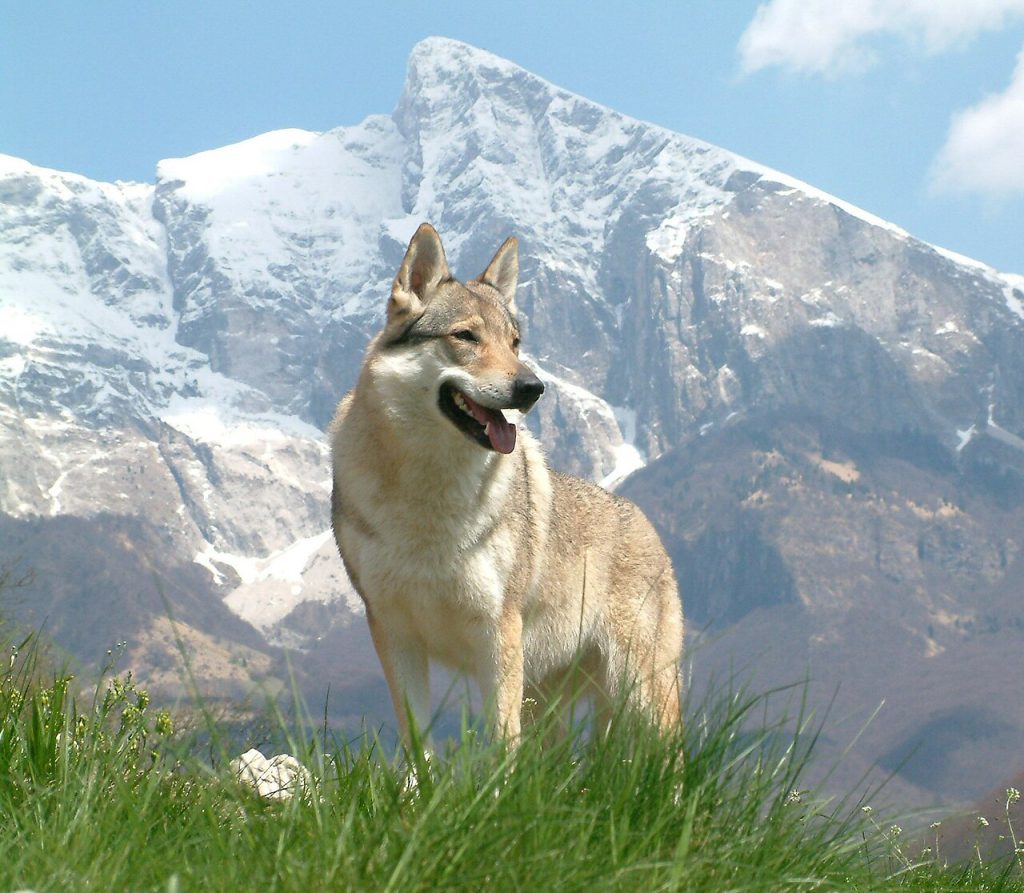
The czechoslovak wolfhound is one of the most fascinating and demanding breeds in existence: A distinctly wolf-looking dog, born from a military experiment that crossed German shepherds with Carpathian wolves. Intelligent, athletic, loyal, and deeply independent, the Czechoslovakian wolfhound is not a pet for just anyone, but a working companion for whom he seeks an intense bond and is willing to give exercise, guidance, and freedom in equal shares.
Is the Czechoslovak wolfhound for you?
Before you fall in love with its wolf-like look, you should be honest: the Czechoslovak wolfhound is a dog of character that tests its owner. It does not obey to please, but because it understands and trusts. It needs an active environment, a serious fence and someone who enjoys working with it every day. These boxes summarize for whom it fits and for whom it does not.
✅ It suits you if…
- You have previous experience with character or work dogs.
- You live in a house with a fenced-in lot and space to run.
- You’re passionate about dog sports, hiking or sniffing.
- You can devote several hours a day to exercise and company.
- You’re looking for a deeper bond than an obedient, easy dog.
⁇ Better another race if…
- Either it’s your first dog or you’re looking for something easy to handle.
- You live in a small apartment or spend a lot of time away from home.
- You want a dog that’s very sociable with strangers from minute one.
- You can’t guarantee intense exercise and daily stimulation.
- You expect immediate obedience and submission without prior work.
Character and temperament

The Czechoslovak wolfhound brings together the best – and most complex – of its two ancestors. From the German shepherd she inherits intelligence, the ability to learn and the will to work; from the Carpathian wolf, endurance, independence and a natural distrust of the unknown. The result is an extremely loyal dog to his family, brave and protective, but reserved and wary of strangers.
It’s an animal that thinks for itself. He’s not stubborn on a whim, but he needs to understand why things happen before he can cooperate. That autonomy, coupled with a very strong herd bond, causes it to suffer when left alone for too long. He also retains some very wolflike traits: tends to howl more than bark, reads body language with astonishing finesse and retains a marked prey instinct. As a biological curiosity, females usually have only one heat a year, just like wolves.
Coexistence: children, other pets, flat and loneliness
With children: bred within the family, the Czechoslovak wolfhound is loyal and attentive to the children of the house.
With other dogs: usually gets along well with other dogs, especially if it shares life with them from puppyhood; it has a highly developed sense of herd.
This breed needs space and hates isolation; a bored Czechoslovak wolfhound and only gets frustrated, escapes (he is an exceptional escapist) and develops destructive behaviors.
Education and training
Training a Czechoslovakian wolfhound is an exercise in patience, consistency and respect. It is very intelligent, but it does not work to please: you have to motivate it, earn its trust and completely avoid coercive methods, which only get it to close. Positive reinforcement, short and varied sessions and a solid bond are the key.
The early socialization is absolutely non-negotiable. From puppyhood it must know people, noises, environments, vehicles and other animals so that its natural caution does not lead to fear or reactivity.
Exercise and activity

Few breeds require as much physical and mental wear and tear as the Czechoslovak wolfhound. We are talking about an endurance athlete who can jog for hours without getting tired, bred precisely to cover long distances. A couple of short walks a day are not enough for him: he needs running, exploration and, above all, a job that occupies his head.
Disciplines such as canicross, cycling, mantrailing, mushing or mountain hiking are ideal for channeling their energy. In fact, some specimens have been employed in search and rescue work.
Care: fur and hygiene
The maintenance of the coat is surprisingly simple. The Czechoslovak wolfhound wears a straight coat, attached to the body and very dense in winter, which becomes lighter in summer. It does not require hairdressing or cuts: just a regular brushing, which is intensified during the two major seasonal mowing, when it sheds hair in abundance.
It is a rustic and clean breed, with little body odor. The baths should be punctual so as not to damage the natural protection of the coat. As with any dog, it is advisable to check and care for ears, teeth and nails, and watch the pads after long days of exercise.
Foodstuffs
As an active and athletic dog, the Czechoslovak wolfhound needs a high-quality diet, rich in animal protein and adapted to its high level of activity. e amount should be adapted to the age, weight, sex and actual exercise of each dog, avoiding both overweight and malnutrition in hardworking dogs.
Many owners opt for high-end feed, mixed diets or a well-balanced natural diet; in any case, it is advisable to have the guidance of the veterinarian, divide the ration into two servings and, in deep-breasted dogs, avoid intense exercise just before and after eating to reduce the risk of gastric torsion.
Health and life expectancy
The Czechoslovak Wolfhound is generally a healthy, rustic and long-lived breed, with a life expectancy which is usually between 12 and 16 years. Its recent origin and relatively narrow genetic base – a 2015 DNA study identified very few maternal and paternal lineages within the breed – make it important to choose serious breeders who perform health testing.
Due to its German Shepherd ancestry, it may share some predispositions to be monitored, such as hip and elbow dysplasia or degenerative myelopathy.
Physical appearance

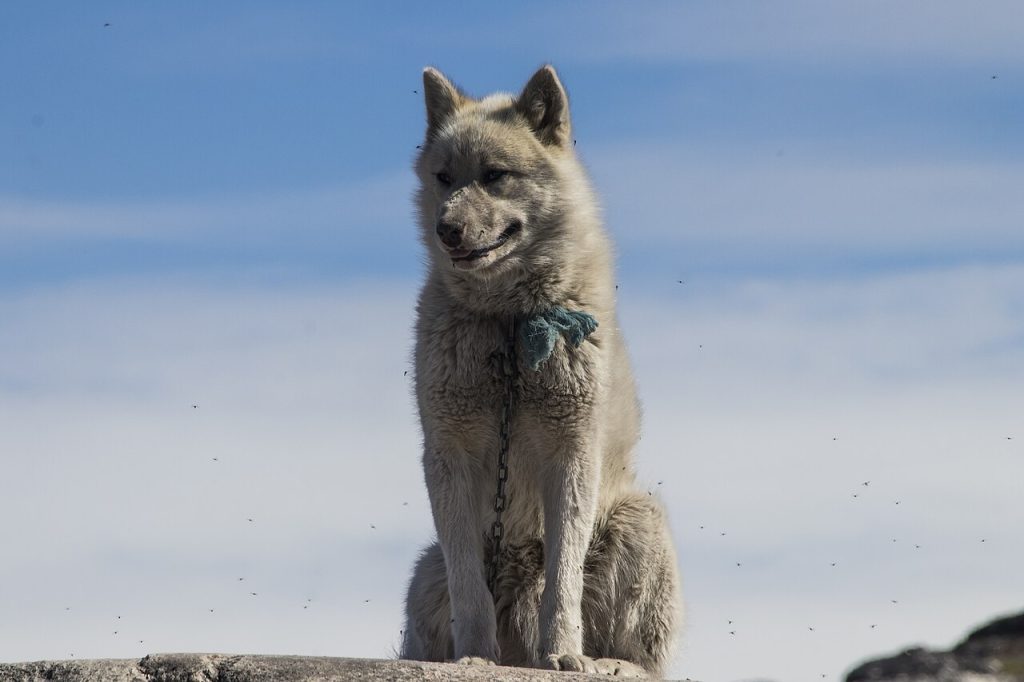
The Czechoslovak wolfhound is the living image of a wolf. Strong in build, somewhat larger than average in size and rectangular in shape, it is reminiscent of Carpathian wolves in its structure, movements, fur and typical clear facial mask.
According to the standard, the minimum height at the cross is 65 cm in males and 60 cm in females, with a minimum weight of 26 kg and 20 kg respectively. The coat is straight and tight, and its color ranges from silver gray to yellowish gray, always with a light mask and light hair on the chest and lower neck; dark gray with light mask is also supported. The eyes, small and oblique, are usually amber in color, and the ears, erect and triangular, complete that unmistakable wild expression.
Origin and history
The history of the Czechoslovak wolfhound begins in 1955, when Colonel Karel Hartl, together with the cynologist Heiri Machat, proposed a scientific experiment in the military kennels of the former Czechoslovakia: cross the German shepherd with the Carpathian wolf. The goal was to create an animal that combined the temperament, mentality and training ability of the dog with the strength, constitution and endurance of the wolf.
The first hybrids were born on 26 May 1958 in Libějovice, from the wolf Brita and a German shepherd called Cézar z Březového hay. For years the project sought to fix the useful qualities of the wolf and the dog in a stable population. The breed, originally known as czech wolfhound, was recognized as the national breed of Czechoslovakia in 1982. Fédération Cynologique Internationale admitted it provisionally in 1989 and definitively in 1999, placing it in Group 1 (shepherd and buffalo dogs). In 2024, the American Kennel Club published its own breed standard.
Curiosities
- Its original name in Czech is czech and Slovak; in Slovak, czech and Slovak.
- Until 1982 it was known as the “Czech wolfhound”, before adopting its current name.
- Only four Carpathian wolves participated in the creation of the breed, on a basis of 48 German shepherds.
- He’s a born escapist: he jumps, climbs and digs with amazing skill, so the fence must be well thought out.
- Its closest relative is the Saarloos wolfhound, another breed born from crossing German shepherd and wolf, this time in the Netherlands.
- In 2026, a Czechoslovak wolfhound named Nazgul made headlines by sneaking onto a cross-country skiing circuit at the Winter Olympics.
If you are attracted to the Czechoslovakian wolfhound for its wolflike demeanor, intelligence, and energy, you may be interested in other breeds with a similar profile. Take a look at the Pastor Alemán, its direct ancestor; the tough Husky Siberiano; the versatile Border Collie, another workaholic genius; and the imposing Akita, equally loyal and independent.
Frequently asked questions about the Czechoslovak wolfhound
Is the Czechoslovak wolfhound a good dog for beginners?
No. It is a demanding breed, very intelligent and independent, with a strong wolf heritage that makes it reserved and uncomfortable. It needs an experienced guide, time, patience and early socialization. For a first coexistence with a dog a more manageable breed is usually recommended.
Is he a dangerous or aggressive dog?
Not inherently. The Czechoslovak wolfhound is not more aggressive than other working breeds; in fact it tends to be shy and to avoid conflict rather than seek it out. The risk arises when such a powerful, territorial and distrustful animal does not receive socialization or guidance.
Can you have a Czechoslovak wolfhound in a flat?
It is not advisable. It needs space, intense exercise and constant stimulation; locked up in a floor without activity it develops anxiety, shattering and howling. It fits much better in a house with a well-fenced plot and, above all, with a family that takes it out to move and work daily.
How much exercise do you need a day?
A lot: at least a couple of long hours of physical and mental activity a day, combining extensive walks, running and olfactory work or training.
Is it legal to have a Czechoslovak wolfhound in Spain?
Yeah, I got it. The Czech wolfhound is a canine breed recognized by the FCI (since 1999) and the Royal Canine Society, so it is considered a purebred dog and not a wolf hybrid. It should not be confused with recent wolf-dog crosses, which may be subject to restrictions. Even so, in some communities you may be able to enter into responsible tenure regulations for your size, so it is advisable to review the local regulations.
Howls instead of barks?
Because of its origin, the Czechoslovak wolfhound barks less and communicates more with howling, moaning, and other sounds.
How long does a Czechoslovak wolfhound live?
Its life expectancy is usually between 12 and 16 years, a high longevity for a dog of its size.
Do you get along with children and other dogs?
It is loyal and protective, but its intensity, size and instinct make it not the ideal companion for very small children without supervision.