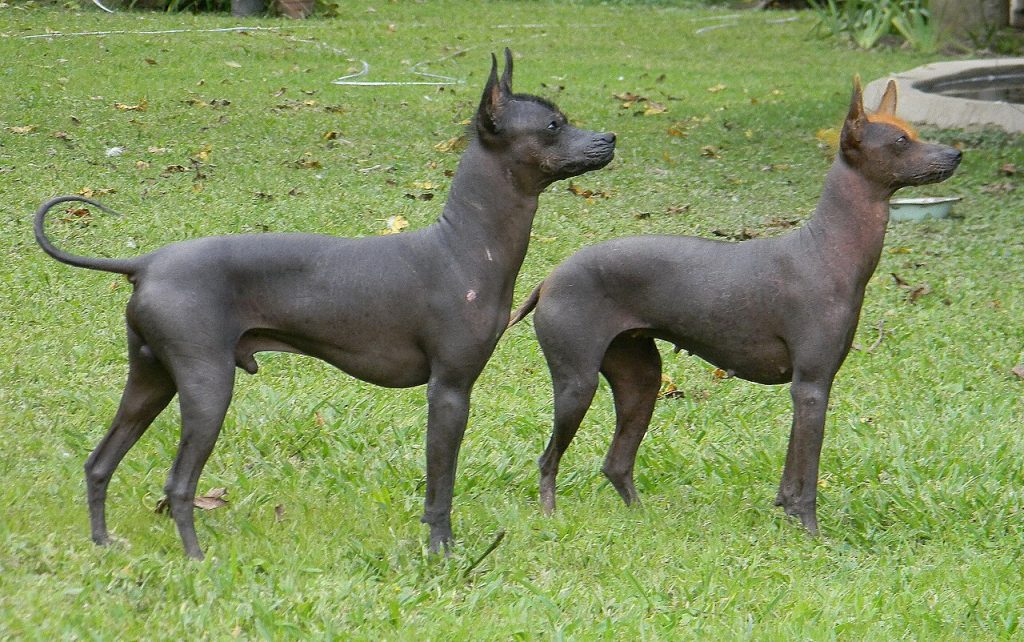
The Pila Argentino(or Argentine pila dog) is one of the most unique and unknown breeds in South America: A dog without hair, agile and vigilant, bred for centuries in northwestern Argentina. Heir to the ancient pre-Columbian bald dogs, only a handful survive today, mostly in Salta. If you’re looking for an exotic, clean and deeply family-connected mate, this guide tells you unvarnishedly what it’s like to live with an Argentine Pila.
Is the Argentine Pila for you?
The Argentine Pila is not a dog for everyone, and that’s part of its charm. It’s a rustic and tough animal inside, but with a skin that demands attention: neither extreme cold nor strong sun feels good to it. Instead, it gives you a clean companion, almost hairless around the house, awake like few and devoted to its people. Before you fall in love with its appearance, look at the two sides of the coin.
In favour .
- Barely loose hair: very comfortable for home and often better tolerated by sensitive people.
- Manageable size and affectionate character: ideal as a companion and alert dog.
- Agile, healthy in constitution and not fond of strong dog smells.
- A race with a thousand-year history: you’ll have a living piece of Andean culture.
To be taken into account
- Naked skin needs protection from cold, wind and sun.
- It is a very rare breed: it is difficult to get a serious breeder.
- He usually lacks dentures, which is normal but requires hygiene.
- Watchman and warning barker: you need to channel your guardian instinct.
Character and temperament

Those who live with an Argentine Pila usually describe the same thing: a always on the alert dog, attentive to any noise or strange movement in its environment. This natural vigilance made it, for generations, a guardian appreciated by farmers and the middle class of northwestern Argentina, who valued its ability to warn of any novelty without needing to be a large or aggressive dog.
Next to that vigilante facet is a dog intensely attached to his family.. The Pila seeks contact, warmth, and companionship from its owners; not for nothing it was used for centuries as a bed dog, attached to its owner. He is alert, curious, and sensitive to the environment, and he is quick to capture the mood of the house. With strangers he tends to be reserved at first and trusting afterwards, once he’s checked that there’s no threat.
It is not a nervous dog without sense: its energy has a noble and athletic point. It likes to move, observe from a high place and participate in what its people do. Well socialized, it is balanced and pleasant; careless or isolated, it can become too barking or suspicious.
Coexistence: children, other pets, flat and loneliness
The Argentine Pila fits well into a family. With the children it is affectionate and playful, provided two basic rules are respected: supervise play and teach the little ones to carefully treat a skin without hair protection, which scratches more easily than that of a furry dog. It is not a fragile dog, but its bare skin deserves soft hands.
other pets is sociable, but its instinct for alertness and agility can arouse the pursuit of cats or small animals if it is not accustomed from a puppy.
Its contained size makes it perfectly suitable for flooring, as long as it receives its walks and some stimulation. Of course, it is a warning barker, so in neighborhood communities you have to work on self-control. As for the loneliness, it is a companion dog: it tolerates a few hours better than whole days alone. A pile that spends too much time isolated gets bored, barks and becomes frustrated.
Education and training
We’re dealing with a smart and attentive. dog, which makes education a lot easier if it’s well-focused, responds greatly to positive reinforcement – rewards, kind voice, play – and closes in on harsh methods, because it’s sensitive.
The priorities are twofold. The first, a broad and early socializing: know people, dogs, noises, soil and situations as a puppy, so that his natural vigilance does not lead to distrust. The second, channel the warning barking: Teaching him to warn and to keep quiet about the order prevents the guard from becoming a heavy dog. The basic commands, the call and the quiet handling of the skin (for checks and baths) complete the program.
Exercise and activity

The Argentine Pila is extraordinarily agile: it runs fast, jumps easily and is able to climb, a heritage of mountain varieties adapted to difficult terrain.
What you really need is variety and companionship. Enjoy exploring, smelling and participating in the activity of the house. A fenced garden where you can jog is a gift, but not a must. It’s good to remember your skin: on very cold days you need to keep it warm to go out and, in summer, avoid the hours of strong sun and the hot asphalt, which can burn both the pads and the naked skin.
Skin care and hygiene
Here is the big difference between the Pila Argentino and any conventional dog: there’s no coat to brush, but skin to take care of.. Its body, mostly bare – with possible plumes of hair on the head, tail and legs – is exposed to the elements, so the routine focuses on the skin and not the coat.
- Bathing and hygiene: gentle and periodic baths to remove grease and dirt, which in a hairless dog accumulate directly on the skin and can cause granitis or blackheads if neglected.
- Hidratación: depending on the individual’ s skin, you may need a moisturizer suitable for dogs to prevent dryness and flaking.
- Sol: sun protection in the most exposed areas during the summer; bare skin, especially in light specimens, burns.
- Frío: winter coat and a warm bed; without hair, the Battery loses heat easily.
- Revisiones: uses the bathroom to check for scratches, abrasions or any changes in the skin.
In return for this care, you save yourself daily brushing, hairballs per household, and much of the typical dog smell.
Foodstuffs
The Pila Argentino does not require an exotic diet: it needs a complete and balanced nutrition, adjusted to its size, age and activity level.
There is one detail of the breed that deserves attention: Because they often lack teeth – especially premolars – chewing some very hard foods may be less effective. It is not a serious problem, but if your stack has few pieces, it is advisable to choose a feed of the right size and texture or evaluate softer options with your veterinarian. Water always fresh and available, and head candy to keep the diet fresh.
Health and life expectancy
The Pila Argentino is, as a whole, a rustic and resistant dog, the result of centuries of natural selection in a demanding environment.
- Sunburn, dryness, granite or small wounds are the most common problems, all preventable with good care.
- Dentadura: the absence of premolars and other parts is normal in the breed; the important thing is to take care of the hygiene of the teeth present, especially the incisors and tusks.
- Genetics of hair: the hairlessness factor is lethal in double doses, a matter which concerns mainly the responsible breeding and not the health of the newborn pet dog.
There are no official longevity figures for such a minority breed. As a guideline, hairless South American dogs of a similar type tend to be long-lived when well cared for; the determinant will be good nutrition, veterinary control and healthy skin.
Physical appearance
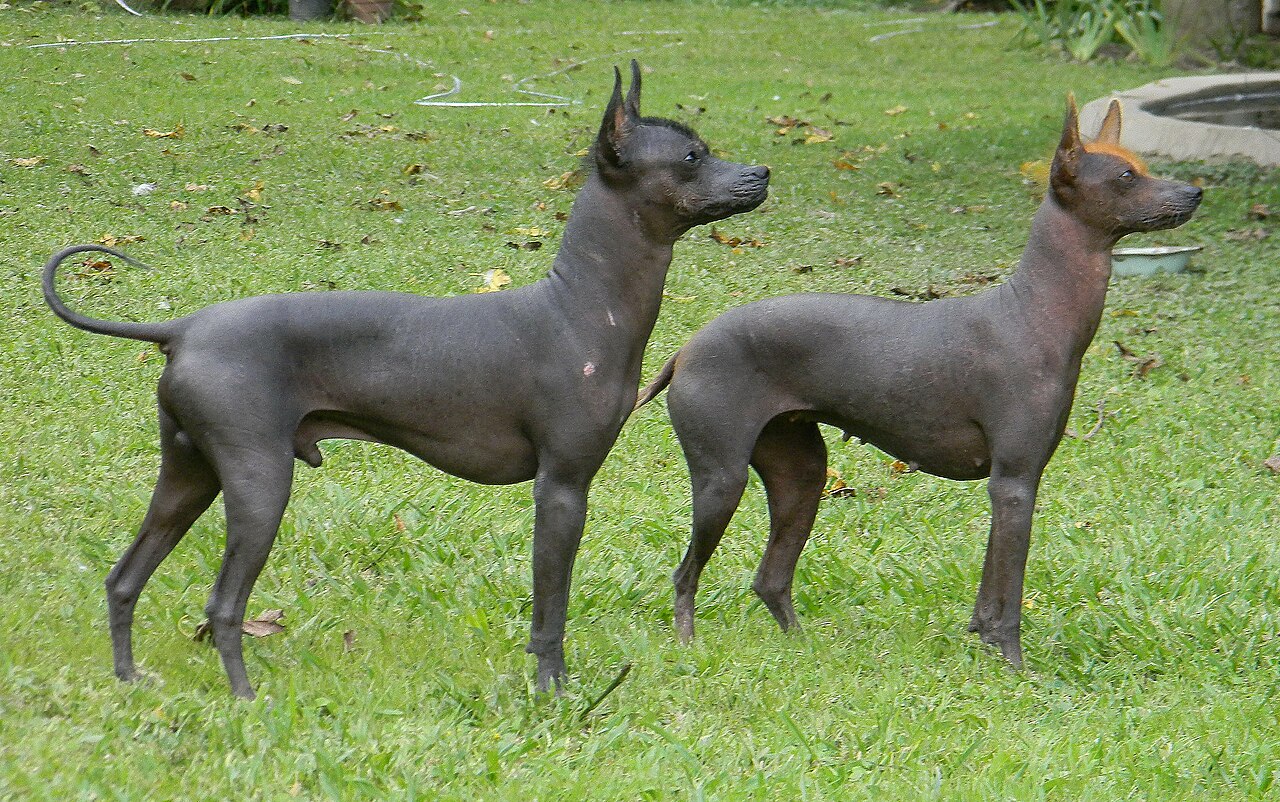
The Pila Argentino is a small to medium sized dog with an elegant silhouette. The most well-known variety, the eachña, resembles a miniature pinscher in structure, with a somewhat shorter back and a high insertion tail, which in movement is curved over the back.
The standard of the chaqueña variety recognizes three sizes: small(25 to 35 cm at the cross), median(35 to 45 cm) and large(over 45 cm).
The skin, its defining feature, is usually dark – black, gray, or plumage – or clear with dark spots. The degree of alopecia varies greatly from specimen to specimen: Some are completely naked except for whiskers, and others show plumes of hair on their head, tail and legs, though never as profuse as those of the Chinese crested. Their movement is short, fast and elastic, and in small specimens often appears an airy elevated trot, almost like a pony (the so-called Hackney gait), which is considered a hallmark of the breed.
Origin and history
The story of the Argentine Pila is that of the ancient hairless dogs of America, which archaeological evidence places on the continent from about three thousand years ago.
There is no record of these dogs in what is now Argentina before the inca colonisation of the 15th century. The Inca empire stretched across the Andes to northwestern Argentina, and among the gifts it gave to its colonies were the prized bald dogs, the khalas(Quechua for “naked”). After the Spanish conquest, trade with Peru was maintained through Salta and Jujuy, but the flow of dogs ceased: The Crown was not interested in these creatures except out of curiosity. The later isolation was shaping, century after century, the different local varieties, including the Pila.
For generations it was held in high esteem by the indigenous, Creole, and peasant peoples of the northwest. They called him “pila”, a colloquial term for “peeled” or “naked”, and valued him for his warm skin: They used it to warm their beds and as a pocket of living water against the rheumatism of the elderly – hence the nickname “hot feet” – in addition to appreciating it as a guardian always alert. The Asociación Canina Argentina officially recognized the breed in 2007. It’s not recognized by the FCI.
Curiosities
- A hot dog. Because of the heat emitted by its naked skin, the Pila was used to heat beds and relieve rheumatic pains; in Rioplaten cities it came to be called “calentapié”.
- Mixed layers. In the same litter can be born bald puppies and puppies with full hair, and all are legitimate Pila.
- Fewer teeth by design. The same gene that removes their hair affects their teeth, which is why they’re almost always missing premolars.
- Their Inca ancestors were known as khalas, “naked”, the same concept that rings in the word “pile”.
- It’s extremely rare. There are estimated to be only about 1,700 copies, most of them in the province of Salta.
If you are attracted to the Argentine Pila because of its alertness, agility, or hairlessness, you may want to compare it with other similar-looking breeds: the vigilant and compact Chihuahua, also of pre-Columbian roots; the athletic and elegant Doberman, of the pinscher family with which its structure is compared; the light and fast Whippet; or the alert and tenacious Teckel. Each one shares with the pile some of its virtues.
Frequently Asked Questions about the Argentine Pila
Is the Argentine Pila hypoallergenic?
Because it has no coat, the Pila Argentino barely sheds hair, so many sensitive people tolerate it better than a hairy dog. However, there is no 100% hypoallergenic dog: allergy is also triggered by dandruff, saliva and skin proteins, and the Pila has skin. If you live with allergies, it is wise to spend some time with several specimens before deciding.
Do you get cold because you don’t have hair?
Yes, and it is their greatest need for care. Their naked skin is not insulated from cold and wind, so in winter or at night they need a blanket, a warm bed, and, if you live in a cold area, dog clothing. In summer the opposite is true: they need to be protected from direct sunlight to avoid burns.
Why do some of Pila’s puppies grow hair?
Because the hairless gene is dominant but lethal in double doses. In a litter of two bald parents, statistically, one half is born with a full coat (hairy) and the other half bald; embryos with double copies of the gene do not reach term. That’s why it’s normal that in the same litter coexist bald puppies and hairy puppies, and both are pure strain stacks.
Is he really missing teeth?
Yes. The same mutation that causes hair loss affects tooth development, so most Piles lack premolars and other parts, and the fangs may be conical or not appear at all. It’s a trait of the breed, not a disease; it’s best to take great care of the hygiene of the teeth you do have.
How many Argentine Pilates are left?
It is a very minority breed. It is estimated that there are about 1,700 specimens, concentrated mainly in the northwest of Argentina and very especially in the province of Salta.
Do you get along with children and other dogs?
Yes, it is usually an attached and sociable dog with its family, including children, always with the respect and supervision that any dog deserves. With other animals, early socialization is appropriate: it is alert and territorial in its vigilance, but it is not a fighting dog.
Do you need a lot of exercise?
It’s agile, it’s fast and it jumps, but it’s small, so it’s content with daily walks and playtime. It loves to run and climb, and it appreciates a garden, although it adapts well to a floor if you pull it out and stimulate it. More than miles, it needs companionship and mental activity.