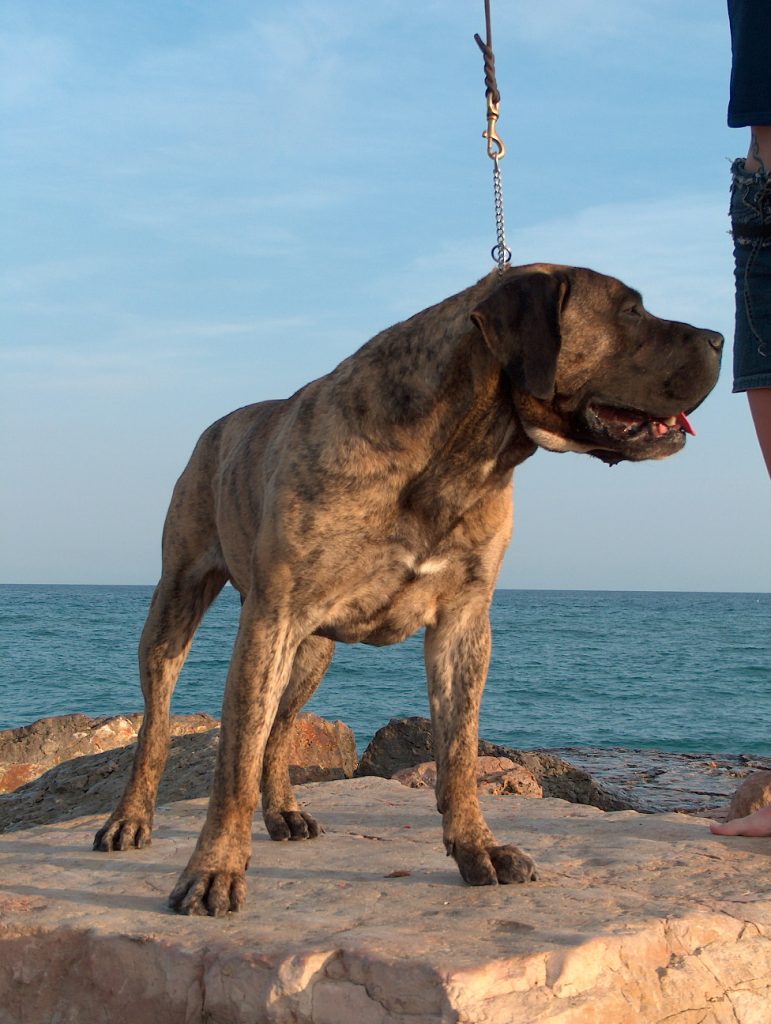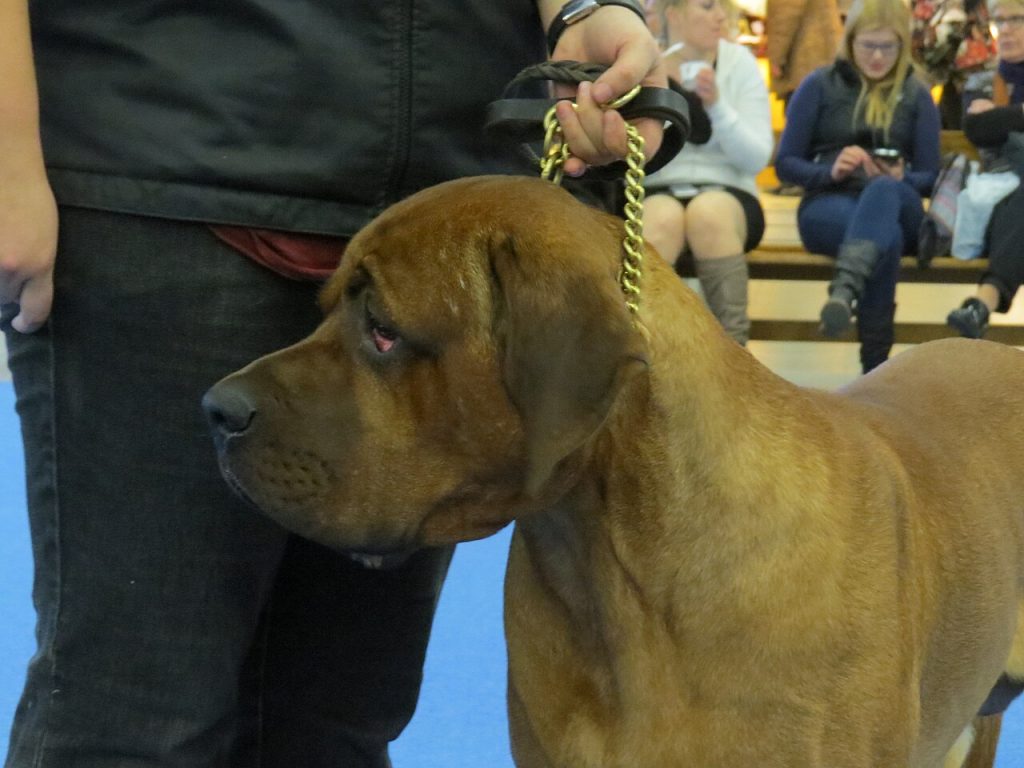
The Tosa Inu is an imposing Japanese moose, bred in the 19th century in the former Tosa Province (present-day Kōchi Prefecture) as a fighting and guard dog. Serene, silent and deeply loyal to his family, he is both one of the most impressive and most demanding dogs in existence: in Spain it is listed as a potentially dangerous breed (PPP) and its ownership requires a licence. It’s not a dog for everyone, but in experienced hands it’s a balanced companion with an uncommon dignity.
Is the Tosa Inu for you?
Before you fall in love with his image, you should be very honest: The Tosa Inu is a dog of considerable legal and physical responsibility. In Spain it belongs to the list of potentially dangerous breeds, which implies administrative license, civil liability insurance, registration in the municipal register and mandatory use of muzzle and belt not extendable on public roads. Add to that their size – they can weigh over 200 pounds [60 kg] – and a real need for socialization and quiet leadership. If you’re looking for an easy dog, this isn’t it. If you’re looking for a serene guardian and you’re willing to make the commitment, few can match his presence.
In favour .
- Balanced temperament and surprisingly calm at home.
- A natural guardian, deterrent by its very presence.
- Very loyal and devoted to his family.
- Short coat with minimal maintenance.
- Little barking; usually a quiet dog.
- Intelligent and highly capable of learning.
To be taken into account
- PPP breed in Spain: licence, insurance, muzzle and belt compulsory.
- Strength and size that demand expert handling.
- He needs early and intense socialization.
- It can show dominance towards other dogs of the same sex.
- Not suitable for first-time owners.
- Banned or restricted in numerous countries.
Character and temperament

In Japan, the Tosa Inu is compared to a sumo wrestler, not only for its body size, but for that mixture of calm, discipline and contained power.
This placeness, however, goes hand in hand with a very strong guarding instinct and a threshold of tolerance toward other dogs that depends greatly on the socialization received. The Tosa observes, evaluates and acts decisively when it considers there is a real threat. He’s brave, self-confident and very aware of his strength. With his family he is affectionate and close, and he develops a deep bond with those he considers his group. The counterpart is a firmness of character that requires consistent ownership: Tosa does not respond well to toughness or improvisation, but to calm, steady and fair leadership.
Coexistence: children, other pets, flat and loneliness
With the children of his own family, a well-socialized Tosa Inu is usually patient and protective, but its size imposes elementary caution: a specimen weighing 60 kilograms or more can knock down a small child without the slightest intention of harming him.
The most delicate point is the relationship with other dogs. Given its past as a fighting dog, the Tosa can show dominance or intolerance, especially towards specimens of the same sex. Early, extensive, and well-behaved socialization is essential; yet, many Tosa get along better as the only dog in the household. With cats and other pets, coexistence is possible if they are raised with them from puppyhood, but their instinct and strength require caution.
In terms of habitat, it tolerates floor life better than its size suggests, because it is quiet indoors, but it needs space, daily walks and, preferably, access to fenced and safe ground. It can reasonably tolerate periods of solitude if it is well balanced, although it is not a dog to be left alone for many hours on a regular basis: The bond with its people is an essential part of its balance.
Education and training

The education of a Tosa Inu is non-negotiable: it is the basis of a safe coexistence. It is a intelligent and self-willed dog, capable of learning quickly when it understands what is asked of it and why. It responds to coherence, patience and positive reinforcement, and closes in bands to coercive or violent methods, which are also dangerous in a dog of this power.
The socialization from puppyhood is the most important pillar: controlled exposure to people, environments, noises and – very carefully – other dogs, so that he learns to handle stimuli calmly. Basic obedience (control, quiet, reliable call) must be firmly installed before it reaches its adult weight, because a Tosa pulling on the leash is difficult to physically contain. Many breeders and trainers recommend working with a professional who specializes in molluscs. The golden rule: Quiet leadership, clear boundaries and daily consistency.
Exercise and activity
The Tosa Inu has a moderate energy: It’s not a hyperactive dog or an endurance athlete, but it needs daily exercise to stay healthy, balanced and at its weight. A couple of long walks a day, supplemented with play and some mental work, cover their needs well. He marvels at the quiet walks, the olfactory exploration, and the short obedience sessions that also strengthen the bond.
It is advisable to avoid intense exercise during the growth phase – up to 18-24 months – to protect joints that bear a lot of weight.
Care: fur and hygiene
Here the Tosa Inu is grateful. Its short, dense and smooth fur requires minimal maintenance: a weekly brushing is enough to remove dead hair and keep the coat in good condition, with slightly more frequency during seasonal mowing.
Bathing should be occasional, only when absolutely necessary, with specific dog shampoos. The rest of the hygiene is the usual but important in a large dog: checking and cleaning the ears to prevent infection, brushing teeth regularly, cutting nails and paying attention to lip folds, as some specimens tend to drool. Watching the skin and eyes completes a simple routine.
Foodstuffs
Feeding a dog of this size requires planning. The Tosa Inu needs a complete, balanced and of high quality diet, adjusted to its weight, age and activity level. During growth, a feed formulated for large or giant breeds is key, with a controlled intake of calcium and energy so that bone development is gradual and does not strain the skeleton.
Like all large, deep-chested dogs, the Tosa carries some risk of gastric dilation-torsion(harmful and potentially fatal). To reduce it, it is advisable to divide food into two daily servings instead of one, to avoid strenuous exercise just before and after eating, and not to let it swallow with anxiety. Maintaining your ideal weight without being overweight protects your joints and prolongs your quality of life. Any dietary adjustment should be discussed with the veterinarian.
Health and life expectancy

The Tosa Inu is, as a whole, a robust dog, but like all large-sized molosses it is predisposed to certain problems. The life expectancy is around 10-12 years old, a usual figure in breeds of this size.
It is also advisable to monitor the eyes, heart problems and dermatological conditions in the folds. Prevention involves buying a serious breeder who tests the breeders for health, keeps the dog at its weight, takes care of feeding during growth, and goes for regular veterinary checkups. A well-bred, well-fed and well-attended Tosa has a long life ahead of it for its size.
Physical appearance
The Tosa Inu is a large, solid and of a solemn character mollusk . Their size varies greatly depending on the breeding line: Japanese-bred dogs are typically much smaller – around 35-55 kg – while western lines have been selected for much heavier dogs, between 60 and 90 kg, with specimens approaching 100 kg. The height at the withers can range from approximately 60 to 82 cm in the largest males.
It has a broad and powerful head, with a broad skull, moderately long snout, and somewhat droopy lips. The body is muscular and compact, with a deep chest and a firm back. The the mantle is short, dense and soft to the touch., and the most common colors are red, tan, and fawn, with the occasional possibility of a muted black; white markings are allowed. The ensemble conveys quiet strength and a dignity that has made this breed a symbol in its native Japan.
Origin and history
The Tosa Inu was born in the second half of the 19th century in the former Tosa Province, on the island of Shikoku (now Kōchi Prefecture), Japan. His starting point was the Shikoku Inu, a medium-sized native dog (about 25 kg). In search of a larger and more powerful dog for dog fighting competitions – deeply rooted in local culture – breeders crossed the Shikoku River with several large European breeds arriving in Japan: the Old English Bulldog (1872), the English Mastiff (1874), the St. Bernard and the German Brack (1876), the Great Dane (1924) and the Bull Terrier, among others.
From that mixture came a unique mollusk, and its golden age came between 1924 and 1933, when there were said to be more than 5,000 Tosa breeders throughout Japan. In his country he is considered a dog of great value and prestige, linked to the tradition of dog fighting – the only legally permitted modality in Japan with this breed – where the best specimens reached almost ceremonial ranks, dressed in ornaments reminiscent of sumo wrestlers. Over time, the breed spread throughout the world, although its history as a fighting dog has marked its legal regulation in numerous countries.
Curiosities
- In Japan, the best Tosa competitors are awarded sumo-inspired ranks and titles, and parade in ceremonial aprons and braided ropes like the great champions of that sport.
- It is the only breed legally allowed in traditional Japanese dog fighting, which in Japan is practiced with rules that penalize noise and excessive aggression and reward calmness and technique.
- The Tosa Inu served as the basis for creating the Dosa Inu or Korean Mastiff.
- There is a huge size difference between Japanese and Western lines: an “export” Tosa can weigh almost twice as much as one bred in Japan.
- It is banned or restricted in many countries – including the United Kingdom, Australia, France, Ireland or New Zealand – making it one of the races with the most specific legislation in the world.
- Despite its fame, it is a remarkably quiet dog: it barks little and acts with restraint.
If you are attracted to large, powerful, guard dogs, you may be interested in other impressive breeds that you can meet on our website: the Cane Corso, another high-tempered guard mole; the English Mastiff, a quiet giant related to the Tosa ancestors; the Rottweiler, robust and protective; and the Akita, another canine emblem of Japan. Comparing their characters helps a lot to decide which one really fits your lifestyle.
Frequently Asked Questions About the Tosa Inu
Is the Tosa Inu a potentially dangerous dog in Spain?
Yes, the Tosa Inu is listed as a potentially dangerous breed (PPP) in Spain. Its ownership requires obtaining an administrative license, taking out liability insurance, registering the animal in the municipal register of potentially dangerous dogs and using a muzzle and non-extendable leash on public roads.
How much does a Tosa Inu weigh?
It depends a lot on the breeding line. Specimens bred in Japan usually weigh between 35 and 55 kg, while western lines have been selected towards much larger dogs, from 60 to 90 kg, with some specimens approaching 100 kg.
Is he a good family dog?
With his family, a well-socialized Tosa Inu is loyal, calm, and protective. However, due to its size, strength, and character, it is not a recommended dog for first-time owners or for households that cannot guarantee constant socialization, education, and supervision.
Does he get along with other dogs?
Because of its origin as a fighting dog, the Tosa can show dominance or intolerance, especially towards dogs of the same sex.[1] Early and intense socialization greatly improves the situation, but many Tosa get along better being the only dog in the home.
How much exercise do you need?
He has moderate energy. A couple of long walks a day, some play and mental work are all he needs. During growth he should avoid strenuous exercise to protect his joints, and in summer he should avoid exercising during the hottest hours.
How long does a Tosa Inu live?
With a serious breeder, good nutrition, weight control, and regular veterinary checkups, you can achieve a long life for your dog.
Does it need a lot of coat care?
No. Their short, smooth coat requires minimal maintenance: a weekly brushing (somewhat more in the seedlings) is sufficient. Baths should be occasional. The hygiene of ears, teeth, nails and lip folds is the part to which more attention must be paid.
Where does the Tosa Inu come from?
It originated in the ancient province of Tosa, on the island of Shikoku (present-day Kōchi Prefecture, Japan).It emerged in the 19th century by crossing the native Shikoku Inu dog with large European breeds such as the English Mastiff, the St. Bernard, the Great Dane or the Bulldog, to obtain a powerful moose intended for dog fighting.