Cómo conseguir que tu perro pasee sin tirar de la correa
You leave the house with the best intentions and at ten meters you are already rowing: your dog pulls the leash., you pull back, he coughs, you get frustrated and the ride becomes a daily fight. The good news is that pulling the leash is not a dog defect or a question of “dominance”: It’s a learned behavior that can be re-educated at any age with a clear method, the right material and some consistency. In this guide, I explain step-by-step how to get it, what the scientific evidence says about necklaces and harnesses, and the mistakes that make most people fail.
Why is your dog pulling the leash?
Before correcting anything, it’s best to understand the cause, because the pull is almost never a whim:
- Every time your dog pulls and you take a step forward, he learns that the tension brings him closer to what he wants: that tree, that smell, that other dog.
- Your rhythms don’t match. A dog’s natural gait is considerably faster than a person’s.
- Excess energy or emotion. A dog that’s been home for hours goes out the door like a rocket. If it’s also an active breed, the problem multiplies.
- A reflection of opposition. Under sustained pressure, the dog’s body responds by pushing in the opposite direction, which is why pulling the leash backwards usually causes more pull, not less.
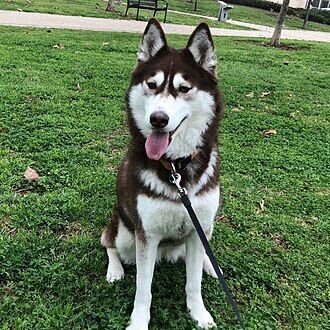
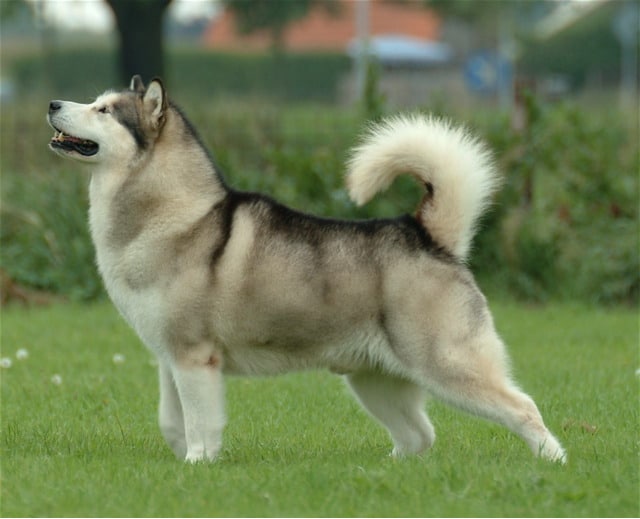
- Genética. Some breeds were literally selected for shooting: a Husky Siberiano or a Alaskan Malamute have shooting in their DNA. They can be taught equally, but you’ll need more patience and more outings of actual exercise.
The important thing: none of these causes are fixed by “corrective” pulling or punishing collars.
What to do when your dog pulls the leash: step-by-step method
The system I’m proposing to you combines techniques recommended by organizations like the American Kennel Club and positive educators.
1. Start where there are no distractions
Don’t try to teach anything new in the middle of the street at rush hour. Practice first in the hallway, the garage, or a quiet yard. Carry small, tasty prizes (pieces of sausage or cheese the size of a pea) and walk around the area. Whenever your dog chooses to step up to your level, mark with a cheerful “okay!” and reward it’s stuck to your leg., never ahead of you. You’re building the idea that good things are raining on your side.
2. The technique of the tree
Already on the street: at the exact moment the leash is tightened, stand dry and stand still like a tree. Don’t pull, don’t scold, don’t keep walking. Wait. Sooner or later your dog will loosen the tension or look at you; in that instant say “okay!” and resume walking. The message is crystal clear: pulling stops the world, loosening it starts it.
3. Changes in direction
If your dog is one of those who gets stuck pulling like a tractor, add this variation: when tense, turn 180 degrees without saying anything and walk in the opposite direction. When it reaches you and the leash loosens, press and turn back to where you were going. Within a few minutes, the dog discovers that losing sight of you does not compensate and starts hanging on to you.
4. Strengthen the “good zone”
Define mentally an area at the height of your leg (even the side, but choose one and be consistent). At first, reward very often when the dog walks within that area with the leash forming a loose “J”. Over the days, see the spacing of the rewards: first every three steps, then every ten, then an entire street. The food is withdrawn gradually, not suddenly.
Use natural rewards, not just food.
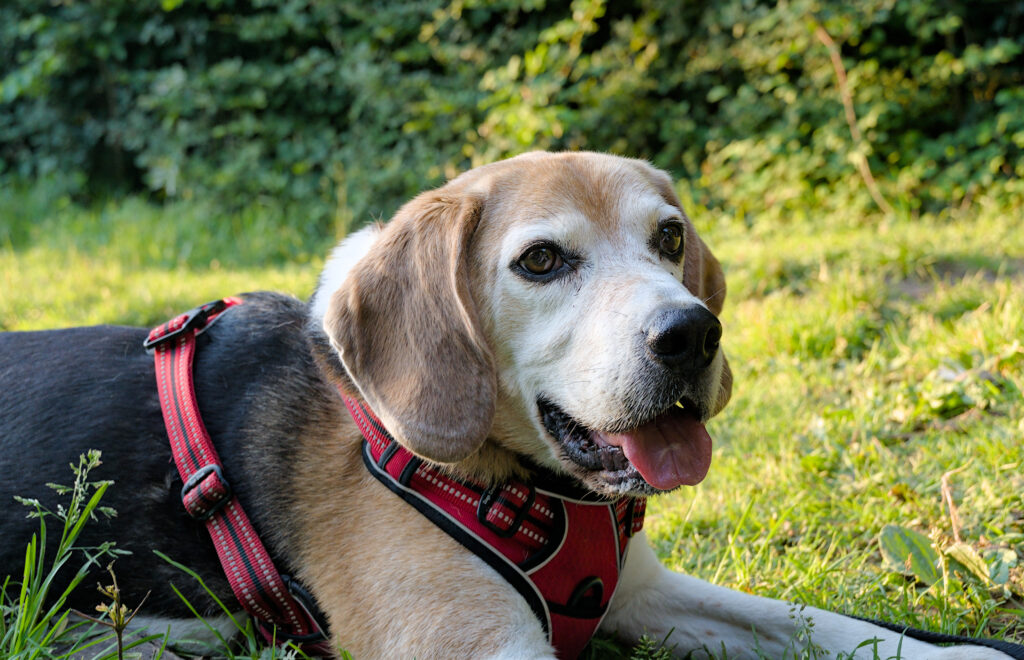
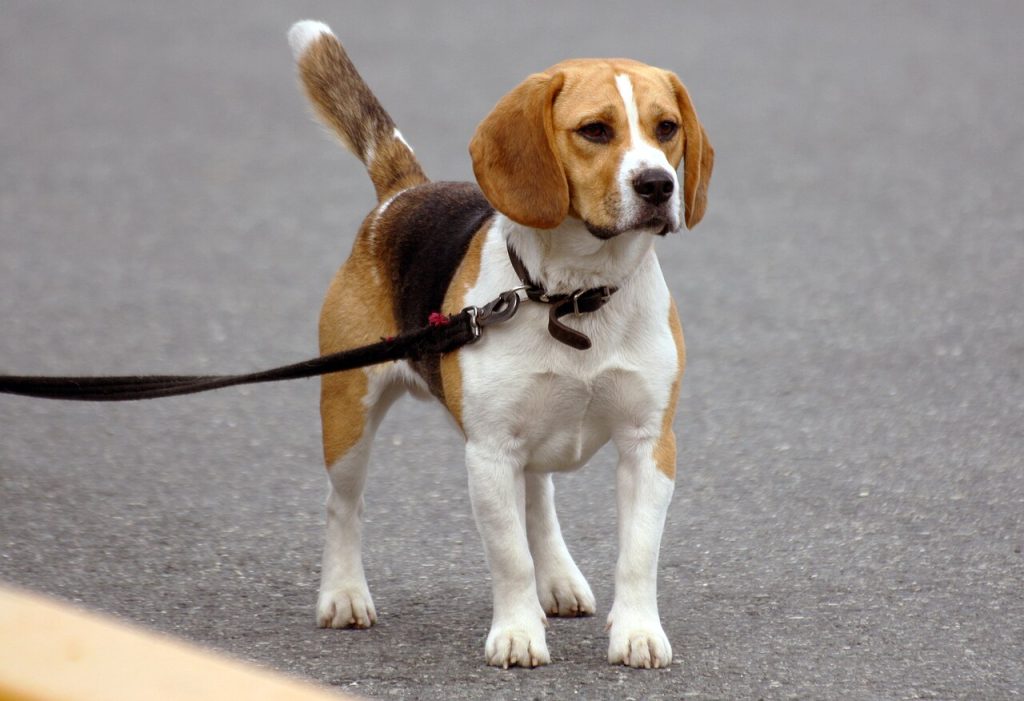
Sniffing is almost any dog’s favorite activity, and for nose breeds like the Beagle it’s directly a necessity. Use it to your advantage: a few feet of loose leash are paid for with a “go sniff!” and a few seconds of free sniffing in that crazy bush. Greeting a dog friend or getting to the park are also very powerful rewards if they only happen with the leash loose.
6. Generalize gradually
When it works on quiet streets, the difficulty increases progressively: more people, more dogs, rush hour. If in a new environment the dog starts pulling again, it’s not that it’s “forgotten”, it’s that the level of distraction is still too high.
Necklace or Harness – What Science Says
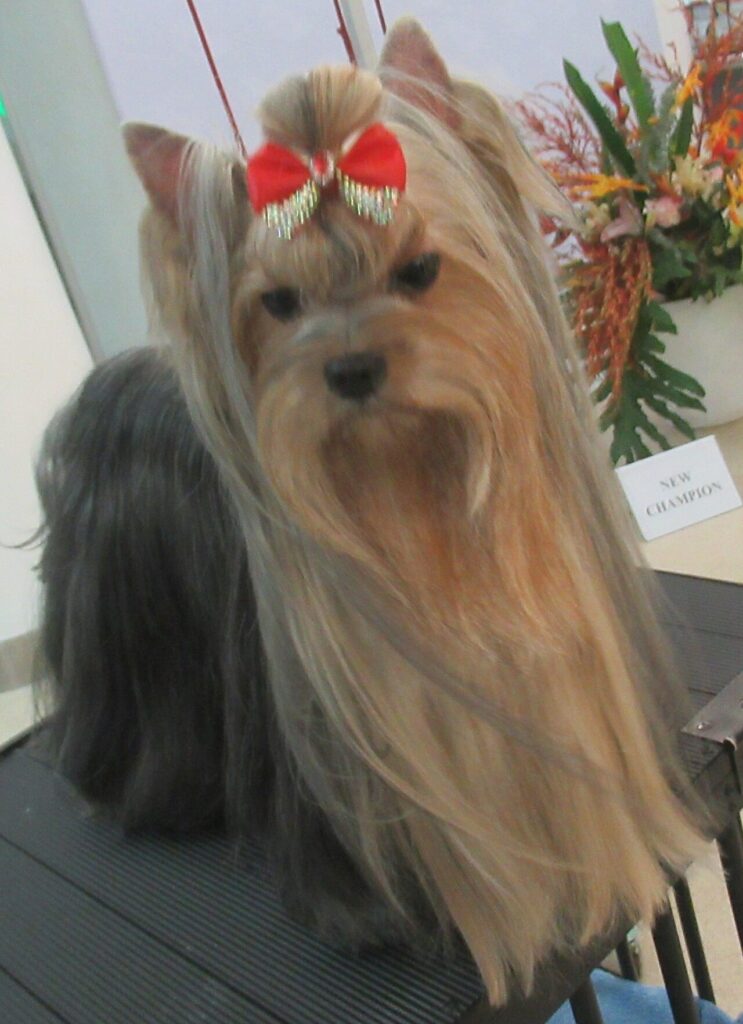
The material doesn’t educate on its own, but it does protect health while educating. And this is data, not opinions. A review published in 2020 measured the pressure a flat collar exerts on the neck when the dog pulls or receives a pull: the values recorded were well above the threshold at which tissue damage can occur. Maintained pressure on the neck has been associated with injury to the trachea, thyroid and increased intraocular pressure. In small breeds prone to tracheal collapse, such as the Yorkshire Terrier or Pomerania, this point is not negotiable: If he pulls, harness.
A curious fact: A 2021 study published in Frontiers in veterinary science with 52 dogs observed that, when faced with a food incentive, dogs pulled harder and longer with rear-hook harness than with collar, probably because the harness distributes the force and pulling is comfortable for them. The honest conclusion: the harness protects the neck, but it doesn’t teach you not to throw.. Education is up to you with the above method; the harness only prevents your dog from getting hurt while learning.
| Team | – For who? | To be taken into account |
|---|---|---|
| Flat collar | Dogs that already walk without pulling | Cervical risk if there are strong or frequent twitches |
| Rear coupling harness | Daily use, puppies, small breeds | Protects the neck, but makes it easy to pull comfortably |
| Harnesses with frontal (chest) hook | Dogs pulling, during re-education | When pulling, the dog turns toward you; helps without causing pain |
| Two to three metres strap | Almost all | It gives you room to sniff without constant tension. |
| Other, of circular cross-section, of iron or steel | Not recommended for retraining | It rewards permanent tension – it teaches just the opposite |
| Other, of circular cross-section, of iron or non-alloy steel | No one . | Pain, risk of injury and associated behavioural problems |
And if your dog coughs, has a delicate neck or any respiratory problem, discuss it with your vet before choosing equipment: each dog is a world.
Manage energy before and during the ride
Asking an energy-laden dog to walk slowly is like asking a child to leave school on tiptoe. Working breeds like the Border Collie or tireless dogs like the Labrador Retriever need to burn and use their heads, or the leash will pay the consequences. Ideas that work:
- Discharge before training: a few minutes of play at home or in a pipe before the polite walk session do wonders.
- Take it easy . If your dog walks through the door like a bullet, wait with the door open until he calms down before leaving.
- Switching modes: divides the ride into “walking together” sections (short leash, attention) and “free mode” sections (sniffing your air with the 3-meter leash).
- Smell = good tiredness: ten minutes of intense sniffing tires more than half an hour of mechanical walking. A slower ride with more noses on the ground is usually a ride with fewer pulls.
- Separate quality exercise: leash walking cannot be the only escape valve for an athletic dog. Controlled racing, play with other dogs or canine sport take pressure off the leash.
Common Mistakes That Ruin Training
- Be consistent only at times. If on Monday you stop when pulling and on Tuesday you let yourself be dragged because you are late, the dog learns that pulling works “sometimes”, and intermittent reinforcements are the hardest to eliminate.
- Pulling punishments. In addition to physical risk, they activate the opposition reflex and associate walking (and sometimes other dogs or people) with something unpleasant.
- Late prize or wrong place. The prize goes when the leash is loose and handed over next to your leg.
- The eternal sessions. Ten concentrated minutes yield more than an hour of demanding work.
- Always in a hurry. If you only walk when you have fifteen minutes and a thousand things on your mind, the dog notices.
- Don’t involve the whole family. If you apply the method and someone else in the house lets you shoot, the progress is erased.
- Confusing pull with reactivity. If your dog not only throws but also barks, bounces or panics in front of other dogs or people, the problem is emotional, not a walk.
Frequently Asked Questions
How long does it take to teach a dog not to pull the leash?
It depends on age, breed, energy and, above all, how many years the dog has been “charging” for pulling. With daily practice and total consistency, many dogs improve visibly in 2-4 weeks, although polishing the walk in environments with many distractions can take several months.
What’s better, a collar or a harness for a pulling dog?
Harness, no doubt, for health: the pressure of a collar on the neck of a dog pulling can damage the trachea and other tissues. Of course, the harness does not teach not to pull (with rear hook can even facilitate pulling), so combine it with training.
Do the chokehold or spanking collars work?
They can suppress the painful pull in the short term, but they carry the risk of neck injury and behavioral problems due to the negative association (fear, reactivity).
What’s the best leash to teach walking without pulling?
A fixed leash of 2 to 3 meters: gives enough looseness for the dog to sniff without tension, but maintains control. Avoid the stretch during re-education, because it rewards constant tension (the dog learns that pulling gains meters), which is exactly the opposite of what you want to teach.
Does my dog pull because he wants to be the leader or dominate me?
No. The dominance theory applied to walking is outdated. Your dog pulls because it walks faster than you, because the world excites it, and because pulling has worked for it so far. It’s a matter of learning and motivation, not hierarchy, and that’s why it’s corrected with reinforcement and consistency, not punishment.
What if my dog only throws when he sees other dogs?
If the pull is accompanied by barking, crying, or lashing out at other dogs or people, we are talking about reactivity, an emotional problem that requires a specific plan for behavior modification. In that case, seek out a canine educator or ethologist who works positively, and if the behavior change is abrupt or recent, rule out pain or other medical problems with your veterinarian first.