Camas para perros: cómo elegir la adecuada (y cuándo ortopédica)
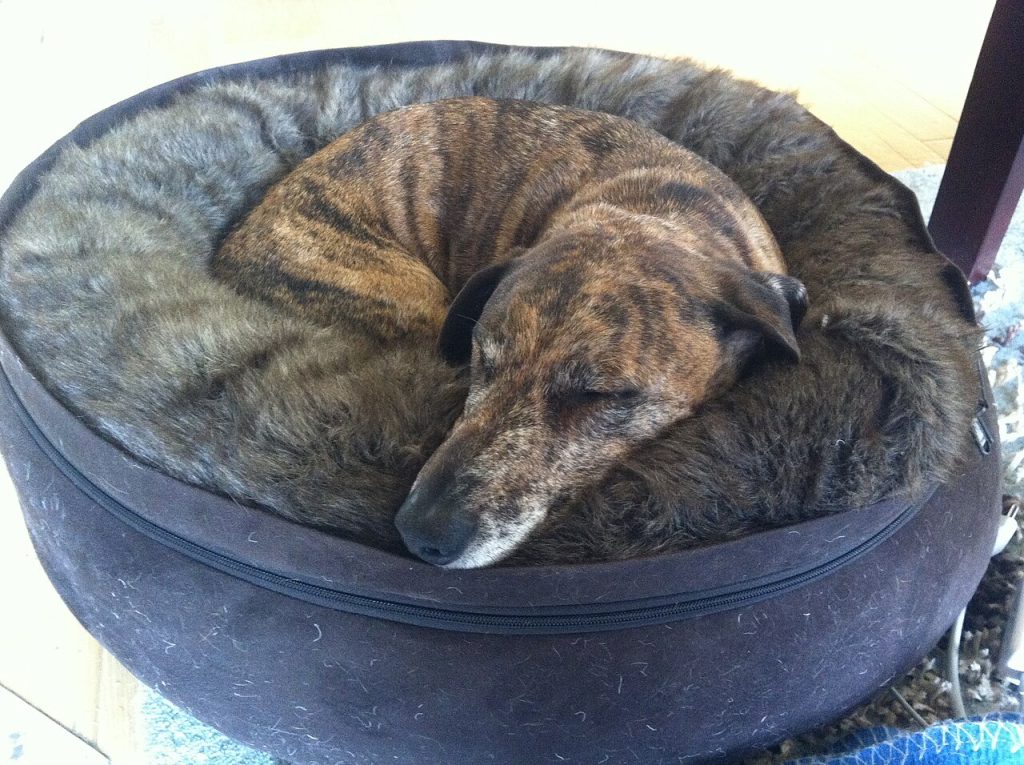
Your dog sleeps between 12 and 14 hours a day if it’s an adult, and up to 18 or 20 if it’s a puppy or already graying. I mean: You’re gonna spend more than half your life in bed. And yet, most of us choose the dog bed in two minutes, because of the price or because it sticks to the couch. In this guide, we’ll tell you how to get it right: what size you need, what materials they compensate for, what kind of bed fits into your sleep pattern and, above all, when it’s worth (or not) the jump to an orthopedic bed.
Why bed matters more than you think
Sleep is not a luxury for a dog: it is when his body repairs muscles, consolidates what it has learned and regulates stress. A dog that rests poorly is noticeable in everything else: more irritable, more clumsy, less receptive to training.
The bed is also his safe area. A private place where no one disturbs him reduces anxiety and gives him a “refuge” to retreat when there are visitors, noise or children with excess energy. If your dog does not have such a corner, it is not uncommon that he ends up looking for it under a table or behind the sofa.
And there’s a third reason, which almost no one looks at: joints. Sleeping for years on a hard surface or on a foam mattress punishes elbows, hips and spine, especially in large, heavy dogs.
How to Choose the Right Dog Bed: 5 Criteria
1. Size: Measure, not calculate
Mistake number one is falling short.
- Measure your dog lying down, from the tip of the snout to the base of the tail (not counting the tail).
- Add between 15 and 25 cm to that measure.
- This is the minimum length of the useful surface of the bed (note: padded edges do not count as useful surface).
If your dog sleeps on its side with its legs outstretched – you’ll see it right away – pull toward the top of the margin.
2. Your sleeping position tells you which bed you need
- It curls up like a doughnut: will do well on nest or doughnut beds, with edges to support the head and a sense of containment.
- Sleep on your back or on your head: better mattress or flat and wide mattress, without edges that hinder you.
- He buries himself under blankets: values a cave bed or extra blanket. Teckel
- Always look for fresh soil: may not need more filler, but less heat: a raised bed or a breathable surface.
3. Materials and filling: where quality lies
Two identical beds on the outside can be opposite on the inside.
- The filling: the hollow fiber or foam cuts are crushed in months. The high density foam and the viscoelastic (memory foam) last years and distribute the weight better.
- The thickness: for a large dog, a core less than 8-10 cm ends up hitting bottom. Do the hand test: press the center hard; if you feel the floor, that bed is not for him.
- The cover: removable and machine washable, yes or yes. If the dog lives in a wet area or is one of those who come wet from the walk, look for a waterproof base or membrane cover.
- Certificaciones: stamps such as CertiPUR or OEKO-TEX indicate foams and fabrics free of problematic substances.
4. Age, weight and health
A dog-breaking puppy doesn’t (yet) need an expensive bed: it needs a sturdy, washable, filler-free one that it can swallow if it breaks. A healthy adult dog has room for almost any type. A senior, overweight or large breed dog deserves you to think about orthopedics before the problems appear, as we see below.
5. The weather and the dog itself
Not all dogs want a warm little nest. Double-layered Nordic breeds like the Husky Siberiano usually prefer cool surfaces, and forcing them to sleep in a soft, closed bed in the middle of summer is condemning them to the ground. At the opposite end, dogs with little body fat or undercoat, such as the Galgo Español, need generous padding and warmth: Their marked bones and thin skin are very resentful of hard surfaces.
Bed types: which one fits your dog?
| Type of bed | Ideal for | Keep in mind |
|---|---|---|
| Mattress / flat mattress | Dogs sleeping on their backs, large dogs, use in cages or carriages | Watch the thickness: the thin ones are crushed soon |
| Nest / doughnut with edges | Dogs that curl up, rest their head or seek restraint; nervous dogs | The internal usable area is usually smaller than it appears |
| Ortopédica (viscoelástica) | Seniors, dogs with osteoarthritis or dysplasia, large and heavy breeds | Many “orthopaedic” are not: look density and thickness |
| Hoisted / hammock | Hot weather, outdoors, dogs looking for the cool | Some dogs have a hard time getting used to the initial rocking |
| Cave or pit | Small hounds and excavators | Not recommended for hot dogs. |
| Refreshing blanket or mat | Summer supplement, double-coated or brachycephalic dogs | It’s a complement, not a substitute for the bed. |
Orthopaedic bed: when and how to distinguish a real one
Canine osteoarthritis is very widespread and very underdiagnosed, and the numbers vary depending on the study and the method — from about 20 percent of adult dogs in classical estimates to about 40 percent in recent clinical screening, and even more in older dogs evaluated with X-rays — but the conclusion is the same: many more dogs than we think live with joint pain., because they’re experts at hiding it.
What makes an orthopedic bed good is distributing the weight and removing pressure points on the hips, elbows and shoulders, so the dog can rest without crushing the painful areas and get up with less stiffness.
When It Makes Sense
- Dogs with diagnosis: osteoarthritis, hip or elbow dysplasia, joint surgery, spinal injuries.
- Séniors: if your dog is slow to get up, hesitates before lying down or no longer jumps on the couch, do not wait for the diagnosis to improve his rest (but do not replace the visit to the veterinarian with a bed: this behavior change must be consulted).
- Large and giant breeds, even young: a Labrador or a Pastor Alemán have a known predisposition to dysplasia, and in giants like the Gran Danés joint wear starts earlier. Many veterinarians recommend moving to a firm support bed around 5-6 years of age in large breeds, or earlier in giants, as a preventive measure. There is no clinical trial that measures exactly how much a bed prevents — let’s face it — but reducing pressure on predisposed joints is common sense, and no veterinary trauma specialist is going to argue with you.
- Very thin or low mass dogs: greyhounds and the like appreciate the extra cushioning even if they’re healthy.
How do you know if you’re a real orthopedist?
“Orthopaedic” is not a regulated term: anyone can stamp it on the label.
- High density or viscoelastic foam core, one-piece, if the filling is balls, fibers, or bits of foam, it’s not orthopedic, call it whatever you want.
- Thickness proportional to weight: from about 10 cm core for medium and large dogs; a 3 cm sheet of viscoelastic over nothing is pure marketing.
- The test of the hand: sinks your hand firmly in the center, should recover slowly and without letting you touch the ground, if it sinks all the way down with your hand, imagine with 35 kg of dog.
- Easy to access: for a dog with reduced mobility, better low profile or with a lowered entrance side, no high edges to climb.
Where to put the bed at home
The best bed fails in the wrong place.
- Neither isolated nor in the middle of the pass. Dogs want to see their family, but not sleep in a busy hallway.
- No currents or edges: away from doors that open onto the street, sticky radiators or floors that heat up in the afternoon sun.
- Estabilidad: once you find the right site, don’t move it every week.
If you have several plants in your home or spend many hours in separate rooms, a cheap second bed keeps your dog from sleeping on the floor for half the day.
Hygiene: how often to wash and how
The dog bed is, according to most home hygiene studies, one of the objects with the most microbial load in the house: it accumulates hair, saliva, walking remains and, if there is bad luck, flea eggs and mites.
- Funda: to the washing machine every 1-2 weeks (every week if there are allergies in the house or the dog goes out in the field).
- Aspirado: vacuums the bed a couple times a week, along with the surrounding floor.
- Inner core or cushion: washed or thoroughly aerated once a month, following the label (the viscoelastic usually cannot get into the washing machine: the cover is aerated and cleaned).
- Completely dried before re-mounting: trapped moisture is the shortcut to fungus and bad smell.
Common mistakes when buying a bed
- It’s the most expensive mistake in the medium term: you’ll end up buying two.
- Staying short“because it likes to curl up”. It also curls up because it doesn’t fit when stretched.
- Buy “orthopedic” from marbles. If there is no foam core of a piece, there is no orthopedics.
- Never renew it. A conquered foam, with marked valleys, no longer holds anything.
- Wash it twice a year. In addition to the health issue, many dogs reject beds that smell bad… or that suddenly smell like lavender softener.
- Ignore the dog. If you’ve been sleeping on the cool floor next to your brand-new lamb bed for weeks, the message is clear: you’re hot.
Frequently Asked Questions
What size bed does my dog need?
Measure your dog lying down from the snout to the base of the tail and add up between 15 and 25 cm: that’s the minimum useful surface area you need, not counting padded edges. If he sleeps on his side, go to the high margin. Between two sizes, always choose the big one.
When is an orthopedic bed worth it?
Whenever there is arthrosis, dysplasia or joint surgery; in senior dogs that take time to get up; and as a prevention in large and giant breeds from 5-6 years of age (formerly in giants).
How often do you have to wash the dog’s bed?
The cover, every 1-2 weeks in the washing machine (weekly if there are allergies in the house or the dog goes out a lot in the field), and the inside thoroughly once a month.
Why doesn’t my dog use your bed?
The most common causes: excessive heat (typical in double-coated breeds), the bed is in a slippery or isolated place, the size or type does not fit with his sleeping position, or it smells too much of detergent.
How often do you change the dog’s bed?
There is no fixed date: it is changed when the filling loses the battle. If the foam does not regain its shape when squeezing it, there are marked valleys where it sleeps or you notice the ground when pressing the center, the bed no longer fulfills its function even if the cover is impeccable.
Is it wrong that my dog sleeps in my bed instead of yours?
There is no evidence that it is harmful to healthy, well-balanced dogs: it is a personal decision. Of course, even if you share your bed, it is good to have your own for shelter during your absence and when you need to rest without discomfort.