Esterilizar a tu perro: ventajas, mitos y el mejor momento
Few decisions raise as many questions for those who share their lives with a dog as sterilize‘s . That if she changes her character, that if she gets fat, that if it’s better to wait until she gives birth once… There are many myths and opinions about sterilizing your dog, and the truth is that veterinary science has come a long way in recent years: Today we know that it’s one of the most important health decisions you’ll make for him, but also that the when and the how ? matter more than we thought. In this guide, we tell you, with verified data and without drama, the real advantages, the risks that no one tells you and the best time depending on the size and breed of your dog.
What exactly does it mean to spay a dog?
Although in everyday life we use “sterilize” and “castrate” as synonyms, technically they are not the same thing:
- Castración: removes the gonads, i.e. the testicles in males (orchiectomy) or the ovaries in females (ovariectomy, often together with the uterus: ovariohysterectomy).
- Sterilization in the strict sense: prevents reproduction without removing the gonads (vasectomy in males, ligation of tubes in females).
This article focuses on the first option, which is recommended by most veterinarians because it provides the health benefits that we will now consider. There is also a third route for males: This is called chemical castration using a deslorelin implant, which temporarily and reversibly suppresses the hormones for about 6 to 12 months. It is a useful tool to “test” how your dog would respond before taking the final step, always under veterinary criteria.
Real Benefits of Sterilization
In females
The classic study of breast tumors in dogs, cited for decades by the veterinary community, yields impressive numbers:
- Sterilized before the first heat: the risk of breast cancer drops below 0,5 %.
- After the first heat , the risk rises to around 8 %.
- After the second heat , it fires close to the 26 %.
Breast tumor is the most common tumor in unsterilized bitches, and about half of the cases are malignant. Added to this is peaches, a serious uterine infection that, according to epidemiological studies, affects between 20 and 25% of whole bitches before the age of 10 and usually requires emergency surgery. Sterilization with removal of the uterus completely prevents it, in addition to eliminating psychological pregnancies and jealousy with its bleeding and escapes of suitors.
In males
- It eliminates the risk of testicular cancer., one of the most common tumors in older whole males.
- It drastically reduces prostate problems, especially benign prostatic hyperplasia, which affects most older whole males.
- Reduces hormone-related behaviors: marking with urine, riding and, above all, escapes in search of females in heat, one of the main causes of overtaking and losses.
For both of you and for all of us
According to the American Veterinary Medical Association (AVMA), they live longer on average dogs are sterilized more than whole dogs, partly for the prevention of these diseases and partly because they wander and have fewer accidents. And there’s a collective benefit we shouldn’t forget: Each unplanned litter competes for a home with the thousands of dogs already waiting in shelters. Sterilization is also a form of responsibility toward others.
The risks, honestly counted
It would be easy to sell you sterilization as a decision with no fine print, but it wouldn’t be honest. Research over the last decade, especially from the University of California at Davis, has greatly nuanced the message of “the sooner, the better”:
- Tendency to be overweight. After surgery, the metabolism slows down and the calorie requirement drops around 20-30%. If you keep feeding the same, your dog will get fat. It is the most common side effect and also the easiest to control: less feed or specific feed, and daily exercise.
- Joint disorders in large breeds sterilized too soon. UC Davis studies of 35 breeds found that in large breed dogs neutered before the age of one year increased the risk of hip dysplasia, cruciate ligament rupture, and elbow dysplasia.
- Some cancers in specific breeds. In Golden Retriever, early sterilization has been associated with increased incidence of certain tumors and joint problems, and in Rottweiler very early castration has been associated with increased risk of osteosarcoma.
- Urine incontinence in some females. Affects a minority, especially large breeds, and is usually well controlled with medication.
- Anesthetic and surgical hazard. exists, as in any surgery, but in young, healthy animals with proper preoperative is very low.
The researchers’ conclusion is not “non-sterile”, but there is no one age for all dogs.: the decision should be personalized according to race, size, sex and lifestyle, together with your veterinarian.
Best time to spay your dog
With all of the above on the table, these are the general guidelines that most veterinarians now follow and that support breed studies:
| Size (adult weight) | Examples | General guidance |
|---|---|---|
| Mini and small (< 10 kg) | Chihuahua, Yorkshire Terrier | From 6-12 months; early sterilization showed no increase in joint problems |
| Medium (10 to 20 kg) | Beagle and Cocker. | Approximately 6-12 months, on a case by case basis |
| Large (20-40 kg) | Labrador Retriever, Pastor Alemán | It’s best to wait until 12-18 months, when the growth plates close. |
| Giant (> 40 kg) | Gran Danés | From 18 to 24 months, with complete skeletal maturity |
In females there is an important nuance: sterilizing before the first heat maximizes protection against breast tumors, but in large breeds it may clash with the recommendation to wait until bone maturity.
What if your dog is already an adult or a senior? It is never “too late” by definition: preventing pyometra or prostate problems is still valuable at any age, although protection against breast cancer decreases the longer it is delayed. A thorough pre-anesthetic check resolves the question of whether surgery is safe for him.
Myths to Bury
- “It’s better for the bitch to have a litter first”. False, and also counterproductive: every passing heat increases the risk of breast cancer.
- “It will change his personality”. Your dog will remain the same: equally playful, equally affectionate, equally clever.
- “Grow fat yes or yes”. They get fat if they continue to be fed as before. By adjusting the ration and maintaining exercise, a sterilized dog keeps its weight perfectly.
- “Castration fixes the aggression”. can only help in hormone-linked aggression (among males, by sexual competition). Aggression due to fear or poor socialization is not operated: it is worked with an educator or ethologist.
- “The males don’t need it because they don’t stop”. The prostate and testicular benefits are yours, and the unwanted layers occur between the two.
- “It’s unnatural and the dog suffers from it”. Dogs have no notion of fatherhood or “miss” breeding. A bitch with recurrent psychological pregnancies or a frustrated male after every female in heat have it much worse.
The operation and the postoperative, step by step
Castration is one of the most routine surgeries in any clinic: in males it usually takes about 20-30 minutes and in females a little longer, and in most cases your dog goes home the same day.
- Antes: adheres to the fast prescribed by the veterinarian (usually 8-12 hours of food) and takes advantage of preoperative (analytical, auscultation) to rule out risks.
- The first 24-48 hours: may be sleepy and without appetite; offer him water and food in small quantities and let him rest in a quiet place.
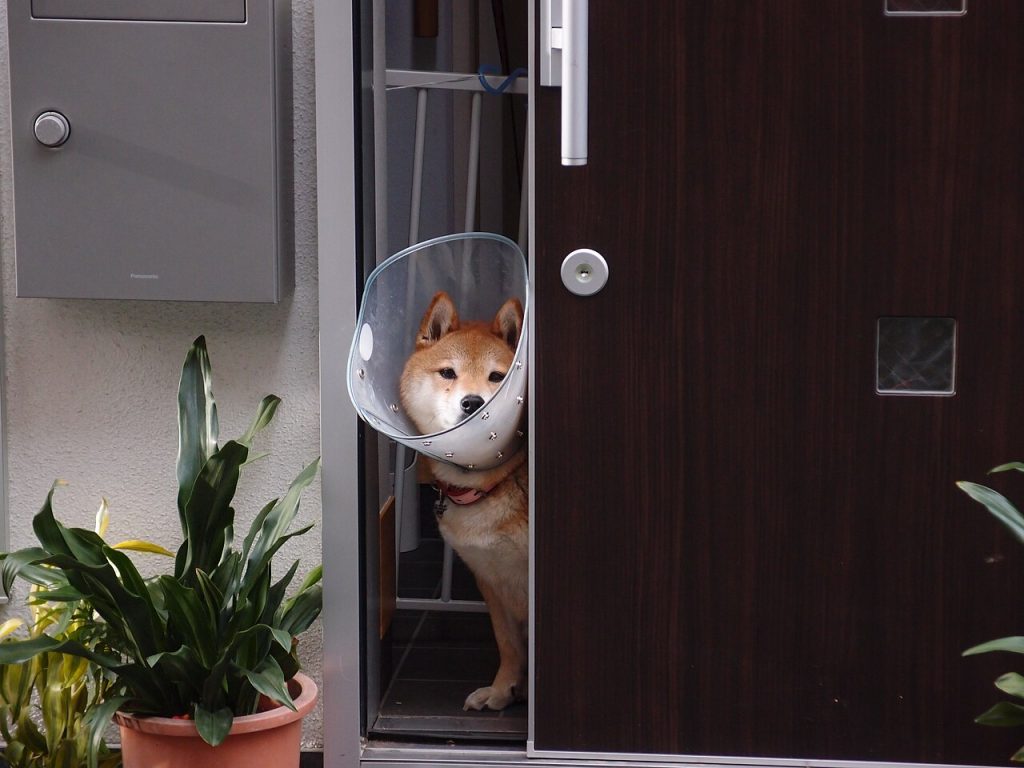
- Elizabethan collar or post-surgical body until the stitches are removed: a lemon to the wound can turn a 10-day recovery into weeks of complications.
- Relative rest 10 to 14 days: short walks on a leash, no jumping, no running or rough play with other dogs.
- Watch the wound daily: some inflammation is normal; severe redness, swelling, odour or fever are grounds for calling the veterinarian.
- Adjust feeding from the first month: reduces the ration by around 10-20% or switches to a sterilized dog food, and grooms it every few weeks to correct in time.
Common Mistakes to Avoid
- Sterilize a large breed puppy “as soon as possible” without assessing bone maturity: in a Labrador or German Shepherd, getting too far ahead can increase joint risk.
- Delaying it indefinitely “out of pity” in a female: each heat increases the risk of breast tumor and the pyometra stalks entire adult bitches.
- Do not change the diet after the surgery and discover the excess weight a year later, when it’s already much more expensive to reverse.
- Take off his Elizabethan necklace.“because it bothers you” and find the wound open or infected.
- Expecting surgery to resolve behavioral problems that need education, not a scalpel.
- Deciding what worked for the neighbor’s dog: every breed and every individual has their peak time; talking to your vet is not a paperwork, it’s the most important part.
The final picture is clear: Sterilizing your dog is, for the vast majority of pet dogs, a decision with far more benefits than risks, provided the timing is right. The days of “everyone the same and as soon as possible” are behind us; the days of “every dog his plan” are what a good vet will offer you. Ask him to evaluate your dog’s breed, size, sex, and lifestyle, and you will have peace of mind that you have made your decision with the best information available.
Frequently Asked Questions
At what age is it best to sterilize a dog?
It depends on the size and breed. As a guideline: small breeds, between 6 and 12 months; large breeds, better wait at 12-18 months; giant breeds, at 18-24 months, when bone development has finished. In females, sterilizing before the first heat maximizes protection against breast tumors. The final decision should always be made with the veterinarian, evaluating each case.
Will sterilizing my dog change his character?
No, her personality, her cheerfulness and her bond with you remain intact. What decreases are the behaviors linked to sex hormones: urine marking, riding, running away in search of fervent females, and some of the aggressiveness between males.
Is it true that dogs get fat after they’re spayed?
They’re easier to fatten up because their calorie requirements drop around 20-30%, but overweight is not inevitable. By reducing the ration or switching to sterilized dog food and maintaining daily exercise, your dog will maintain its ideal weight without any problems.
How long does it take to recover from sterilization?
In general, between 10 and 14 days until the removal of stitches and return to normal activity. The males usually recover somewhat faster than the females. During this period the key is the isabeline collar or body, short walks with a leash and daily surveillance of the wound.
Is it better to let my dog have a litter before sterilizing her?
It is one of the most widespread myths and has no scientific basis: raising a litter does not bring any physical or emotional benefit to the dog. On the contrary, each heat that passes increases the risk of breast tumors, which is less than 0.5 percent if sterilized before the first heat and rises to about 26 percent after the second heat.
Is there any reversible alternative to surgery?
Yes, for males there is chemical castration by means of a deslorelin implant, which temporarily suppresses sex hormones (about 6-12 months depending on the dose). It is useful to check how the dog would respond before a definitive castration.