¿Por qué ladra tu perro? Tipos de ladrido y cómo gestionarlos

It’s eleven o’clock at night, your dog starts barking in the hallway and you wonder, once again, why is my dog barking? if there’s nothing there. The short answer is: Because he’s telling you something. Barking is their primary means of communication, and there is not one barking, but many different types with different meanings. The good news is, once you learn to distinguish them, managing them is a lot easier than it looks. In this guide, we explain what each type of bark means, how to recognize it by its sound and context, and what to do (and not do) in each case, following the recommendations of veterinarians and positive educators.
Why my dog barks: the short answer
Dogs bark because it’s their natural way of expressing themselves: They warn, they ask, they greet, they protest, they vent. Interestingly, their wild ancestors barely bark; adult wolves do so rarely and almost only as an alarm. During domestication, dogs developed a much broader barking repertoire, probably because they found it very useful for communicating with us. I mean: Your dog barks, mostly it’s for you.
That is why the goal should never be that your dog never bark (it would be like asking a person not to talk), but to understand the message and reduce excessive or problematic barking. Every bark has a reason, and the reason is the key to the treatment: A territorial barking is not handled the same way as a barking of boredom or anxiety. Being wrong about cause is the number one reason “nothing works”.
The 8 Types of Barking and How to Recognize Them
Behavioral veterinarians usually classify barking according to its function.
| Type of barking | How does it sound? | Typical context |
|---|---|---|
| Territorial | Serious, strong, in sustained bursts | Someone approaches the house, the garden or the car |
| Warning | Dry, repetitive, to any noise | The doorbell, the doorbell, the steps on the stairs |
| Demand for care | Sharp, insistent, staring at you | He wants food, play or caresses. |
| Greetings | Sharp, accompanied by relaxed body and moving tail | You get home or you run into someone you know. |
| Playing | Sharp, cropped, with playful bows | During races or play with other dogs |
| Bored | Monotonous, repetitive, almost mechanical | Many hours alone, without exercise or stimulation |
| Out of frustration | Explosive, mixed with moans. | Tied, behind a fence or strapped to another dog |
| From separation anxiety | Continuous barking and howling when left alone | It starts a few minutes after you leave; there could be damage. |
To this list can be added the socially facilitated barking(barks because another neighborhood dog barks) and the compulsive barking, a repetitive barking without a clear trigger that is usually accompanied by other stereotyped behaviors, such as turning in circles, and that requires professional evaluation.
How to Read a Bark – Tone, Rhythm, and Body
Can you “translate” a bark? To a large extent, yes. Research on canine acoustic communication, such as that of the ethology group at Eötvös Loránd University in Budapest, has shown that people are able to identify the emotional context of a bark (threat, fear, play, loneliness) above randomness, even without seeing the dog.
- The tone: Low barks usually indicate warning or threat (“do not approach”); high ones are associated with positive emotions, excitement or request.
- The rhythm: the faster and more followed the burst, the greater the urgency or activation of the dog.
- The body language: the same barking means different things with stiff body and curly hair than with playful bows and loose tail.
Spend a few days observing your dog as if you were a detective: note when it barks, what it barks at, how it sounds, and what it accomplishes. That little diary is worth more than any trick, because it will tell you exactly what kind of barking you’re up against.
How to handle each type of barking
The golden rule is always the same: identify motivation and act on it, not about the symptom.
Territorial and alarm barking
- Manage the environment: if it barks out the window, it limits visual access with translucent vinyl or rearranging space.
- Desensitize the doorbell: sounds the bell (or an audio) at low volume and rewards calmness, increasing the intensity very gradually.
- Give him an alternative: teaches him that when the doorbell rings, his job is to go to his bed and wait for a prize.
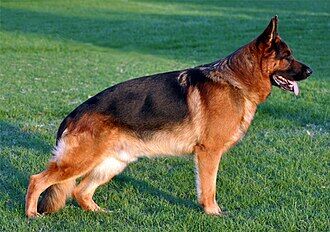
- It is more realistic than aiming for zero warnings in guard races like the Pastor Alemán.
Barking for attention
- Withdraw the prize: if he barks to get something and he gets it, you’ve trained the barking. When he barks to ask you, ignore him completely: without looking at him, without talking to him, without touching him (for a dog, even a scolding is attention).
- The prize is silence: as soon as he’s quiet for a few seconds, ask him for a “sit” and then give him what he wanted.
- Prepare for the “extinction explosion”: the first few days will bark harder and harder before giving up. It’s normal and expected; if you give in at that peak, you’ve taught that insisting on the beast works.
Barking from boredom
- More exercise: quality walks with time for sniffing, active play, running.
- More mental work: Kong-type stuffed toys, sniffing mats, chewables, and short daily training sessions.
- If you spend a lot of time alone, set up a dog walker or daycare a few days a week.
Frustrated barking (belt, fences)
- Increase the distance with the stimulus until your dog can see it without exploding, and reward calmness at that distance.
- Avoid greetings with tight belts – tension triggers frustration.
- If leash reactivity is intense, work with a positive canine educator; it is one of the problems where professional help is first noticed.
Barking from separation anxiety
This is a separate case: The dog isn’t “behaving badly”, he’s having a bad time. It usually starts within a few minutes of being alone and may be accompanied by shattering of doors and windows, gasping, salivation or urination. Serious treatment involves gradual desensitization(absences of seconds that lengthen, without letting the dog become distressed), discrete exit routines and, in moderate or severe cases, support from a veterinarian specialized in behavior, who can assess supportive medication. Camera footage is very helpful in confirming the diagnosis.
The method of “silence”: step by step
Teaching a “silence” signal is one of the most useful tools out there, and veterinary hospitals like VCA specifically recommend it.
- It causes a controlled barking.(e.g. with the doorbell) or wait for it to bark naturally.
- Let him bark two or three times and bring a very appetizing prize to his nose. When he smells it, he will stop barking: it is physically incompatible to smell and bark at the same time.
- The moment he is silent, say your keyword (“silence”, “quiet”) in a calm voice and give him the prize.
- Repeat in short sessions, gradually lengthening the seconds of silence before awarding: first 2, then 5, then 10…
- Once you’ve learned it, start using the word before to teach the prize, and then practice in increasingly difficult situations.
Important: give the just once . signal and in a calm tone. Repeat “shut up, shut up, shut up!” louder and louder only confirms that you are barking too.
More dogs and less barking
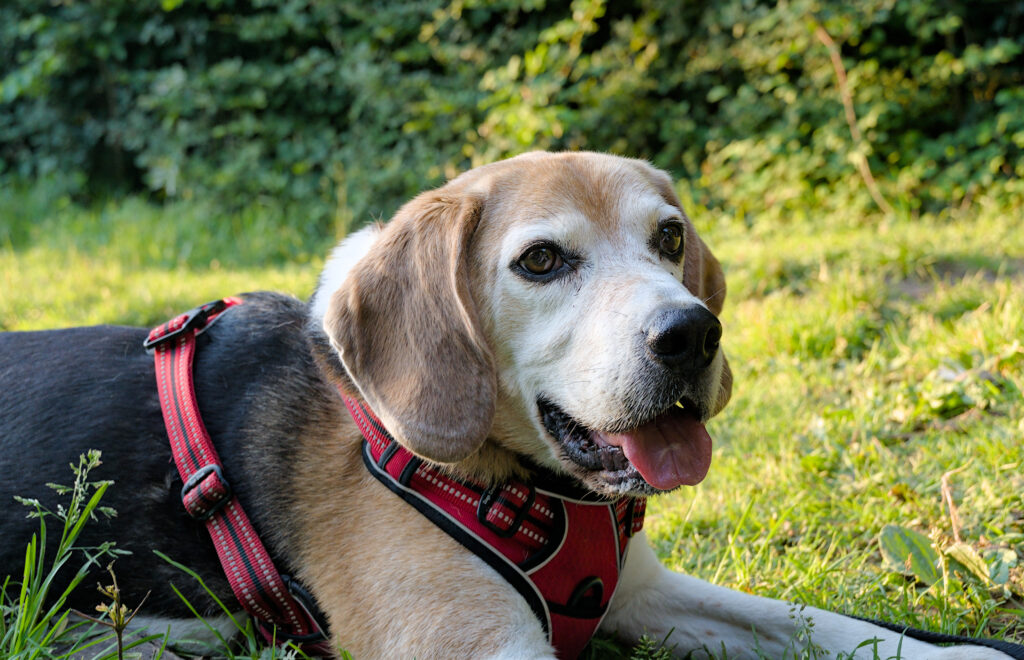
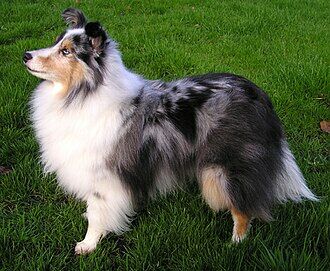
Yes, and a lot. Genetics sets clear trends, because for centuries we have selected dogs precisely for their voice. Hounds like the Beagle were bred to “sing” during tracking, and that characteristic howl-bark comes standard. Shepherding dogs such as the Shepherd of Shetland used the voice to move livestock and warn the shepherd, and many terriers, such as the Yorkshire Terrier, retain the alarm instinct of their rat-hunter days. Among small companion dogs, the Chihuahua has a well-deserved reputation as a tireless watchdog: Small size, a lot to say.
At the other end of the spectrum is the Basenji, known as “the dog that doesn’t bark”: because of the peculiar shape of its larynx, it emits a kind of chirping or yodeling instead of the classic barking.
The moral is twofold: first, if you value silence, learn about the vocal tendency of the before breed to choose a dog. second, with a talking breed, be realistic. You can reduce and channel barking, but asking a hound to not bark is never going against its nature.
Common Mistakes That Worsen Barking
- Besides, punishment increases stress, and stress increases barking.
- Reinforcing without realizing it. Looking at him, touching him or talking to him when he barks for attention is paying him for barking, even if it is to scold him.
- It’s a burglar collar. The discharge ones are aversive and are banned or restricted in several countries; those of citronella or ultrasound, according to the veterinarians themselves, usually lose effectiveness because the dog learns to distinguish when he wears the collar, and none of them solves the cause.
- The chorectomy or “devocalization”. Operating the dog so that it does not bark is a mutilation prohibited by the European Convention for the Protection of Pet Animals, ratified by Spain.
- Being impatient. Barking takes months or years to build up; it won’t go away in two days.
- Treating the symptom without the cause. Silencing a bored or anxious dog without meeting its needs only shifts the problem to wrecking, compulsive whining, or other worse behaviors.
When to go to the vet
Make an appointment with your vet if you notice any of these signs:
- Sudden change of heart: a dog that never barks and begins to do so (or vice versa) without changing its routine.
- Older dogs that vocalize at night or seem disoriented: it can be cognitive dysfunction (the “canine Alzheimer’s”), also hearing or vision loss, and there are treatments that improve their quality of life.
- Compulsive barking with no trigger, with repetitive walks or shadow chasing.
- Suspicion of separation anxiety, intense fear or aggressiveness: here the indicated is an ethologist veterinarian or an educator specialized in behavior modification with positive methods.
Ruling out medical cause is always the first step in any behavioral problem, and it’s quick, and it saves you months of misdirected training.
Frequently Asked Questions
Why does my dog bark at other dogs during the walk?
The most common is the so-called leashed reactivity: frustration at not being able to approach to greet, or fear and desire to put distance. The strained leash and narrow corridors aggravate it. Work at a distance where your dog can see other dogs without exploding, reward calmness and gradually shorten it. If it is intense, a positive educator will save you a lot of time.
Is it true there are dogs that don’t bark?
The Basenji barely barks because of the peculiar shape of its larynx, but it emits a characteristic yodel or gurgle, as well as growls and howls.
Do the burglar collars work?
They’re not recommended. Showerers are banned or restricted in several countries because they’re aversive, and citronella or ultrasound often lose their effectiveness because the dog doesn’t know when to wear them. None of them act on the cause of the bark, which is the only thing that solves the problem in the long run.
Why does my dog bark at night?
The most common causes are noises you do not perceive (fine hearing and alarm barking), boredom from lack of exercise during the day, demanding attention or, in older dogs, cognitive dysfunction.
How long does it take to correct excessive barking?
Depending on the type of bark, how long it has been building up, and your persistence, a recent demand bark may improve in a couple of weeks; a well-rehearsed territorial one or separation anxiety may require months of gradual work. Be wary of any method that promises immediate results.
Do I always have to ignore my dog when it barks?
No. Ignoring only works with attention-demanding barking. If the barking is born out of fear, anxiety or boredom, ignoring it doesn’t solve anything and may even make it worse, because the underlying need is still unmet. First identify the cause, then choose the strategy.