Primeros auxilios para perros: lo que todo dueño debería saber
No one wants to imagine their dog choking, bleeding, or collapsing from heat stroke. But the ER doesn’t warn, and what you do in the first few minutes can make a difference. Knowing about first aid for your dog does not replace the vet – let me make that clear – but it saves you time, prevents the problem from getting worse, and gets you to the clinic with your stable dog. In this guide, we tell you step-by-step how to deal with the most common emergencies.
The golden rule: protect yourself and call the vet.
Before you touch a wounded dog, take a deep breath and remember two things. The first one: a dog in pain can bite., even the owner he adores. Go slowly, talk to him calmly, and if he is not having trouble breathing or vomiting, try improvising a soft muzzle with a bandage or stocking. The second: First aid is for stabilize and buy time, not healing. Call your vet or a 24-hour emergency clinic as soon as you can, tell them what happened and let them know you’re on your way: So they can get everything ready before you get there.
Keep your regular vet’s phone on your phone and the phone of the nearest emergency clinic.
First aid kit for your dog
Have one at home and, if you’re traveling or hiking with your dog, another small one in your backpack or car.
- Sterile gases and cohesive bandages(stick to themselves, not the hair).
- Physiological serum on a single dose, to clean wounds and eyes.
- Dilute chlorhexidine as a disinfectant (better than alcohol, which irritates and hurts).
- Digital thermometer for dog use only, and lubricant.
- Machinery for making pulp of fibrous cellulosic material to cut bandages or remove visible splinters.
- Thermal blanket or towel, for shock and as a makeshift stretcher.
- Soft nozzle or a wide blindfold to improvise it.
- Disposable gloves and plastic bags.
- The health record(or a photo of her on her cell phone) and emergency phones.
Eye: in the canine first aid kit your meds aren’t working.. Ibuprofen and acetaminophen, so harmless to you, are toxic to dogs.
Vital signs: what’s normal in a dog
It’s hard to know if something’s wrong without knowing what’s normal.
| Continuous | Approximate normal value | How to measure it |
|---|---|---|
| Temperature | 38 to 39,2 °C | Rectal thermometer with lubricant |
| Heart rate | 60 to 100 lpm (large dogs), 100 to 140 lpm (small dogs) | Hand on chest, behind left elbow |
| Breathing | 15 – 30 breaths/min at rest | Counts chest movements in 60 seconds. |
| Gums | Pink and moist | Lift your lips: if they are pale, bluish or very red, bad sign |
| Capillary filling time | Less than 2 seconds. | Press the gum; the color should return immediately |
Pale or greyish gums, a relentless gasp or a slow capillary fill time may indicate shock or internal bleeding: keep the dog warm and quiet, and run to the vet.
Choking – What to Do
Too small balls, pieces of toy, bones… Swallowing dogs – any Labrador Retriever owner knows what we’re talking about – are common candidates. A really choked dog doesn’t cough with noise: stretches his neck, opens his mouth, makes silent arcs and its gums can turn blue.
- Open your mouth carefully and look. If you see the object and you can grasp it clearly, pull it out with your hook-shaped fingers.
- Small dog: hold it by the thighs face down, with the head hanging, and swing it gently; gravity helps.
- Medium to large dog: applies the Heimlich maneuver: stand back, wrap your arms around your abdomen, place your fist just below the ribcage, and do up to 5 quick inward and upward compressions.
- Check the mouth after each batch and repeat if necessary.
Even if you succeed in removing the object, go to the veterinarian – the maneuver can cause internal injuries and damage should be ruled out.
Heat stroke
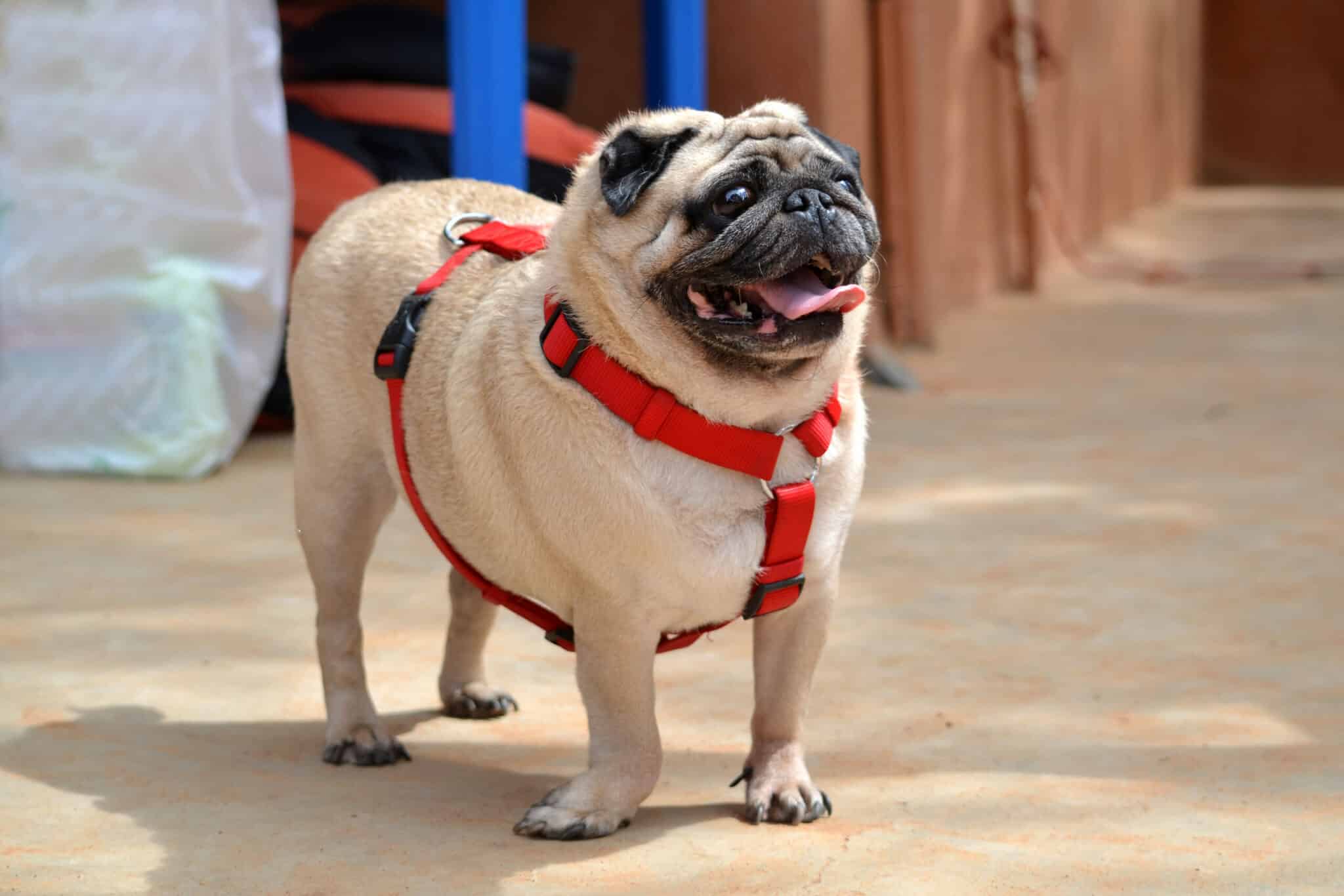
Dogs do not sweat like us: they cool themselves by panting, a system that is ineffective when squeezing heat. If body temperature soars above 41 °C, organs begin to fail. Brachycephalic (flat-nosed) breeds such as Bulldog Francés, Pug or Bulldog Inglés are especially vulnerable, as are older, overweight or very dense-coated dogs.
Warning signs: heavy and noisy panting, excessive drooling, very red or red gums, wobbling, vomiting and, in severe phases, collapse or convulsions.
What to do:
- Take it immediately to the shade or to a cool, ventilated place.
- If you use wet towels, change them every few minutes (soaked and hot make a blanket effect).
- Offer water in small quantities, but do not force it.
- Put it in front of a fan or the air conditioning in the on my way to the vet. car .
And yes, to the veterinarian, even if he appears to be recovered: heat stroke can cause internal damage that manifests itself hours later.
Wounds and bleeding
In the case of a bleeding cut, the most effective is the simplest: direct pressure. Place a gauze or clean cloth over the wound and press constantly for 3 – 5 minutes, without lifting to look (you would break the clot that is forming).
- Mild wounds: clean with saline, disinfect with chlorhexidine and prevent licking.
- Deep, puncture wounds or bite wounds: cover them and go to the vet.
- If there’s a nailed object (stick, glass), don’t pull it out.: it could be blocking the bleeding.
- A tourniquet is a last resort, only in unrelenting hemorrhages from one limb and with the vet already notified.
Poisoning and poisoning
Chocolate (the darker, the worse), grapes and raisins, onions and garlic, xylitol (the sweetener in chewing gum and some “sugar-free” products), raticides, insecticides, some plants and our medicines – the list of everyday toxins is long.
What to do: calls your veterinarian or emergency services immediately, with the product packaging or label on hand. Tell them what your dog has eaten, how much, when and how much it weighs.
What NOT to do: do not induce vomiting on your own. With caustic or petroleum-derived products, vomiting causes a second damage to the esophagus; and home remedies such as salt are dangerous. It only induces vomiting if a veterinarian specifically directs you and explains how.
Seizures
Watching your dog convulse is impressive, but your role is simpler than you think: protect it from the environment and timing.
- Remove furniture and objects that could hit him, and keep him away from stairs.
- Don’t hold him. don’t even try to “wake him up”, and don’t put your hand in his mouth: he won’t swallow his tongue, but he may bite you unintentionally.
- Lower lights and noise, and time the duration of the crisis.
- When he passes, keep him warm and quiet; he’ll be disoriented for a few minutes.
If the seizure lasts more than 5 minutes, if you have two or more seizures in a row within 24 hours or if you don’t regain consciousness between them, go to the emergency room.
CPR: first aid when your dog is not breathing
Current veterinary guidelines (RECOVER guidelines, adopted by the international veterinary community) recommend:
- Lie on your right side on a firm surface and check that there is nothing obstructing the airway.
- Do chest compressions at a rate of 100 – 120 per minute(the famous rhythm from “Stayin’ Alive”), sinking the chest between one-third and one-half of its width. In large dogs, compress over the widest part of the chest; in Bulldog-type breed breeds, over the breastbone with the dog upside down; in very small dogs, directly over the heart, even surrounding the chest with one hand.
- Alternate 30 compressions with 2 infusions: close his mouth, seal his nose with your mouth and blow until you see his chest rise.
- Don’t stop until your pulse is back or until you get to the vet, and if there’s anyone else, take turns every two minutes.
Ideally, do a hands-on canine first aid workshop – CPR is better learned with your hands than reading.
Emergencies that go straight to the vet
There are situations where the best first aid is don’t waste a minute at home.:
- If the test chemical is administered in the same way as the test chemical, the test chemical is administered in the same way as the test chemical. swollen and hard abdomen, arching without vomiting anything, extreme restlessness and drooling. Gran Danés Weimaraner
- Slip and fall accidents, even if the dog gets up and walks: internal lesions are not seen.
- Obvious shortness of breath, bluish gums or collapse.
- Bites with swelling of the face or neck: an allergic reaction can close the airway. In small dogs like the Yorkshire Terrier, the same dose of poison or toxic does proportionally much more damage.
- Fracturas: does not attempt to “pull” anything. Immobilizes the dog on a rigid surface or blanket as a stretcher and carries with minimal movement.
Common Mistakes to Avoid
- Medicating with human drugs. Ibuprofen, paracetamol or naproxen can cause ulcers, liver or kidney failure in dogs.
- Use ice water or ice in a heat stroke. Causes vasoconstriction and hinders heat loss; fresh water, not ice.
- Provoke the vomit “just in case”. With certain toxicants it makes things worse; always under veterinary indication.
- Blindly put your fingers in your mouth of a dog choking or convulsing.
- Remove a nailed object in a wound.
- Trust because “it’s okay”. Heat stroke, strangulation, and poisoning can cause severe symptoms hours later.
- Do not wear an improvised muzzle and end up bitten: an injured owner can’t help his dog.
Frequently Asked Questions
Can I give my dog paracetamol or ibuprofen if he’s in pain?
No, never. Both are toxic to dogs even in small doses and can cause severe liver, kidney and digestive damage. If your dog is in pain, call your veterinarian: there are safe veterinary painkillers adapted to its weight.
What is a dog’s normal temperature and how do I take it?
It is measured with a digital thermometer via the rectum, lubricated and with the dog held by another person. Above 39.5 °C consult the veterinarian; above 41 °C is an emergency.
Should I make my dog vomit if he’s eaten something toxic?
Only if specifically instructed by a veterinarian. With caustic or petroleum-derived substances vomiting causes more damage, and some home methods are dangerous.
How do I know if my dog is in shock?
Typical signs: pale or gray gums, capillary fill time greater than 2 seconds, rapid and shallow breathing, weak pulse, cold extremities, and apathy.
Is a human first aid kit good for a dog?
Partly: gauze, bandages, physiological serum and thermometer are the same. What you should never use are human medicines or alcohol as a disinfectant. Add adhesive bandages, chlorhexidine and a soft muzzle, and you have a complete canine first aid kit.
When should I go to the vet without trying anything at home?
If you suspect that your stomach is twisting, you have obvious difficulty breathing, you are running or falling hard, you are convulsing for more than 5 minutes, you are bleeding or losing consciousness, the best first aid is to call the clinic and go there immediately.
This article is for informational purposes only and does not replace professional advice.