Choking and CPR in dogs: how to respond in an emergency
Your dog is playing with his ball and suddenly he stops making noise. He puts his paws to his snout, opens his mouth without breathing in and looks at you in a panic. In a complete airway obstruction everything is decided in a matter of minutes, and there’s no time to look for a tutorial: You either know what to do, or you don’t. That’s why knowing CPR in dogs(cardiopulmonary resuscitation) and how to swallow a dog is probably the most useful thing you’re going to learn as an owner.
In this guide, we explain, following the RECOVER veterinary guidelines (the international standard for resuscitation in dogs and cats), how to recognize a real choking, how to act according to your dog’s size and how to do compression and ventilation if he loses consciousness, and also, honestly, what you can expect from these maneuvers.
How do you know if your dog is really choking?
The first rule is counterintuitive: if your dog coughs hard, there’s air going through. Coughing is an effective defense mechanism, and a dog who coughs and barks is usually solving the problem on its own. In that case, stay calm, don’t put your hand in his mouth and give him a few seconds: interrupting him may make things worse.
Dangerous choking, with total or near-total obstruction, has another twist.
- Silence or loud noises when attempting to breathe (stricture), rather than coughing.
- Scratching the nose or mouth with the feet, desperate, or rub your face against the ground.
- “Tripod” posture: front legs open, neck stretched, trying to get air in anyway.
- Excessive salivation, because the body is trying to lubricate the airway.
- Bluish or greyish gums and tongue(cyanosis): Oxygen is not coming.
- Panic, frantic movements and, if the obstruction is not resolved, collapse and loss of consciousness.
Eye on two classic impersonators. reverse sneezing(those loud and repeated breaths, as if the dog “sucked” in) is very common in small breeds and brachycephalic, scares a lot and is not an emergency: It usually goes away in less than a minute. And the tooth from kennels causes arcades that many owners mistake for a jammed object. The key difference: In both cases the dog breathes between episodes and his gums remain pink.
What to do if your dog chokes, step by step
If you’ve confirmed that there’s a real obstruction, proceed in this order:
- Breathe and evaluate for two seconds. A dog choking is terrified and can bite you unintentionally, even being the best dog in the world.
- Open your mouth and look. Lower the tongue carefully and use the flashlight of the mobile phone. If you see the object clearly and can grab it (preferably with tweezers or with the fingers in tweezers), remove it. Never do a “blind sweep” with the finger at the back of the throat: the dog’s airway is narrow and it is very easy to push the object even further in.
- Puncture wounds between the shoulder blades. If you can’t see anything or can’t get it out, give 4 or 5 dry blows with the heel of your hand between the shoulder blades, with the dog’s head pointed downward for gravity to help.
- Heimlich maneuver adapted to size. In medium and large dogs: stand back, wrap your arms around your abdomen, place your fist just behind your ribs (in the “mouth of your stomach”) and perform dry compressions inward and upward, as if you were trying to lift it off the ground. In small dogs: Hold it in your arms with your spine against your chest, place your fist (or several fingers) under the sternum and press inward and upward with short, firm movements. Mini dogs can be held upside down for a few seconds so that gravity works; don’t try this with a large dog, you could hurt it (and yourself).
- Check his mouth after every batch. alternates 4-5 abdominal compressions with a visual check of the mouth.
- If he loses consciousness, start CPR.(next section) and go to the veterinary clinic immediately, ideally with someone driving while you continue the maneuvers.
An honest note: the Heimlich maneuver on dogs is more difficult to perform well than it appears in the videos, and if done incorrectly it can cause internal injuries. Veterinarians recommend reserving it for real complete obstructions and not wasting valuable time if it doesn’t work in a few attempts: at that point, the absolute priority is to get to a clinic.
CPR in dogs: how to do resuscitation step by step
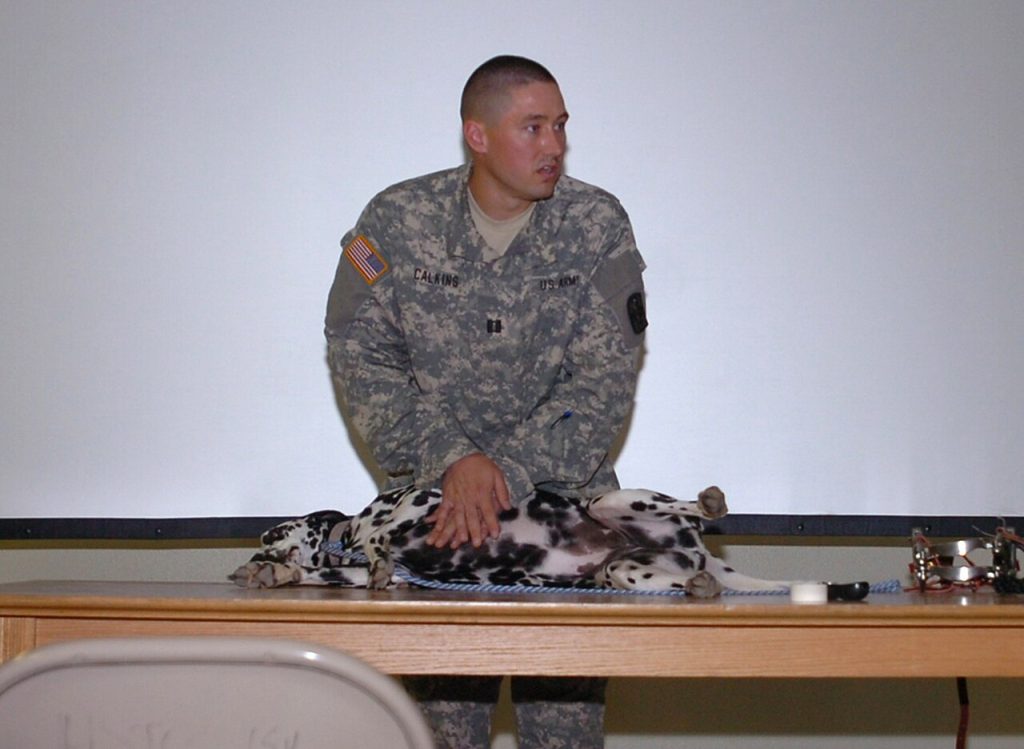
CPR is only done on a unconscious, not breathing and not beating. dog . Compressing a conscious or pulsed dog is dangerous. Check first: call it and touch it (does it respond?), observe the chest (does it move?) and look for the heartbeat by resting your hand on the left side of the chest, right where the elbow touches the chest when flexing the leg, or the pulse on the inner face of the thigh (femoral artery). If there’s no response, you can’t breathe and you can’t feel a heartbeat, start fearlessly: at a stop, doing something is always better than doing nothing..
1. Position of the dog and your hands
Put the dog on his right side on a firm surface and kneel on his back, shoulders above your hands and elbows locked.
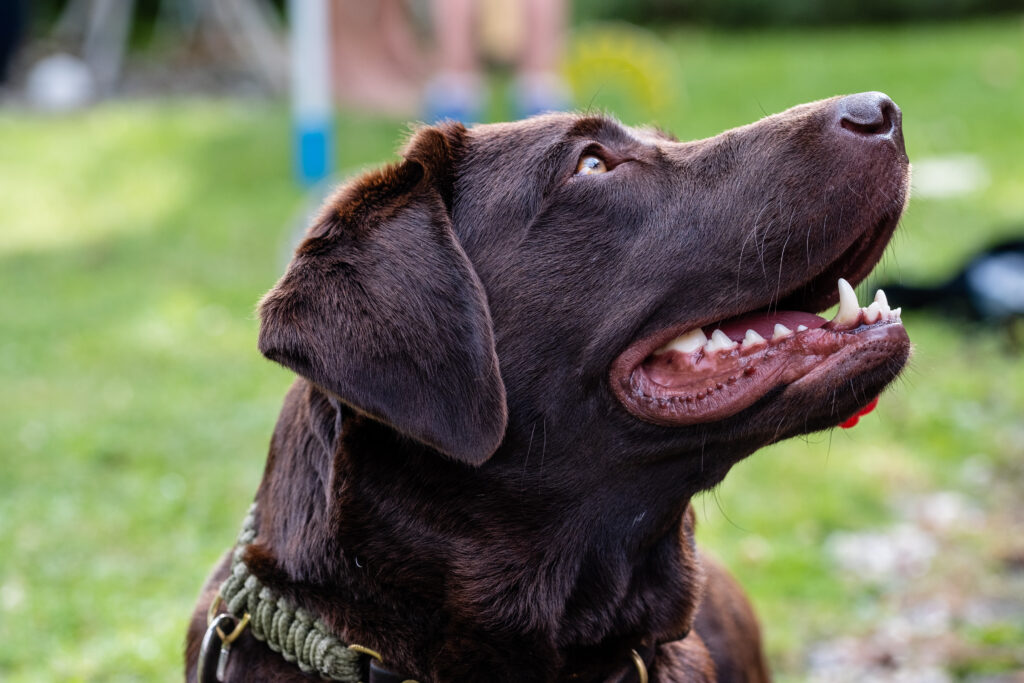
- Medium and large dogs with rounded breasts(most, like a Labrador Retriever): compresses over the widest part of the chest, with both hands overlapping and fingers interlaced.
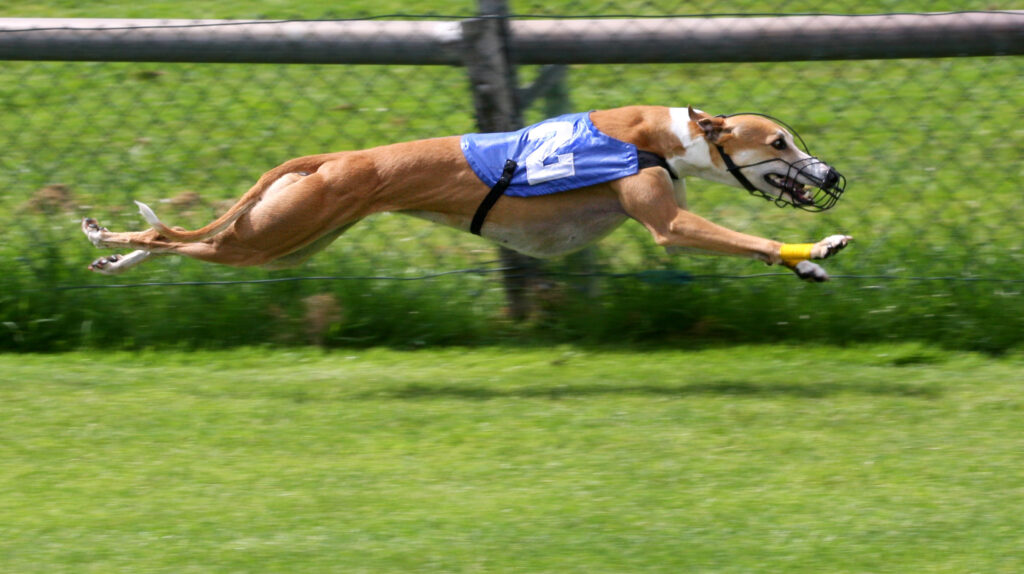
- Dogs with deep and narrow breasts, like Galgo Inglés or Dóberman: compresses directly over the heart (where the elbow touches the chest).
- Breeds of barrel chest, such as the English Bulldog or Bulldog Francés: it may be more effective to lay them face up and compress over the sternum, as in people.
- Mini dogs (less than 7 kg approx.), like a Chihuahua or a Yorkshire Terrier: use one hand, surrounding the chest so that the thumb is on one side and the other fingers on the other, and compress by squeezing the heart between them.
Compression: rhythm and depth
The RECOVER guides make it clear: 100 to 120 compressions per minute, sinking the chest between a third and a half of its width, and letting the chest fully expand between compression and compression (without that “bounce”, the heart doesn’t fill up with blood again).
3. mouth-to-mouth ventilation
Each 30 compressions, two vents: stretch the dog’s neck to align the airway, close its mouth with your hands, seal your lips over its nose, and blow until you see the chest rise, about a second per insufflation.
4. 2-minute cycles, without interruption
It works on 2-minute cycles nonstop, and only then does it pause for a few seconds to check for spontaneous heartbeat or breathing. Quality compression is very exhausting: if there’s another person, relieve them in each cycle. And if you’re two, the ideal is to do CPR on the way to the clinic: one drives, one resuscitates.
| Parameters | This is a recommendation (RECOVER guidelines). |
|---|---|
| Compression rate | 100 to 120 per minute |
| Depth | 1/3 to 1/2 of the width of the chest |
| Compressors and air vents | 30: 2 (mouth-to-mouth) |
| Cycles | Two minutes, relay of CPR. |
| Location | Lying on the side (upside down in barrel breeds) |
After the emergency: to the veterinarian always
Even if your dog expels the object and appears perfectly recovered, the visit to the vet is not optional. Obstruction and maneuvering can leave lesions in the mouth, pharynx or trachea, rib fissures, and even trigger pulmonary edema hours after the episode.
And here ‘s where we have to be honest: Even in veterinary hospitals, with trained equipment and staff, only about 6 percent of dogs that suffer a cardiac arrest survive to discharge. That doesn’t mean CPR isn’t worth it, it means two things: that every second counts(the stops witnessed and attended instantly have a better prognosis, and a reversed choking in time is one of the most recoverable scenarios), and that the best strategy is always prevention and reaching professional hands as soon as possible. Keep the phone number and address of your emergency room on your cell phone 24 hours a day: Looking for him in an emergency is very expensive.
How to Prevent Choking
The usual suspects: balls too small for the size of the dog, pieces of wood, chipped boiled bones, biters that have become small from too much gnawing, recreational bones of the wrong size, and broken toys.
- Choose the ball by the size of the mouth: it has to be big enough not to go over the premolars.
- Remove biters and worn toys when reduced to a “swallowable” size.
- No boiled bones . or sticks like the usual toy: splinters and hooks.
- Dining room anti-volatility if your dog swallows: Breeds that are gluttonous and anxious about food swallow more feed, especially if they compete with other dogs in the house.
- Always keep an eye out. prizes chewable ears, tendons or pressed leather, especially the last piece.
- Take a face-to-face course in canine first aid: practicing on a mannequin with a vet is worth more than a hundred items, including this one.
Common Mistakes That Can Be Costly
- Blindly sticking your finger in to the back of the throat: it’s the fastest way to turn a partial obstruction into a total.
- Confusing a reverse sneeze or cough with choking and launch aggressive maneuvers at a breathing dog.
- CPR on a dog with a heartbeat or semi-conscious: compresses are only applied if there is no pulse or breathing.
- Loose or non-bouncing chest compressions: no depth and no full recoil no actual pumping.
- Hanging a medium or large dog upside down for “falling object”: risk of injury to both.
- Staying at home doing maneuvers in loop instead of going out to the vet: the ideal is to do both at the same time, with help.
- Forgetting your own safety: a dog asphyxiating bites out of sheer panic. Hold tight, move your hands with your head, and if there are two people, distribute the papers.
Frequently Asked Questions
How many compressions per minute does a dog’s CPR have?
Between 100 and 120 compressions per minute, according to the RECOVER veterinary guidelines, sinking the breast one-third to one-half of its width and letting it fully expand between compressions.
How do you give a dog mouth-to-mouth?
In dogs, it’s mouth-to-mouth: stretch out their neck, close their mouth with your hands, seal your lips around their nose, and blow for about a second until you see their chest rise.
How do I tell a real choking from a simple cough?
If the dog is coughing hard, it is passing air and it is best not to intervene and observe. Serious obstruction is recognized by sharp noises or silence when breathing, panic, paws scratching the snout, abundant saliva and bluish gums.
Does the Heimlich maneuver work on dogs?
There is an adapted version (abdominal compressions inwards and upwards, just behind the ribs), but it should only be used in complete obstructions and with care, because poorly executed can cause internal injuries.
How long do I have to keep CPR?
Work in 2-minute cycles, checking heartbeat and breathing only between cycles, ideally while someone else is taking you to the clinic.
My dog ejected the object and it’s okay, do I have to go to the vet anyway?
There may be injuries to the mouth, pharynx or trachea, remains of the object, or pulmonary edema may develop hours after the episode.
No one wants to ever need this guide. But if one day your dog looks at you and can’t breathe, knowing exactly what to do – and what not to do – can give you many more years of walking together.