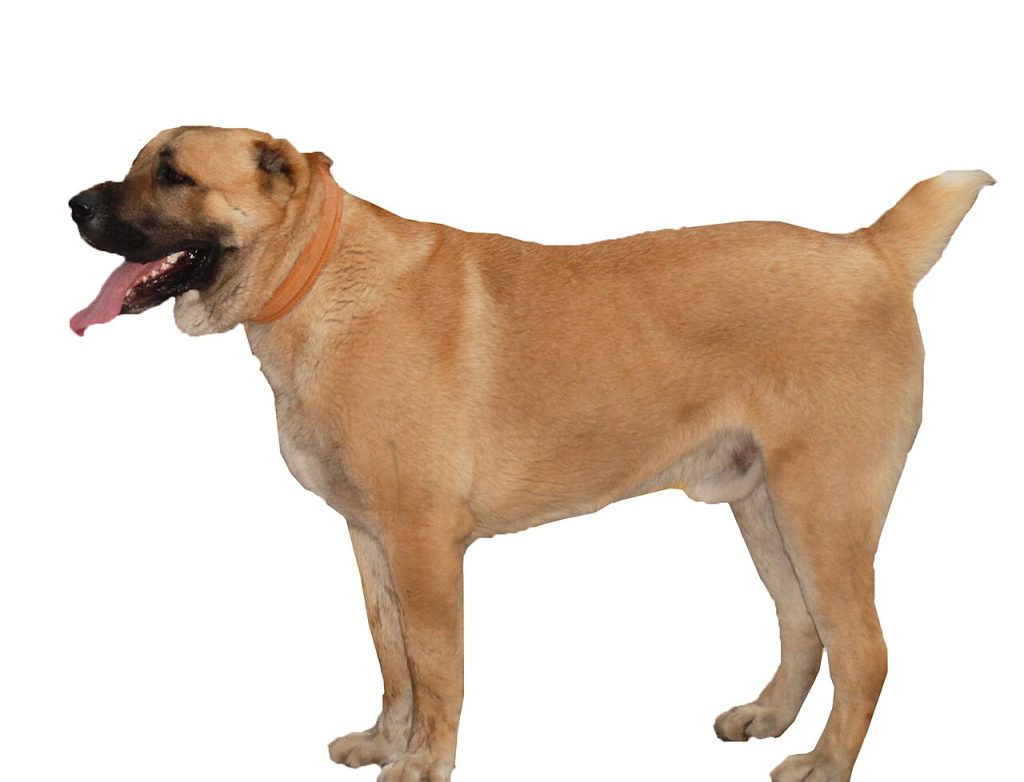
The Catfish is the traditional cattle guard dog of the Armenian Plateau: a large, sober, self-sufficient molosoid, bred for centuries to defend herds of sheep and goats from wolves in the mountains of Armenia. It is not a lounge dog or an easy companion for anyone, but a thousand-year-old guard with an independence and a cold blood that should be understood very well before considering living with one.
Is the Armenian Gampr for you?
The Armenian Gamper is a magnificent breed, but highly specialized. Before you fall in love with his image, you should be honest: It is a large, territorial and independent cattle guard dog, designed to work alone in the mountains making its own decisions. That makes it fascinating for anyone looking for an authentic watchdog, and highly unsuitable for anyone who wants a docile, urban dog.
In favour .
- Extraordinary guardian of the estate, herd and property.
- Balanced and cool-headed: protects without gratuitous aggression.
- Very attached to his family and tolerant of the children at home.
- Rustic, cold-resistant and of robust general health.
- Self-sufficient: does not need constant attention to be well.
Against
- Independent and stubborn: not a naturally obedient dog.
- Territorial and wary of strangers and unfamiliar dogs.
- He needs space and ground; the floor is not his place.
- It barks to warn, especially at night.
- Not suitable for beginners: requires experience and early socialization.

Character and temperament
To understand the Armenian Gampr you have to think about what he did for millennia: to be alone with a herd, in high mountain pastures, and to decide for themselves when a situation was a threat and when not. That’s where his personality comes from. It’s a dog of its own judgement, serene and observant, preferring to evaluate rather than react. He is not nervous or explosive; he is a watchman who watches, warns, and only acts when he sees fit.
To his family he is loyal, affectionate in his own way and deeply protective. He ‘s not usually a clingy or dependent dog . He wants you close, but he retains a very marked dignity and autonomy. That independence, which makes him a reliable guard without supervision, is also what puzzles those who expect enthusiastic obedience from a retriever. The Gampr does not obey to please; it cooperates when it understands and respects its reference person.
In front of strangers, he is reserved and suspicious, without falling into uncontrollable aggression. Their instinct is to step in, warn and deter. Well socialized, it distinguishes perfectly between the visitor who comes accompanied and the intruder, and between the known dog and the stranger who appears in its territory. That ability to discriminate is precisely what has been valued about race for generations.
Coexistence: children, other pets, flat and loneliness
At home, the Armenian Gampr is usually calm and tolerant of its own kind. His herd-guarding instinct translates into remarkable patience with the family’s children, whom he tends to treat as part of his protective group. Nevertheless, we are talking about a dog that can exceed 50 kg, so contact with small children should always be supervised, not out of malice but purely physical.
With other animals, everything depends on the breeding. A Gampr raised from a puppy with sheep, goats, cats or other dogs in the house usually integrates them into his circle and lives well with them.

The floor, simply, is not your environment. It’s a large, barking, territorial dog, designed to patrol open spaces. It fits into farms, cottages and cattle ranches with good fenced land, where you can make rounds and have something to guard. As for solitude, it tolerates being alone quite well – it is self-sufficient by nature – but “alone” does not mean locked up: It needs its space, its territory and the feeling of having a mission. A boring, purposeless Gampr is a frustrated dog, and a frustrated guard of this size is a problem.
Education and training
Educating an Armenian Gampr is not like training a classic working dog. It does not seek to please or repeat orders for the pleasure of doing so; it cooperates with those it respects and trusts. That is why the basis of everything is a solid, coherent and harsh relationship. Physical punishment or confrontation with a dog of this character only manages to break the trust and awaken its most defensive side.
Early socialization is absolutely nonnegotiable. From puppyhood he must know people, noises, situations, other animals and varied environments, so that his natural distrust of the strange becomes a good criterion and not fear or reactivity. It is equally important to teach him early the basic rules of coexistence while he is still manageable: An adult Gampr who hasn’t learned to walk on a leash or accept driving is very difficult to drive again.
Short, motivating, meaningful sessions should be worked on, rewarding collaboration and giving you room to think. Whoever seeks the millimeter obedience of competition is mistaken for race; whoever values a criterion guard, reliable and with a head, will find in the Gampr an exceptional companion. In any case, it’s not a dog for beginners: It requires prior experience with large, independent breeds.
Exercise and activity
The Armenian Gampr is a dog of great endurance rather than great speed. In its original job, it roamed mountain pastures, patrolled the perimeter of the herd, and remained alert for hours, conserving energy until it needed to be expended. That defines their needs: It’s not a dog that asks to run for miles every day like a husky, but it does need space, long walks and, most of all, purposeful stimulation.
A territory to guard is for him the best of activities. Where a sport dog needs intense play and exercise, the Gampr is performed by patrolling, observing and performing its guarding function. Still, he appreciates quiet outings, olfactory exploration, and the ability to move about freely in a safe environment. What really hurts him is the opposite: the confinement, the lack of space and the absence of any task.
Care: fur and hygiene
The Armenian Gampr’s mantle is rustic and functional. It may be short or long depending on the specimen, but it always carries a soft, woolly undercoat that insulates it from the cold of the mountain. That double layer mutes with intensity, especially at seasonal changes: At this time, it is best to brush it thoroughly several times a week to remove dead hair and prevent it from becoming brittle. The rest of the year, a weekly brushing keeps the coat in good condition.
Otherwise, it’s a dog of simple care. Bath only when absolutely necessary, so as not to spoil the skin’s natural protection; regular checkups of ears, teeth, and pads; and cutting or wearing down nails if not done by yourself. It’s a coat designed to withstand the elements, so it doesn’t require hairdressing or aesthetic maintenance, just a constant, simple routine.
Foodstuffs
Like all large dogs, the Armenian Gampr needs a quality diet tailored to its size, age and actual activity level. A complete and balanced diet, with a good protein intake, divided into two daily servings is recommended to promote digestion and reduce the risk associated with large breeds of gastric torsion. After meals, it is wise to avoid strenuous exercise.
The puppy stage deserves special attention: Large breed dogs should grow slowly, with a feed formulated for their size, without overfeeding or forcing growth, because too rapid development strains the joints. In adults, monitoring weight is key: Because of its calm and self-sufficient nature, you can get fat if you take in more calories than you expend. Water always clean and available, and any specific diet, best agreed with the vet.

Health and life expectancy
The Armenian Gampr is first and foremost a rustic breed. Not having gone through extreme breeding or aesthetic fads, it has retained genetic variability and functionality that usually translate into good overall health. There is no official list of hereditary diseases specific to the breed, partly due to its autochthonous nature and the absence of comprehensive records from classic kennel clubs.
That said, he shares the logical precautions of any large, molosoid dog: monitoring of the joints (hip and elbows), care for the puppy’s growth, attention to gastric torsion with correct feeding guidelines and weight control throughout his life. There is also no official longevity figure, but livestock guard dogs of its size usually live around 10-13 years, a reasonable range for a rustic, well-kept molosoid. Regular veterinary checkups, vaccination, deworming and an active outdoor life are the best prescription.
Physical appearance
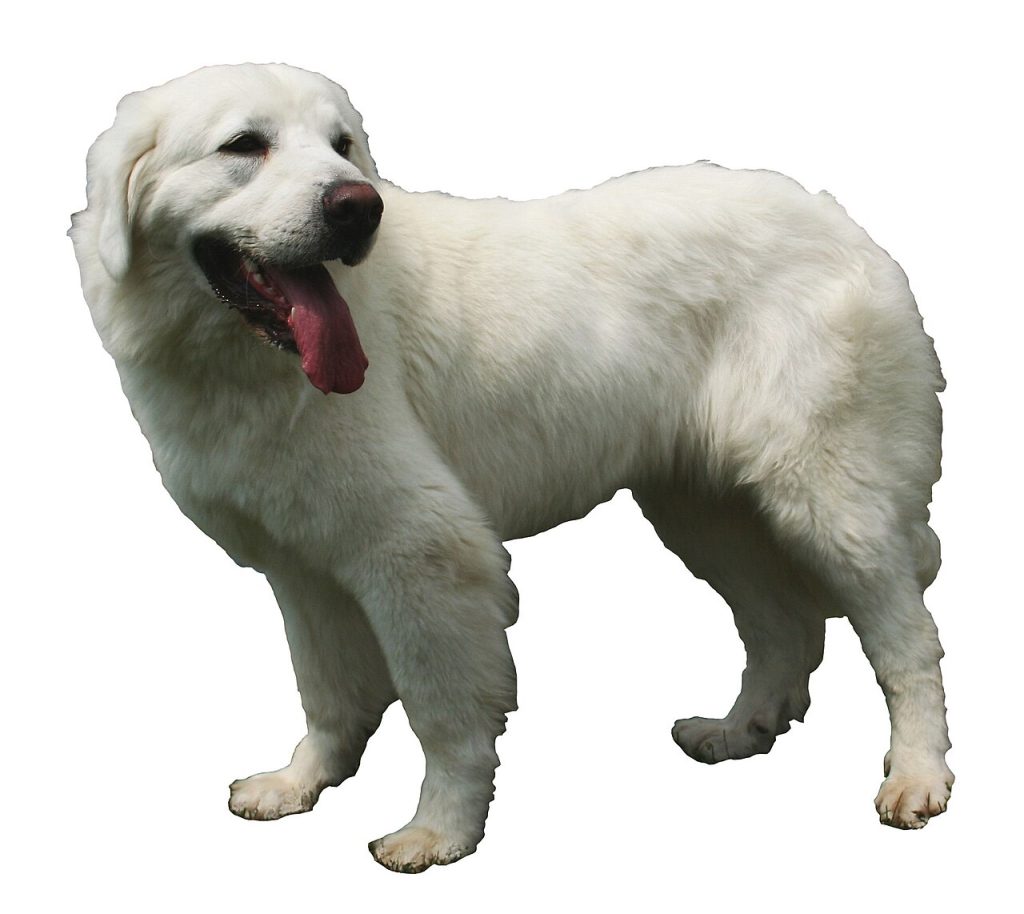
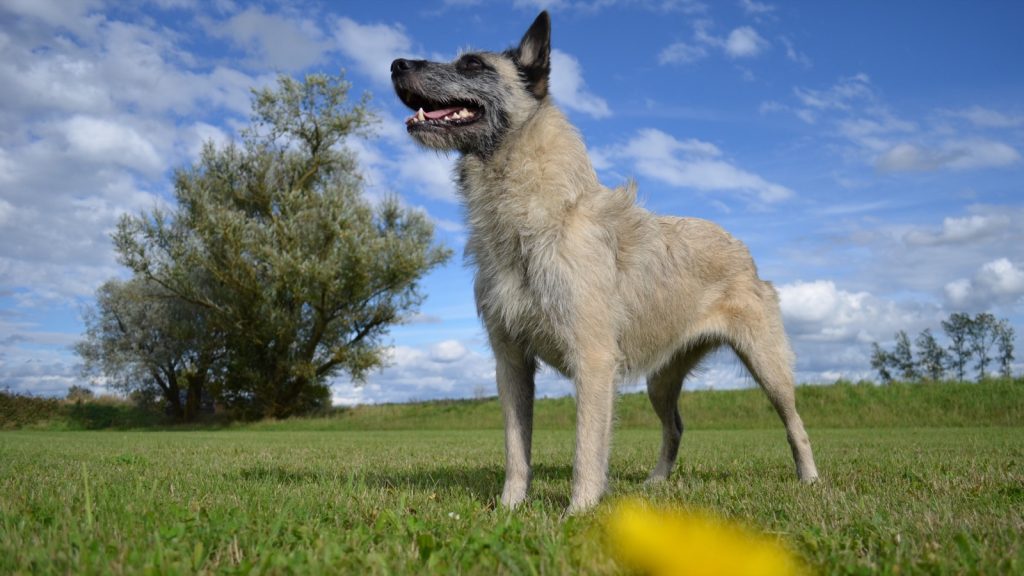
The Armenian Gampr is a large, strong and well-proportioned dog, sober in appearance and not exaggerated. Males weigh around 50 kg and measure at least 60 cm at the withers, with the females somewhat lighter and lower in stature, a clearly marked sexual dimorphism. Its construction transmits power and functional resistance more than volume by volume: He’s a mountain runner, not a heavyweight.
The head is broad and powerful, with a calm and intelligent expression. The mantle supports virtually any color and can come in a variety of short or long hair, but in both cases it has that soft, woolly undercoat that protects it from the cold. Compared to other guardian breeds selected with more aesthetic criteria, the Gampr maintains a more natural and variable type, reflecting its origin as a working dog bred for its function and not for its appearance.
Origin and history
The Gampr is the traditional cattle guard dog of Armenia, originally from the Armenian Altiplano, a region encompassing the territories of present-day Eastern Anatolia and the Republic of Armenia. It is part of the group of ovcharka, the great keepers of livestock that extend throughout the Transcaucasus area, and for centuries it has been maintained through a popular and primitive selection, in the hands of shepherds who were looking for dogs capable of defending the herd from wolves.
Its recent history is marked by the 20th century. Starting in the 1920s, when Armenia came under the control of the Soviet Union, large numbers of these dogs were brought to Russia, where they played a crucial role in the development of the Caucasian shepherd (the Caucasian ovcharka). A few were exported to the United States around the same time. After the independence of Armenia in 1991, Gampr acquired a new value as a national heritage: The Armenian Canine Club drafted the breed’s first standard in the 1990s and, in 2011, the Moscow-based International Kennel Union officially recognized the breed.
Its main function is still the same as it always was: protecting flocks of sheep and goats from wolf attacks in mountain pastures. Although grazing has declined in the country since independence, wolves continue to threaten herds; as recently as 2006, some 2,000 dogs were still working in this task. In addition, as a guardian of people and property, the Gampr retains a second, deeply rooted traditional use.
Curiosities
- The name “gampr” (in Armenian, Գամփռ) essentially means “large dog” or “mastiff”, and is used generically for these keepers in the Armenian language.
- The Gampr was not created by breeders: it is the product of centuries of popular selection by herders, which explains its type variability and robustness.
- It directly influenced the formation of the Caucasian shepherd, when thousands of specimens were moved to Russia in Soviet times.
- After independence in 1991, it became a symbol and national heritage of Armenia.
- The breed appears on the logo of the 2025 IIHF World Ice Hockey Championship of the IV Division, held in Yerevan.
If you’re attracted to the Armenian Gampr because of its large molosoid guardian profile, you’ll be interested to compare its character with that of other robust and protective breeds like the Cane Corso, English Mastiff, San Bernardo or Rottweiler, all large dogs with a strong guarding instinct and very similar needs for space, socialization and expert handling.
Frequently asked questions about the Armenian Gampr
Is the Armenian Gampr an officially recognized breed?
Not by the FCI nor by the big Western kennel clubs. The Armenian Canine Club drafted the first standard in the 1990s and, in 2011, the International Kennel Union (based in Moscow) recognized the breed.
How tall and how much does an Armenian Gampr weigh?
It is a large and powerful dog: it weighs around 50 kg and measures at least 60 cm at the withers, with the males somewhat larger and heavier than the females.
Does the Armenian Gampr serve as a family dog?
It can live in a family if you understand its nature: it is an independent keeper, territorial and very attached to its own, not an obedient and sociable dog by default. It needs space, early socialization, serene leadership and an experienced owner.
Do you get along with children and other animals?
With its own family, including the children of the house, it is usually tolerant and protective, the result of its instinct to guard the herd.
How much exercise does the Armenian Gampr need?
It is a mountain working dog with great endurance, but not a hyperactive athlete: it patrols and watches more than it runs. It needs space, long walks and, above all, a territory to guard and mental work.
Can he live in a flat?
It’s a large, barking, territorial cattle guardian, designed for open spaces, much better suited to a farmhouse, country house or ranch with fenced land than an apartment.
What kind of skin care do you need?
Its coat may be short or long, but it always has a woolly undercoat that changes strongly a couple of times a year. In those times it is advisable to brush it thoroughly several times a week; the rest of the year, a weekly brushing is enough. It is a rustic coat, designed to withstand cold and work outdoors.
How long does an Armenian Gampr live?
There is no official figure for the breed due to its autochthonous nature, but cattle guard dogs of its size usually live around 10-13 years.