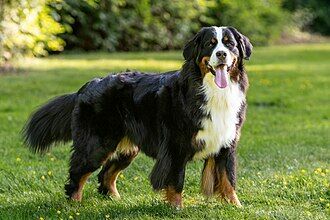
The Boyer of Bern(Bernese Mountain Dog or Berner Sennenhund) is one of the most beloved family dogs in the world: a giant tricolor with a sweet look and a serene character who was born on the farms of the Swiss canton of Bern. He combines the towering plant of a mountain dog with the quiet nobility of a companion who just wants to be close to his own. He’s affectionate, dependable and surprisingly easy to treat for his size, but before you fall in love, you should know his Achilles heel: a short life expectancy. In this guide we go through their character, care, health and everything you need to know about the Bernese Boyer.
Is the Bernese Boyer for you?
The Bernese Boyer is a family dog that’s almost perfect emotionally, but demanding logistically. It’s big, it sheds a lot of hair, it doesn’t tolerate heat well, and above all, it lives a few years for its size. Before you decide, look honestly at both sides of the coin.
In favour .
- Affectionate character, calm and very balanced.
- Excellent with children and deeply familiar.
- Intelligent and docile: easy to learn.
- Loyal and devoted, a companion who follows you everywhere.
- Good deterrent: watch without being aggressive.
- With a dry mouth, he drools too little to be a molosoid.
- Enjoy the cold and the outdoors.
Against
- Short life expectancy (around 8-10 years).
- High predisposition to cancer and other diseases.
- Abundant mud: there is hair all year round.
- He suffers from heat; no exercise in sunny hours.
- He needs company: prolonged solitude is bad for him.
- Their size costs food, veterinary care and transportation.
- Slow growth: watch out for puppy exercise.
Character and temperament
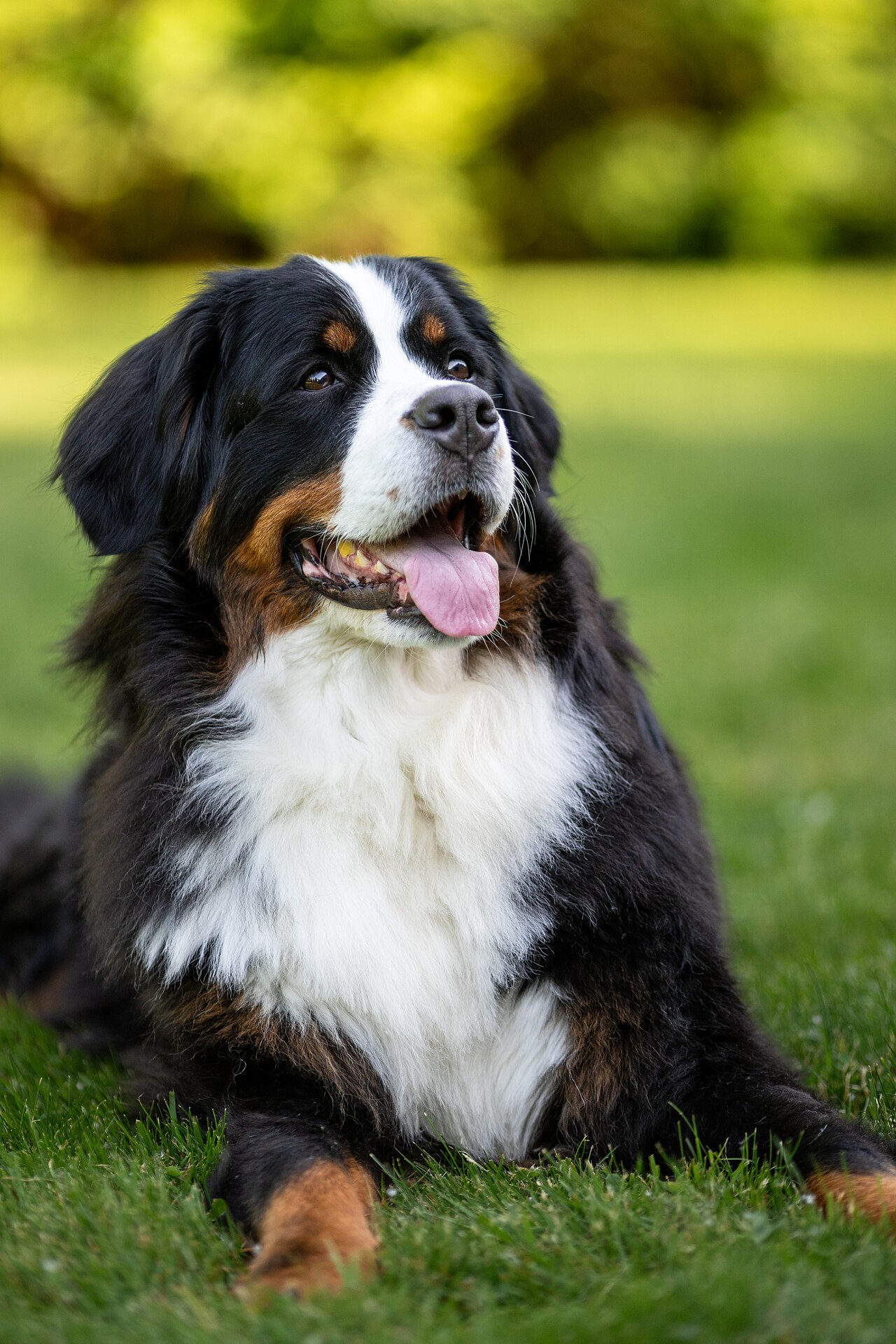
If there ‘s one word that defines the Bernese Boyer , it ‘s the balance. It is a calm, self-assured dog with a disarming sweetness that rarely seeks conflict. That calm is not passivity: Behind him is an animal that is attentive, awake and very aware of what is going on in his house. He inherited a dependable and predictable temperament from his peasant origins, just what is expected of a dog who had to get along with family, livestock, and strangers without losing his temper.
It ‘s enormously attached to his people. The Bernese Boyer is not a dog that lives in the garden on its own; it wants to be where you are, lying at your feet while you work or glued to your legs on the couch. He usually develops a particularly strong bond with one member of the family, although he shares affection with all. This need for closeness is her greatest virtue and, at the same time, what makes her feel lonely.
With strangers it is reserved and somewhat suspicious, without falling into aggressiveness. It watches, warns with a serious bark and interferes if it notices something strange, but its instinct is not to bite, but to dissuade and inform. Well socialized, it ends up accepting visitors naturally.
Coexistence: children, other pets, flat and loneliness
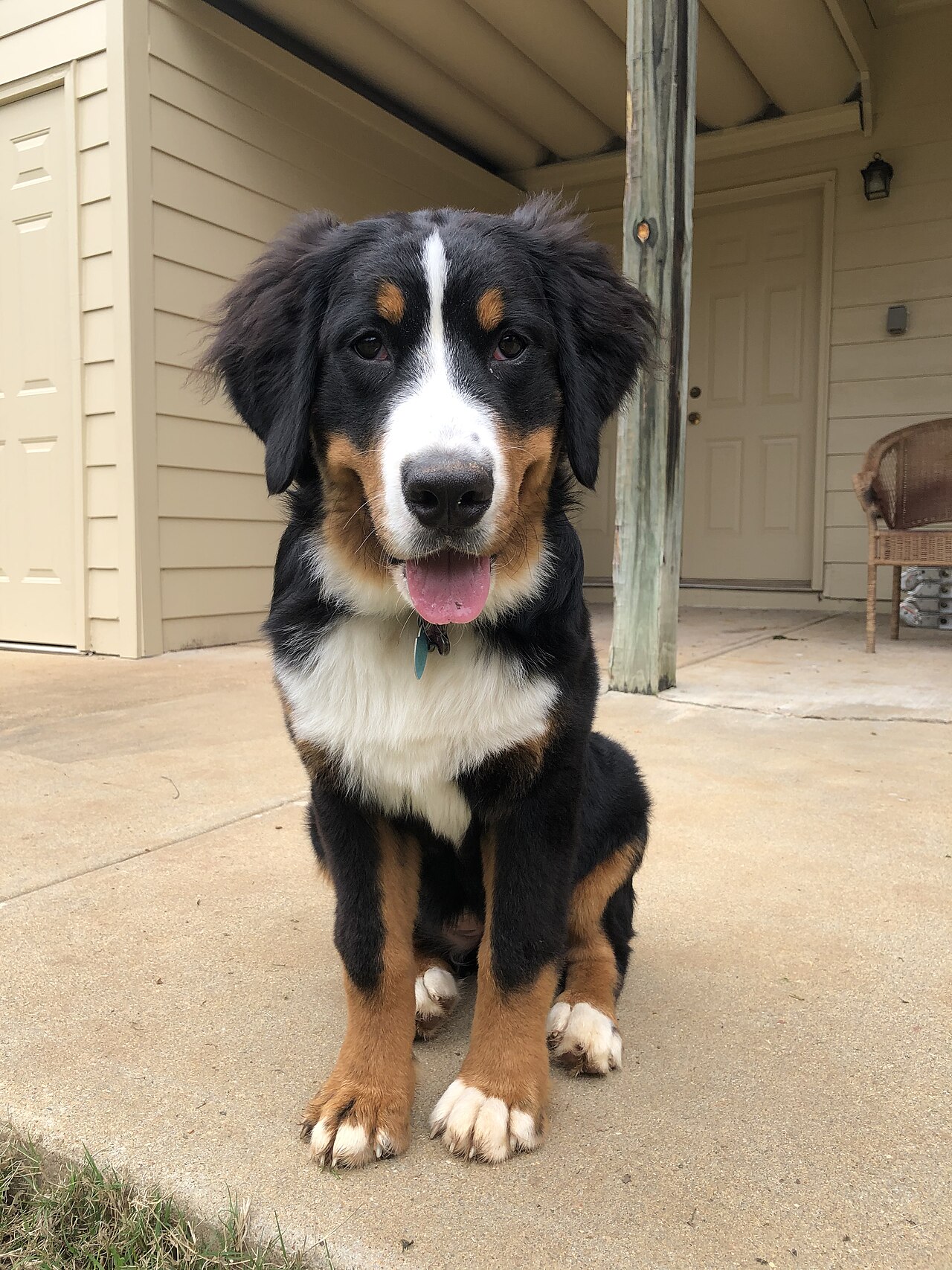
- With children: is one of its great assets. Patient, tolerant and affectionate, it fits wonderfully in families with small children. Of course, its size makes it convenient to monitor games with very young children to avoid unintentional pushes or falls.
- With other dogs: is usually sociable and non-confrontational, especially if socialized as a puppy.
- With other pets: being a farm dog used to living with animals, it accepts cats and other pets it grows up with well, although a gradual introduction always helps.
- On the floor: can live in a flat if he gets enough exercise, but he’s a big dog who comes from the movies to a house with a garden and cool weather.
- Soledad: is its weak point. It is not made to spend many hours alone; if left in excess it may show separation anxiety, destructive behaviors or sadness. It needs to be part of the family’s daily routine.
Education and training
The Bernese Boyer is intelligent and eager to please, a combination that makes it one of the easiest to train giants. It learns quickly and enjoys collaborating, as long as the method is kind. It responds wonderfully to positive reinforcement (rewards, caresses, cheerful voice) and closes in on harshness: it is a sensitive dog that abruptness only confuses and frightens.
The key piece is the early socialization. The earlier he gets to know people, dogs, noises, cars and different environments, the safer and more sociable he will be as an adult.
For its future size, it is advisable to teach as soon as possible the basic rules: do not jump on people, walk without pulling on the leash and go to the call. A Bernese Boyero puppy is adorable, but soon it will weigh between 40 and 50 kilos, and what you tolerate as a child becomes an adult problem. Short, varied and fun sessions work much better than long and repetitive ones.
Exercise and activity
Despite his calm nature, the Bernese needs daily activity Boyero is not a dog of overwhelming energy, but neither is he a piece of furniture. With a couple of good walks a day, some play and the possibility of moving, he is satisfied.
Where he really shines is in activities that recall his past work: carriage hauling(carting) is almost a race sport, and today there are specific tests and workshops. He is also good at obedience training and, for years, he can participate in herding tests. Giving him a “task” keeps him balanced and happy.
Two important warnings: the first, the heat: with its double coat of long hair, it gets tired and heated easily, so in summer you should walk it first and last hour and never demand effort from it under the sun.
Care: fur and hygiene
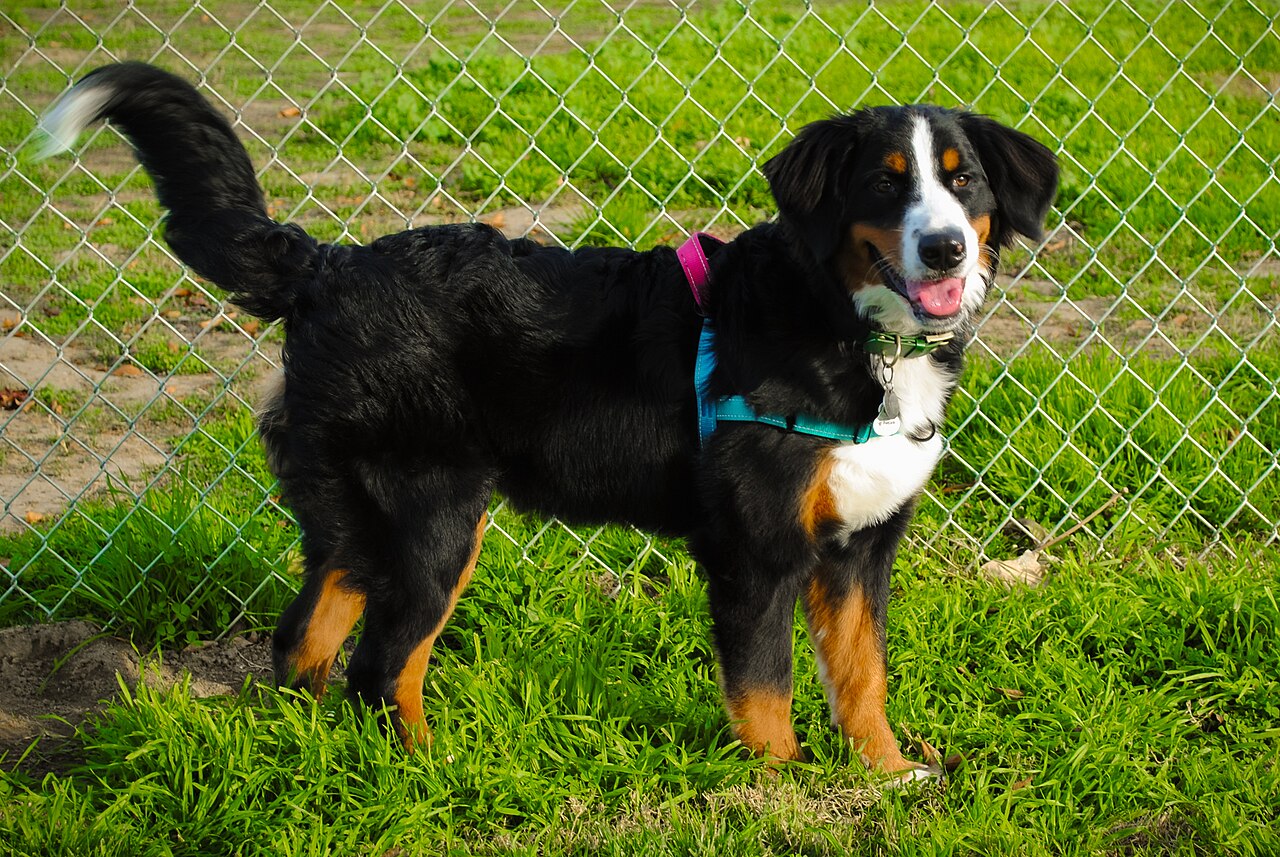
The beautiful coat of the Bernese Boyer has a price: it loses a lot of hair.. It is a double-coated dog with long hair, and that means hair on the floor, on clothes and on the sofa all year round, with two more intense moults in spring and autumn.
Its care, however, is not complicated: it is enough with a brushed two or three times a week(daily during mowing) to remove the dead hair, avoid knots and keep the coat healthy and shiny.
Complement the usual hygiene routine by checking and cleaning your ears to prevent infections, cutting your nails when they hit the ground, monitoring dental hygiene, and checking that dirt and parasites do not accumulate between your fingers and under your long hair after walking in the countryside.
Foodstuffs
As a good large dog, the Bernese Boyer needs a quality and well-adjusted feeding to its size, age and activity level. A complete and balanced feed, or a diet supervised by the veterinarian, covers its needs without problems.
The most delicate stage is that of puppy: being a slow-growing breed with heavy bones, it must eat a food formulated for large breeds in growth, neither with excess calories nor with poor calcium.
In the adult, the biggest enemy is the overweight: every extra pound punishes hips, elbows and heart in a dog that starts out with demanding joints. Keeping it at its ideal weight is one of the best investments for its health. And, as with all deep-chested dogs, you should avoid strenuous exercise just before and after eating to reduce the risk of stomach torsion.
Health and life expectancy
Here’s the hard part about wanting a Bernese Boyer. It’s a breed with a short life expectancy, even compared to other similarly sized dogs. Studies place it around 8 to 10 years: a 2016 Swiss study calculated an average of 8.4 years and a 2024 British study raised the figure to about 10.1 years, still below that of crossbred dogs.
The main reason is high incidence of cancer. In some studies, more than half of the breed’s deaths are attributed to tumors. Especially characteristic is malignant histiocytosis, a family and aggressive disease that goes on to explain a quarter of Bernese Boyer’s tumors; other forms of histiocytosis are also more frequent.
Beyond cancer, it’s good to have on your radar:
- Elbow and hip dysplasia: joint problems common in large breeds, with a notable prevalence of elbow dysplasia in this breed.
- Degenerative myelopathy: neurological disease associated with mutations in the SOD1 gene.
- Renal disorders: a Swiss study found in the breed a much higher than average incidence and mortality of kidney disease, including immune-mediated glomerulonephritis.
- Mastocitoma: increased risk of high-grade mast cell tumors.
- He was diagnosed with von Willebrand disease type I. an inherited bleeding disorder that frequently affects the breed.
What can you do? Always go to responsible breeders for health tests (hip, elbow and family history of cancer), keep the dog at his weight, take him to regular veterinary checkups, and watch for any lumps, weight loss or behavior change.
Physical appearance
The Bernese Boyer is a large, robust and harmonious dog, slightly longer than tall, with strong bones and powerful musculature, but without losing elegance.[1] Males measure between 64 and 70 cm to the cross (ideal 66-68 cm) and females between 58 and 66 cm(ideal 60-63 cm).
Its most recognizable feature is the tricolor fur: long, abundant and double-layered, with a deep, bright black base, with fire-colored markings over the eyes, cheeks, chest and legs, and very characteristic white spots.
The white man draws a kind of swiss cross on the chest, a spot on the head that runs down the snout to the truffle – always black – and a clear finish on the legs and the tip of the tail.
Origin and history
The Bernese Boyer comes from the canton of Bern, in Switzerland, and from farms in the Swiss Alps. It is one of the four swiss boyars or Sennenhund – along with the Grand Swiss Boyer, the Appenzell Boyer and the Entlebuch Boyer – and the family is considered to have its roots in ancient Roman mastiffs. The name says it all: Berner for the Bern region and Sennenhund, Senne(“Alpine grass”) and Hund(“dog”), because they accompanied shepherds and mountain cowboys.
For centuries it was a off-road farm dog: it guarded property, drove cattle to high pastures and, above all, pulled wagons loaded with milk and cheese.
At the beginning of the 20th century, the breed was on the verge of extinction, until a group of enthusiasts decided to revive it. In 1907, breeders from the Burgdorf region founded the first club (the Schweizerischer Dürrbach-Klub) and drafted the first standard defining it as their own breed. The the recovery was quick.: By 1910 there were more than a hundred registered, and the breed gained official recognition soon after. In 1937 it was admitted to the American Kennel Club, which frames it in the working group. Today it is one of the most popular family dogs in German-speaking countries and is among the most sought-after breeds in the United States.
Curiosities
- He was known as “dog of the cheese” for his work pulling milk and cheese wagons from Swiss farms.
- It is the the only one of the four Swiss boyars with long hair; its cousins (Gran Boyero Suizo, Appenzell and Entlebuch) have it short.
- The white spot on its head and chest draws, in the ideal specimen, a “Swiss cross”, a nod to its country of origin.
- The carriage hauling is almost an unofficial sport of the race, with competitions and dedicated workshops reclaiming its former function.
- Despite its body size, it is a dry mouth dog that drools considerably less than other molosoid giants.
- Since 2010 he can compete in AKC’s tests of grazing, proving that his farm instinct is still intact.
If you are attracted to the Bernese Boyer because of its noble size and quiet nature, you may want to get to know other breeds of large size and vocation for work or mountain. Check out the San Bernardo, another Swiss giant with a huge heart; the Terranova, a water colossus equally sweet with children; the Leonberger, lion and family; and the Pyrenees mountain, the white guardian of mountain herds.
Frequently asked questions about the Bernese Boyer
How long does a Bernese Boyer live?
It is a short-lived breed: studies place its average life expectancy at around 8 to 10 years. A Swiss study from 2016 estimated 8.4 years and a British one from 2024 about 10.1 years. Cancer is the main cause of early mortality.
Is the Bernese Boyero good with children?
Yes, it is one of its great virtues. It is patient, tolerant and very affectionate, which makes it an excellent family dog. Due to its size, it is advisable to supervise games with very young children to avoid accidental pushes or falls.
How much hair does he shed and how is his coat taken care of?
It sheds a lot of hair throughout the year, with two more intense moults in spring and autumn. Its care is simple: a brushing of two or three times a week (daily in moult season) keeps the mantle healthy and reduces loose hair at home.
Can he live in a flat?
It can, as long as it gets enough daily exercise and company, but it is a large dog that enjoys much more space and cool weather. A house with a garden and a temperate environment are its ideal setting, as it suffers from heat.
How much exercise do you need?
It needs moderate activity: a couple of good walks a day, play and the possibility of movement. It is not hyperactive, but enjoys field trips and activities such as cart-dragging.
Does the Bernese Boyero drool a lot?
It’s considered a dry-mouthed dog, so it drools considerably less than other moluscoid giants like the St. Bernard or the Mastiff.
Is he an easy dog to train?
Yes. It is intelligent, docile and eager to please, which makes it one of the most manageable giants. It responds very well to positive reinforcement and badly to harshness. Early socialization is key to its tendency to be reserved with strangers.
How much does an adult Bernese Boyer weigh and measure?
Males measure between 64 and 70 cm at the withers and females between 58 and 66 cm. The weight is around 35-55 kg in males and 35-45 kg in females, depending on the specimen.