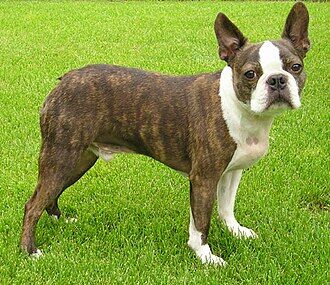
The Boston Terrier is a small, compact, elegant dog that appears to wear a tuxedo, and it is no accident that he is nicknamed “the American gentleman”. Born in the city of Boston in the late 19th century, it combines the alert nature of the terrier with the sweetness of a companion dog made to live close to his family. If you’re looking for a cheerful, sociable, comfortable-sized flatmate, the Boston Terrier is one of the most balanced choices out there. Here’s the complete guide to really getting to know him before you decide.
Is the Boston Terrier for you?
Before you fall in love with that face, you should put the good and the bad on the table. The Boston Terrier is an easy dog to love and keep, but its flat face brings with it special needs that not everyone is willing to take on. These are the lights and shadows of the breed.
In favour .
- Small and compact, ideal for floor and small spaces.
- Cheerful, affectionate and very family-oriented.
- Short hair that barely falls out and requires little maintenance.
- Intelligent and willing to please: easy learner.
- He usually barks little, only when he has to.
- Good companion for children, seniors and other pets if socialized.
To be taken into account
- It’s brachycephalic: flat face that can cause respiratory problems.
- Poor tolerance to heat and intense exercise in the sun.
- Increased risk in anesthesia and deliveries that often require C-section.
- Predisposition to hereditary cataracts and skin problems.
- He can be a little stubborn and territorial with other dogs.
- It’s not a dog to live in the garden: it needs to be inside, with its people.
Character and temperament
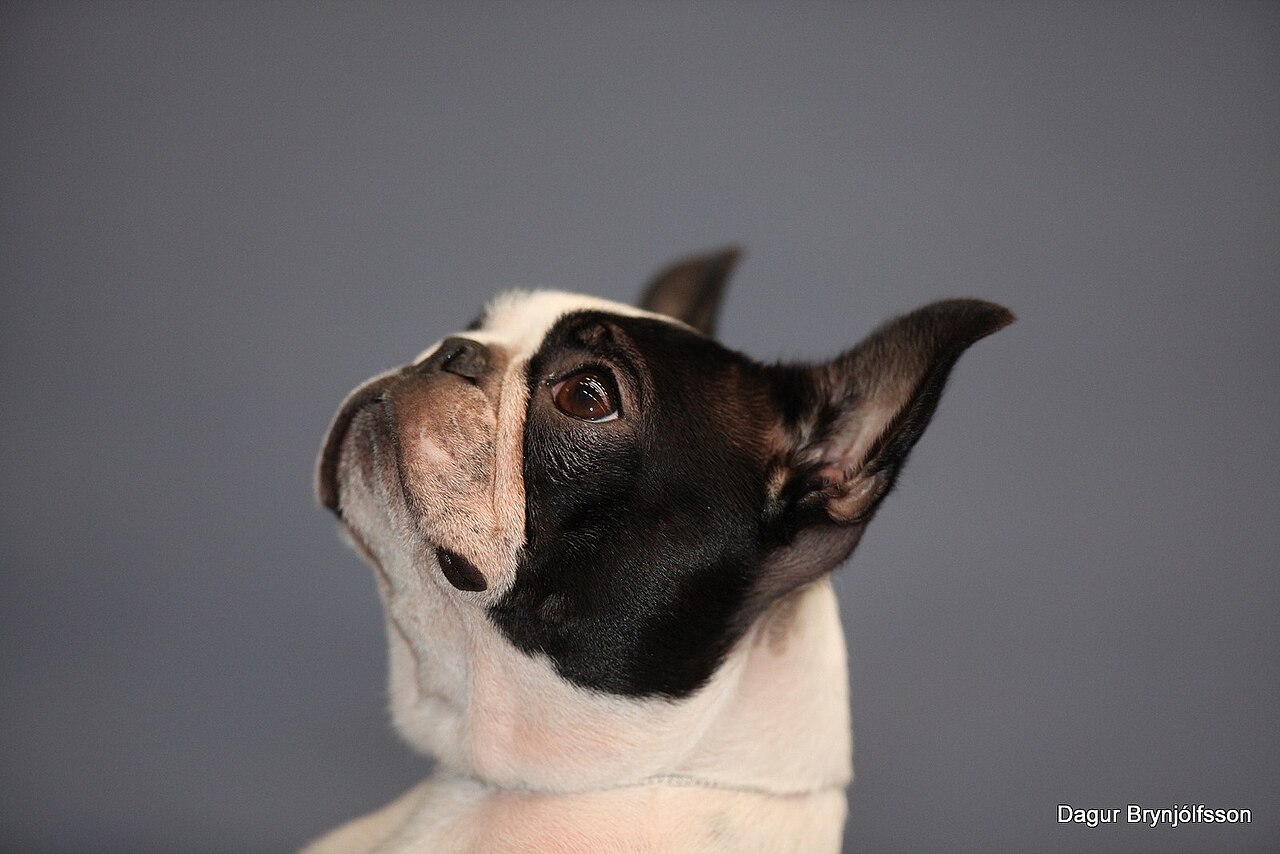
The Boston Terrier has a bright personality. It is a friendly, lively dog with a mischievous sense of humor that makes it a very fun companion at home. It is made for human company: it enjoys the presence of its family like no one else and turns out to please its caregiver, which explains why it has a reputation for being so easy to deal with.
Under that lounge dog air beats, however, a terrier heritage. He’s alert, curious and occasionally has a stubborn streak that needs to be patiently channeled. Some males may be protective and challenge other dogs if they feel their territory has been invaded, especially if they have not been well socialized as puppies. With strangers, she’s usually more alert than barking. It warns, observes, and immediately relaxes when it sees no danger.
One of its great virtues is that it barks little. Both males and females tend to be calm and use their voice only when there is a reason, a quality that is greatly appreciated in an apartment or in a neighborhood community. It is, in short, a sensitive, balanced and deeply sociable dog that earns the affection of all who live with it.
Coexistence: children, other pets, flat and loneliness
The Boston Terrier is one of those dogs that fits into almost any home. Its manageable size and friendly temperament make it very versatile, although there are nuances that should be known point by point:
- With children: gets along very well with the little ones. It is playful, patient and resistant, perfect for a family. As always, it is good to teach children to respect their rest times.
- With the elderly:‘s affectionate nature and low maintenance requirements make it an excellent companion for older people seeking affection without great physical demands.
- With other pets: if properly socialized, coexists smoothly with other dogs and even cats.
- On the floor: is practically the ideal apartment dog. It occupies little, barks little and adapts to small spaces whenever it has its daily walks.
- In the face of loneliness: is very attached to his family and does not take long absences well. If he will spend many hours alone, he may suffer from anxiety. He needs to be part of the daily life of the house.
Education and training
Few small breeds are as grateful when it comes to training. The Boston Terrier is intelligent and has a marked willingness to please, so it responds greatly to training. The American Kennel Club describes it precisely as a very intelligent and easy-to-train dog, and experience confirms this.
The secret lies in positive reinforcement: rewards, caresses and a cheerful tone get much more out of him than any harsh correction. His sensitivity makes abrupt methods counterproductive; he closes in and then that terrier stubbornness does appear. Short, frequent, fun sessions work wonders for him.
Exposing the puppy to people, children, other dogs, noises and different environments will make him a confident and balanced adult, and will reduce any territorial tendencies.
Exercise and activity
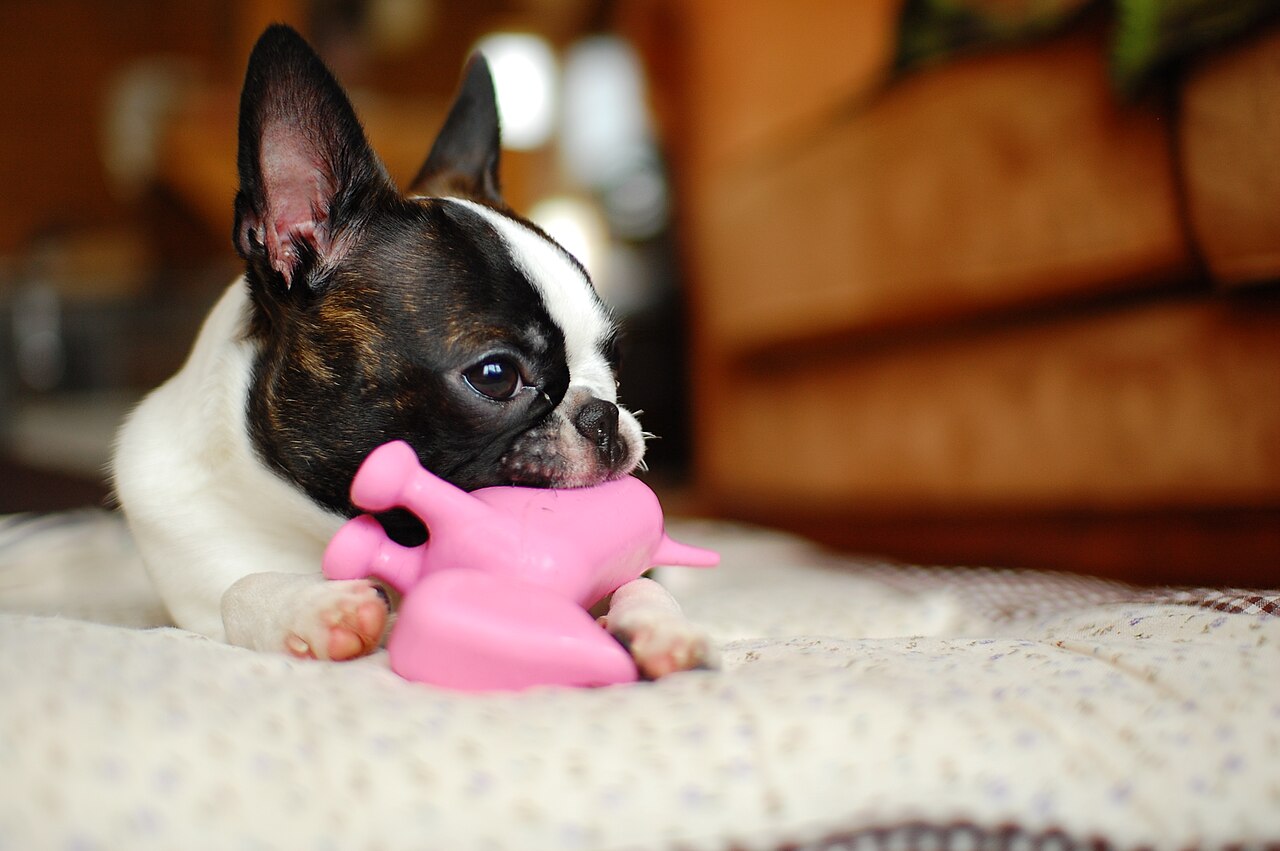
The Boston Terrier has a moderate energy: it loves to play and take walks, but it is not a tireless athlete who needs miles of running. With a couple of daily walks and some playing time at home or in the park it covers its needs. It is a dog that enjoys both a good toy session in the living room and a quiet walk around the neighborhood.
Here comes an important precaution stemming from his dull face: the heat tolerance. As a brachycephalic, it finds it difficult to regulate its body temperature by panting, so strenuous exercise in the sun or on hot days can be dangerous. The wise thing to do is to walk around in the cooler hours of the day during the summer, carry water, and avoid extreme exertion. Better several short, gentle walks than one long, demanding one.
That same mental stimulation that he loves so much – smelling games, interactive toys, little obedience exercises – helps keep him happy and channel his intelligence.
Care: fur and hygiene
If there’s one thing the Boston Terrier loves about daily life, it’s how little it does with its grooming. Its hair is short, smooth, fine and shiny, and barely loosens. A weekly brushing with a glove or a soft brush is enough to keep it shiny and remove dead hair.
Bathing should be done with caution: it is advisable not to overdo it. Excessive bathing dries the skin and can cause dandruff, so a bath about once a month (or when it gets really dirty) is enough. The rest of the care is basic for any dog: checking and cleaning the ears, cutting the nails regularly and maintaining good dental hygiene.
A point not to be forgotten about brachycephalic dogs is the folds of the face and the area around the eyes. Although the Boston has a fairly wrinkle-free snout compared to other flat breeds, it is advisable to keep that area clean and dry to prevent irritation. And because of their large and prominent eyes, it is worth keeping an eye on them to detect any discomfort in time.
Foodstuffs
The Boston Terrier’s diet has no great mysteries, but it does have two keys that make a difference. The first is weight control: it is a small and compact dog, and a few extra pounds overload joints and a respiratory system that already start with some fragility. Keeping it at its ideal weight is one of the best investments in its health.
The second key has to do, again, with your brachycephalic anatomy. When you eat and drink, you swallow air easily, so anti-voral feeding, divided rations, and avoiding exercise right after eating help prevent digestive discomfort.
If you have any questions about rations, food allergies, or digestive sensitivities, your veterinarian is the best person to guide you.
Health and life expectancy
The Boston Terrier is a robust and generally healthy dog, with a life expectancy of around 11 to 13 years. A 2024 British study placed its average longevity at around 11.8 years.
Being a brachycephalic breed, its short snout deforms the upper respiratory tract and can lead to brachycephalic respiratory syndrome, with snoring, loud breathing and difficulty breathing in severe cases. There are also two risks that every homeowner should be aware of: the poor tolerance to heat (heat stroke due to not being able to cool down while panting) and an increased risk during anaesthesia, something that the veterinarian will keep very much in mind in any intervention.
Other problems associated with race are:
- Hereditary cataracts: The Boston is one of the breeds most affected by cataracts of genetic origin.
- Problems with the kneecap: the kneecap dislocation in the hind legs can even cause a curvature of the back (what is known as “roaching”).
- Difficult births: by the broad head of the pups, the vast majority of litters are born by caesarean section; females have a very high risk of dystocia.
- Skin and subcutaneous tissue is predisposed to atopic dermatitis, skin allergies and other skin conditions.
The good news is that on other fronts there is plenty: hip dysplasia is extremely rare in the breed, well below the average canine. With regular veterinary checkups, weight control, and care with heat, a Boston Terrier can enjoy a long and happy life.
Physical appearance
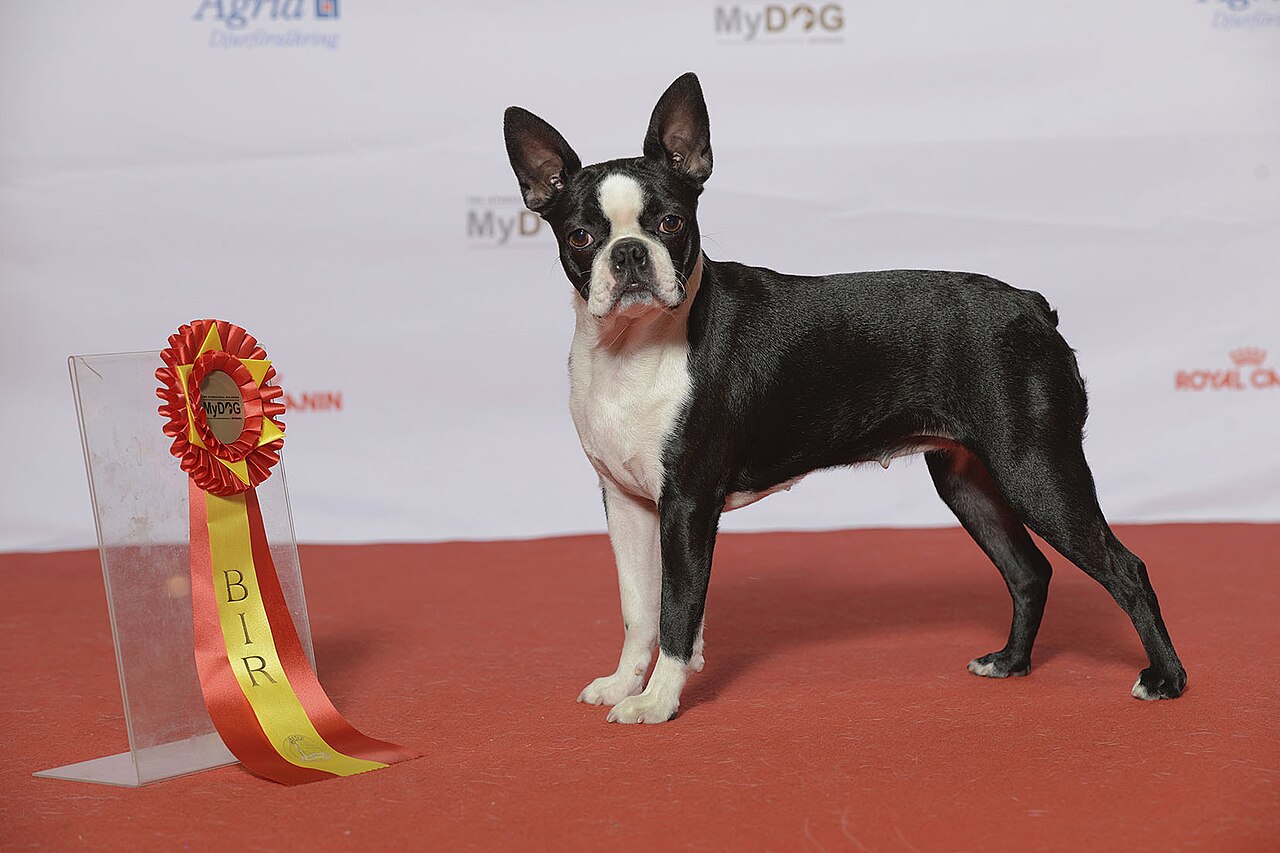
The Boston Terrier is a small dog, compact in build and square and balanced in appearance. It measures about 38 to 43 cm at the cross and, according to the international standard, should not exceed 11 kg or less in weight.
Its head is one of its most distinctive features: square, flat above and without wrinkles, with a short, flattened snout similar to that of the bulldog but without the folds of skin.
The body is robust and well proportioned, with a broad chest, strong, angular limbs, and a short tail from birth that may be straight or corkscrew-shaped, usually no longer than a few centimeters. The coat is short, smooth and shiny. As far as colour is concerned, black and seal (a black that turns red under certain lights) are permitted, always accompanied by the mandatory white markings: A stripe on the snout, a band between the eyes and a white chest. It is precisely this combination, reminiscent of a gala costume, that has earned him the nickname “the American gentleman”.
Origin and history
The Boston Terrier is one of the few genuinely American breeds, and its history begins around 1870 in the city that gives it its name. That year, Robert C. Hooper, of Boston, bought a dog named Judge – later known as “Hooper’s Judge” – a bull and terrier related to the ancient fighting dogs of the day. The American Kennel Club considers this Judge the ancestor of virtually all modern Boston Terriers.
Judge, who weighed about 40 pounds [15 kg], was crossed with a dog named Gyp (or Kate), a strong, bulldog-like white female with a massive head, owned by Edward Burnett of Southboro, Massachusetts. From that union was born the basis of the race. From then on, successive generations of breeders refined the breed, reducing the size of those ancient “Old Boston Bulldogs” – which weighed up to 70 pounds [20 kg] – to the sleek, compact dog of today.
The Boston Terrier Club was founded in 1891 and, just two years later, in 1893, the breed was admitted by the American Kennel Club, which classified it within the “non-sporting” group. Throughout the 20th century, their distinctive markings and colors became an essential part of the standard. Over time, Boston gradually lost its former combative character to become what it is today: A companion dog par excellence, who prefers human company a thousand times over any fight. Such is its roots that since 1979 it has been the official state dog of Massachusetts.
Curiosities
- The American gentleman:‘s white markings on a dark background are reminiscent of a tuxedo, and hence – coupled with its good manners – its famous nickname.
- A war hero: Sergeant Stubby, a World War I Boston, was decorated by the U.S. Army in 1921 and is considered the first dog to receive a military rank.
- Finnish presidential dog: Lennu, the Boston of Finnish President Sauli Niinistö, went viral worldwide by appearing at numerous public events between 2012 and 2021.
- Récord Guinness: a Boston named Bruschi entered the Guinness book as the dog with the largest eyes, each 28 mm in diameter.
- Boston University has used a Boston Terrier named Rhett as a pet since 1922.
- Star of the manga: Iggy, one of the characters from “JoJo’s Bizarre Adventure”, is a street Boston Terrier.
If you have been won over by this flat-faced little gentleman, you may be interested in other races with a similar air or history. The Bulldog Francés shares with it the compact silhouette and brachycephalic charm; the Pug (Carlino) is another flat-faced little one designed for the company; the Bulldog Inglés brings the rugged side of this family, and the Staffordshire Bull Terrier shares that old “bull and terrier” ancestry from which the Boston also descends.
Frequently Asked Questions About the Boston Terrier
Is the Boston Terrier a good dog for the floor?
Yes, it’s one of the best. Its small size, its need for little space and its tendency to bark only when needed make it an ideal apartment companion, provided it has your daily walks and company.
How long does a Boston Terrier live?
Their life expectancy is around 11 to 13 years. A British study from 2024 placed their average longevity at around 11.8 years. With good care, weight control and veterinary checkups, they can lead a long and healthy life.
Does the Boston Terrier shed a lot of hair?
No, his hair is short, thin and shiny, and it barely falls out, and with a weekly brush and a bath about once a month, it’s enough to keep him in perfect condition.
Are you having trouble breathing because of your flat face?
As it is a brachycephalic breed, it may exhibit snoring and noisy breathing, and in severe cases respiratory distress. It also tolerates heat poorly and has a higher risk in anesthesia.
Do you get along with children and other pets?
Very well. It is playful and patient with children and, if socialized as a puppy, coexists without problems with other dogs and even cats. Early socialization is key to softening the territorial point of some males.
Is the Boston Terrier easy to train?
Yes, he’s intelligent and loves to please his family, so he learns fast with positive reinforcement and short, fun sessions.
Why do they call the Boston Terrier “the American gentleman”?
For two reasons: its white markings on its dark body are reminiscent of a tuxedo, and its polite, pleasant character fits the image of a gentleman, and it is one of the few breeds native to the United States.
How much does a Boston Terrier weigh and measure?
It measures about 38 to 43 cm at the withers and should not exceed 11 kg. At exposure it is divided into three weight categories: less than 6.8 kg, from 6.8 to 9 kg, and from 9 to 11.3 kg.