The Dogo Sardo– also known as Dogo Sardesco– is one of those dogs that have survived in the shadow of the spotlight: an athletic, fierce-looking, native of Sardinia, bred for centuries to guard cattle, dominate cerriles and accompany the shepherd in the harshest corners of the island. He has no official standard or FCI recognition, but in his homeland he is a living legend. If you’re looking for a rustic, strong-willed guard dog, here’s everything you need to know about the Dogo Sardo before you consider living with one.
Is the Sardinian Doge for you?
The Dogo Sardo is not a dog for everyone, and it is advisable to say it clearly before continuing. It is a hardworking, primitive and strong-tempered moloss, which gives its best in the hands of people with experience, space and time. In return, it offers a loyalty and a guarding ability that are difficult to match. Here is the honest summary:
In favour .
- Exceptional guardian: territorial, courageous and very deterrent.
- Extremely rustic, hardy and healthy from its origins as a diverse indigenous breed.
- Athletic, agile and tireless on the field.
- Minimal fur maintenance.
- Deep and protective attachment to his family.
Against
- Not recommended for beginners or floors.
- Distrustful of strangers; demands early and constant socialization.
- It needs a lot of exercise and a job or function to perform.
- Independent and dominant: requires firm and consistent guidance.
- Past as a prey dog: coexistence with other dogs must be managed with head.
Character and temperament
If we had to define the Sardinian Doge in one word, it would be tempted. For generations, Sardinian herders selected these dogs, not for their beauty or for an exhibition standard, but for their strength of character, their rusticity and their fitness for work. The result is a serious, self-confident guard dog with a high provocation threshold: He doesn’t bark at everything, but when he decides something doesn’t fit, he’s serious.
With his family, it’s a different story. The Doge of Sardinia develops an intense and protective bond with the people of his core, whom he follows and watches with devotion. He is not a particularly effusive or clingy dog – his independence is noticeable – but his loyalty is total. That same independence, inherited from centuries of freelance work keeping herds away from the master, makes him not a submissive dog: He thinks for himself and needs a guide to trust, not a boss to fear.
With strangers, he is reserved and vigilant. Their instinct to guard and defend the driver has been documented since ancient times, so distrust is part of their nature. Well socialized, it can distinguish between a normal visit and a real threat; poorly managed, it can become overly territorial. The difference, almost always, is marked by the work the owner does during the first year of life.
Coexistence: children, other pets, flat and loneliness
With children. Raised as a puppy with the children of the house and with supervision, the Dogo Sardo is usually tolerant and protective with them.
You have to be realistic here. The Dogo Sardo was also used in the past for dog fighting, and retains a strong territorial instinct. He can get along well with dogs he has lived with since he was a puppy, but introductions to new dogs – especially of the same sex – should be done calmly and in control. In front of the cattle it was bred to keep and manage it, not to harm it, although with cats and other small animals it is advisable to supervise.
On the floor. is not his place. This dog needs space, an enclosed plot and an environment that he can patrol. A Dogo Sardino locked in an apartment with not enough activity is a frustrated dog, and a frustrated 40-kilogram moose is a problem for anyone.
In the face of solitude. tolerates being alone outdoors quite well if it has its territory and function, because it is a dog built for autonomy. What does not do well is chronic boredom or total isolation from the family group: it needs to feel that it belongs to its people.
Education and training
Educating a Dogo Sardo is an exercise in consistency rather than strength. It is an intelligent and resolute dog, but also independent and with its own criteria, so it does not respond well to mechanical repetition or harsh methods. What works is calm leadership: clear rules from the first day, positive reinforcement, and an owner who is predictable and fair.
The early socialization is, without a doubt, the most important investment. A Dogo Sardo puppy should know people, dogs, noises, vehicles and various situations as soon as possible, in a positive framework, so that their natural distrust towards the strange does not lead to reactivity.
Basic obedience – trustworthiness, impulse control, walking on a leash without pulling – is a must for a dog of this size and strength. Competitive training is not needed, but consistency is. And if you can give it a real function – guarding, field work, canine sports involving head and body – you will have a much more balanced dog.
Exercise and activity
The Dogo Sardo is, above all, an athlete. Sources describe it as a very agile, resistant and strong molosoid dog, capable of moving over difficult terrain for hours. That machinery needs to be worn daily: long walks alone are not enough, you have to combine walking, exploration and, above all, mental stimulation and work.
An adult and healthy Dogo Sardo appreciates several daily outings, access to a large space to run and patrol, and activities that test his head: tracking, search games, controlled guard work. It’s a dog that gets bored with empty routine and channels its energy much better when it feels it has a task. Of course, during growth, it is advisable to dose the strong impacts (jumps, intensive stairs) to protect their joints from large mollusks.
Care: fur and hygiene
One of the great practical advantages of the Dogo Sardo is the unpretentiousness of its aesthetics. Its mantle is of medium-short, rough and rustic hair, designed by nature to withstand the sun, wind and cold of Sardinia without asking for anything in return.
Bathing should be occasional, only when it is really dirty, so as not to spoil the natural protection of your skin and hair. The rest of the hygiene is the sensible routine of any large dog: To check and clean the ears, monitor the wear of the nails, take care of dental hygiene – which in a breed with such strong teeth should not be neglected – and check pads and skin after field trips.
Foodstuffs
As an athletic moloss of 30 to 45 kilos, the Dogo Sardo needs a quality diet, rich in protein of good provenance and adjusted to its real level of activity, which in a working dog can be very high.
In large breeds and deep-chested breeds it is advisable to take precautions against gastric dilation-torsion: Split your food into two servings instead of one, avoid strenuous exercise just before and after eating, and don’t let him drink large amounts of fluid after exertion. During the growth of the puppy, a feed formulated for large breeds is key, which controls the supply of energy and calcium so that the bone development is progressive. When in doubt, it is best to discuss the procedure with your veterinarian.
Health and life expectancy
Here we have to be honest: As it is not a breed with official breeding standards or programmes, there are no systematic clinical data on the Dogo Sardo. What we do know is in your favor. It is an autochthonous population, raised for generations prioritizing rusticity, temperament and fitness for work above any aesthetic criteria. This harsh selection, coupled with a broad and diverse genetic base, often results in robust dogs that are less prone to the inherited problems of closely related breeds.
That said, it is wise to apply the common sense of large molluscs. Monitor joint health (hip and elbows), take care of weight so as not to overload the skeleton, prevent gastric torsion with good feeding guidelines and keep the schedule of vaccinations and deworming up to date. There are no official figures of longevity, but by size and type the expected in a rustic mollusk of its size is placed, in an indicative way, around 10-12 years, with well-kept specimens that can exceed them.
Physical appearance
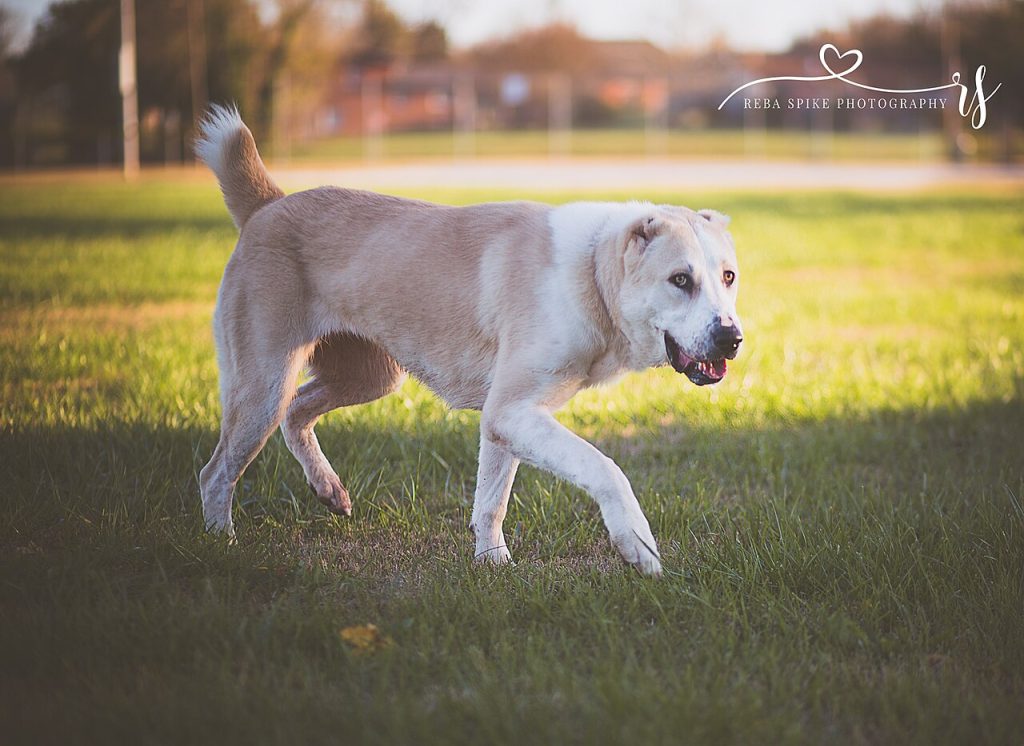
The Dogo Sardo is a molosoid dog of large size, but far from the heavy molose and lymphatic: That’s where athletics comes in. Strong, muscular body, tight skin, broad chest and a frame that transmits power without losing agility. The average height ranges from 56 to 68 cm at the withers – males start from 60 cm and larger specimens are not uncommon – and the current weight ranges from 30 to 45 kg.
The head shows more or less molosoid features, with evident development of the mandibular musculature and a snout slightly shorter than the skull. The denture is imposing and solid, with scissor or clamp closure, long fangs and a highly developed third upper incisor: A team designed to hold and dominate. The eyes are usually amber or brown, and many specimens – especially those from Gavoi – have a distinctly yellow eye that gives them that fierce look by which the breed is recognized.
The coat is medium-short, rough, in layers of reddish or lionskin, gray, black or tarred. As no standard was ever set and the isolation of some areas favored a certain local consanguinity, there is considerable variability from one specimen to another depending on its region of origin.
Origin and history
The Dogo Sardo is an indigenous dog of Sardinia, linked to the pastoral and rural life of the island since ancient times. Throughout history he was entrusted with very diverse tasks: He was also responsible for guarding livestock, property and aprons, managing cerrilla cattle, hunting ungulates such as wild boar and, in former times, even serving as a war dog. It was, in short, the Sardinian shepherd’s all-terrain dog.
There are several hypotheses about its origin. The Jesuit Francesco Cetti, around 1700, described the Sardinian dogs as a perfect mix between a hare and a large dog, a combination that gave them agility and power in equal parts. Earlier, the Arborea Court Logbook already mentioned a strong-tempered dog employed to guard and defend its driver. That dual heritage – runner’s speed and molosser’s stamina – is still read in his athletic physique today.
On the island, this dog receives a long list of local names that give an idea of its origin: In addition to the old Sardinian dog, there is also the jagaru, trighinu, sorgolìnu, pastore gavoese, cani perdigatzu, cane di Gavoi, cani pertiatzu, alano di Bonorva or old Sardinian dog. It never set a breed standard or gained recognition as an official Italian dog, so it has survived as a highly prized working dog inside Sardinia and almost ignored outside of it.
Curiosities
- Their name changes depending on the people: jagaru, trighinu, sorgolìnu, cani pertiatzu… the same race with a map of nicknames throughout Sardinia.
- The characteristic deep yellow eye of many specimens is mainly associated with dogs from the Gavoi area.
- An official standard has never been set: the selection was made by the shepherds, rewarding temperament, rusticity and work above aesthetics.
- The Jesuit Cetti already wrote about Sardinian dogs around 1700, describing them as an ideal cross between hare and large dog.
- Although it is called a dog and shares air with other prey molluscs, it is a much lighter and more agile dog than a classic heavy mollusk.
- It is often confused with the Shepherd Fonnés, another native dog of Sardinia; but they are different types: the Fonnés is a herding dog and the Dogo Sardo, a guard and prey moose.
If you are attracted to the Dogo Sardo because of its molose guardian character, you will surely be interested in other breeds of molosoid root and guarding vocation. Take a look at the Cane Corso, the great Italian game molose; the Rottweiler, guardian par excellence; the imposing English Mastiff; and the elegant Gran Danés, heir to the ancient Alans. Comparing characters will help you better understand what you are looking for in a guard dog.
Frequently Asked Questions about the Doge of Sardinia
Is the Dogo Sardo an officially recognized breed?
No. The Dogo Sardo (or Dogo Sardesco) is not recognized by either the FCI or the Ente Nazionale della Cinofilia Italiana (ENCI), and an official standard has never been set.
Is he an aggressive or dangerous dog?
It is not an aggressive dog by nature, but a strong, territorial, and distrustful of strangers. Historically it was used as a prey and defense dog, so its protective instinct is real. With early socialization, sensible handling, and an owner who knows what he has on his hands, it is a balanced companion; without those requirements, it is not a recommended breed.
How tall and how much does a Sardinian Doge weigh?
The average height ranges from about 56 to 68 cm at the withers, with males starting from 60 cm and even larger specimens that are not uncommon.
Does the Doge of Sardinia serve to live in a flat?
It’s not ideal. It’s a working dog, athletic and with a strong guarding instinct, which demands space, intense daily activity and an environment where it can patrol and expend energy. It fits much better in a house with enclosed land in the countryside than in an urban apartment.
Do you get along with children and other animals?
With the children of his own family, raised alongside them and always with supervision, he is usually tolerant and protective. With other dogs it is advisable to be careful about his past as a prey dog and his territorial instinct: early socialization and controlled presentations are essential.
What kind of skin care do you need?
Very few. Their coat is of medium short, rough and rustic hair, designed to withstand the cold weather of Sardinia. A weekly brushing and baths are enough only when really needed. It is a race of low maintenance in aesthetics; where you have to invest is in exercise, training and socialization.
Where did the Sardinian Doge come from?
It is a dog native to Sardinia, of very ancient origin. Already the Jesuit Francesco Cetti, around 1700, described the Sardinian dogs as a perfect mix between a hare and a large dog, and the Letter of Logu of the Court of Arborea cites it as a dog of strong temperament used for guard and defense. He’s known on the island by many names: It is also known as jagaru, trighinu, sorgolìnu, shepherd gavoese or cani pertiatzu, among others.
Is it a good dog for someone who has their first dog?
The Dogo Sardo is independent, tenacious, domineering and with a strong guarding instinct; it needs an experienced guide, consistent and calm, able to socialize it and give it structure from a puppy.