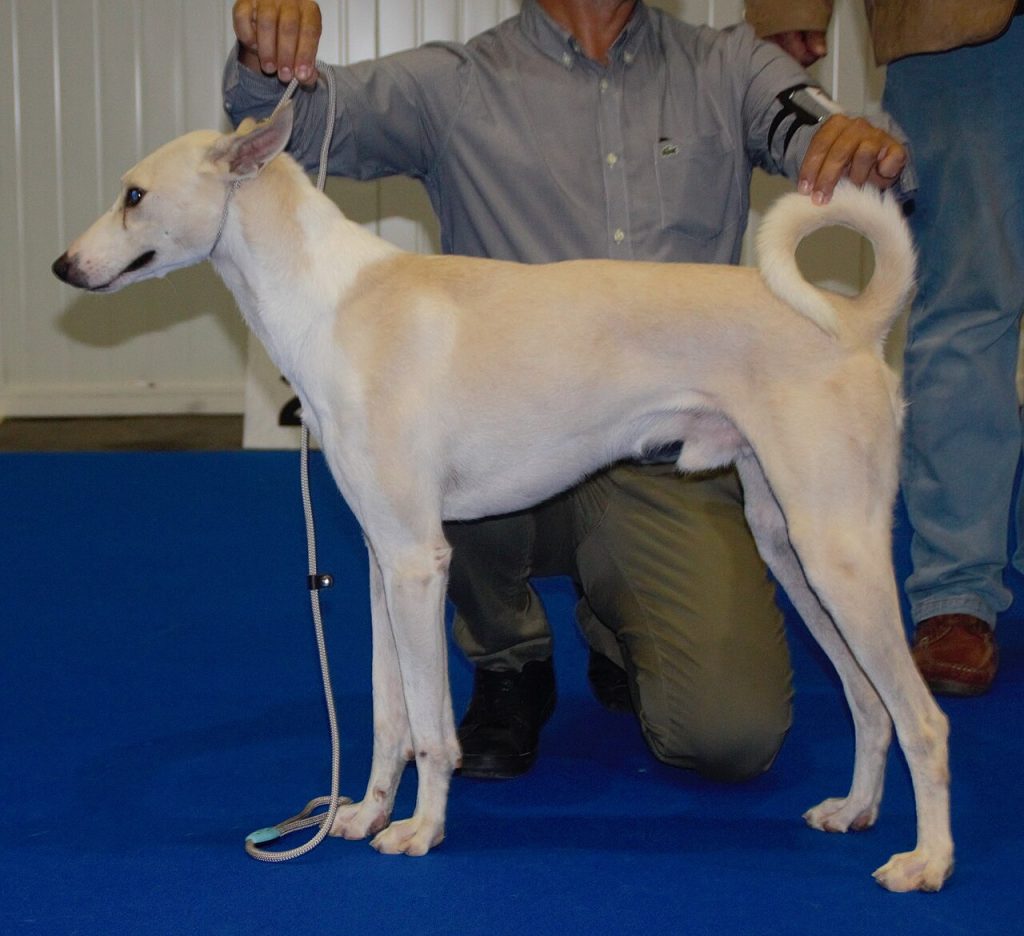
The Power of Crete(in Greek Kritikos Lagonikos) is a slender and fast hunter native to Crete, considered one of the oldest dog breeds in Europe, with thousands of years of documented history. Halfway between the hound and the hare, it is a primitive, rustic, independent and extraordinarily healthy dog, made to run after the hare over rocky terrain. If you’re looking for an athletic, clean, personable mate – and not intimidated by his oddity or hunting instinct – this age-old breed has much to offer.
Is the Power of Crete for you?
The Cretan Podenco is not a dog for everyone. It is a primitive athlete, loyal to its people but with its own criteria, which needs real movement and an owner who understands its hunting nature. Before you fall in love with its ancient greyhound image, consider what it means to live with it.
In favour .
- Iron health and rusticity are the result of millennia of natural selection.
- Athletic, agile and very fast: he shines in sports such as agility or canicross.
- Short, clean hair: minimal maintenance and almost odorless.
- Inside the house, he’s quiet, discreet and very close to his family.
- Good instinct for alertness: warn without being a heavy barker.
To be taken into account
- High hunting instinct: unreliable loose, goes after any prey.
- Independent and stubborn: not a dog of easy obedience.
- Reserved with strangers and often selective with other dogs.
- It requires a lot of exercise and space; it doesn’t fit with a sedentary lifestyle.
- Extreme rarity: very difficult to obtain outside Crete and Greece.
Character and temperament

The Cretan Podenco has the virtues of a free-ranging working dog. It is proud, brave and independent, with a security that comes from centuries of hunting on its own in the Cretan mountains. With its family it is affectionate, loyal and surprisingly sensitive, but it is not a clingy or servile dog: it has its own agenda and defends it with a pinch of heebie-jeebies.
With strangers he tends to be aloof and cautious, which makes him a good warning dog. He’s not aggressive by nature, but he doesn’t give away his confidence either. It also retains guarding and even herding instincts, something unusual in a hunting dog, which speaks of its ancestral versatility. He’s awake, observant and always aware of what’s moving around him: Nothing escapes him.
Above all, it’s a dog with an intense prey drive, and its brain is wired to detect, chase, and capture, and that drive shapes much of its daily behavior, and understanding and channeling that drive is the key to good coexistence.
Coexistence: children, other pets, flat and loneliness
With the children in the family, the Cretan Poodle is usually tolerant and affectionate, especially if it grows up with them.
With other dogs it is selective: traditionally it does not look for canine companionship and can be dominant or simply indifferent.
As for the floor, it can adapt if it gets a lot of exercise, since it is clean and quiet at home; however, it greatly enjoys a fenced and safe plot to stretch its legs.
Education and training
Training a Cretan Powerhouse requires patience and respect. It is intelligent and quick to learn, but its independent nature makes it not obey for the sake of obeying: it needs motivation. Positive reinforcement, short and varied sessions and a relationship based on trust yield much better results than imposition, which only gets it to close in on itself.
The two priorities are early socialization– exposing him as a puppy to people, environments and other animals – and working hard on called. Even with good training, it’s worth assuming that a dog with this level of prey instinct will never be 100 percent reliable loose in open country with prey in sight.
Exercise and activity

Here is the heart of the breed. The Cretan Podenco is a dog built for speed and endurance, capable of moving with astonishing agility over impossible terrain. It needs abundant and intense daily exercise: long walks, galloping opportunities in safe places, exploration and games that stimulate its sense of smell and instinct.
At the very least, think about one or two hours a day of real activity, not just a walk around the block. It is an excellent candidate for canine sports such as agility, canicross or lure coursing, where it can channel its energy and passion for chasing. A well-trained Cretan Poodle is a balanced dog; one bored, a constant source of trouble.
Care: fur and hygiene
As far as maintenance is concerned, the Podenco of Crete is most grateful. His hair is short, thin and attached to the body., with a longer lock of hair under the tail. A weekly brushing is enough to keep him in shape and distribute the natural fat of the skin; the mucus is moderate and hardly gives off odor.
The rest of the care is the basic of any dog: checking and cleaning the ears (large and erect), cutting the nails if they do not wear out by themselves and taking care of dental hygiene.
Foodstuffs
The Cretan Podenco is a frugal and efficient dog, a legacy of generations who lived on limited resources in the mountains. He needs a high-quality diet, rich in animal protein, tailored to his high activity level and lean athlete metabolism. The natural feature of this breed is the slightly marked ribs and a recessed belly: Overweight is especially bad for you, as it puts a strain on your fine joints.
Split food into two servings a day and, as with any active, deep-breasted dog, avoid strenuous exercise just before and after eating. Always adjust rations to your dog’s age, weight, and actual energy expenditure, and have fresh water available, especially after exercise sessions.
Health and life expectancy
Centuries of natural selection and a relentless traditional breeding, which discarded any defective specimens, have resulted in a remarkably healthy breed, largely free from the hereditary diseases that plague many dogs of modern pedigree.
There are no formal studies on its longevity, but, as a primitive, rustic, medium-sized breed, it is usually placed around 12 to 14 years with good care. To keep him healthy, all you need is the essentials: exercise, a balanced diet, daily vaccination and deworming, weight control and regular veterinary checks. Their natural thinness and short hair call for some protection from the cold.
Physical appearance

The Cretan Podenco is a slender and harmonious dog, halfway between the greyhound and the greyhound, slightly longer than tall.
The head is elongated, wedge-shaped and dry, with ears erect and highly mobile folding backwards during the race, as in greyhounds. But the most distinctive feature is the tail: long and curved upwards forming a ring, loose or closed, and covered under a longer hairbrush. As for color, the breed supports a great variety: Pure white, cream, sand, deer, grey, black or brindle, in monochrome, bi-chrome or tri-chrome versions. The height at the cross is, according to sources, around 50-58 cm and the weight between about 15 and 25 kg.
Origin and history
Few races can boast of a lineage like that of the Cretan Podenco. Its presence on the island of Crete has been documented for at least 3,500 years, and it is considered one of the oldest dog breeds in Europe, possibly predating 3200 BC. Their ancestors are represented on Minoan seals, ceramics, metal objects, sculptures and frescoes that are now preserved in the Heraklion Archaeological Museum.
It was bred and used by the Minoan civilization, which at its height dominated much of the Aegean Sea. He was always employed as a hunter of wild hares and rabbits in the harsh terrain of his island. Classical authors – from Xenophon to Ovid – praised the Cretan dog as the best hunter of hares, and in antiquity it was exported to the Greek colonies and other European countries, reaching as far as Spain and the British Isles, to improve local poodles.
Isolated for millennia on an island with unique wildlife, the race remained pure and unaltered. Their story of struggle and survival forged a proud and independent dog, which Cretan hunters jealously guarded, often keeping their best specimens out of the public eye. That same reserve explains why, despite its antiquity, it remains today one of the rarest breeds in the world.
Curiosities
- It is cited as one of the oldest dog breeds in Europe, with origins dating back to the Neolithic.
- Its Greek name, Kritikos Lagonikos, alludes to its ancestral specialty: hare hunting (lakes).
- Their ancestors appear in Minoan frescoes and seals from thousands of years ago: a dog who posed for art rather than photography.
- In antiquity it was exported to Spain and the British Isles to improve local hunting breeds.
- It unusually combines hunting, guarding and even herding instincts in the same dog.
- It’s so rare that, for centuries, Cretan breeders kept their best dogs virtually secret.
If you are attracted to the Cretan Podenco for its fast and elegant hunting profile, you may be interested in other hare or hunting breeds with which it shares family airs: the Greyhound, speedster par excellence; the agile and affectionate Whippet; the tireless sample Pointer; or the versatile and energetic Vizsla. All of them share with the Cretan Podenco that mix of athleticism, instinct and nobility.
Frequently Asked Questions about the Power of Crete
Is the Cretan Podenco a good family dog?
Yes, with his family he is loyal, affectionate and very attached, and inside the house he is calm and clean. However, he is a primitive, independent and reserved dog with strangers, so he fits better in active homes with experience than in someone looking for a dog openly sociable with everyone. With children who respect their space he lives well, always with supervision.
How much exercise does a Cretan Powerball need?
It is a fast and hardy hunter, bred for millennia to chase hares through rocky terrain, and needs at least one to two hours a day of intense activity: running, exploring, and playing, ideally with galloping stretches in safe areas, without which it becomes bored and frustrated.
Can you have a Cretan Powerhouse in a flat?
It may adapt to living in a flat if it gets plenty of daily exercise and long walks, because indoors it is discreet and sleepy. But its athletic nature and hunting instinct demand space, running terrain, and easy access to the outdoors; a house with a fenced and secure plot feels much better.
Is it easy to train the Cretan Power?
It is not a classic obedience dog. It is intelligent but independent and somewhat stubborn, the result of centuries of free-wheeling. It learns with positive reinforcement, short sessions and a lot of patience, but it will rarely be as submissive as a shepherd or a retriever. Early socialization and a good call are priorities.
Does the Cretan Podenco get along with other dogs and cats?
It is selective. Traditionally it does not like the company of other dogs very much and can be dominant or distant. With cats and small animals its very high prey instinct makes it unreliable, unless it grows up with them and still with caution.
How tall and how much does a Cretan Podunk weigh?
It is a medium-sized and lightly built dog. According to the sources, the height at the withers is approximately between 50 and 58 cm, and the weight is around 15-25 kg, with the males being somewhat larger than the females.
Is the Power of Crete recognised by the FCI?
Not by the FCI internationally. It is a Greek national breed recognized by the Kennel Club of Greece (KOE) and also widespread in Germany. It is considered one of the oldest dog breeds in Europe, but its rarity and local character have greatly limited its recognition outside Greece.
Is it hard to get a Cretan Powerhouse?
It is one of the rarest breeds in the world: for centuries Cretan hunters kept their best specimens almost secret and rarely leave the island. Outside Greece it is practically impossible to find, and anyone who wants to usually has to contact breeders in Crete and arm themselves with patience.