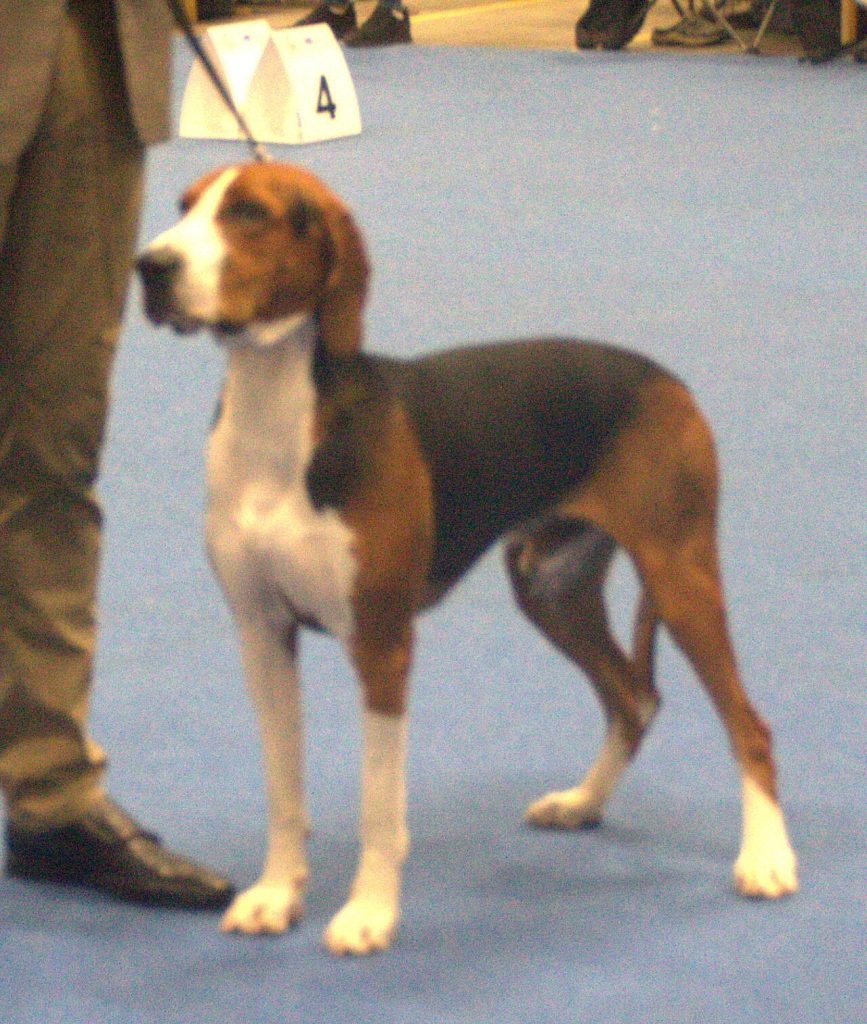
The Hamilton hound(Hamiltonstövare, in Swedish) is a medium-sized, elegant, tricolored Swedish hunting dog, bred to track hare and fox on its own along dense forests, open fields and mountainous terrain. Outside Scandinavia it is still a rare breed, but anyone looking for a dog with a balanced, sociable and extraordinary sense of smell will find the Hamilton Hound a loyal companion who keeps his tracking instinct intact.
Is that the Hamilton Hound for you?
The Hamilton Hound is a dog designed to live outdoors and move around a lot. Its friendly temperament and attachment to the family make it pleasant at home, but its nose dictates: as soon as it catches an interesting trail, everything else goes into the background. Before falling in love with its tricolor pattern, it is advisable to be clear about what it means to live with a working dog.

In favour .
- Kind, sociable character and very close to his family.
- Generally good with kids.
- Short coat and easy to maintain.
- Healthy, resilient dog with few serious hereditary pathologies.
- Remarkable physical endurance: ideal for active people.
- It barks with a powerful, melodious voice, useful as a warning.
To be taken into account
- Very strong tracking instinct. Distracted by any odor.
- He can be stubborn; he needs patient and constant training.
- It’s not a small-floor dog or a sedentary dog.
- Loose in an unfenced area, he can chase a trail and get away.
- It tends to “sing” (hound howling), not recommended in neighborhoods very sensitive to noise.
- Rare outside Scandinavia: it can be hard to find a breeder.
Character and temperament
The Hamilton Hound combines two facets that define most hounds: on the one hand, it is a tenacious hunter, with a keen sense of smell and extraordinary determination when following a trail; on the other hand, at home, it is a friendly, calm and sociable dog, which forms close bonds with its family and enjoys human company.
He’s a loyal and affectionate dog, not very aggressive. His emotional balance is one of his great attractions: is not nervous or overly reactive, but serene when he is resting. Now, that calm coexists with a stubbornness inherited from working alone. The Hamilton Hound was bred to hunt on its own, making decisions independent of the hunter, and that independence is seen in its character: He knows what he wants and sometimes it’s hard to convince him otherwise.
Early socialization is key for this hunting instinct to be well channeled and for the dog to learn to live with stimuli that would otherwise activate its “tracking” mode.
Coexistence: children, other pets, flat and loneliness
With children: is a breed that generally gets along well with children. Its sociable and patient nature makes it a good family dog, always under reasonable supervision that deserves any coexistence between dogs and minors.
With other pets: is bred to work and hunt in packs, it usually tolerates other dogs well. With small animals or cats you have to be more careful because of their tracking and chasing instinct; careful socialization from puppyhood helps a lot, but it is not advisable to assume that it will ignore an animal that runs out.

On the floor: is not its ideal habitat. It is a field dog, with a high need for exercise and a tendency to vocalize. It can adapt to urban life if it receives a lot of daily exercise, but fits much better in a house with terrain and access to open spaces to run and sniff.
Soledad: as a good companion dog that is attached to his family, does not like to spend long hours alone. Boredom and lack of stimulation can lead to howling, wrecking or attempts to escape to follow some trail.
Education and training
Educating a Hamilton Hound requires patience and perseverance. It is an intelligent dog and capable of learning, but its independence and stubbornness make it not respond well to harsh methods or mechanical repetition. Positive reinforcement, short and varied sessions and clear motivation (food, play, tracks) give much better results.
The priority should be socializing and working with the call. Because its sense of smell dominates it, the called is the classic weak point of the breed: As soon as he finds an attractive trail, he tends to disconnect from the guide. That’s why you have to reinforce the “here” a lot from a puppy and be realistic about letting him off without a leash in open areas without a fence. Interestingly, the breed was selected to to refuse the deer trail and focus on hare and fox, a good example of how much their instinct was honed through breeding.
Exercise and activity
It is an endurance dog, bred to work for hours on demanding terrain. It needs plenty and quality exercise: long walks, runs, olfactory games and, when possible, activities that exploit its nose. A simple walk around the block is not enough for a healthy adult of this breed.
Activities that combine physical and mental effort – trawling, mantrailing, hunting, hiking – are ideal, because they satisfy both your body and your head. A Hamilton Hound that gets enough exercise is a calm and balanced dog at home; one that doesn’t, will find on its own how to expend that energy, almost always in inconvenient ways.
Care: fur and hygiene
One of the great advantages of the breed is its ease of maintenance. The coat is short and dense, and a weekly brushing is enough to remove the dead hair and keep it healthy and shiny.
Bathing is only necessary from time to time, when the dog gets really dirty. Like all dogs with droopy ears, the ears must be checked and cleaned regularly to prevent infections, since the hanging ear reduces the ventilation of the ear canal. The rest of the hygiene is the usual: nails, teeth and eyes with the recommended periodicity.

Foodstuffs
The Hamilton Hound is an athletic and active dog, so its diet must be adjusted to a high energy expenditure. A quality feed or food, with a good protein ratio and adapted to its activity level, age and size, is the basis for keeping it in shape.
It is advisable to divide the food into several servings and avoid strenuous exercise immediately after eating, a reasonable precaution in deep-breasted dogs. Being a very mobile dog, it is easy to maintain its weight, but in dogs that do less exercise than they need, the rations must be monitored to prevent overweight. Fresh water always available, especially after a busy day.
Health and life expectancy
The Hamilton Hound is considered a robust and healthy breed, without a long list of serious hereditary diseases, which is partly attributed to its functional selection as a working dog.
Regular veterinary checkups, deworming, daily vaccination and good ear hygiene are the keys to keeping it healthy for many years. With proper care, it is a long-lived dog within its category, able to remain active into old age.
Physical appearance
It is a medium-sized dog, with a well-proportioned and muscular structure, which transmits strength without losing elegance.
Males measure between 53 and 61 cm at the withers, and females between 49 and 57 cm; the weight is around 23 – 27 kg. The mantle is short and dense, and its most characteristic feature is the tricolor layer: A combination of black, fire (red-brown) and white, with a pattern that gives it that unmistakable Scandinavian hound print. The head is elongated, with sloping ears of high insertion, and the expression is serene and gentle.
Origin and history
The use of hounds in Sweden dates back to at least the 16th century, when tracking dogs from Eastern Europe are believed to have arrived in Scandinavia. The exact ancestry of the Hamilton Hound is not entirely agreed upon: Different authors point to native Swedish hounds, Swiss and German breeds such as the Holstein hound or the Hannover hound, the now extinct Courland hound (Latvia), and also the English Foxhound and Harrier.
The key figure was Count Adolf Patrick Hamilton, a Swedish cavalry officer and first president of the Swedish Kennel Club (Svenska Kennelklubben). At the end of the 19th century he devoted himself to developing a breed that would excel in hunting and tracking, and at a dog show in 1886 he presented two dogs considered the first specimens of what we know today as the Hamilton Hound. The result was a robust dog, perfectly adapted to the various terrains of the Swedish countryside.
Originally it was simply called “Swedish hound”, like the Schillerstövare and the Hygenhund. In 1921 it was recognized by the Swedish Canine Club and renamed Hamiltonstövare in honor of its creator. The International Kennel Federation (FCI) recognized the breed in 1955, and it is currently part of the American Kennel Club’s Foundation Stock Service. Despite being a very popular hound in Sweden, it is still rare outside Scandinavia.
Curiosities
- It owes its name to Count Adolf Hamilton, founder and first president of the Swedish Canine Club.
- It was deliberately selected for reject the trail of the deer and focus on hare and fox.
- According to Swedish folklore, the elf Tomten(a Christmas figure) is accompanied by a Hamilton Hound named Karo.
- Among its ancestors are the English Foxhound and the Harrier, which explains its British hound air with Scandinavian touches.
- He hunts alone, not in a closed cage, which shaped his independence and initiative.
If you are attracted to the Hamilton Hound, you may be interested in other tracking breeds, hounds and working dogs of balanced temperament. You can continue to explore with the Beagle, Basset Hound, Bloodhound and Dachshund, other sniffing and tracking breeds with which you share character and abilities.
Frequently Asked Questions About the Hamilton Hound
Is the Hamilton Hound a good family dog?
Yes. He is kind, sociable and very close to his family, and generally gets along well with children. His weakness is not character, but the need for plenty of exercise and his strong tracking instinct, which must be channeled from puppyhood.
How tall and how much does a Hamilton Hound weigh?
Males measure between 53 and 61 cm at the withers and females between 49 and 57 cm. The weight is usually between 23 and 27 kg. It is a medium-sized, well-proportioned and muscular breed.
What color is the Hamilton Hound?
Its coat is tricolor: it combines black, fire (red-brown) and white.
Is it easy to train?
It is intelligent but stubborn and independent, inherited from being bred to hunt alone. It responds well to positive reinforcement and short sessions, but the call is difficult for it: as soon as it catches a trail, it tends to disconnect from the guide.
Can he live in a flat?
It is not ideal. It is a field dog, with a high need for exercise and a tendency to vocalize. It can adapt to the city if it receives a lot of daily activity, but it fits much better in a house with land and open spaces.
Where did the Hamilton Hound come from?
It was developed in the late 19th century by Count Adolf Hamilton, founder of the Swedish Canine Club, from German hounds, the English Foxhound and the Harrier, among others.
Is it a healthy breed?
It is considered robust and healthy, without a long list of serious hereditary diseases. As in many medium-sized breeds, it is advisable to watch for hip dysplasia and, for its drooping ears, otitis; ear checks and hygiene are the best prevention.
Is he a weird dog?
Outside Scandinavia, yes. It’s very popular in Sweden as a hunting dog, but rare in the rest of the world, so it can be hard to find specialized breeders.