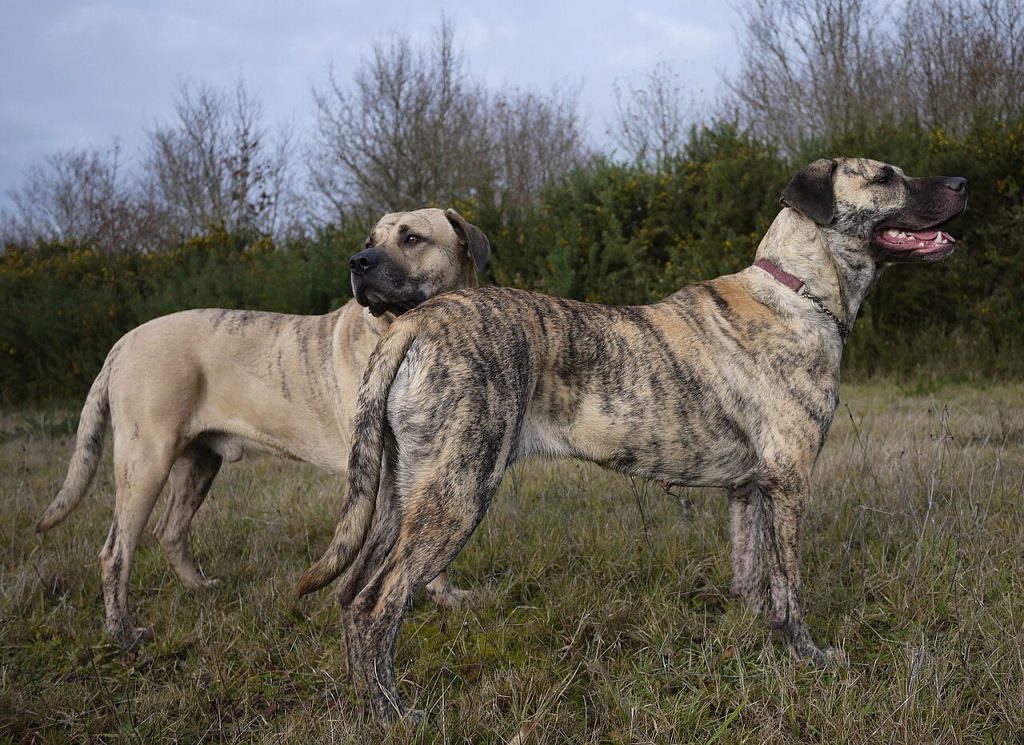
The Cimarrón Uruguayo is the national dog of Uruguay: A medium- to large-sized, rustic, brave and deeply loyal Dogo-type mollusk. A descendant of the dogs that roamed the country’s mountains and became legendary, he is today a well-balanced watchdog and work and family companion. In this comprehensive guide we review its character, coexistence, care, health and the fascinating history that made it a symbol of Uruguay.
Is that Uruguayan cinnamon for you?
Before you fall in love with its appearance, be honest: the Uruguayan Cimarron is a working dog with a guarding instinct and a lot of character. It shines in the right hands and can be difficult in the wrong ones.
In favour .
- Natural guardian, brave and deterrent without being gratuitously aggressive.
- Very loyal and devoted to his family; protective of the children at home.
- Rustic and healthy breed, low maintenance coat.
- Intelligent, athletic and versatile: cattle, hunting and guard.
- Balanced and stable when well socialized.
To be taken into account
- It is not for beginners: it needs a firm and consistent guide.
- Strong prey and guard instinct; requires early socialization.
- Lots of energy – requires daily exercise and stimulation.
- Unsuitable for small apartments or sedentary living.
- Distrustful of strangers; responsible driving is mandatory.
Character and temperament

The standard sums up the temperament of the Uruguayan Cimarron in four words: balanced, cunning, very attentive and very brave.. It is not a nervous or reactive dog; on the contrary, it conveys a safe, almost feline calm that breaks instantly when it perceives a real threat.
With his family he is another dog: affectionate, calm and extremely loyal. He clings tightly to his group and enjoys the company, although without being clingy or demanding. With strangers, on the other hand, he keeps a suspicious and vigilant distance: he does not attack by system, but observes, evaluates and intervenes if necessary. He is a guard who thinks before acting.
That independence is the other side of his intelligence. The Cimarron was selected to make decisions on its own versus cattle or hunting, so it is not a servile dog. Respect and obey someone who inspires confidence and leadership, but not someone who shouts at you. The standard is blunt on one point: Both aggression and extreme shyness are elimination fouls. A good Cimarron is, first and foremost, stable.
Coexistence: children, other pets, flat and loneliness
In the home, the Uruguayan Cimarron is an excellent family dog when its needs are met. With the children of the house is usually patient, tolerant and protective, but its size and strength force you to always supervise the game and to teach the little ones to respect their spaces and their rest.
With other pets, the key is early socialization. Raised from puppyhood alongside other dogs and animals, it coexists without problems; however, it retains a marked prey instinct inherited from its hunter past, so coexistence with unknown cats or small animals must be managed with head.
The floor is not their ideal habitat. is a field dog, made to patrol, run and work outdoors. He can adapt to city life if he gets plenty of exercise and company, but he is much happier in a house with a fenced-in plot. He tolerates loneliness. is better than many breeds, thanks to its independent nature, but it is not advisable to leave it alone for too many hours: Boredom and lack of spending are a recipe for barking and wrecking.
Education and training
Educating an Uruguayan Cimarron is rewarding, but not suitable for everyone. It is intelligent and learns quickly, so it assimilates commands easily; the challenge lies in its independence and firm personality. It needs a quiet, consistent and secure guide, able to set clear boundaries without resorting to harshness, which this dog rejects out of hand.
Positive reinforcement – rewards, play, friendly voice – works infinitely better than imposition. The socializing should start as soon as possible: Exposing him as a puppy to people, noises, other dogs and varied environments is what makes his guardian instinct into a dependable adult behavior. Basic obedience (go to the call, sit, let go, walk without pulling) lays the foundation for safety when we are talking about a 40-kilogram dog.
For its character and power, it is not the breed I would recommend to someone who has his first dog. In experienced hands, however, it responds with remarkable nobility and reliability.
Exercise and activity
The Cimarron is an athlete. It was bred to work long hours with cattle and for larger game – especially that of the wild boar – and that engine is still there. It needs, at a minimum, one or two long walks a day, supplemented with racing, intense play and, above all, mental stimulation. A Cimarron that only goes around the apple is a frustrated Cimarron.
It marvels at activities that combine body and mind: olfactory work, retrieving objects, hiking, canicross or dog sports. Having a safe space where it can run and explore makes a huge difference in its balance. The rule is simple: a tired and mentally satisfied dog is a calm dog at home.
Care: fur and hygiene
Here the Uruguayan Cimarrón is grateful. Its coat is short, smooth and attached to the body, very low maintenance. A weekly brushing is enough to remove dead hair and keep the skin healthy, intensifying it during the seasonal mowing. It does not need hairdressing or sophisticated care; the baths, only when really needed, so as not to dry your skin.
The rest is the basic routine of any large dog: checking and cleaning the ears to prevent infections, cutting the nails when they do not wear out on their own, monitoring dental hygiene with proper brushing or biters and keeping up to date with internal and external deworming.
Foodstuffs
As a large, active and muscular dog, the Cimarron needs a quality diet, rich in animal protein and adjusted to its activity level, age and weight. Ideally, the daily ration is divided into two takes instead of one, a practice that, in large breeds of deep chest, helps reduce the risk of gastric dilation-torsion.
It is advisable to avoid strenuous exercise just before and after eating, to control the quantities so that it does not gain excess weight – its athletic structure suffers with each extra kilo – and to pay special attention to the puppy stage, when too rapid growth can damage the joints.
Health and life expectancy
The Uruguayan Cimarron is a rustic and robust breed. Its origin – centuries of natural selection in the wild before it was re-domesticated – has left it with harsh genetics and generally enviable health, with few documented hereditary diseases.
That said, he shares the precautions of any large mollusk. It is advisable to monitor hip and elbow dysplasia, acquire puppies from breeders who monitor their breeders, and pay attention to gastric dilation-torsion(swelling), a veterinary emergency common to deep-breasted dogs. Maintaining a proper weight, a good routine of vaccination and deworming, and regular veterinary checkups are the best investment in their longevity.
Physical appearance

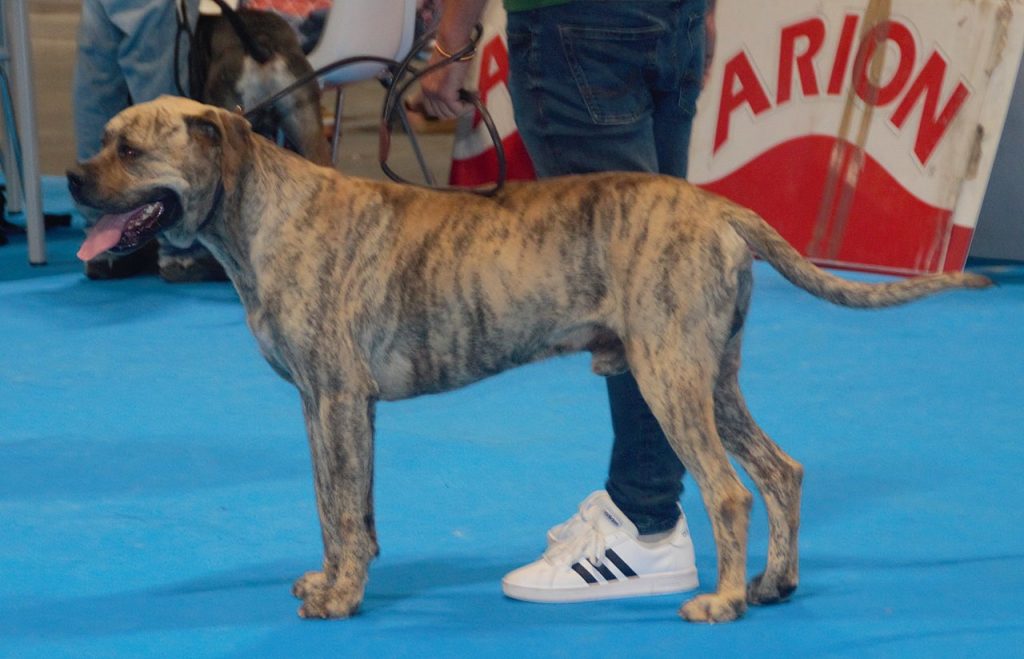
The Uruguayan Cimarron is a soft, strong and very compact. dog, with good boning and musculature, but surprisingly agile. The ratio of the standard marks a body slightly longer than high (10:11) and a balanced silhouette, without exaggerations. Males measure 58 to 61 cm and weigh between 38 and 45 kg; females, 55 to 58 cm and 33 to 40 kg, with a clearly visible sexual dimorphism.
The head is massive and powerful-looking, with the snout barely shorter than the skull and, in most specimens, a characteristic black mask. The coat is short and its color defines the breed: the bay (leonated) and, above all, the triggered, with all their shades predominate; small white spots are allowed only in specific areas. Long hair and colors out of character are elimination fouls. Their ears, of medium insertion, have sometimes been traditionally cut in the so-called “puma ear”, a practice with historical roots now in retreat.
Origin and history

The story of the Uruguayan Cimarron is one of the most epic in the canine world. Their ancestors were dogs of the Alano type that arrived with the Spanish colonists and that, for one reason or another, were abandoned to their fate. In the cattle ranches of present-day Uruguay, with abundant food and no large predators, these they went wild and multiplied. dogs. The word “brown” referred precisely to the domestic returning to the wild: “He who dwells on high”.
Turning into true herds, they came to be regarded as a pest. There are chronicles of attacks on caravans and people that, at the end of the 18th century, led the authorities to order large-scale killings; each dead animal was paid for and the jaw or pair of ears were demanded as evidence, a custom from which the traditional cut of “puma ear” derives. Despite everything, a good number of females with their young survived in the mountains and foothills of Cerro Largo and Thirty-Three.
There, farmers and landowners appreciated his virtues for working with cattle and defending property, and began to raise him preserving him from mestizaje. The modern recovery process began in the 1980s with breeders in Montevideo. In 1989 the Rural Association of Uruguay and the Uruguayan Kennel Club officially recognized the breed, and the 21 February 2006 the International Cinological Federation (FCI) granted it international recognition, within Group 2 (molosoids, dogo type).
Curiosities
- The Cimarrón is the official mascot of the National Army of Uruguay and has a place of honor in the military parades of July 18.
- The dog of Artigas. The tradition links it to the prolific José Gervasio Artigas, who went so far as to claim that, if he were left without soldiers, he would fight with brown dogs.
- From plague to national treasure. Few races have gone from being persecuted and exterminated by tens of thousands to becoming a symbol of a country’s identity.
- Seal and honors. Uruguay has dedicated postage stamps to him and the department of Cerro Largo claims to be “the Cimarrón Department”.
- Pure natural selection. Their hardiness and health are the result of generations surviving in the wild, something unusual among modern breeds.
If you’re attracted to the Uruguayan Cimarron for its moosey demeanor, guarding instinct, and working dog character, you may also be interested in other breeds of similar strength and temperament. Cane Corso Bóxer Rottweiler Mastín
Frequently Asked Questions about the Uruguayan Cimarron
Is the Uruguayan Cimarron a dangerous or aggressive dog?
It is not an aggressive dog by nature. The breed standard describes a balanced, attentive and very courageous character, and expressly penalizes both aggression and extreme shyness. It is a serious and suspicious guard to strangers, but stable and not nervous.
How tall and how much does an Uruguayan Cimarron weigh?
According to the FCI standard, males measure between 58 and 61 cm at the withers and weigh 38 to 45 kg; females measure 55 to 58 cm and weigh between 33 and 40 kg. It is a medium to large size, compact and muscular dog, with a marked sexual dimorphism between males and females.
Does the Uruguayan Cimarron adapt to living in a flat?
It is not its ideal environment. It is a field dog, guard and hunter, which needs plenty of space and daily exercise. It can live in a large apartment if its family guarantees it several long outings and mental activity, but it is much more comfortable in a house with a fenced plot where it can patrol and move around.
Is he a good family dog and gets along with children?
Yes. With his family he is loyal, calm and very attached, and is usually patient and protective with the children of the house. Because of his size and strength, it is advisable to always supervise the game with the little ones and teach children to respect the dog. Early socialization is key for him to channel his protective instinct well.
How much exercise do you need a day?
It is an athletic and resistant breed, bred to work with cattle and for larger game. It needs at least one or two long walks daily, in addition to running, play and tasks that stimulate its mind. A bored or unspent Cimarron can develop destructive behaviors or excessive barking.
Is the Uruguayan Cimarron easy to train?
It is intelligent and quick learner, but also independent and characterful. It is not the ideal breed for someone inexperienced. It responds very well to positive reinforcement, consistency and a calm and confident leader; it rejects harsh methods. Socialization and basic obedience should begin as a puppy.
How long does an Uruguayan Cimarron live and what health problems does it have?
It is a rustic and healthy breed, the result of a strong natural selection, with a life expectancy that is usually cited between 12 and 14 years.
Where did the name “brown” come from?
These dogs, descendants of those brought by the Spanish colonizers, became feral and took refuge in the peaks and mountains of the Uruguayan Sierras; hence “the one who lives in the peaks”.