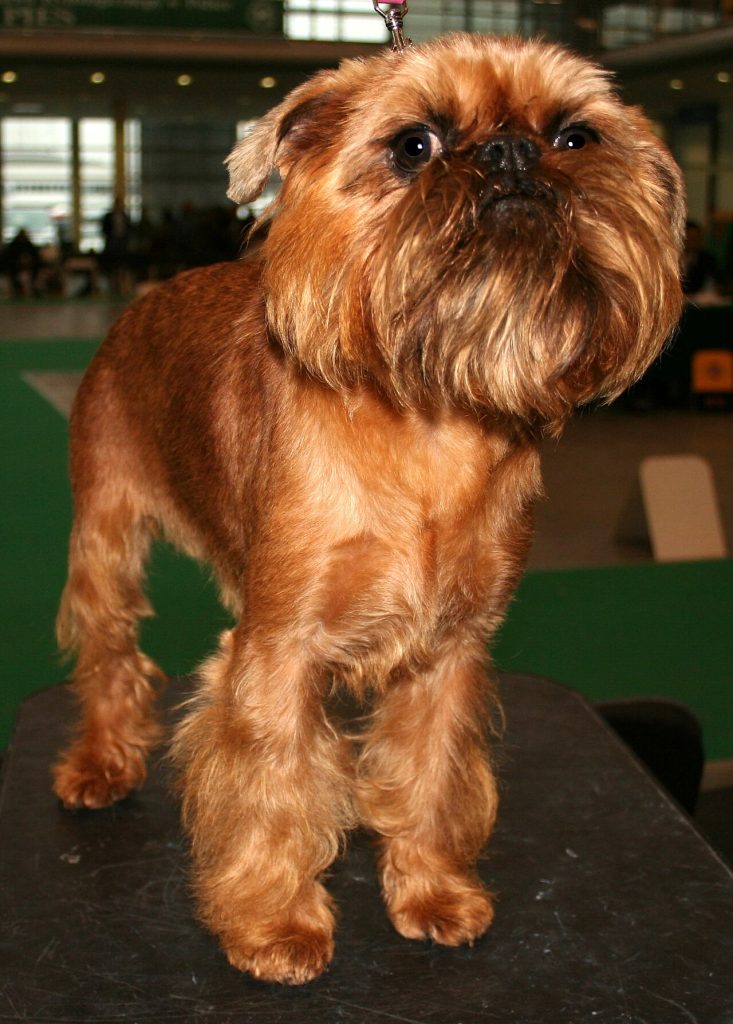
The Brussels Griffon is a tiny companion dog, with a flat face and almost human expression, which concentrates in less than five kilos a huge personality: Proud, sober, tremendously attached to his people and with an irresistible clown point. Born in the Belgian countryside as a rat hunter and turned into a parlor pet, today he’s a charming rarity who hooks anyone who knows him. In this guide you will find everything you need to decide if the Brussels Griffon is the dog for you and how to take good care of it.
Is that the Brussels Gryphon to you?
Before you get carried away by that face, look at the breed coldly. The Brussels Gryphon is a full-time companion, not an independent dog that can be left “on its own”. These are its lights and shadows.
In favour .
- Minimum size: ideal for flats and city.
- Very close and affectionate with his family.
- Smart, funny and with a great memory.
- Moderate exercise needs.
- Good longevity for a purebred.
- He gets along well with other pets in the house.
To be taken into account
- He’s very sensitive. He doesn’t tolerate loneliness or fights.
- Prone to eye and neurological problems.
- Rare breed: high price and few litters.
- He can be stubborn in training.
- Flat-nosed calls for vigilance in the heat.
- He’s not an “outdoor” dog or a hard worker.
Character and temperament

The International Kennel Federation describes the Brussels Griffon as a balanced dog, proud and attentive, neither shy nor aggressive, and very attached to its owner.
It is a curious animal, clean by nature and endowed with a remarkable memory, which means that it learns quickly both good and bad. He usually chooses one person in the house as his favorite and turns to her, even though he shares affection with the whole family. That emotional intensity is his great virtue and, at the same time, his weakness: The Brussels Griffon has a low threshold for loneliness and a high sensitivity that makes it respond very poorly to harsh corrections or abrupt training methods.
He is not particularly patient, but he loves to play and participate in everything his people do. Under his dignified air hides a clown who enjoys attracting attention. He is also an alert dog who warns of any news, a quality inherited from his past as a guard of blocks.
Coexistence: children, other pets, flat and loneliness
With children: The Brussels Griffon is good with children as long as they do not disturb or treat it abruptly. It is affectionate and playful, but its tiny size and poor patience advise to monitor contact with the younger ones, who could catch it wrong or hurt it unintentionally.
With other pets: tends to get along well with other pets in the house, including cats, ferrets, and other dogs.
On the floor: is one of the most recommended breeds to live in an apartment. Its moderate energy level and its bond with the family make it perfectly adapted to indoor life, provided it goes out daily.
In the face of loneliness: here is its great limitation. The Brussels Griffon is not made to spend long hours alone. Its attachment and sensitivity cause prolonged loneliness to cause anxiety, barking or destructive behavior. It is a household dog with frequent presence of people.
Education and training

The Brussels Griffon is smart and quick to learn, but it has a strong character and a skin-flowing sensitivity that sets the rules of the game. Harsh methods, shouting or abrupt corrections are counterproductive: they close in and lose confidence. Instead, they respond greatly to positive reinforcement, short sessions and a loving tone.
Early socialization is key for him to grow up safe and not develop excessive fears or barking. It is advisable to expose him from puppyhood to people, noises, other dogs and various situations. Basic obedience training works best if it is thought of as a shared game, taking advantage of his enormous memory and his desire to please his favorite person.
His occasional stubbornness should not be confused with clumsiness: he understands perfectly what is asked of him, he simply decides if he wants to.
Exercise and activity
The Brussels Griffon is not an athlete nor does it need large doses of exercise. With one or two daily walks and some playing time it has its physical needs covered. It is, above all, a companion dog that enjoys the couch and interaction with its people more than long days in the field.
That said, he’s an alert dog who appreciates mental stimulation. Smell games, interactive toys, and small learning sessions keep you balanced. Some even excel in dog sports such as agility, where their agility and willingness to play surprise given their size. Watch the heat: its flat snout makes it sensitive to high temperatures, so it is best to avoid exercise in the hottest hours of the day.
Care: fur and hygiene

Care depends on the variety of coat. The hard-haired (rough and loose) Brussels Griffon barely shaves and needs a weekly brushing, plus a periodic stripping or fitting to maintain the correct texture of the coat.
The area that demands the most attention is the face. Large and bulging eyes accumulate wounds and are vulnerable, so it is advisable to clean them gently and check them often. The beard and folds of the nose should also be kept clean and dry to avoid irritation. As with any dog, you should not forget to cut nails, dental hygiene and regularly clean ears.
Foodstuffs
Since the Brussels Griffon is such a small dog, it needs tight rations and a quality food, formulated for mini breeds, that provides energy without exceeding in quantity.
Weight control is important: a few extra grams are too much for such a heavy body and overload joints and the heart. It is advisable to measure the rations, moderate the rewards and adapt them to your activity level and your age.
Health and life expectancy
The Brussels Griffin has a remarkable longevity: a British study in 2024 placed its average life expectancy at 13.3 years, above the average of purebred dogs (12.7 years).
The most serious are neurological. the following: is a condition of the brain and spinal cord, with fluid-filled cavities in the spinal cord, which can cause anything from mild discomfort to severe pain and partial paralysis. It is usually associated with chiari type of malformation, linked to the shape of the skull; according to one study, 61.7% of griffins with syringomyelia also had this malformation. A good breeder should run tests to rule out these birth defects.
The other big chapter is the eyes. Their large eyes and short snout leave them very exposed: wounds and ulcers in the cornea (which, if left untreated, can cause blindness), age-related cataracts, lens dislocation and glaucoma are common. Regular eye exams are highly recommended. In females, deliveries usually develop without problems, although sometimes complications require a caesarean section, especially in large litters.
Physical appearance
The Brussels Griffon is a small-sized dog with a compact and robust structure. It measures on average between 23 and 28 cm at the withers and weighs between 3.6 and 4.5 kg, with an ideal weight of around 4 kg for both sexes. Its most characteristic feature is the head: round and large in proportion to the body, with a very short snout, prominent chin (slight prognatism) and large, dark eyes that give it that almost human expression. The nose is broad, black and almost at eye level.
Under the name Brussels Griffon there are actually three closely related varieties, identical in all but coat and colour: the Brussels Griffon proper, hard hair and red; the Belgian Griffon, also hard hair but black or black and fire; and the Petit Brabançon, short and smooth hair. In many standards they are considered varieties of the same breed. The usual colors range from deep red to black and fire, through combinations of black and reddish.
Origin and history
The Brussels Griffon takes its name from its city of origin, Brussels. All three varieties are descended from a dog named Smousje, a small rough-haired dog and air terrier that was kept in the stables to eliminate rodents, related to the Dutch Smoushond. The coarse-haired puppy in the foreground of Jan van Eyck’s famous painting The Arnolfini couple is thought to be a primitive form of this breed.
In nineteenth-century Belgium, car drivers appreciated their small square griffins and began crossing them with imported companion dogs. The crossing with the Pug (Carlino) and King Charles Spaniel defined the current type: it brought the flat face, short black hair that gave rise to the Petit Brabançon (initially considered a defect) and the rich red and black and fire colors of modern griffins.
The first specimen was registered in 1883 in the book of origins of the Belgian canine club (LOSH). The breed gained fame thanks to Queen Maria Enriqueta, a great dog lover, who became a breeder and gave it international exposure. The two world wars were about to end it: By the end of World War II, there were hardly any left in Belgium, and only the dedication of breeders in the UK saved the breed. It has never been numerous, and today it remains an uncommon dog.
Curiosities
- The Brussels Gryphon’s hairy, wide-eyed expression inspired the design of the Ewok from Star Wars.
- Her popularity in the United States soared after appearing in the film Better than impossible(As Good as It Gets), alongside Jack Nicholson.
- The Brussels Griffon has no idea of its size and can stand up to dogs much larger than itself.
- The cubs are born tiny, weighing just over a pound [100 g], and fit in the palm of an adult’s hand.
- A very similar dog already appears in Jan van Eyck’s painting The Arnolfini couple, painted in 1434.
- It is a clean breed by nature, which greatly facilitates its education at home.
If you are attracted to the Brussels Griffon but want to compare it to other small companion dogs with a strong character, take a look at these related breeds: Pug, Bulldog Francés, Yorkshire Terrier and Shih Tzu.
Frequently asked questions about the Brussels Griffon
Is the Brussels Griffin a good dog for beginners?
It may be. It does not require large doses of exercise or complicated handling, and its size makes it easy to manage at home. The delicate point is its emotional sensitivity and its tendency to become very attached to a person: the adopter must be willing to accompany it, educate it gently and not leave it alone for long hours. With that disposition, it is an affordable breed for someone new.
Does the Brussels Gryphon bark a lot?
It is an alert dog that warns of what is happening around it, so it barks when it detects visitors or noises. It is not a tireless barker, but its watchful nature and attachment can lead to barking from boredom or anxiety if it spends too much time alone. Good mental exercise and early education keep barking at a reasonable level.
How long does a Brussels Griffon live?
A British study in 2024 put their average life expectancy at 13.3 years, above the average for purebred dogs. With good nutrition, veterinary control and attention to their eye and neurological problems, many specimens easily exceed that figure.
Does the Brussels Gryphon get along with children?
Yes, as long as children treat it with respect and do not disturb it. It is affectionate and playful, but it is impatient and small in size, so it is advisable to supervise contact with very young children who may grab it sharply or hurt it unintentionally.
How much hair does he shed and how much care does he need?
Depending on the variety, the hard-haired one barely moults and needs weekly brushing and periodic stripping; the short-haired Petit Brabançon requires even less maintenance.
Can you live in a small apartment?
It is one of the most suitable breeds for flooring. Its minimal size, its moderate energy level and its bond with the family make it very well adapted to indoor life, provided it goes out for a daily walk and receives mental stimulation.
What health problems does the Brussels Griffin have?
The most serious are of neurological origin: syringomyelia and Chiari-type malformation, linked to the shape of its skull. Eye problems (corneal wounds, cataracts, lens dislocation and glaucoma) are also common due to its large eyes and short snout.
Why does he look like an Ewok?
The expressive, hairy face of the Brussels Griffon, with its beard and large eyes, inspired the design of the Star Wars Ewok. The breed also gained fame thanks to its appearance in the film Better Than Impossible, alongside Jack Nicholson, which sparked interest in these dogs in the United States.