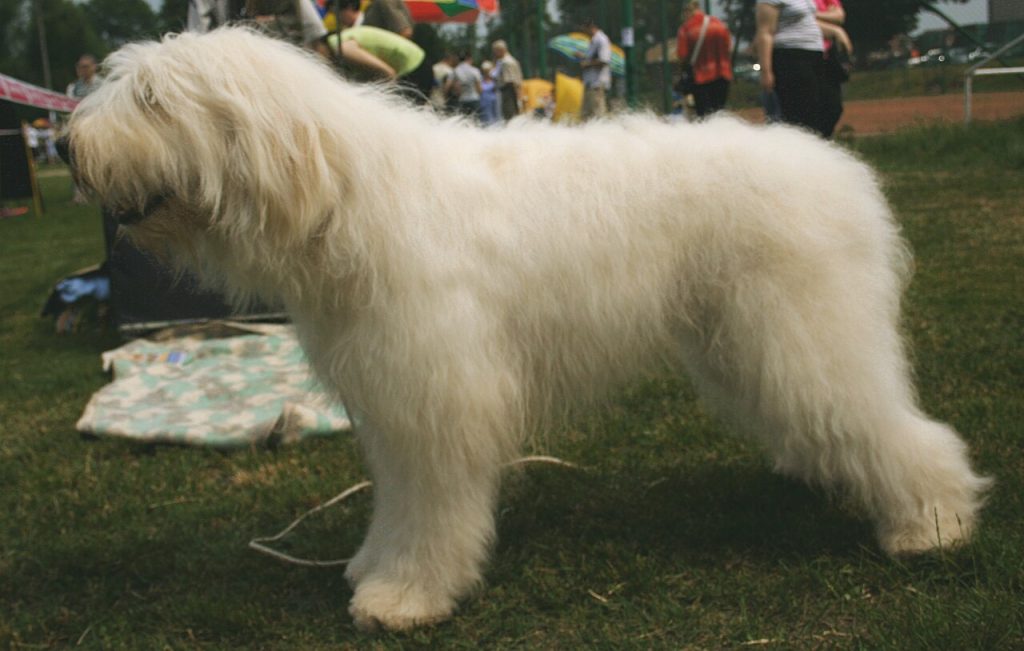
The Shepherd of Southern Russia is one of Eastern Europe’s great herd guards: a huge dog, covered in a white, woolly coat that covers its eyes, bred for centuries in the southern steppes of the former Russian Empire to defend sheep from wolves and thieves. Independent, territorial and of a rocky loyalty to his own, it’s not a breed for everyone. If you’re looking for a serious guard dog and are willing to socialize and train him firmly, here’s everything you need to know about the Southern Russian Shepherd.
Is the Shepherd of Southern Russia for you?

Before you fall in love with that white bear image, you better be honest: The Southern Russian Shepherd is a working guard dog, not a stuffed animal. He was selected to think for himself, impose himself on a wolf and distrust anything that approaches his flock. That character doesn’t go away by living in a cottage. It’s a magnificent breed for those looking for a true keeper and has experience, time and space; and a risky choice for those who want an easy and sociable mate.
It suits you if…
- You want a real territorial guardian and deterrent.
- You have a house with fenced-in land, not a floor.
- You have experience with big, dominant dogs.
- You can devote time to intensive, early socialization.
- You value an independent, one-family dog.
- You’re prepared for their hair maintenance and size.
Think about it if…
- Either it’s your first dog or you’re looking for something easy to handle.
- You live on the floor or with no outdoor space of your own.
- You get a lot of visitors or there’s a constant transfer of strangers.
- You can’t brush and clean a long coat.
- You just want a dog that’s docile and compliant.
- Your area bans potentially dangerous guard breeds.
Character and temperament
The Southern Russian Shepherd is the definition of the independent watchdog. His historical job was to stand alone with the herd for days, assess threats and act without waiting for orders, and that character is still very much alive. With his family he is loyal, calm, and surprisingly affectionate; with strangers he is suspicious, aloof, and, if he senses a threat, decisive. He ‘s not a nervous or hysterical dog . Rather, he’s a quiet watchdog who watches, calculates, and only takes action when he thinks it’s necessary.
That autonomy is his greatest virtue as a watchdog and also his greatest challenge as a family dog. He does not constantly seek to please or obey out of obedience; he needs to understand why he should do things and trust the one asking him. It’s brave, territorial and very protective, a dog that takes its role seriously. That’s why early socialization isn’t optional: A well-socialized Southern Shepherd distinguishes between normal and threatening; one who is not can overreact to any stranger.
Coexistence: children, other pets, flat and loneliness

With children in the family is usually tolerant and protective, but its enormous size forces it to always monitor contact with the smaller ones; a sudden movement of a 60-kilogram dog accidentally kills a child.
With other pets, if he grows up with them and sees the other animals in the house as part of “his” group, can coexist well; after all, his function was to protect the cattle.
The floor is not his place. is a large dog, territorial and with a vocation to watch over a terrain; enclosed in a small space it becomes frustrated and can become noisy or reactive.
Education and training
Raising a Southern Russian Shepherd is an exercise in calm leadership and steadfastness. It is not a stupid dog – on the contrary, it is very intelligent – but its intelligence is of a resolute and independent type: decide for himself whether your request seems reasonable to him. It needs an owner who earns its respect with consistency, patience and positive reinforcement, never with harshness, who only gets these types of dogs to shut up or get defensive.
The priorities are clear: intensive socialisation from puppyhood (people, noises, situations, other animals) so that it learns to filter the normal from the threatening, and solid basic obedience– control, call and self-control – established early, while still manageable in size. The sooner the foundations are laid, the better: An uneducated adult is too big and too determined to improvise. Not a breed recommended for first-time owners.
Exercise and activity
Faced with the idea that every big dog needs hours of running, the Southern Russian Shepherd is more of a laid-back guard than an athlete. It moves with economy and much of its “work” consists of watching, not running. He still needs daily activity: long walks, the ability to patrol and explore their own terrain and, above all, a purpose. What’s worse is not the lack of sport, but the boredom and having nothing to guard.
It is not a dog for high-demand dog sports or to accompany marathon runners; it is a guard dog that performs being in its territory, attentive and busy in its own thing.
Care: fur and hygiene

The coat is the most demanding part. The South Russian Shepherd wears long, rough, dense and slightly wavy hair that covers its entire body, including the face and eyes.
It is not advisable to bathe it excessively; with punctual baths when it gets really dirty is enough, always drying well so that the moisture is not trapped under that dense coat. As with any large dog, you must check and clean the ears, watch the eyes – often covered by hair – and keep the nails at bay.
Foodstuffs
Being a large to giant breed, the diet must take care of two things: the quality and quantities adapted to their life stage. In the puppy, the key is a feed for large breeds, with controlled calcium and energy levels, so that the growth is slow and orderly and does not strain joints that are still forming. Growing too fast is one of the biggest risks in dogs of this size.
In adult, a complete and balanced diet, ideally divided into two daily intakes, helps to keep weight under control and reduces the risk of gastric dilation-torsion, more common in large deep-chested dogs. Intense exercise should be avoided just before and after eating. Being overweight hurts your joints and your heart, so keeping fit is one of the best investments you can make in your health.
Health and life expectancy
The South Russian Shepherd is a rugged and hardy dog, forged by generations of hard living outdoors in the steppes. Its life expectancy is around 9 to 11 years, in line with other large breeds.
As with all large and giant dogs, the points to watch are the ones of the format: hip and elbow dysplasia, joint problems due to weight, and the risk of gastric torsion associated with the deep chest. Their dense coat also forces you to be aware of skin and ear problems if not kept clean and dry. Regular veterinary checkups, weight control and good coat care are the best prevention.
Physical appearance
The first impression of the Southern Russian Shepherd is that of an imposing and massive dog, completely covered in a white and woolly coat. It is a large to giant breed: the males measure at least 66 cm at the cross and weigh at least 35 kg, and the females are about 4 cm shorter and about 5 kg lighter; the heaviest specimens can approach 70-75 kg.
The head is long and wedge-shaped, with triangular, small, dropped ears. The coat, its most characteristic feature, is long, rough, thick and slightly wavy, and even covers its eyes. The most typical color is the white, although gray or pale ivory is also supported, as well as white with yellowish tones or with grey, ivory or wheat-colored spots. The set – size, cloak and serious expression – conveys exactly what it is: A rustic and powerful guardian.
Origin and history
The Southern Russian Shepherd is native to the areas of the former Russian Empire and the Soviet Union that are now Ukraine and southern Russia. The most widely accepted theory places their ancestors in the Crimea region, between the Black Sea and the Sea of Azov. It is believed to have originated from crossing local steppe dogs – both guard dogs and greyhounds – with spanish long-haired sheepdogs, which arrived in the area in the late 18th century along with herds of merino sheep. Those Spanish dogs may have resembled today’s Gos d’Atura Català.
A dog of this South-Russian type won a gold medal at the Paris Universal Exhibition of 1867. Much of the breed’s selection and development took place in the early 20th century on the Friedrich von Falz-Fein in the city of Askania-Nova estates, today in Kherson Province (Ukraine). The breed standard was approved in the early 1930s. The International Kennel Federation (FCI) has finally accepted the 30th of September 1983 as Yuzhnorusskaya Ovcharka or Southern Russian Shepherd Dog.
Curiosities
- The Southern Russian Shepherd is part of the so-called “Troika”, the recognized trio of large Russian shepherd dogs, along with the Caucasian Shepherd and the Central Asian Shepherd.
- It is sometimes known by the transliteration of its name – the ovcharka or other– which in Russian and Ukrainian simply means “shepherd dog”.
- Their population dropped dramatically in the last decades of the 20th century because of the difficult economic situation in Eastern Europe; many were lost for lack of food and medicine.
- Some clubs in Moscow have worked to re-popularise the breed in their home country. In 1994 a hundred specimens were entered in a competition in Moscow.
- It’s prohibited in Denmark, included on your list of banned breeds.
- Hidden beneath its huge white coat is a surprisingly agile and determined dog, able to move quickly when defending its pack.
If you are attracted to the profile of the Southern Russian Shepherd but want to compare with other guard and large dogs, take a look at related breeds such as the Cane Corso, the San Bernardo, the Terranova or the Gran Danés, all of them large dogs with very different characters and needs that you should know before deciding.
Frequently Asked Questions About the Southern Russian Shepherd
Is the Southern Russian Shepherd a good family dog?
It can be loyal and protective to its owners, but it is a large, independent and very territorial herd guardian, not just a companion dog. It needs experienced owners, early socialization and an environment where its defense instinct is well channeled.
How tall and how much does a Southern Russian Shepherd weigh?
It is a large to giant dog. The males measure at least 66 cm at the withers and weigh at least 35 kg; the females are about 4 cm shorter and about 5 kg lighter.
What color is the Southern Russian Shepherd?
The mantle is usually white, although gray or pale ivory is also accepted. It is usually white with yellowish tones or with grey, ivory or wheat spots. The hair is long, rough, dense and slightly wavy, and even covers the eyes.
Is the Southern Russian Shepherd difficult to train?
It is demanding. It learns, but it is independent and makes decisions on its own, which is logical in a breed bred to watch over the herd without constant human supervision. It requires a very firm, consistent, early, positive upbringing, and an owner who knows how to earn their respect without resorting to harshness.
How much exercise does this breed need?
Less pure race than a driving shepherd, but long daily walks, space and a task that gives it meaning. It is a quiet working dog that moves with economy; what is worse is not lack of sport, but boredom and lack of a territory to watch.
Does he adapt to living in a flat?
It is not an ideal environment. It is a large, guard and territorial dog, designed for farms and fenced open spaces. In a flat it suffers from lack of space and can become noisy or reactive to noises and strangers. It needs a house with land.
How long does the Southern Russian Shepherd live?
As a large and rustic breed, its life expectancy is around 9 to 11 years. It is a small dog and quite resistant, although, like all giant breeds, it is advisable to monitor joints, weight and heart health throughout its life.
Is it banned in any country?
Yes. The South Russian Shepherd is banned in Denmark as part of its list of prohibited breeds. Before considering this breed, it is advisable to check the legislation of your country or community on potentially dangerous or guard dogs.