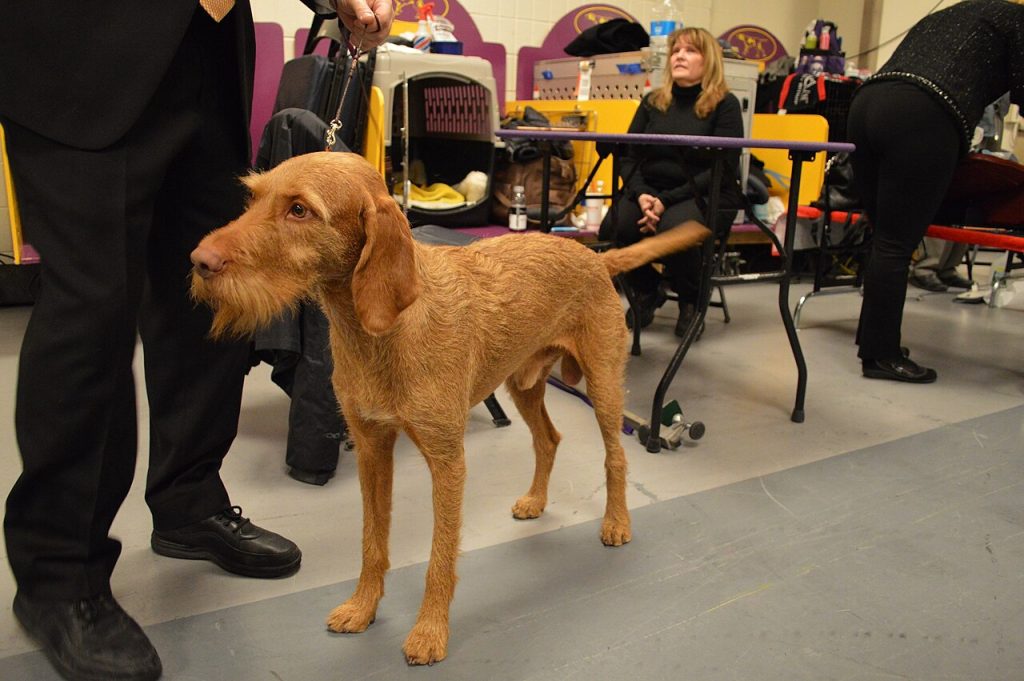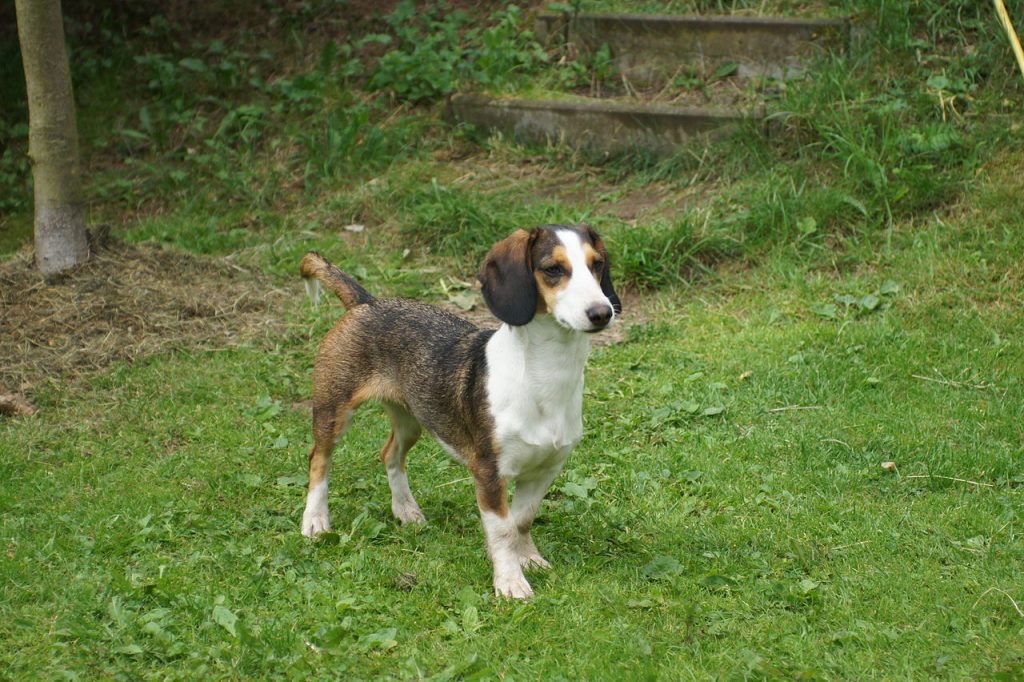
The Dachsbracke from Westphalia is a short-legged, small, and prodigious-smelling German Hound bred for centuries in the region of Westphalia to track ground-dwelling game. It is a rare breed, little known outside of Germany and Scandinavia, but with a balanced and hardworking character that makes it a reliable tracking dog and a surprisingly gentle family companion. If you’re looking for a small-to-medium-sized, hardy dog with a marked hunting instinct and a nose that’s hard to match, the Westphalian Dachsbracke deserves to be thoroughly introduced.
Is the Dachsbracke of Westphalia for you?
Before you fall in love with his miniature hound, be honest: the Westphalian Dachsbracke is, first and foremost, a tracking dog. That instinct doesn’t go out when he comes into the house. Instead, he gives you a robust, healthy, loving companion with far fewer space requirements than other hounds. Here’s the unadorned summary.
Points in favour
- Small-to-medium size: fits on large floors if given exercise.
- Rustic and healthy breed, with few documented hereditary diseases.
- Short coat: minimal maintenance, no hairdressing.
- Balanced temperament, sociable and kind to his family.
- Exceptional sense of smell and great endurance for tracking work.
- Tall and strong in body despite his short legs.
Points against
- Very strong hunting instinct: tends to follow tracks and ignore the call.
- It can bark and “sing” when tracking, something to keep in mind with neighbors.
- Very rare breed: hard to find and with few serious breeders.
- It’s not a couch dog: it needs to sniff and exercise daily.
- Loose without a fence or long strap can disappear after a smell.
- Little literature and clubs – you have to do your research before you buy.
Character and temperament

The Westphalian Dachsbracke inherits the typical temperament of the German Bracken: Serene, tenacious and well-behaved tracking dogs. In the field it is tireless, methodical, and very vocal when following a lead; at home it is usually calm, affectionate, and balanced, without the hyperactivity of other hunting breeds. He’s not a nervous or suspicious dog by nature, but a hardworking dog that knows how to disconnect when there’s no work.
It’s intelligent, but with a smelling-oriented intelligence and autonomous problem-solving: For centuries it has been bred to work on its own following a trail, often away from the hunter. This results in a dog with its own standards, one that cooperates eagerly when it understands what is being asked of it, but can seem “dizzy” when an interesting smell competes with your commands. Understanding that independence is the key to living well with it.
He is loyal and affectionate to his family and enjoys human companionship. He is not a guard in the strict sense – his barking warns, but he is not noted for his distrust – although his powerful voice may surprise those who do not expect such volume in such a small dog.
Coexistence: children, other pets, flat and loneliness
With children:‘s gentle nature and manageable size make it a good companion for families with children who know how to treat the dog with respect.
With other pets: bred in packs, the Westphalian Dachsbracke usually gets along well with other dogs. With cats and small animals the story changes: its very strong prey and tracking instinct makes mice, rabbits or cats be seen as prey.
On the floor: by size could live in a spacious apartment, but needs long exits and daily olfactory stimulation. Its tendency to bark and “sing” is a factor to consider if you have neighbors nearby. A house with a well-fenced garden is its ideal environment, provided the fence is solid: it is able to dig and escape following a smell.
Soledad: tolerates being alone for moderate periods if it has been trained to do so and has expended energy before, but is a sociable dog that does not do well in prolonged isolation.
Education and training
Training a Westphalian Dachsbracke is an exercise in patience and well-chosen motivation. It is not a difficult dog because of malicious stubbornness, but because of its natural independence and how powerful its sense of smell is: when a track competes with your order, the track almost always wins if you have not previously worked on obedience.
It works much better with positive reinforcement – high-value food rewards and play – than with harsh methods, which only get it shut down.
- Reinforce it in controlled environments before releasing it, and assume that a perfect recall with a fresh trail ahead is nearly impossible.
- Self-Control and Waiting, so it learns to “disconnect” from the trail when you ask it to.
- The Leashed March, as his nose tends to pull toward any odor from the ground.
Smell games (bounty hunting, mantrailing, sports tracks) are gold for this breed: they channel their instinct, tire them mentally and strengthen your bond.
Exercise and activity

The fact that it is small does not fool anyone: this is a working dog with enormous endurance for its size. It needs real daily exercise, not a short walk of commitment. Ideally, several long walks where it can smell comfortably, in addition to mental activity.
Think of 60-90 minutes a day spread out, combining walking, scent scanning and some play. He loves hiking in the countryside and the mountains, where he can follow smells at his leisure (always with a long leash or in a safe area). Activities such as mantrailing, sports tracking or sniffing tours fit perfectly into their nature and are the best way to have a balanced dog at home. A Westphalian Dachsbracke without enough exercise and stimulation gets bored, gets fat and can become barking or destructive.
Care: fur and hygiene
Here the breed is grateful. The coat is short, dense and attached to the body, designed for field work, and its maintenance is one of the simplest that exists. With a weekly brushing to remove the dead hair is enough most of the year; in spring and autumn moulds it is advisable to brush more often.
She doesn’t need a haircut. Bathrooms, only when he’s really dirty, because his fur gets a little dirty. As with any dog with drooping ears, checking and cleaning the ears should be done regularly to prevent infection, as the drooping of the pavilion reduces ventilation. Complete the routine with nail trimming when necessary, good dental hygiene, and checking pads after field trips.
Foodstuffs
The Westphalian Dachsbracke has no exotic dietary needs, but two things are worth taking care of: the quantity and its long back. Being an elongated-bodied dog with short legs, overweight puts a strain on the spine and joints, so keeping it at its ideal weight is a health priority, not just aesthetics.
Provide quality food or diet, appropriate to your child’s age, size, and actual activity level. A dog that crawls and walks a lot needs more energy than a sedentary dog; it adjusts its rations to its work. Split food into two servings a day, control rewards (easy to abuse when training with food), and always have fresh water available. If you have any questions about specific amounts or diets, your veterinarian is the best reference.
Health and life expectancy
It is a rustic breed and, as a whole, healthy. Coming from lines of work and not having gone through intensive breeding of popular breeds, it does not drag along the long list of hereditary problems of other breeds.
- The back: due to its elongated morphology and short legs, it is advisable to avoid overweight and sudden jumps from height to protect the spine.
- The ears: dropped ears require periodic cleaning to prevent otitis.
- Weight: with his hound’s appetite, getting fat is easy; weight control is key.
As in any minority breed, it is essential to go to serious breeders who work with healthy and documented dogs, since the scarcity of specimens increases the risk of poorly controlled breeding.
Physical appearance

The Westphalian Dachsbracke is essentially a reduced, short-legged version of the Deutsche Bracke, very similar in size and appearance to the Swedish Drever.
Looks ears of medium length, dropped, and a high insertion long tail that wears upright. The coat is short and usually tricolor: red to yellow base with a black ‘chair’ on the back, adorned with the characteristic white markings of the Bracken(the so-called hound markings): White muzzle, chest, legs, collar and tail tip, plus a white stripe on the head. The set conveys what it is: A small but strong dog, functional and without exaggeration, built to work long days in the field.
Origin and history
The breed takes its name from Westfalia, a region of western Germany where it was developed as a short-legged hound for tracking. The term Dachsbracke combines Dachs(Badger, in German) and Bracke(Badger), a name that reflects both its use in hunting ground pieces and its origin: Bracken long-legged crossed with low dogs to reduce their size and adapt them to work in enclosed terrain.
It was first described as a variety of the German Shepherd Dog in 1886, and was officially recognized by the German Kennel Club (VDH) in 1935 with its current name.
Its most important footprint in cynology is, interestingly, indirect: The Westphalian Dachsbracke was taken to Suecia, where it served as the basis for creating the Drever, today a very popular hound in Scandinavia. In fact, the Drever was initially registered in Sweden in 1910 under the name “Westfälische Dachsbracke”, and did not change its denomination until 1947. The Westphalian Dachsbracke’s canine use has been largely displaced by the Drever, and today it is a rare breed, rarely seen even in its native Germany.
Curiosities
- Father of a race more famous than himself: the popular Scandinavian Drever descends directly from the Westphalian Dachsbracke, which for decades even bore the same name in Sweden.
- A jackal who is not Teckel: although Dachs means badger, it is not a Dachshund; its chest is narrower and its legs slightly longer than those of the Teckel.
- Marking of hound: the white spots on the snout, chest, legs, neck and tail tip have a proper name in German, the Bracken, and are a family seal of these hounds.
- Dog voice in small body: when tracking, “sings” with a surprisingly powerful voice for its size, a direct inheritance from its herd work.
- The real rarity: is so rare that experts warn that whoever buys a copy should research its provenance well, given the abundance of less rigorous registries.
If you are attracted to the profile of the Westphalian Dachsbracke, you are likely to be interested in other breeds of smell and work with a similar character. Take a look at the Teckel (Dachshund), with whom he shares a short, elongated silhouette; the Beagle, a small hound with a tireless nose and sociable character; the veteran Basset Hound, another tracker with short legs and long ears; and the Bloodhound, the world reference tracker par excellence.
Frequently asked questions about the Dachsbracke in Westphalia
Is the Westphalian Dachsbracke a good family dog?
Yes. It is affectionate, balanced and affectionate with its family, and its manageable size makes it suitable for homes with dog-respecting children. The condition is to cover its exercise and smell needs; a well-trained Dachsbracke is a quiet companion at home.
Is it the same as a dachshund?
Although Dachs means badger in both names and share the short silhouette, they are distinct breeds. The Westphalian Dachsbracke is a dog derived from the Deutsche Bracke, with a narrower chest and slightly longer legs than the Teckel, and is much rarer.
How tall and how much does he weigh?
It measures between 30 and 38 cm at the withers, with an elongated body with short legs. It is a small-medium dog; its weight accompanies that size and depends on the constitution of the specimen.
Can he live in a flat?
It can, if the floor is spacious and you guarantee it long exits and daily olfactory stimulation. Take into account its tendency to bark and “sing”, which can disturb the neighbors. Its ideal environment is a house with a well-fenced garden.
Do you get along with cats and other pets?
With cats and small animals it is more delicate: its strong tracking and prey instinct makes it see them as prey.
Is it easy to train?
It is intelligent but independent. It learns well with positive reinforcement, although its smell easily distracts it. Calling is the most difficult subject: when there is a fresh trail, almost any order is lost. Smell games are a great help in channeling its instinct and improving obedience.
How long does the Westphalian Dachsbracke live?
With good care, proper nutrition and weight control, it usually accompanies its family between 12 and 14 years, with few documented hereditary diseases.
Where can I get one?
It is a very rare breed, almost restricted to Germany and some areas of Scandinavia, with few breeders.