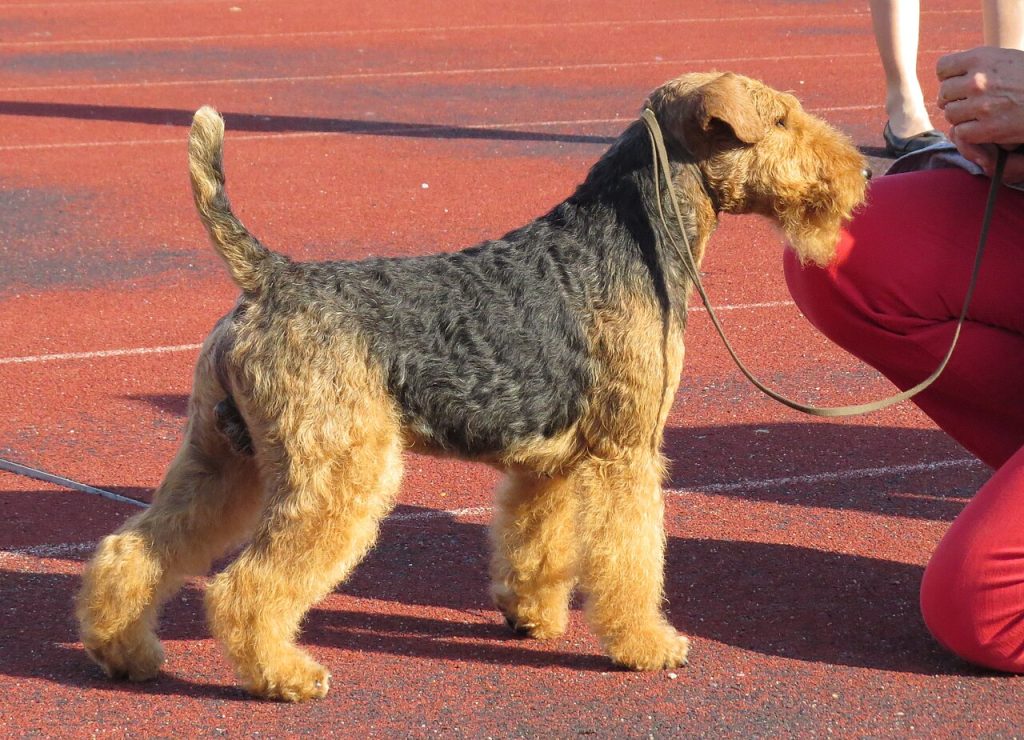
The Terrier Galés is one of the oldest and most well-balanced terriers in existence: A small but very strong dog, with the classic black coat and fire, square build and that terrier-like blend of courage, joy and independence. Raised in the mountains of North Wales to hunt foxes, badgers and otters, today it is above all a lively, clean-haired and surprisingly sociable companion to its pack. If you’re looking for a dog with character, little doggy smell in the house and a huge loyalty to his own, the Welsh Terrier deserves to be known.
Is the Welsh Terrier for you?
Before you fall in love with its bearded, freckled face, you should understand that the Welsh Terrier is a working terrier with all the letters: brave, active and with its own opinion. It is not a difficult dog, but one that thanks active owners and with a firm and kind hand. These boxes summarize where it shines and where it can complicate your life.
It suits you if…
- You want a dog that sheds very little hair and smells little like a dog in the house.
- You lead an active life: walks, games, dog sports or excursions.
- You’re looking for a terrier who’s sociable and patient with the kids in the family.
- You like a dog with character, cheerful and always ready for adventure.
- You can take care of the stripping or pay a dog hairdresser.
Think about it if…
- You spend a lot of time outdoors. He gets bored, barks, and can do a lot of mischief.
- Barking and digging in the garden is a serious problem for you.
- You have cats, rodents or birds and you can’t manage their prey instinct.
- You want a dog that’s 100% obedient without working the constancy.
- You prefer a quiet, sedentary couch partner.
Character and temperament

The Welsh Terrier has the temperament of a terrier in its most gentle form. It is extroverted, active, intelligent and friendly, and is generally considered one of the quietest and least aggressive terriers in the group.
With his family he is affectionate, loyal and very playful, and has a remarkable patience with children. With strangers he is somewhat reserved, but is more open than other terriers if he has received good socialization.
As a good working terrier, he was selected to decide for himself underground, and that leaves a mark: She’s independent, creative and quick to make decisions. That autonomy is part of its charm, but it also implies that it is not a submissive dog that simply obeys. Among its less comfortable traits are its tendency to bark and its taste for digging, both of which are well controlled with exercise, mental stimulation, and constant education.
Coexistence: children, other pets, flat and loneliness
With children: is one of its strong points. The Welsh Terrier loves to play and usually has a lot of patience with the little ones of the family, whom he follows in his games as another companion. It is convenient to supervise with the little ones, because in full euphoria he can pull off a leg or make a child stumble; if he grows up with them, he immediately learns to moderate his momentum.
With other pets: is more sociable than the average terrier, but not a saint. It can fight with dogs of the same sex and its prey impulse, although less than that of other breeds in the group, leads it to chase cats, rodents and birds. With early socialization it coexists well with other dogs; with small animals you have to be realistic and prudent.
On the floor:‘s compact size and low muffling make it suitable for urban living, as long as it goes out enough.
Soledad: is not a dog to be left alone for many hours. The combination of energy, intelligence and terrier eagerness causes prolonged loneliness to lead to barking, wrecking or digging. It tolerates absence better if it has prior exercise, activity toys and a stable routine.
Education and training

The Welsh Terrier is very intelligent, so it learns easily and enjoys working… in its own way. Having been bred to act alone, it tends to make its own decisions, and so its training is more of a long-distance race than a sprint: you have to constantly reinforce the orders so that it doesn’t relegate them when something more interesting comes up.
It works wonderfully with positive methods. The clicker and rewards get the best out of him, as long as the sessions are short, varied and fun; if you bore him with monotonous repetitions, he disconnects and seeks his own fun. It is advisable to diversify the exercises and turn learning into a game.
Socialization from puppyhood is non-negotiable: early and positive exposure to people, dogs, noises and different situations is what makes the difference between a balanced adult and a reactive one. It also works from the beginning on the two “classics” of the terrier – excessive barking and digging – redirecting them to acceptable behaviors before they become a habit.
Exercise and activity
There are no shortcuts here: the Welsh Terrier is full of energy and needs to expend it. A quick walk to the apple or letting it loose for a while in the garden is not enough. It needs real exercise, physical and mental: long walks, playtime, sniffing, running and, if possible, some challenge that makes it think.
He loves chasing toys and, for many, swimming, so trips to the countryside, the lake, or the beach are ideal plans for him. Dog sports that combine head and body – agility, obedience, olfactory games, earthdog – fit perfectly with his awake terrier profile. A Welsh Terrier that burns energy daily is a quiet, happy dog at home; one that gets bored will let you know by barking, digging, and looking for trouble.
Care: fur and hygiene

The coat is what defines the care of this breed. The Welsh Terrier has two layers: a woolly, dense inner layer that insulates it from the cold, and a hard, shiny outer layer that protects it from rain, wind and weed scratches. This coat does not shed by itself, which explains why it sheds so little hair around the house, but also involves special maintenance.
To maintain the correct color and texture, the mantle is repaired by stripping(manual starting of dead hair) every few months, in addition to frequent brushing or raking to remove old hair. If left untreated, the coat loses color, thins, and flakes. Many noncompeting families choose to cut the coat by machine to simplify; it is more comfortable, although over time the coat tends to soften and lose shine.
The rest of the hygiene is the usual: checking and cleaning the ears, cutting the nails when necessary, taking care of dental hygiene and bathing only when it is really dirty, so as not to spoil the natural protection of the hard coat.
Foodstuffs
The Welsh Terrier has no special dietary requirements, but it is advisable to adjust the ration to a small, muscular and active dog. A complete and quality diet – balanced feed, well-formulated home feed or a mixed diet under veterinary supervision – covers its needs without problems.
The key is to adjust the amount to your actual activity level and your age, dividing the food into two servings a day for an adult. Being a compact dog, overweight is noticeable and takes a toll on joints and overall health, so watch the scale and moderate rewards, especially if you use food in training. Clean, fresh water always available.
Health and life expectancy
The Welsh Terrier is a rugged and healthy breed, with a tough and durable physique, and usually remains active and alert into old age.
Like any race, it has some predispositions to watch out for. Eye problems have been described, in particular a genetic tendency to primary lens dislocation, which can lead to secondary glaucoma, so periodic eye examinations are highly recommended. Also relatively common is onychodystrophy, a growth disorder of the nails that makes them weak and brittle. Choosing health-tested breeders and good veterinary supervision greatly reduce these risks.
Physical appearance
The Welsh Terrier is a small-sized dog with a square build: its body is as long as high at the withers, giving it a compact and harmonious silhouette. It is strong for its size and conveys an undeniable elegance.
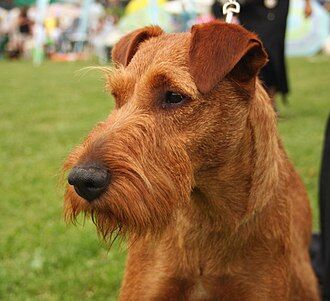
The head is moderately broad, with a medium-length snout, black nose, and the characteristic beard and freckle that give it that “long face” air. The eyes, small and dark, show a cheerful, fearless and courageous expression, never aggressive. The ears are small, triangular and high-inserted, bent forward. The tail is erect, never curved over the back; traditionally it was amputated, a practice now banned in many countries.
The color is its hallmark: black and fire, or grizzly black and fire, with the classic black chair on its back and warm fire on its head, legs and bottom.
Origin and history
The Welsh Terrier has its roots in the mountains of North Wales, and its history dates back to at least the 1760s, making it one of the oldest terriers in existence. In fact, it has been claimed to be the oldest dog breed in the United Kingdom. Its likely direct ancestor is the old black and hard-haired fire terrier, very popular in Britain during the 18th and 19th centuries.
By the end of the 18th century there was already a well-defined terrier breed in North Wales, used to hunt otters, foxes and badgers in rugged and mountainous terrain.
The breed was recognized by the English Kennel Club in the 1880s and arrived in the United States in 1888 by Prescott Lawrence, where it quickly gained fame. To fine-tune its silhouette it was at one time crossed with the hard-haired Fox Terrier, obtaining that “Airedale in miniature” look. It was a late arrival at exhibitions because it was primarily a working dog, and was not officially registered until the 19th century. Today it is mainly a companion and exhibition dog that, despite its virtues, is still rare outside its homeland.
Curiosities
- A vulnerable breed. The British Kennel Club lists it among the endangered native breeds, with only about 300 puppies registered a year, compared to the tens of thousands of the most popular breeds.
- A presidential dog. Charlie, John F. Kennedy’s Welsh Terrier, lived in the White House and is one of the breed’s most famous specimens.
- The pocket Airedale. Its enormous resemblance to the Airedale Terrier, in reduced form, is one of its most recognizable features.
- Champion of Crufts. The breed has won Crufts’ prestigious Best in Show on four occasions, most recently in 1998.
- Suitable for mild allergies. by not changing its coat, sheds much less hair than most breeds, making it more bearable for people with mild allergies to dog hair.
If you are attracted to the Welsh Terrier but want to compare temperaments and needs with other related breeds, take a look at these relatives and similar-profile dogs: The Yorkshire Terrier, another compact British terrier with character; the Border Collie, if you’re looking for an equally active and alert but mentally sized companion; the Beagle, a family hunter of similar energy; and the Caniche, another breed that barely sheds hair and goes well with allergy sufferers.
Frequently Asked Questions about the Welsh Terrier
Does the Welsh Terrier shed a lot of hair?
The Welsh Terrier barely changes seasonally: its hard coat does not fall off by itself, but must be removed by hand (stripping) or with a rake. That is why it sheds much less hair per house than almost any other breed and is usually well tolerated in homes with mild allergies.
Is he a good dog for families with children?
Yes, it is one of its great virtues. The Welsh Terrier is patient and playful with the children of the house, especially if it grows up with them. It is convenient to supervise the games with the little ones because, in the midst of running, it can pull off a leg or cause a child to stumble. Teaching the dog to play softly from a puppy almost always solves this point.
Do you get along with other dogs and pets?
It is more tolerant than the average terrier, but it is still a terrier: it can be territorial or look for a fight with dogs of the same sex, and its prey instinct pushes it to chase cats, rodents or birds.
How much exercise do you need a day?
Enough. It is a working dog full of energy: a simple hygienic walk is not enough for it. It calculates at least one long hour a day divided into walks, games, sniffing and some running or swimming. A bored Welsh Terrier barks, digs and looks for mischief; a well-exercised one is calm and balanced inside the house.
Can he live in a flat?
Yes, as long as it meets its need for exercise and mental stimulation. It is compact and has clean hair, which makes it suitable for urban life. The delicate point is the bark: it tends to warn and may bark excessively if bored or alone for a long time, something to consider with nearby neighbors.
Is it easy to train?
It’s very intelligent, but it’s independent and self-aware, so it learns fast and it also makes decisions on its own. It responds wonderfully to positive reinforcement and clicker if the sessions are short, varied and fun. The key is consistency: you have to reinforce orders regularly, because it tends to test how far you can go.
How long does a Welsh Terrier live?
It is a long-lived and robust breed, with a life expectancy of around 12-15 years.
Is it a rare breed or hard to find?
Outside its native Wales it is uncommon. The British Kennel Club lists it among the vulnerable native breeds, with just a few hundred puppies registered a year. Finding a serious breeder may require patience and a waiting list, but it is worthwhile to ensure health and good temperament.