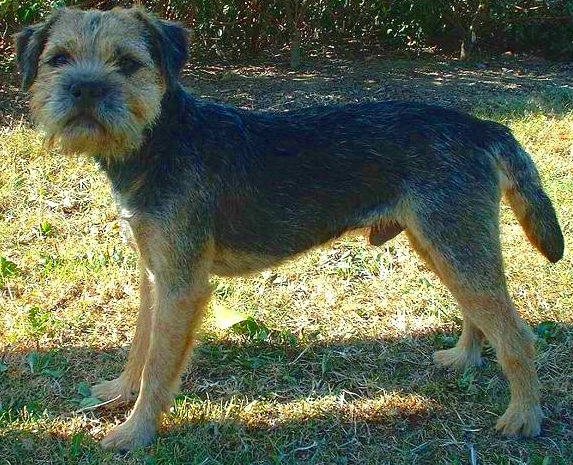
The Border Terrier is a British working terrier, small but incredibly hardy, bred on the border between England and Scotland to chase the fox underground. Hiding behind its rustic, unkempt appearance is one of the most well-balanced, sociable, and long-lived dogs in the terrier group. If you’re looking for a compact, active, surprisingly sweet-tempered companion indoors, the Border Terrier deserves your full attention. In this comprehensive guide, we review its character, care, health, and history so that you know if it is the right dog for you.
Is the Border Terrier for you?

The Border Terrier is a dog with a double life: in the field it is a tireless hunter, able to follow the rhythm of the horses; at home it is calm, affectionate and adaptable. This combination makes it very popular, but it also means that it is not a decorative dog: it needs movement, stimulation and companionship.
In favour .
- Small in size and manageable, but sturdy and not delicate.
- Balanced and affectionate; rarely nervous or fearful.
- One of the longest and healthiest breeds in the terrier group.
- Very social with people and, well socialized, with other dogs.
- Intelligent and willing to learn; enjoys dog games and sports.
- Low-maintenance fur that sheds little hair.
To be taken into account
- Strong hunting instinct: chases cats, rodents and small animals.
- Born excavator and skilled escapist; needs a well-fenced garden.
- Prolonged loneliness is not good for him. He may suffer and bark.
- He needs real daily exercise, not just a short walk.
- The coat requires stripping a couple of times a year.
- His nose says: no solid memory, better with a leash in open areas.
Character and temperament
The Border Terrier has a reputation for being one of the friendliest and easiest-to-handle terriers, and it’s no accident. It was bred to work side-by-side with pack dogs and with horses, so aggression towards other dogs and stubborn character were selected against: A terrier fighting with the pack was no good. The result is a dog that is determined and courageous at work, but remarkably tolerant and balanced socially.
At home he is a loving, cheerful companion and very close to his family. He likes to participate in everything his humans do, go from room to room and curl up on the couch at the end of the day. That sociability is his great virtue and, at the same time, his Achilles heel: A Border Terrier that spends too many hours alone gets bored, frustrated and looks for a way out in barking, digging or wreckage.
It should not be forgotten that, no matter how charming it may be at home, it is still a burrow terrier with a very vivid prey instinct. It is alert, curious, persevering to the point of stubbornness and always alert to any movement of a small animal. That same tenacity, well channeled, makes it a brilliant sports dog; poorly managed, an escapist obsessed with the trail.
Coexistence: children, other pets, flat and loneliness
- With children: is usually an excellent family dog, playful, patient and resistant to the pull of the smallest.
- With other dogs:, due to its herding past, tends to get along well with its congeners, especially if it socializes as a puppy.
- With cats and small pets: here is its weak point. Its hunting instinct for rodents, rabbits, ferrets or birds is very strong. It can coexist with a cat if they grow together, but small caged mammals are rarely a good idea.
- On the floor:‘s compact size allows him to live in an apartment as long as he gets enough exercise and company.
- In the face of loneliness: is one of the worst breeds to be left alone for many hours. If the whole family spends the day outside, you will need help (walker, dog sitter) or rethink your choice.
Education and training
The Border Terrier is intelligent and quick to learn, but it’s also independent and has its own opinion about things. The key is in positive reinforcement: rewards, playfulness, and a cheerful voice work much better than toughness, which only gets him to close in on the band. Short, varied, fun sessions keep his attention; boring repetitions don’t.
Three priorities in their education. First, the early socialization with people, dogs, noises and environments to consolidate its balanced character. Second, the i remember (call): By its prey instinct, a Border that detects a trail can disconnect from the world, so the ven must be consciously trained and, as long as it’s not solid, open spaces require a long leash. Third, the barking management and excavation, offering you alternatives like scent games or an area where you can dig.
Because of his mental agility and energy, he excels in disciplines such as agility, obedience, nose games, and, most especially, earthdog tests.
Exercise and activity
Don’t be fooled by its size: the Border Terrier is a long distance athlete. It was bred to run alongside horses during hunting, so it needs a lot more exercise than it looks. As a reference, at least an hour long daily activity divided between walks, running and play, with a good olfactory exploration component.
He loves the outdoors, the countryside, the mud and sniffing every corner. Long walks, hiking, hunting games, and dog sports keep him happy and fit. Exercise should be accompanied by mental stimulation: Dispensing toys, sniffing games, and little challenges keep such a smart dog from falling into boredom. A well-exercised Border rests peacefully at home; one who is bored, invents his own mischief.
Care: fur and hygiene

The Border Terrier has a double coat: a short, dense and soft inner coat that insulates it from the cold, and a hard, rough and very sticky outer coat that repels water and dirt.
Instead, the stripping or manual start of dead hair is practiced, usually twice a year (spring and autumn), by hand or with a trimming blade. This keeps the hair in its characteristic roughness and promotes the healthy growth of the new coat. Between strippings, a weekly brush is all it takes to remove loose hair and dirt. It is a relatively hairless breed, which many owners appreciate.
Bathing should be occasional: washing it excessively softens the hair and removes the natural protection of the skin fat. The rest of the hygiene is the usual for any dog: checking and cleaning the ears, brushing the teeth frequently, trimming the nails when they ring when stepping and watching the eyes.
Foodstuffs
The Border Terrier needs a complete and balanced diet, adapted to its age, weight and activity level. Being an active dog, it appreciates a quality food with good protein intake; when it works or exercises a lot, its energy expenditure rises. The amount should be adjusted to each individual and divided, ideally, into two daily intakes.
The great enemy of this race is the overweight. It is a voracious and very skillful dog begging for food, and being small any excess weighs proportionately a lot. Overweight strains joints, aggravates any health problems, and reduces quality of life and longevity. Watch the scale, check the prizes (discounting them from the ration) and feel his ribs regularly: You should notice them without pressing. Always have fresh water available and consult your veterinarian about the most appropriate diet for each stage.
Health and life expectancy
The Border Terrier is, as a whole, a rustic and healthy breed, and that is reflected in its longevity. A British study from 2024 estimated its life expectancy at around 14 years old, above the average for purebred dogs.
Still, it is good to know what conditions you are prone to:
- Patients who are at high risk of canine epileptoid cramp syndrome (CECS): is a recognized disorder in the breed that runs with episodes of incoordination and muscle spasms, without loss of consciousness.
- If you have a history of gallbladder disease: British studies have found that the Border Terrier has a markedly higher predisposition than other dogs to developing biliary mucocele and other gallbladder disorders, as well as neutrophil cholangitis.
- General care: as in any terrier, it is worth monitoring teeth, ears and weight, and keeping up with veterinary checks and parasite prevention.
Acquiring the puppy from a responsible breeder, who tests the health of the breeders, is the best guarantee to minimize hereditary problems.
Physical appearance

The Border Terrier is a small dog, narrow-bodied and well-proportioned, built to fit into a fox’s burrow but with enough legs to follow horses. The males measure between 33 and 41 cm at the cross and weigh about 5.9 to 7 kg; the females are somewhat smaller, 28 to 36 cm and 5.2 to 6.4 kg. It is therefore a compact and light dog, easy to lift and transport.
Its most recognizable feature is the head, which resembles that of an otter: wide skull, moderately short and strong snout, and powerful teeth. The ears are small, V-shaped, falling towards the cheeks. The whiskers are few and short, and the tail, of moderately short insertion, is thick at the base and sharpened towards the tip.
The outer coat, hard and rough, has characteristic colors: the grizzle. and fire (a brownish grey intermixed with reddish tones), blue and fire, red and wheat.
Origin and history
The Border Terrier takes its name from the border region between England and Scotland, where it was forged as a working dog. In its origins it was known as Coquetdale Terrier or Redesdale Terrier, for the areas in which it evolved, and it was not until the late 19th century that the current name was popularized, linked to its long collaboration with the Border Hunt of Northumberland.
It shares ancestry with two other terrier breeds from the same area: The Bedlington Terrier and the Dandie Dinmont Terrier. His mission was clear and exacting: to accompany the pack and the horsemen and, when the fox took refuge underground, to get into the burrow to get him out. To do this, he needed a body small enough to enter the den and legs long enough not to be left behind on the ride. It was also used as an effective rodent controller and even in the hunting of otters and badgers.
Official recognition came in 1920, when the British Kennel Club admitted the breed and the Border Terrier Club was founded; the first standard was drafted by Jacob Robson and John Dodd. The first Border Terrier enrolled in the Kennel Club was “The Moss Trooper”, son of Jacob Robson’s Chip dog, registered in 1913. The American Kennel Club recognized it in 1930. Since then, without losing its essence as a working dog, it has also become a highly prized companion dog, historically ranking among the most popular breeds in the United Kingdom.
Curiosities
- Its otter-shaped head is so distinctive that it is used as the breed’s seal of identity on its standard.
- Despite its appearance as a “hairless saloon dog”, it is considered one of the most capable and hardy working terriers.
- It has had a notable career in film and television: a Border Terrier played “Puffy” in Something’s wrong with Mary., and the breed also appears in productions such as Good Boy! and the recent Strays.
- Its name literally defines its territory – the “border” between England and Scotland.
- It is such an enthusiastic excavator that many owners provide it with its own area of sand to channel the instinct without ruining the garden.
- For decades it has been one of the UK’s favourite terriers, rising to become one of the most registered breeds in the country.
If you are attracted to the character of this breed, you may be interested in other working and companion terriers with similar profiles. You can compare the Border with its close relative the Bedlington Terrier, with the rugged Lakeland Terrier from northern England, with the often loving Norfolk Terrier or with the energetic Jack Russell Terrier, another small, sparkling hunter.
Frequently Asked Questions About the Border Terrier
Is the Border Terrier a good dog for families with children?
Yes, it’s a cheerful, playful, resilient breed that usually gets along very well with children, so as with any dog, you have to monitor the interaction and teach the little ones to respect their rest and their food.
How much exercise does a Border Terrier need?
At least an hour a day of walking, running, and playing, with olfactory exploration, plus mental stimulation.
Does the Border Terrier get along with cats and other dogs?
He usually gets along well with other dogs because of his past as a pack dog. He can get along with cats if they grow up together, but his strong hunting instinct makes rodents, rabbits, and small pets not a good combination.
Do you lose a lot of hair?
It sheds relatively little hair, especially if it is stripped on time. No dog is 100% hypoallergenic, but its hard, low shedding coat makes it more bearable for many sensitive people.
Is it easy to train a Border Terrier?
It is intelligent and learns quickly, but also independent, responds very well to positive reinforcement with short, fun sessions, priorities are socialization, a good memory, and managing barking and digging.
Can he live in a flat?
Yes, its compact size allows it as long as it gets enough daily exercise and company. A well-exercised Border is quiet at home; the problem is not space, but boredom and loneliness.
How long does a Border Terrier live?
It is a long-lived breed. A British study in 2024 placed its life expectancy at around 14 years, above the average for purebred dogs. With good care, many easily outlive that age.
Do you need stripping?
Yes. Your hard hair should not be cut with a machine or scissors, because it loses texture. The correct thing is stripping or pulling the dead hair, usually twice a year, plus a weekly maintenance brushing.