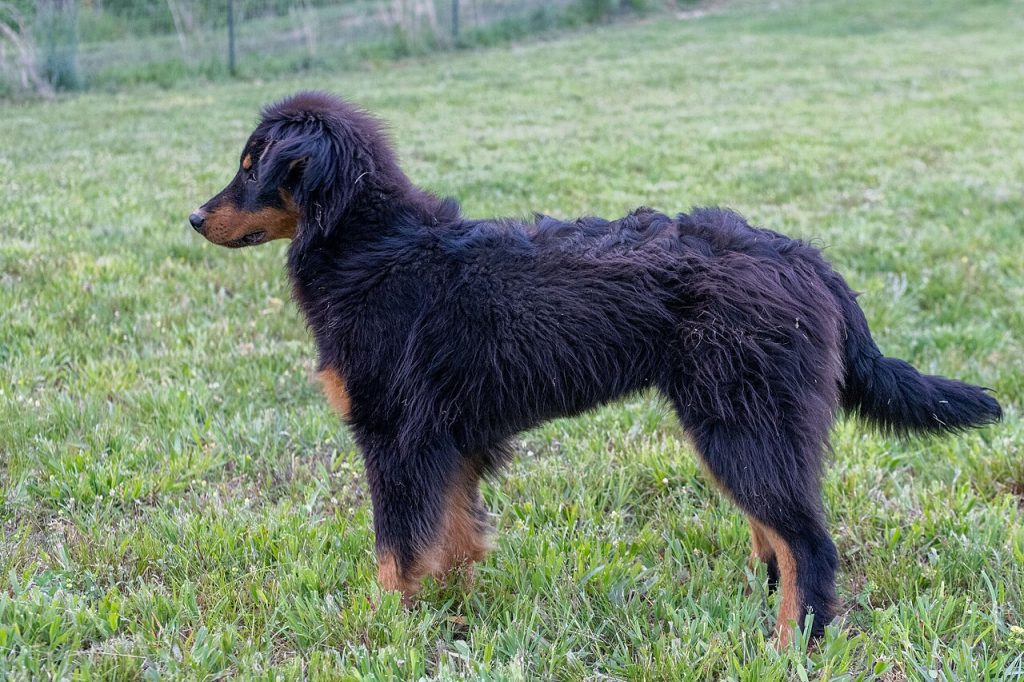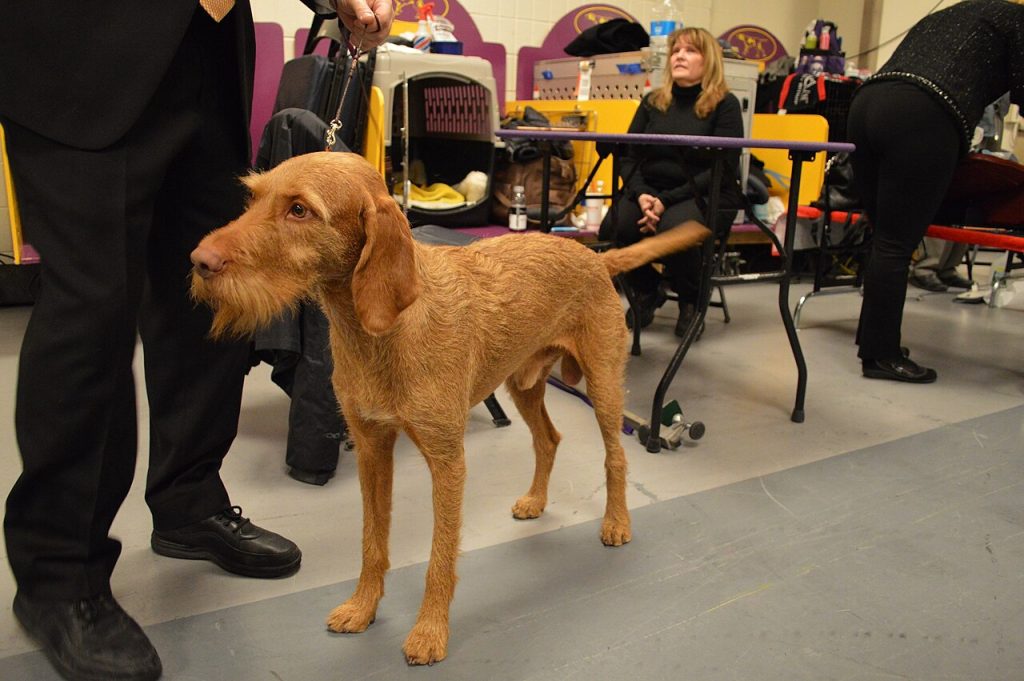
The Hard-haired Hungarian Braco is a versatile hunting dog originating from Hungary: traces, displays and charges the part with the same solvency in the forest as in the icy water. A rough-coated sibling of the classic Vizsla, it combines the unmistakable golden-red color with a more protective coat, a tougher structure and a caring and balanced character that has made it, in addition to being an excellent working dog, a magnificent companion for active families.
Is the hard-haired Hungarian Braco for you?

Before you fall in love with their golden gaze, be honest: this is a working breed with a lot of energy. It shines with sports owners and hunters, and suffers with those who seek a quiet indoor dog. Here you have the balance clear.
In favour .
- Loving, balanced and very close to his family.
- Intelligent and eager to please, he learns fast.
- Versatile in the field: sampling, tracing and collection, even in cold water.
- Low maintenance coat compared to other long-haired breeds.
- Rustic breed and generally healthy, with a good life expectancy.
- Excellent companion for sports, hiking and outdoor activities.
To be taken into account
- Very high exercise needs: not good for short walks.
- It doesn’t fit with a sedentary lifestyle or long hours of solitude.
- Strong hunting instinct: watch out for cats and small animals.
- It is easily bored and can become destructive if it does not expend energy.
- Rare breed: Finding a serious breeder can be expensive.
- Sensitive: does not tolerate harsh training methods.
Character and temperament
The hard-haired Hungarian Braco is first and foremost an affectionate dog that creates very close bonds with the people in its family. Breeders describe it as a stable-tempered breed with a balanced personality, making it especially suitable for the home. He ‘s not a nervous or suspicious dog by nature . He seeks contact, enjoys the company and wants to be involved in everything his people do.
That tender face, however, hides a working dog engine. He’s awake, alert and with a constant need to have something to do. His intelligence and desire to please make him very trainable, but it also means that a bored Braco will find ways to entertain himself, often in ways you won’t like. Well channeled, it’s quiet at home and explosive in the field; mismanaged, it becomes an anxiety ball. It is also a sensitive dog, reading its owner’s mood and responding much better to positive reinforcement than to excessive firmness.
Coexistence: children, other pets, flat and loneliness

With children:‘s balanced and affectionate nature makes it a good family dog. It is tolerant and playful, although its energy and medium size advise to supervise the treatment of very young children and teach toddlers to respect their moments of rest.
With other pets:, socialized as a puppy, cohabits smoothly with other dogs. Its strong instinct to sample and collect forces it to be cautious with cats, rabbits, birds and rodents; coexistence is possible, but built with patience from an early age.
On the floor: can live in an apartment only if its owner commits to giving it intense daily exercise. It is not a breed for those who want a dog that spends the day lying down. With long outings and daily sport, it adapts to the city; without them, the floor will become a cage for it.
Soledad: is a companion dog that hates being alone for long hours. The combination of strong attachment and high energy makes prolonged loneliness easily lead to separation anxiety, barking and wrecking.
Education and training
Few breeds make training as enjoyable as this one. The Hungarian Braco is intelligent, attentive, and wants to please, so it assimilates commands quickly and enjoys working with its owner. The key is to use positive reinforcement, short and varied sessions, and to keep up the challenge: mechanical repetition bores and disconnects it.
Early socialization is essential. Exposing him as a puppy to people, dogs, noises, surfaces, and different situations builds a secure, sociable adult. Being a sensitive dog, hard methods or punishments must be completely abandoned: They undermine their confidence and are counterproductive. With a gentle, consistent and stimulating approach, it becomes an obedient dog and a pleasure to handle, both at home and in the field.
Exercise and activity
This is the point that you have to be very clear about before you have one. The Hungarian Hard-haired Braco was bred to spend the day hunting in rough terrain, and that endurance is still intact. It needs at least one to two hours a day of intense exercise: running, swimming, collecting, sniffing. A quiet walk doesn’t help it even to begin with.
In addition to physical expenditure, it requires mental stimulation. Canine sports (agility, obedience, mantrailing, field trials), olfactory games and collecting work keep it balanced and happy. It is the perfect companion for people who run, hike, cycle or hunt. If you give it work and challenges, you will have a model dog; if you leave it idle, you will have problems.
Care: fur and hygiene

Their coat is one of the great practical advantages of the breed. The hair is hard, dense and attached to the body, about 2.5 cm long, without reaching to hide the silhouette. On the lower legs, chest and belly the hair is shorter and softer, and on both sides of the muzzle forms a very characteristic rough beard, along with some marked eyebrows.
Maintenance is simple: a weekly brushing is sufficient to remove the dead hair, supplemented by punctual manual stripping to preserve the rough texture of the hair. Baths should be scarce, only when really necessary, so as not to soften the mantle. It is advisable to check and clean the beard after meals, watch the ears to prevent infections, keep the nails short and take care of dental hygiene. On the whole, it’s an aesthetically low maintenance breed.
Foodstuffs
As it is an athletic and high-energy dog, it needs a high-quality diet, rich in animal protein, capable of sustaining its intense physical expenditure.
Ideally, the ration should be divided into two meals a day instead of one. As with other deep-breasted breeds, it is advisable to avoid strenuous exercise just before and after eating to reduce the risk of gastric torsion. Weight should be monitored – an overweight Braco loses agility and joint health – and fresh water should always be available. When in doubt about a particular diet, it is best to consult your veterinarian.
Health and life expectancy
The hard-haired Hungarian Braco is a generally rustic and healthy breed, without the huge list of hereditary problems that drag other highly aesthetically selected breeds.
As with most dogs of medium size and high activity, attention should be paid to hip and elbow dysplasia, eye problems and, because of their deep chest shape, the risk of gastric torsion. Choosing a responsible breeder who carries out the health checks relevant to the breeders is the best guarantee. With regular veterinary checkups, vaccination, deworming, weight control and proper exercise, it is a dog that usually enjoys a long and active life.
Physical appearance
It is a medium-sized dog, robustly built but elegant, tougher than the classic Vizsla. Males usually measure between 58 and 64 cm at the withers, and females about 4 cm less; the weight is around 20-27 kg depending on sex and specimen. The general image is that of an athletic dog, well proportioned, with a head reminiscent of the hard-haired German Shepherd over a Vizsla body.
Its mark of identity is the colour: golden rust in different tones, uniform, with ears sometimes somewhat darker than the body. A small white spot is admitted on the chest or throat and some white on the fingers. The hard coat, beard and marked eyebrows complete an unmistakable and functional silhouette, designed for field work and cold water.
Origin and history
The breed is completely independent of the much better known shorthaired Vizsla. It was developed in Hungary in the 1930s, initially driven by Vasas József, owner of the Csabai vizsla breeding farm, together with Gresznárik László, owner of a German Braco hard-haired breeding farm. His objective was clear: to create a dog that retained the Vizsla colour but with a heavier coat and a stronger structure, better prepared to work in cold and freezing waters.
To achieve this, two Vizsla females of excellent pedigree and good working skills, Zsuzsi and Csibi, were selected and crossed with a hard-haired German Braco male of liver color, Astor von Potát. From the best offspring was born Dia de Selle, the first representative of the breed to be exposed: It had the body of the short-haired Vizsla and the head of the German Braco, a promising starting point. Later, Koloman Slimák continued the work in Slovakia, and during World War II other Hungarian breeders joined the development; there are indications of punctual contributions from Pudelpointer, Irish Setter and other show dogs.
The Federation Cynologique Internationale recognized the breed under Hungarian standard in 1963 as the Drótszőrű Magyar Vizsla. It arrived in North America in the 1970s and was recognized by the Canadian Kennel Club in 1977. The United Kennel Club accepted it in 2006 and the American Kennel Club fully recognized it on July 2, 2014, incorporating it into its Sporting Group. As of 2009, there were an estimated 400-450 specimens in the United States and between 2,500 and 3,000 worldwide, which gives an idea of how rare it remains.
Curiosities
- Its Hungarian name, Drótszőrű Magyar Vizsla, literally means “Wirehaired Hungarian Vizsla”, alluding to the coarse texture of the mantle.
- It is one of the most recently recognized sample dog breeds by the AKC: it did not gain full recognition until 2014.
- It was created, in part, to be able to charge pieces in icy water, something the short-haired Vizsla tolerates worse for its thin coat.
- The rough beard and marked eyebrows are not an aesthetic whim – they protect the dog’s face from weeds during hunting.
- It is still a rare breed, estimated to number only a few thousand worldwide.
If you are attracted to this versatile show dog, you will surely be interested in other related breeds. We recommend that you meet the Vizsla, its short-haired brother and common origin; the elegant Weimaraner, another high-strength working arm; the classic Pointer, reference among the show dogs; and the tireless Pastor Alemán if you are looking for a high-energy versatile dog.
Frequently Asked Questions about the Hungarian Hard-haired Braco
Is the hard-haired Hungarian Braco the same as the short-haired Vizsla?
The Hungarian Braco was developed in Hungary in the 1930s by crossing the classic Vizsla with the German Braco to achieve a more protective coat and a more robust structure, suitable for cold and icy water.
How much exercise do you need a day?
It is a versatile hunting dog with high energy: it needs at least one to two hours daily of intense activity, not a simple walk. Racing, swimming, collecting, mantrailing or canine sports come to it like pearls.
Is he a good dog for families with children?
Yes. It is a loving, balanced and very attached breed to its people, which makes it suitable for families. It is convenient to supervise the treatment of small children for their energy and size, and teach the little ones to respect their time, but in general it is an affectionate and tolerant companion.
Can he live in a flat?
It can, as long as you give it plenty of exercise every day and don’t leave it alone for too many hours. It’s not a couch dog: if it doesn’t expend its energy, the floor stays small for it. With active owners who go out daily to play sports with it, it adapts well to urban life.
How long does the hard-haired Hungarian Braco live?
Their life expectancy is around 12-14 years. A study among members of a British breed club placed the average around 13 years. It is a generally healthy and rustic breed, without the long list of hereditary problems of other breeds.
How much hair does it shed and what care does the mantle need?
Its hard and dense hair loosens moderately. It only needs a weekly brushing, with punctual hand-stripping to maintain the rough texture of the mantle, and checking the beard and eyebrows.
Is it easy to educate?
It is an intelligent, sensitive and willing dog, which facilitates training in positive reinforcement. It learns quickly, but needs consistency and stimulation: it is bored with mechanical repetition and does not take hard methods well.
Do you get along with other dogs and pets?
With early socialization it coexists well with other dogs. Being a show dog with a strong hunting instinct, it is necessary to be careful with small animals (cats, rodents, birds) and work on coexistence from puppyhood.