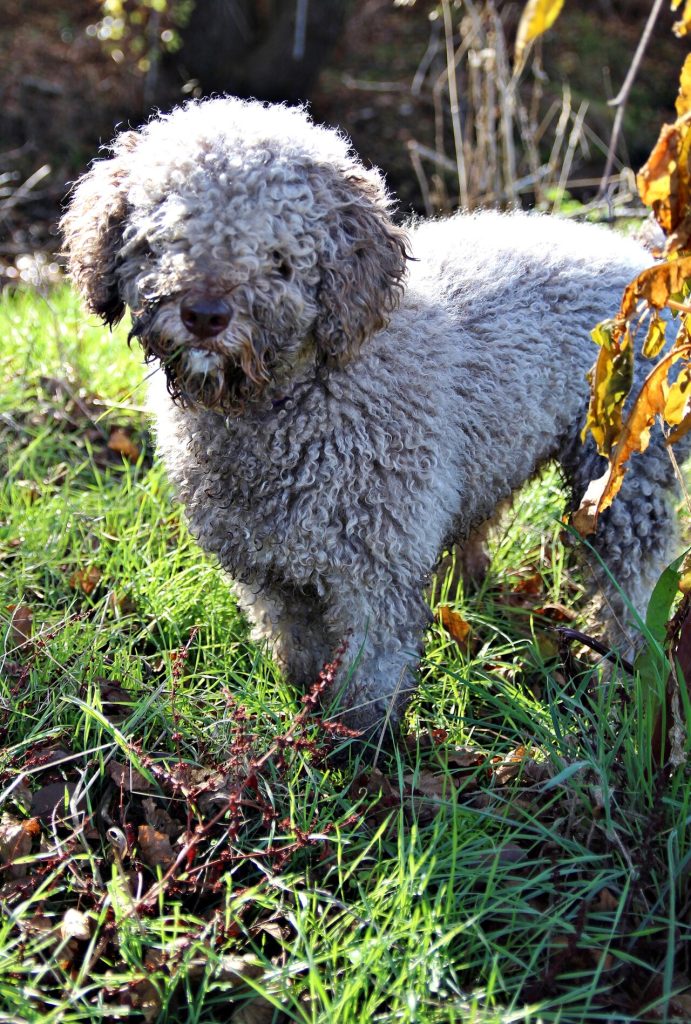
The spanish water dog is one of the most versatile and beloved native breeds in our country: a medium-sized, athletic, unmistakably curly-coated dog who went from herding herds, collecting parts in the marshes and helping the Cantabrian fishermen to becoming today an exceptional family companion. If you are looking for a dog that is intelligent, tireless, and deeply attached to its owners, the Spanish Water Dog deserves to be thoroughly acquainted with before making a decision.
Is the Spanish Water Dog for you?

The Spanish Water Dog is a fantastic breed, but demanding on something very specific: time. It’s a working dog dressed up as a companion dog, so it shines with active owners who want to do things with it and shuts off with anyone who leaves it for just hours with nothing to do. Before you fall in love with its curls, look honestly at whether you fit into its rhythm.
In favour .
- Very intelligent and easy to train: he learns almost anything quickly.
- Faithful and affectionate, he turns completely on his family.
- She barely loosens her hair; her curly coat is comfortable at home.
- Medium size and manageable, adaptable even to the floor.
- Rustic, healthy and long-lived, with few routine veterinary requirements.
- Multipurpose: for sport, rescue, therapy or simply as a companion.
Against
- It needs a lot of physical and mental exercise: it is not a sedentary dog.
- Prolonged loneliness can make him uncomfortable; he can become nervous or destructive.
- Reserved with strangers: requires early and constant socialization.
- The coat requires specific handling (shave, not classic brushing).
- Their guarding instinct and energy can overwhelm a passive first-time owner.
Character and temperament
The breed standard describes the Spanish Water Dog with very expressive adjectives: faithful, obedient, cheerful, hardworking, courageous and well balanced. Anyone who lives with one recognizes that portrait right away. He’s a dog who gives himself unreservedly to his people, who wants to be involved in everything, and who genuinely enjoys having a task at hand, whether it’s picking up a ball, learning a new trick, or watching the house.
Along with that enthusiastic, playful side, there’s a serious nature to the job. It has highly developed natural guarding and hunting instincts, making it attentive to its environment and somewhat wary or suspicious of strangers. He’s not an aggressive dog, but he’s cautious. He warns, he observes, and he needs time to accept the stranger. That combination of nobility with family and reserve with strangers is one of his hallmarks.
It is also a sensitive and intuitive dog, very connected to its owner’s mood. It responds wonderfully to kind and consistent treatment, and much worse to abruptness. A well-bred, socialized and exercised Spanish water dog is balanced, calm at home and explosive when it comes to playing or working.
Coexistence: children, other pets, flat and loneliness

With children: is an excellent family dog. Its cheerful, patient and protective nature makes it a good playmate for the little ones, as long as it has grown up living with them.
With other pets: is well socialized, coexisting with other dogs without problems. Its hunting instinct can arouse interest in small animals, so introduction with cats or other pets must be done with the head and from puppy to accept them as part of the group.
On the floor:‘s medium size makes it perfectly compatible with floor living. It does not need a large house with a garden; it needs to go out several times a day and expend real energy. A Spanish water dog that gets enough exercise is quiet and discreet inside the house.
In the face of loneliness: this is its weak point. It is a dog so attached that it is difficult to stay alone for many hours. If no one is at home for much of the day, it can develop anxiety, barking or destructive behavior. It is a breed for homes where someone can spend time with it or can accompany it in its daily life.
Education and training
Few races are so grateful to educate. The Spanish Water Dog combines remarkable intelligence with an enormous willingness to please, resulting in fast and robust learning. Not in vain it is used in the Spanish fire brigades for rescue, in the Civil Guard for detection of drugs and explosives and by forest guards to locate poisoned baits: It’s a dog that assimilates complex tasks and executes them reliably.
The key is positive reinforcement. It responds brilliantly to rewards, play, and gentle tone, and quite poorly to harsh methods, which only block it or make it suspicious. Short, varied, fun sessions yield better results than monotonous repetition, because it’s a bored dog that needs stimulation.
Socialization is the other essential leg of its education. Because of its reserved nature with strangers, it is essential to expose it from puppyhood to people, animals, noises and different situations. A well-socialized Spanish water dog is balanced and sociable; one who has not been can become overly suspicious.
Exercise and activity
This is a medium-high-energy dog that has been trained for centuries to work tirelessly herding, collecting parts in the water and helping fishermen. That heritage is still alive: it needs to move and, above all, keep its head occupied.
The ideal is several daily outings that add up to at least an hour of real physical activity, combining walking with running, searching or training. Being a true water dog, swimming is his star exercise: If you have access to a safe river, lake, beach or swimming pool, you’ll enjoy it like few others. It also excels in dog sports such as agility or obedience, where specimens of the breed have become champions of Spain.
Smell games, stuffed toys, learning tricks or small chores at home keep it balanced. A Spanish water dog who is given a good physical and mental outlet will be calm and happy; a bored one will seek entertainment on his own, almost never in a desirable way.
Care: fur and hygiene

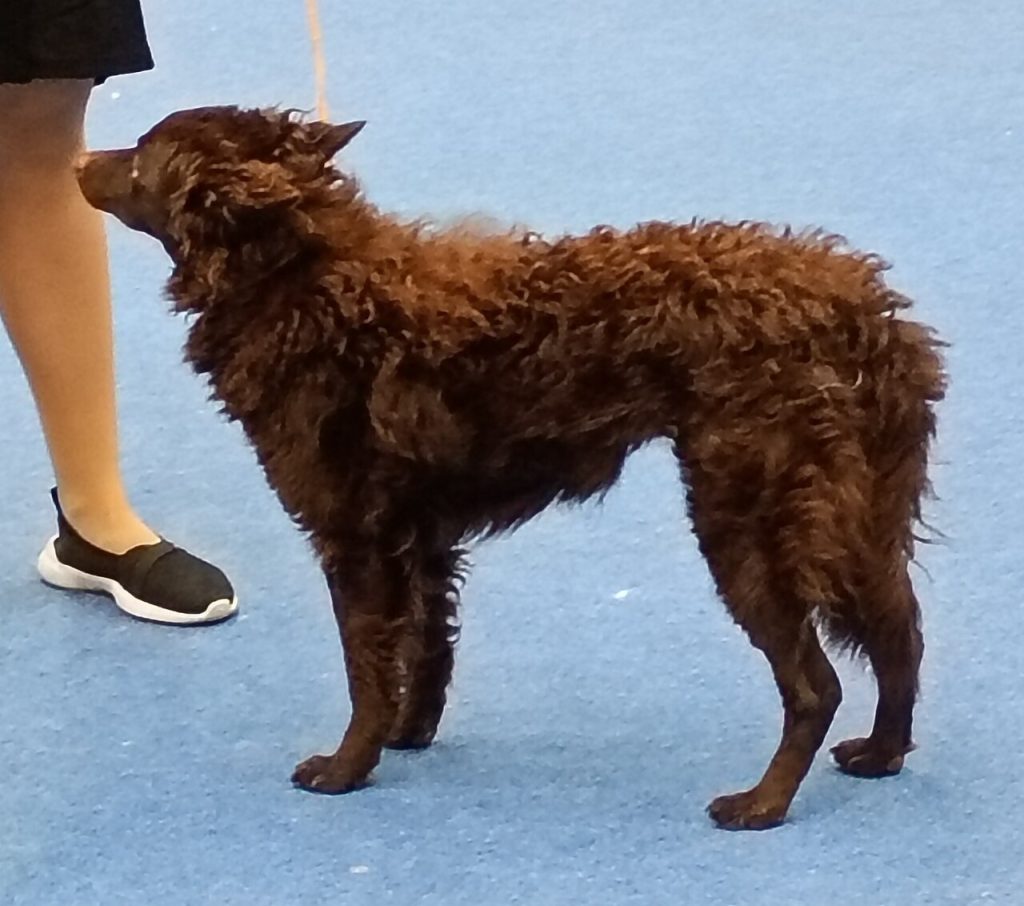
The coat of the Spanish Water Dog is its most characteristic feature and also the one that most misleads those who do not know the breed. It is a curly hair, woolly texture, which when it grows tends to form cords. The golden rule is that it doesn’t brush. in the traditional style: brushing it dry breaks the curl and spoils its natural structure.
Instead of brushing, maintenance is based on shaving the coat uniformly once or twice a year, letting it grow back into curls or cords as desired.
Bathing is done when needed, without excess, and always allowing the wool to dry well to avoid moisture retained in the skin. As in all breeds of fallen ears, it is advisable to check and clean the ears regularly to prevent infections, especially if you bathe or swim frequently.
Foodstuffs
The Spanish Water Dog does not have exotic food needs, but it is advisable to adjust the ration to its activity, which is usually high. A high-quality feed, with a good intake of animal protein and suitable for medium-sized dogs with a high level of exercise, perfectly meets their requirements. It also fits with well-formulated cooked or raw diets supervised by a professional.
The daily amount depends on the weight, age and energy expenditure of each dog: a sporting specimen that swims and trains daily needs more than one of a quieter life. The important thing is to monitor the body condition and keep it thin and muscular, avoiding overweight, which burdens the joints and aggravates predispositions such as hip dysplasia.
It is advisable to divide the food into two servings a day, to always have fresh water available and to avoid intense exercise just before or after eating.
Health and life expectancy
The Spanish Water Dog is a rustic and generally healthy breed, with an estimated life expectancy of around 14 years old, a remarkable figure for a dog of its size.
That said, health studies have identified several predispositions to be aware of. Among the most relevant are hip dysplasia, progressive retinal atrophy (prcd-PRA), hypothyroidism and congenital hypothyroidism with goiter, Addison’s disease (hypoadrenocorticism), exocrine pancreatic insufficiency, allergies, cataracts, dystichiasis, cherry eye (prolapse of the third eyelid gland) and neuroaxonal dystrophy.
The best prevention is always to go to responsible breeders who perform health tests on the breeders (hip x-rays, genetic eye and neuroaxonal dystrophy tests, thyroid control). Add to that the usual: regular veterinary checks, daily vaccination and deworming, weight control and an active lifestyle. With such care, it is a dog that usually accompanies many years and with good quality of life.
Physical appearance
The Spanish water dog is a medium-sized, athletic and robust dog, slightly longer than tall, with a rustic and harmonious appearance. The males measure between 44 and 50 cm at the cross and weigh 18 to 22 kg; the females measure 40 to 45 cm and weigh 14 to 18 kg.
The head is strong and elegantly worn, with the skull flat and parallel to the nose. The eyes, separate and very expressive, range from hazel to brown or dark brown depending on the color of the mantle; the truffle and the edges of the eyelids are of the same tone as the darkest part of the hair or darker. The ears, triangular, are inserted at half the height of the skull and fall to the sides.
The cloak, as we have seen, is its great sign: Curly, woolly in texture, forming cords as it grows. As far as colour is concerned, specimens of one colour (white, black or brown/beige) and bicolours in which the second colour is always white are permitted. Tricolors and combinations with fire (black and fire or brown and fire) are expressly prohibited by the international standard.
Origin and history
The Spanish water dog is an indigenous breed of Spain with ancient roots, traditionally linked to Andalusia and, very especially, to the marshes of the Guadalquivir. There are several theories about its origin; the most accepted one considers it an archaic race introduced to the peninsula during the Middle Ages, which took root in the south and from there spread over much of the territory through canals and river routes.
For centuries it was a versatile and popular working dog, with different names depending on the region. It had three main functions: Shepherd dog for driving sheep, goats, pigs and cattle; collector dog for finding and retrieving parts in wet hunting areas; and assistant to fishermen on the Cantabrian coast. Scholars have identified three historical subpopulations: the marshland of the marshes of the Guadalquivir, the mountains of southern Andalusia and the north of Cantabria and Asturias.
The breed was not officially recognized until the 1970’s and 1980’s, just as changes in agriculture and fishing brought its numbers to the point of extinction. After its study and presentation in exhibitions, the Royal Canine Society of Spain recognized it and its standard was developed. The International Cinological Federation admitted it provisionally in the eighties and accepted it definitively in 1999, at the assembly held in Mexico. The northern subpopulation was recognized in 2012 as an independent breed with the name Cantabrian water dog.
Curiosities
- Its woolly coat, which does not shed like that of other breeds, makes it one of the options that many allergy sufferers tolerate best (although no dog is 100% hypoallergenic).
- Specimens of the breed participated in rescue efforts after Hurricane Mitch in Central America.
- It is genetically related to other water breeds such as the Portuguese Water Dog, the Poodle, the French Barbet, the Italian Lagotto Romagnolo and the Irish Water Dog.
- The Civil Guard uses it at airports, ports and customs to detect drugs and explosives.
- About half of the puppies are born with a short tail naturally, without the need for amputation.
- Before its official recognition it received very different popular names depending on the area, such as “Andalusian Turkish” or “churrino” in Extremadura.
If you are attracted to the Spanish Water Dog because of its intelligence, versatility, and industrious nature, you may also be interested in other high-energy and high-learning breeds. You can check out the Border Collie, another genius of canine work and sport; the Poodle, a direct relative within the water and also curly coat breeds; the inexhaustible Pastor Australiano; or the versatile Labrador Retriever, another great water collector and family companion.
Frequently Asked Questions About the Spanish Water Dog
Is the Spanish Water Dog a good family dog?
Yes. The Spanish Water Dog is a loyal, cheerful and very close family companion. It gets along well with children as long as it has grown up with early and continuous socialization. It is a dog that needs to feel part of the group: it is not made to live isolated in a yard, but within the family nucleus.
How much exercise does the Spanish Water Dog need?
It is an athletic and hardworking breed, with medium-high energy, which appreciates two or three long daily outings plus play, swimming or dog sports. With a minimum of an hour of physical activity and some mental stimulation a day it usually stays balanced; without enough exercise it can become nervous or destructive.
Does the Spanish Water Dog shed a lot of hair?
Their curly, woolly coat does not change like that of other breeds, so they barely leave hair at home. Instead, that hair is not brushed in the traditional style: it is left to form curls or cords and is shaved once or twice a year.
Can you have a Spanish water dog in a flat?
Yes, as long as their needs for exercise and companionship are met. It’s a medium-sized dog that adapts well to living on the floor if it goes out several times a day and does real physical activity. What’s worse is not the space, but prolonged solitude.
Does the Spanish Water Dog bark a lot or is he a good watchdog?
It is not an excessive barker if well balanced and exercised, but its natural alertness makes it a good warning dog.
How long does a Spanish water dog live?
Its life expectancy is estimated to be around 14 years. It is a rustic breed and generally healthy, although it is advisable to know its predispositions (hip dysplasia, progressive atrophy of the retina, hypothyroidism or Addison’s disease) and always buy breeders who do health tests to the breeders.
Is it hard to train the Spanish Water Dog?
No, quite the contrary. It is very intelligent and has an excellent training disposition, so much so that it is used in rescue, detection of drugs and explosives and sports such as agility. It learns quickly with positive reinforcement; the important thing is to give it consistency, socialization and mental work so that it does not get bored.
Where did the Spanish Water Dog come from?
It is a Spanish breed, traditionally associated with Andalusia and the marshes of the Guadalquivir, although it was present throughout the southern half and in the Cantabrian ridge.