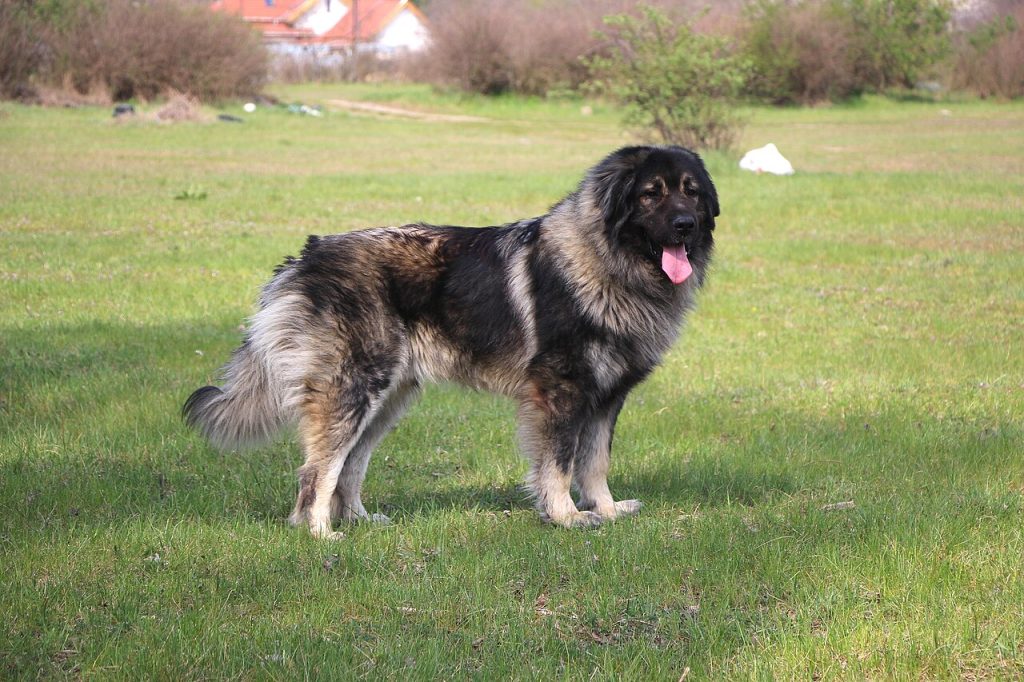
The Šarplaninac is one of the great cattle guard dogs of the Balkans: a shepherd mollusk from the Šar Mountains, between Serbia and North Macedonia, able to stand up to a wolf or a bear to defend his flock. Strong, independent and deeply loyal to his family, the Šarplaninac is not a dog for just anyone, but a natural-born keeper who demands space, experience and respect. In this guide you will find everything you need to know before sharing your life with this breed.
Is the Šarplaninac for you?

The Šarplaninac is a fascinating dog, but very demanding. It is not a companion pet to use, but a working guardian with thousands of years of instinct behind it. Before letting yourself be seduced by its bearish demeanor and serene look, it is advisable to be honest about what it means to live with it. These boxes summarize its lights and shadows.
In favour .
- Exceptional guardian: Few dogs protect family and territory with such dedication.
- Extraordinarily loyal and balanced inside the house; calm and unnerving.
- Rustic, tough and healthy, with a high life expectancy for its size.
- He endures the cold, the rain and the outdoor work without moving.
- It is neither a compulsive barker nor hyperactive – it warns when there is a reason.
To be taken into account
- Independent and stubborn – not an obedient dog or easy to train.
- Very territorial and distrustful of strangers; needs early and intense socialization.
- It requires space, fenced-in land and a function; it suffers in floors.
- Not for first-time owners or anyone who doesn’t set boundaries calmly.
- Its size and strength require responsible driving; it is banned in some countries.
Character and temperament
The temperament of the Šarplaninac can be summed up in three words: independent, protective and serene. It is a dog bred to make decisions on its own in the mountains, away from the shepherd, and that has shaped a reflective character with its own criteria.
With his family he is affectionate in his own way, quiet and of unwavering loyalty. He is not an effusive or clingy dog; his affection is expressed in the constant vigilance and calmness with which he accompanies his own. With strangers, however, he is aloof and suspicious. It does not attack without reason, but it remains alert and cautiously evaluates any newcomer. This guardian instinct is innate: It’s part of the race and it’s not eliminated, it’s only channeled through socialization.
It is a remarkably balanced dog and not very reactive for its size. It is not usually nervous or destructive if given the right space and stimulation. Its loud barking is a warning tool, not a mania. Together, we are talking about a sensible guard, brave to the extreme when he perceives a real threat, but measured in the day to day.
Coexistence: children, other pets, flat and loneliness

The Šarplaninac is usually patient and protective: he integrates them into his “herd” and takes care of them.
With other pets, its history as a livestock guardian plays in its favor: it instinctively protects animals it considers part of its territory, and therefore coexists naturally with sheep, goats or other farm animals.
On a floor does not fit. It needs space, a territory to patrol and open air. It is a house dog with terrain, ideally fenced, in the countryside or outdoors. The Loneliness tolerates it better than many breeds because it is used to working alone, but that does not mean that it should spend the day abandoned: a Šarplaninac without function or contact is bored and may develop undesirable behaviors.
Education and training
Raising a Šarplaninac is an exercise in patience and consistency. He ‘s not a dog that lives to please: It’s intelligent but independent, and it will obey when it understands the meaning of what you’re asking, not out of blind submission. Harsh methods are counterproductive; they only create distrust in such a proud animal. The path is the positive reinforcement, quiet firmness and a relationship based on mutual respect.
The early socialization is, without exaggeration, the most important part of their education. From puppyhood they must know different people, noises, animals and situations so that their guardian instinct is expressed in a balanced way and not as indiscriminate aggression. A well-socialized Šarplaninac can distinguish between a real threat and a normal visit; a poorly socialized one can become a serious problem.
For all this, it is not a breed recommended for a first-time owner. It requires prior experience, time and calm leadership. Whoever is willing to invest in its education will in return have an exceptional and absolutely reliable guardian.
Exercise and activity
The Šarplaninac has a non-explosive average energy. It was bred to patrol and guard herds for hours, with sustained effort and pacing rather than intense running.
What really satisfies him is not the physical exercise itself, but having a function and a territory. A Šarplaninac with a terrain to watch and a family to protect is in his element. Boredom and confinement affect him more than lack of sport: a specimen frustrated by confinement can become destructive or barking.
Care: fur and hygiene

The coat of the Šarplaninac is its great sign of identity and also its main need for care. It has a dense, medium to long double coat, rather rough on the outside and with a woolly undercoat that insulates it from cold, rain and snow.
During seasonal seedlings, in spring and autumn, hair loss spikes and it is advisable to brush daily to control the amount of loose hair in the house. He does not need frequent baths: his hair tends to repel dirt, and too much bathing can damage the natural protection of the mantle.
The rest of the hygiene is basic for any large dog: checking and cleaning the ears, watching the pads and nails, and maintaining good dental hygiene.
Foodstuffs
As a large dog with a strong constitution, the Šarplaninac needs a high-quality diet, rich in animal protein and adjusted to its level of activity. A specimen working outdoors in cold weather consumes much more energy than one who lives quietly at home, so the ration must be adapted to each case to keep it at a healthy weight, without overweight that punishes its joints.
In puppies of large breeds, feeding during growth is especially delicate: an excessive intake of energy or calcium can accelerate bone development and promote joint problems. It is wise to use a formula for large breeds that are growing and, if in doubt, to consult a veterinarian. As with all deep-breasted dogs, it is advisable to divide food into two servings and avoid strenuous exercise right after eating to reduce the risk of gastric torsion.
Health and life expectancy
The Šarplaninac is a rustic and healthy breed, shaped by centuries of natural selection in a harsh environment rather than by aesthetic criteria.
That said, it shares the usual risks of large, heavy dogs. It is advisable to monitor hip and elbow dysplasia, acquiring puppies from breeders who evaluate breeders, and pay attention to gastric torsion or dilation, an urge inherent in deep-chested dogs. Proper weight, moderate exercise, and regular veterinary checkups are the best way to take advantage of your good genetic base. Overall, it’s a long-lived and hardy dog for its size.
Physical appearance
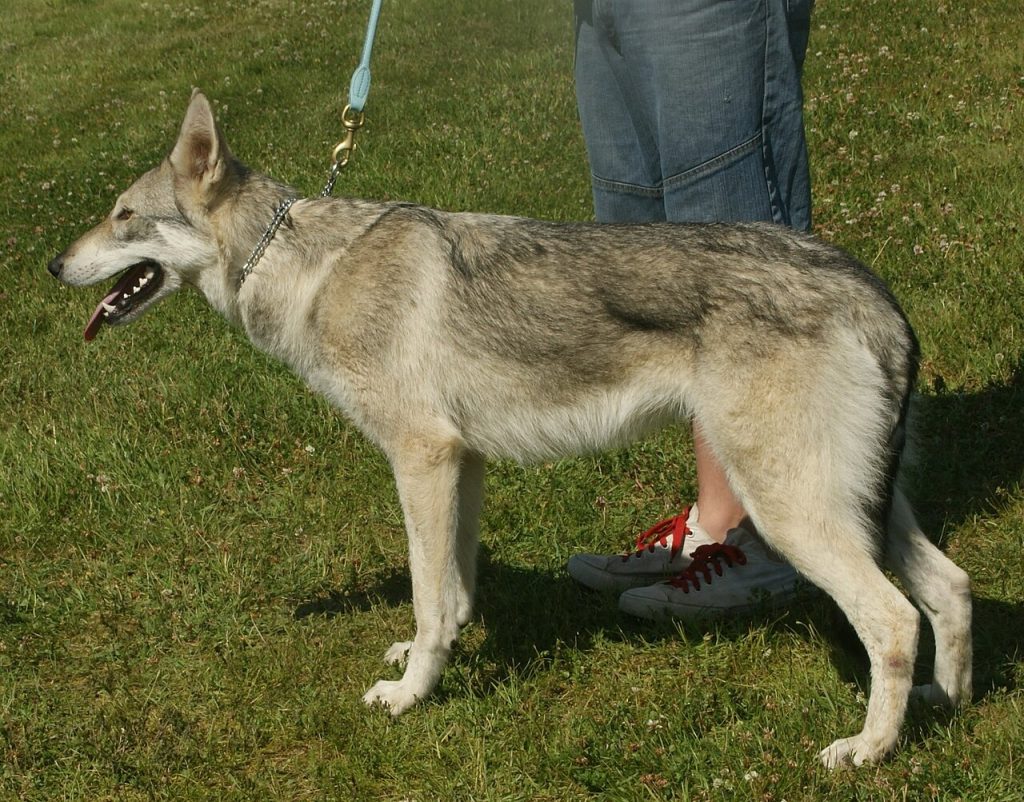
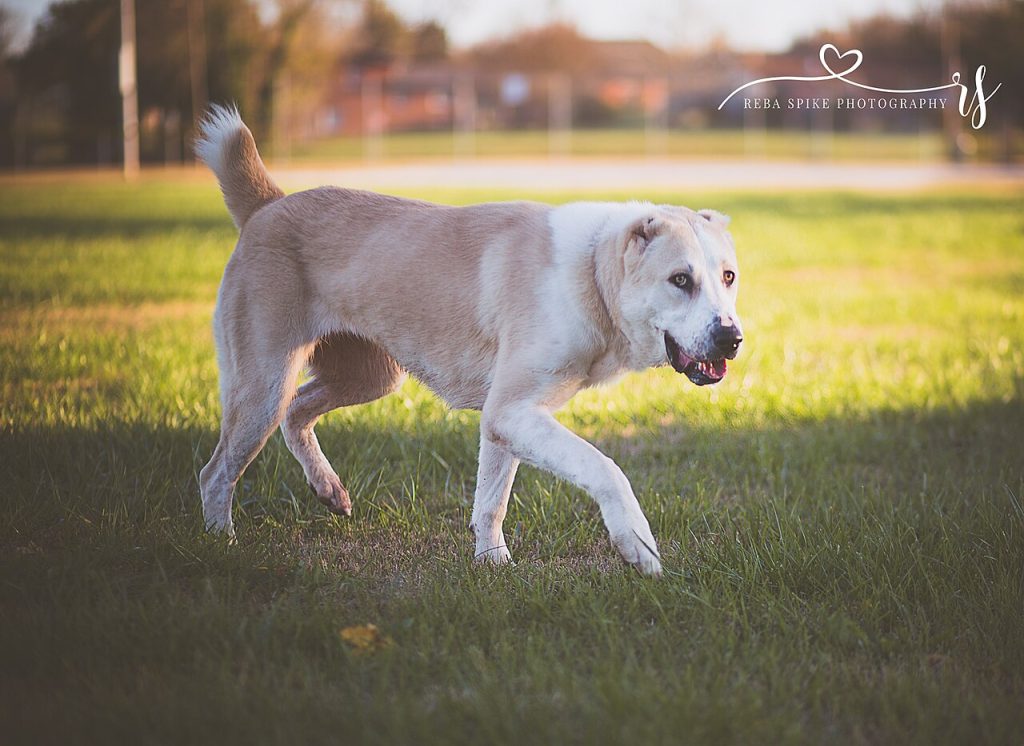
The Šarplaninac is a large, robust and well proportioned dog, with strong bones and compact appearance that transmits power without heaviness. The body is slightly longer than the height at the withers, which reinforces its collected and solid image.
According to the standard, males measure around 62cm to the cross. and females about 58 cm high; males weigh between 35 and 45 kg and females about 5 kg less, although some sources cite notably larger specimens.
The colour is always solid: lilac, iron gray, white or almost black. The most common are the grayish or lilac layers with darker tones on the head and back, and a paler undercoat. The colour does not have to be completely uniform, and many specimens have several shades of the same tone that merge with each other.
Origin and history
The exact origin of the Šarplaninac is lost to history. It takes its name from the Šar (Šar Planina) mountain range, on the border between North Macedonia and Serbia, where for centuries it has accompanied and protected the large herds of sheep in the region. In the transhumanity system of the Balkans, cattle were moved twice a year – to high mountain pastures in summer and to temperate plains in winter – always escorted by men and dogs like this one.
Already in Ottoman times, dogs of this type went down with the herds to Thessaly to spend the winter, where they were known as “Greek shepherd dogs”. The Fédération Cynologique Internationale recognized the breed in 1939 with the name of Ilirski Ovčar or “Illyrian shepherd dog”. In 1957, at the request of the Yugoslav Kennel Federation, the official name became For the purposes of this Decision, the following definitions shall apply:(“Yugoslav shepherd dog – Sharplanina”).
Under Josip Broz Tito’s government it was employed as military dog, a use that has endured in the Serbian army. The conflicts of the disintegration of Yugoslavia in the nineties greatly reduced the number of specimens; after those years, the FCI recognized North Macedonia and Serbia as countries of origin of the breed. Today the Šarplaninac has even reached ranches in North America, where it is regarded as one of the few dogs capable of deterring wolves and bears.
Curiosities
- The Šarplaninac is depicted on the coin of 1 dinar of North Macedonia, minted with its figure on the obverse since 1993.
- It is one of the very few dogs in the world with a reputation for scare away a wolf or a bear power, something that has made its presence a very effective method against cattle predators.
- In North America it has earned a place as a ranch guard dog: When a Šarplaninac takes charge of a herd, attacks from predators often collapse.
- The Macedonians simply call it the “Macedonian shepherd”, and for Serbs and Macedonians it is a national symbol.
- It features in the list of breeds banned in Denmark, a controversial relationship that has been criticized because most of the races included do not accumulate reported incidents.
If you’re attracted to the world of big, moldy keepers, you might be interested in other breeds with strong characters and impressive build. You can compare the Šarplaninac to the Cane Corso, to the powerful Rottweiler, to the majestic San Bernardo or to the giant Gran Danés to get a more complete idea of what it’s like to live with a large dog.
Frequently asked questions about Šarplaninac
Is the Šarplaninac a dangerous dog?
He’s not a dangerous dog by nature, but he’s a powerful cattle guard, very territorial and wary of strangers. In inexperienced or unsocialized hands it can become problematic, and is in fact on Denmark’s list of prohibited breeds. With a responsible owner, clear boundaries, and socialization as a puppy, it is a balanced and reliable dog. It’s not a race for beginners.
How long does a Šarplaninac live?
The life expectancy of the Šarplaninac is around 11 to 13 years, a remarkable figure for a dog of its size.
Is the Šarplaninac adapted to living in a flat?
The Šarplaninac is a large dog, with a double coat of hair and a strong need for space and a territory to guard. It lives much better in a house with fenced land in the countryside or outskirts. In a flat it would suffer, and its warning barks can generate conflicts with neighbors.
How much does a Šarplaninac weigh and measure?
According to the standard, males are around 62 cm at the withers and females about 58 cm. The weight of males ranges from 35 to 45 kg, and females weigh about 5 kg less.
Is the Šarplaninac good with children?
Within its family, it is usually calm, patient and protective, including the children of the house that it considers part of its flock.
Does the Šarplaninac need a lot of exercise?
It has a medium, non-explosive energy: it was bred to patrol and watch for hours, not to run non-stop. It needs long daily walks and space to move around. What it really needs is a function and a territory; boredom and confinement make it feel worse than a lack of intense sport.
Is it difficult to train the Šarplaninac?
It is an independent dog with its own criteria, not an obedient enforcer of orders. It does not respond well to harshness. It requires an owner with experience, patience, consistency and positive reinforcement, in addition to early and constant socialization. It is not a recommended breed for those looking for their first dog.
Can the Šarplaninac live with other dogs or pets?
If he grows up with them and socializes well from a puppy, he can live with other animals, especially the cattle that he instinctively protects.