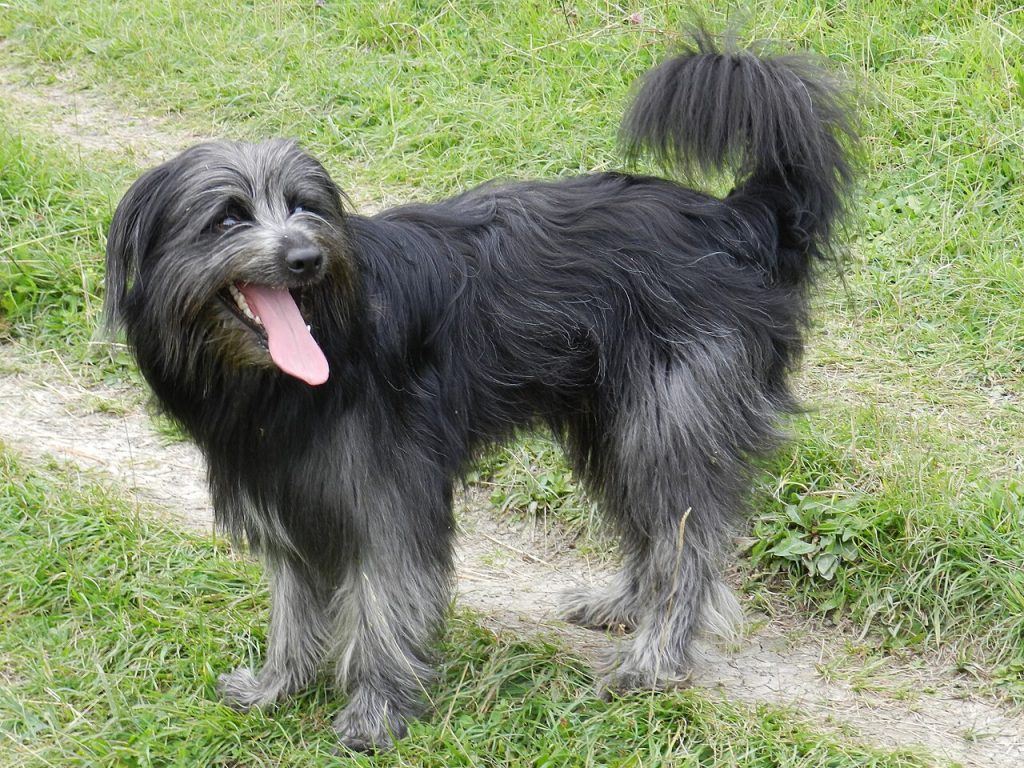
The Shepherd of the Pyrenees is the quintessential shepherd of the mountains that separate France and Spain: A little dog, nervous and tireless, able to herd herds for hours over impossible hillsides. Considered the smallest of the French shepherd breeds, it hides under its rustic mantle a swift intelligence and an energy that its breeders describe as a “fireball”. If you’re looking for a quiet couch-mate, it’s not for you; if you want an active, alert, devoted dog, keep reading.
Is the Shepherd of the Pyrenees for you?

Before you fall in love with its hairless face, you should be honest: the Pyrenean Shepherd is a real working dog, not a decorative stuffed animal. It fits wonderfully with active people, sportsmen and with time; it becomes a problem in sedentary or absent hands.
In favour .
- Highly intelligent and quick to react: he learns at full speed.
- Incredibly tough and athletic; ideal for canine sport.
- Very close and loyal to his family.
- Handled size (8-15 kg) and harsh climate resistant ruggedness.
- Good warning dog, always on the lookout.
To be taken into account
- Almost inexhaustible energy – he needs a lot of daily exercise.
- Stubborn and independent; not easy to train.
- Distrustful of strangers; requires early socialization.
- It tends to bark and may try to scare children or pets.
- The long-haired one loosens his hair and asks for frequent brushing.
Character and temperament
If there is one word that defines the Shepherd of the Pyrenees, it is intensity. It is an extremely active dog, so full of nervous energy that in France it is affectionately nicknamed “fireball”. Behind that vitality is a brilliant mind: It’s cunning, it’s sharp, it’s quick to react, and it has a surprising capacity for learning. It also has its nagging, mischievous point, typical of very smart dogs that need to keep their heads busy.
He is affectionate and deeply attached to his family; he will follow you everywhere and want to be a part of everything you do. With strangers, however, he is reserved and suspicious, a trait he inherited from his work as a sheepdog. Such caution makes him an excellent warning dog, although socialization from a puppy should be worked on so that distrust does not lead to shyness or excessive nervousness. The bald variety is usually somewhat more open-minded and less wary than the long-haired variety.
Coexistence: children, other pets, flat and loneliness

With children: is a loving, family dog who usually loves children in the house. Its shepherding instinct, of course, can make it try to “lead” the little ones by touching or circling them. With supervision and clear rules, coexistence is great.
With other pets: is a well-socialized dog that lives comfortably with other dogs. With small animals, it should be noted that its herding instinct can be activated.
Floor and solitude: can live on the floor on condition of covering its enormous need for exercise and mental stimulation outside the house. What it does not tolerate well is prolonged loneliness or boredom: a neglected Pyrenean Shepherd barks, becomes frustrated and can become destructive. It is a dog for present and active people.
Education and training
Here is the great challenge of the breed. The Pyrenean Shepherd is as intelligent as it is independent and stubborn, a combination that can despair the novice owner. It is not a dog that obeys for obedience’s sake: it needs to understand what it gains and trust who guides it. So the key is to start ever since I was a puppy. and arm yourself with enormous patience.
It works wonderfully with positive reinforcement, short, varied, fun sessions, and goals that put that fast-paced mind to work. Boring him with mechanical repetition is a direct route to disconnecting him. Well-focused, he’s a star in obedience, agility, flyball, sports shepherding and virtually any discipline that combines body and head. Early socialization with people, noises, and environments is essential to soften their natural suspicion.
Exercise and activity
This is the point where many would-be owners underestimate the breed. The Pyrenean Shepherd was bred to spend the whole day moving around the mountain: he walks without removing his hair more than 30 kilometers a day over steep and high terrain.
Translated to everyday, that means a lot more than a couple of walks.: You need to run, explore, play, and most of all, burn off mental energy. Long walks, running, hiking, dog sports, and smelling or intelligence games should be part of your routine. A well-trained Pyrenean Shepherd is a balanced and happy dog; one with excess energy becomes an inexhaustible source of barking and mischief.
Care: fur and hygiene

The mantle is designed to protect it from rain, wind, and the extreme cold of the mountains, and in the long-haired one it can even form locks or cords if left unattended.
- For the purposes of subheadings 040210 and 040310: requires frequent brushing, almost daily, to avoid knots and tangles.
- For the purposes of this Regulation, the following definitions shall apply: is much less demanding; regular brushing is sufficient.
In both cases it is not necessary to cut the hair: the mantle is functional. The rest of the hygiene is the usual: check and clean the ears (remember that it has fallen), cut the nails when necessary, take care of dental hygiene and bathe only when necessary so as not to damage the natural protection of the hair.
Foodstuffs
As a small dog with a very high energy expenditure, the Pyrenean Shepherd needs a high-quality diet well adjusted to its actual activity level.A sporting dog that works or exercises a lot will burn significantly more than a calmer dog, and the diet should reflect this.
The important thing is a complete and balanced feed or diet, with good protein intake, divided into two daily intakes in the adult to maintain its stable energy. Monitor its weight: although its metabolism is active, overweight is harmful to any dog. Fresh water always available, especially after exercise, and consult with your veterinarian the amounts according to age, weight and activity.
Health and life expectancy
The Pyrenean Shepherd is a rugged and remarkably healthy breed, shaped by centuries of natural selection in a harsh environment.
Like any small and agile working dog, with good care, proper feeding, exercise and periodic veterinary checks it usually enjoys a long life, in the typical range of breeds of its size (around 12-15 years).
Physical appearance
It is the smallest of the French shepherd breeds, a small to medium-sized dog with a wrinkly, nervous, and distinctly athletic silhouette reminiscent of a miniature Berger Picard.
- Altura: long hair, males 40-50 cm and females 38-48 cm; bald face, males 40-54 cm and females 40-52 cm at the withers.
- Peso: between 8 and 15 kg.
- Manto: medium (called “goat hair”) long. The long-haired one has abundant hair also on the face; the bald-faced one has it much shorter on the snout.
- Colores: lionish, grey, blue, jagged or black, often with overlapping dark tones and some white on the chest and extremities.
- Traditionally, their ears and tail were cut off, a custom now disused and banned in many countries.
Origin and history
The Shepherd of the Pyrenees is born in the mountains of the Pyrenees, on the French side, where it is known throughout the entire mountain range and even in the Basque Country. For centuries it formed the classic tandem of Pyrenean herding: The giant Pyrenees mountain was in charge of protecting the herd from wolves, bears and thieves, while the small, fast Pyrenean Shepherd did the job of driving and guiding the sheep, an essential job during the summer months in the high pastures.
It belongs to the large European family of rough-haired shepherd dogs, related to the French Briard and Berger Picard, the Catalan Gos d’Atura, the British Bearded Collie and Border Collie, the Italian Bergamasco or the Dutch Schapendoes, among others. Some scholars point out that the ancestors of all these dogs may have arrived in Europe more than 4,000 years ago with Indo-European migrations, later diversifying into the regional breeds we know today.
The Société Centrale Canine officially recognized the breed in 1926 and today distinguishes two: the long-haired (Chien de Berger des Pyrénées à Poil Long) and the bald-faced (à Face Rase).
Curiosities
- It’s the smallest French Shepherd breed, and still one of the toughest.
- Its breeders describe it as a veritable “fireball” for its overflowing energy.
- He worked side by side with the huge Pyrenees Mountain: one protected, the other drove.
- It easily travels more than 20 miles a day over mountain terrain.
- There are three types of mantle: long hair, “goat hair” and bald face.
- His French nickname, Petit Berger, literally means “little shepherd”.
If you are attracted to this Pyrenean dynamo but want to compare yourself to other equally intelligent and active herding dogs, check out the Border Collie, the versatile Pastor Australiano, the sleek Shepherd of Shetland or the classic Collie.
Frequently asked questions about the Pyrenean Shepherd
Is the Pyrenean Shepherd a good dog for beginners?
It’s not the easiest choice. It’s a very lively breed, very intelligent and with almost inexhaustible energy, designed to work all day in the mountains. If it’s your first dog and you lead a quiet or sedentary life, it probably overwhelms you. With previous experience, daily time for exercise and a desire to stimulate it mentally, it’s an extraordinary companion.
How much exercise do you need a day?
A healthy adult Pyrenean Shepherd appreciates a minimum of 1.5 to 2 hours of daily activity, and not just walking: he needs to run, play and use his head.
Do you get along with the kids?
Yes, it is usually affectionate and very attached to its family, including children. Now, it is a herding dog with herding instinct and a lot of energy, so it can try to guide small children by touching them. With supervision, early socialization and children who respect the dog, coexistence is great.
What’s the difference between the one with the long hair and the one with the bald face?
They are two historical types of the same Pyrenean breed (the Société Centrale Canine came to recognize them as separate breeds).The long-haired (à poil long) has abundant hair also on the face; the shaved-face (à face rase) carries it much shorter on the muzzle and face, and tends to be somewhat more compact.
Do you lose a lot of hair and how much maintenance do you have?
The one with long hair does loosen hair and needs frequent brushing, almost daily, to avoid knots and cords. The one with a shaved face gives much less work. In neither case do you need to cut them: their mantle is designed to protect them from the cold and the mountain rain.
Can he live in a flat?
It can, but with conditions. It’s not a dog that settles for floor space: what it really needs is daily physical and mental expenditure. If you give it that exercise and stimulation outside the house, it adapts to living on the floor; if you leave it locked up and bored, it will bark, break down and become anxious.
Is he a healthy dog? How long does he live?
As a small and agile working dog, its life expectancy is usually around 12-15 years with good care, proper feeding and exercise.
Does it bark a lot and serve as a warning dog?
It is alert, alert and suspicious of strangers, so it warns of what is happening around it and tends to bark.