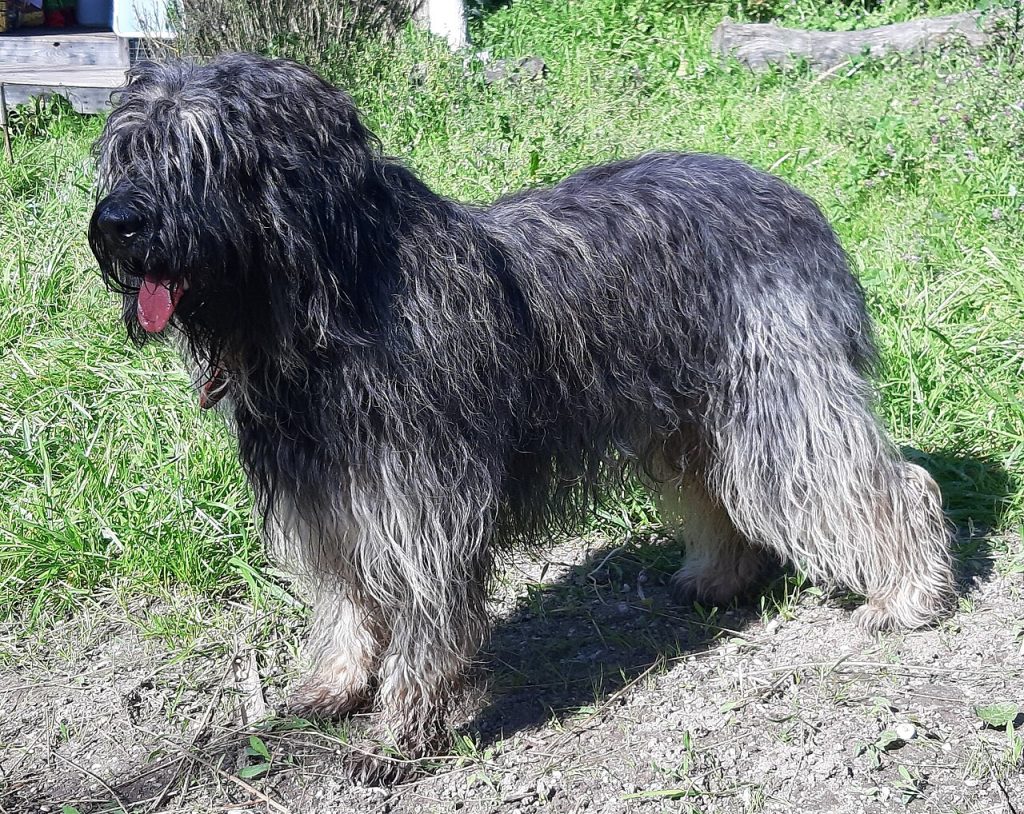
The Portuguese Shepherd Dog– known in its homeland as Cão da Serra de Aires and the surrounding countryside– is one of Portugal’s most unique native breeds: A medium-sized shepherd with long, untidy hair, mischievous gaze and inexhaustible energy. Raised for generations to lead herds in the Alentejo mountains, he now captivates families with his intelligence, cheerful disposition, and furry face that has earned him the nickname “monkey dog”. If you are looking for an active, intelligent, and personable mate, read on: This breed has a lot to offer, but it also demands its own.
Is the Portuguese Shepherd Dog for you?
Before you fall in love with that hairy face, be honest: the Portuguese Shepherd Dog is a working dog with a working soul. It fits wonderfully with active people and families, but it can be exhausting for those looking for a quiet, low-maintenance pet. Here’s a quick balance to help you decide.
In favour .
- Outstanding intelligence and great ease of learning.
- Very affectionate and loyal, he bonds intensely with his family.
- Medium size and manageable, suitable for home with garden.
- Rustic and healthy, no documented hereditary diseases.
- Versatile: it is used for herding, agility, obedience and dog sport.
- Cheerful, funny and always ready for action.
To be taken into account
- He needs plenty of exercise and mental stimulation every day.
- He is easily bored and can become destructive or barking.
- Long hair requires frequent brushing so as not to become soiled.
- Their shepherding instinct may lead them to “drive” children or pets.
- It is a rare breed: breeders are hard to find outside Portugal.
- He doesn’t like prolonged loneliness.
Character and temperament

If there’s one word that defines this breed, it’s vividness. The Fédération Cynologique Internationale’s own standard describes the ideal specimen as “exceptionally intelligent and very lively”, and those who live with one readily confirm this. It is an alert, curious dog with a surprising capacity for learning, the result of centuries of selection to make decisions on its own as it guided herds through difficult terrain.
He is deeply affectionate and devoted to his family. He loves to be involved in everything that goes on at home and doesn’t like to be left out. That devotion has its counterpart: It’s a companionable dog that suffers if left alone. With strangers he is usually reserved but not aggressive, and his natural instinct makes him a good alarm dog, always on the lookout for anything new.
His temperament has a mischievous and clownish point that makes him tremendously entertaining. He’s not a dog who settles for dozing off; he wants to do things, solve challenges and be on the move. Well channeled, that spark is a delight; neglected, it becomes frustration.
Coexistence: children, other pets, flat and loneliness
The Portuguese Shepherd Dog is, above all, a sociable dog who enjoys family life. With the children usually behaves in a patient and protective manner, and its energy makes it an ideal playmate for younger children, always under proper supervision. Their shepherding instinct may emerge in the form of attempts to “lead” children by giving them small pushes or by surrounding them; it is not aggression, but work in their DNA, and is easily corrected with early education.
With other pets gets along well, especially if he has grown up with them. Coming from an environment where he lived with cattle, horses and even pigs, he tends to accept other animals naturally.
As for the floor, its medium size is not an obstacle, but the interior space is the least: What he really needs is to get out, move and spend his head. A well-trained specimen can live perfectly in a city. As for the loneliness, it ‘s its weak point: This breed isn’t built to spend long hours alone. Isolation leads to anxiety, barking, and destructive behavior. If you work long hours away from home, consider how to meet their needs for companionship before making a decision.
Education and training

Few breeds are as grateful for training as this one. Its intelligence and willingness to please make it assimilate orders quickly, provided the method is the right one. The positive reinforcement– prizes, play, praise – is the way: it responds fatally to abruptness and wonderfully to enthusiasm.
The key is in the variety. It is a dog that gets bored with mechanical repetition, so short, dynamic sessions with new challenges work much better than monotonous routines. It is advisable to start early with socialization and basic obedience, because a Serra de Aires puppy is a sponge that learns both good and bad at full speed.
As a good sheepdog, it has its own initiative and likes to think. It takes advantage of that quality by setting it tasks: looking for objects, solving intelligence games, learning new tricks. A Portuguese Shepherd Dog with a busy mind is a balanced and happy dog.
Exercise and activity
There are no shortcuts here: this is a high energy breed that needs to move a lot and often. A minimum of one to two hours daily of physical activity, combined with mental stimulation, is what allows it to stay balanced. Quiet walks around the neighborhood are short-lived; it appreciates intense exercise, running, playing with other dogs and field trips.
Where it really shines is on the dog sports. His agility, natural obedience, and eagerness to work make him outstanding in disciplines such as agility, flyball, crawling, competition obedience, and, of course, shepherding trials. These activities not only tire him out physically, but they satisfy his need for a “mission”, which is just what he carries inside. You give him a job, he’ll pay you back big time.
Care: fur and hygiene
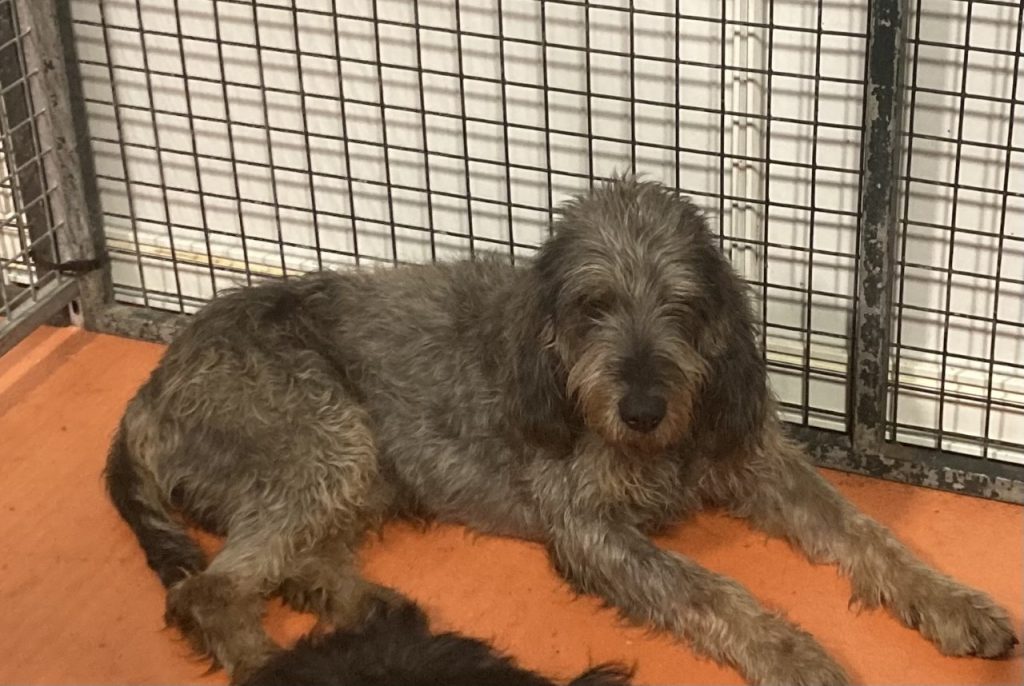
The coat of the Portuguese Shepherd Dog is its most striking feature and also the one that requires the most attention. It is a long hair of medium thickness and rough ‘goat’ texture, with a physiological peculiarity: has no woolly undercoat. This means that the muzzle is not as apparent as in double-coated breeds, but also that the dog is less protected against extreme climates.
It is recommended to use a brushed several times a week, paying special attention to the areas of rubbing (armpits, ears, legs) and the abundant hairline of the face. Baths should only be given when really needed, with specific products, so as not to dry out the skin.
A characteristic feature of the breed: the facial hair covers its eyes, so it is advisable to watch that it does not disturb or accumulate dirt.
Foodstuffs
As a medium-sized active dog, the Portuguese Shepherd Dog needs a a balanced and quality diet that covers its high energy expenditure.
The amount should be adjusted to your age, weight, activity level and physical condition. Being a dog that burns a lot of energy, it tolerates generous rations well when working or exercising a lot, but it is advisable to avoid overweight by dividing the food into two servings a day and controlling the rewards, especially if they are used abundantly in training. Always have fresh water at your disposal, especially after intense exercise sessions.
Health and life expectancy
One of the great advantages of this breed is its strength. As it is a rustic dog, forged by work and little genetically manipulated, it is not known to have well-documented recurrent hereditary diseases.
Their main risks are more environmental than genetic. In its area of origin it is prone to ehrlichiosis, a disease transmitted by ticks, so good antiparasitic prevention is essential. In addition, tumors of the abdomen may appear in older individuals, which is why specialists advise periodic ultrasounds from the age of eight, to detect any problems in time.
With proper care – good nutrition, exercise, deworming, and veterinary checkups – it is a long-lived, active dog into old age.
Physical appearance

The Portuguese Shepherd Dog is a medium size and elongated dog, longer than tall, with an agile and functional structure designed for work.
Its hallmark is the long hair, without undercoat, roughly textured “goat”, which gives it that unkempt and rustic look so recognizable. The face is covered with abundant hair – eyebrows, beard and mustache – which gives it a naughty and sympathetic expression. The drooping ears is inserted high and glued to the head, and the the tail is long.: a naturally short tail is grounds for disqualification in the standard, and should never be amputated.
The accepted coat colours are varied: yellow, brown, grey, lions, wolf grey (flower or the wolverine in Portuguese) and black, often with fire marks.
Origin and history
The Portuguese Shepherd Dog takes its Portuguese name, Cão da Serra de Aires and the surrounding countryside, from the Serra de Aires, a mountain near Monforte, in the Alentejo region.
As is often the case with working races of humble origin, their ancient history is poorly documented: There are hardly any records of guard and shepherd dogs before 1900. It is recognized as one of the oldest types of European shepherd dogs, closely related to the Pyrenean Shepherd and the Catalan Shepherd. The most accepted theory is that it descends from Briards(Brie Shepherd) imported to Portugal in the early 20th century by Count de Castro Guimarães, from Cascais, crossed with the Shepherd of the Pyrenees.
The first breed standard was drafted by Antonio Cabral and Felipe Morgado Romeiros, and was accepted by the Portuguese Canine Club. International recognition came in 1996, by the hand of the FCI, under the name of “Portuguese Sheepdog”. In the United States, the United Kennel Club recognized it within its herding group in 2006. Exported to other countries, it has become a prized companion dog in Europe and a coveted breed for those looking for an unusual pet.
Curiosities
- Its most affectionate nickname in Portugal is “like a monkey”(monkey dog or macaque dog), for its hairy face and vivacious demeanor, reminiscent of that of a small primate.
- It is one of the few long-haired shepherd breeds that have no undercoat at all, which gives it a very peculiar coat texture.
- The landscape of the Sierra de Aires is so arid and harsh that it has been noted that the breed itself struggled to adapt to that extreme climate.
- It shares a traditional role with other Portuguese herding and herding breeds in different regions of the country, such as the Sierra de la Estrella Dog or the Castro de Laboreiro Dog.
- A naturally short tail (bobtail) disqualifies the specimen in the standard: the long tail is an indispensable distinguishing feature of the breed.
If you are attracted to the shepherd temperament and that blend of intelligence and energy, you may be interested in other working breeds with a similar profile. You can take a look at the Border Collie, the smartest shepherd in the world; the versatile Pastor Australiano; the classic and elegant Collie; or the energetic Shetland Shepherd, all of them herding dogs with character, a willingness to work and a great connection to their families.
Frequently Asked Questions About the Portuguese Shepherd Dog
Is the Portuguese Shepherd a good family dog?
Yes. Although it was born as a working dog for herding, today it has become an excellent family companion. It is affectionate, very attached to its own and enjoys company. Of course, it needs to be integrated into the home life: it is not a breed to leave alone in a yard, because the bond with people is part of its character.
How much exercise do you need a day?
It is a lively, athletic dog with a remarkable physical background inherited from generations of herding herds in the mountains. It has a minimum of one to two hours of daily activity divided between long walks, play and, above all, mental stimulation. A bored specimen will look for ways to entertain itself on its own, and they will not always be the ones you like.
Do you lose a lot of hair?
Its hair is long, rough “goat” texture, and, interestingly, it lacks woolly undercoat. This makes the muzzle not as showy as in dense double-coated breeds, but the coat becomes easily flabby if not brushed.
Do you get along with children and other pets?
In general, yes. With children it is usually patient and protective, as long as the coexistence is supervised and the dog is well socialized. With other dogs and animals it gets along well, especially if it grows up with them; its instinct for herding can lead it to “drive” children or other pets, a behavior that is corrected with education.
Is it hard to educate?
No, quite the contrary. The breed standard defines it as “exceptionally intelligent and very lively”, and it learns quickly. The key lies in positive reinforcement, variety and consistency: it is a dog that is bored with mechanical repetition and responds wonderfully when training is presented as a meaningful game.
Can he live in a flat?
It can, but with conditions. It is not a large dog, so space is not the main problem; the determining factor is exercise and daily stimulation. A Portuguese Shepherd Dog that goes out little and is bored on a floor will develop barking, anxiety or destructive behaviors. With enough activity, it adapts well to urban life.
Why do they call it a monkey dog?
This affectionate nickname was given to him in Portugal because of the abundant hair covering his face – eyebrows, beard, and mustache – and because of his mischievous, alert expression, which to many resembles that of a small primate.
Is it a healthy breed?
As a rustic breed with little genetic manipulation, it is not known to have any well-documented recurrent hereditary diseases. Its main risks are environmental: ehrlichiosis transmitted by ticks, frequent in its area of origin, and the appearance of abdominal tumors in older specimens, so periodic ultrasounds are advised from the age of eight.