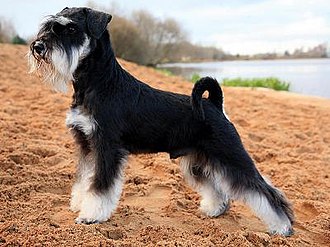
The Schnauzer Miniatura is the smallest of the three schnauzers and one of the most beloved companion dogs in the world. Under his unmistakable beard and crowded eyebrows he hides a German mouse hunter: alert, intelligent, brave and very close to his family. It sheds very little hair, fits on the floor and watches the house as if it were twice its size. Here’s the complete guide to deciding if he’s a good fit for you and getting along with him.
Is that the Miniature Schnauzer for you?
The Miniature Schnauzer is a small dog with a big head: It fits in any home, but it requires companionship, mental stimulation and a minimum of daily activity. It’s ideal for anyone who wants an alert, fun, watchdog dog that barely lets go of hair. Not so much for those looking for an independent, quiet dog or one that can be left alone for many hours. Before you go any further, take a cold look at their strengths and their tolls.
In favour .
- It sheds very little hair; the American Kennel Club considers it hypoallergenic.
- Comfortable size: suits floor, home and travel.
- Very intelligent and easy to educate (ranked 12th in Stanley Coren’s ranking).
- He’s an excellent watchdog. He warns you of anything that happens.
- Loving, loyal and very close to his family.
- Robust and long-lived for his size.
To be taken into account
- He tends to bark: he must be taught early to keep quiet.
- He needs a hairdresser or stripping every 6-8 weeks.
- Prolonged loneliness is not good for him; he may get bored and protest.
- Hunting instinct: chasing cats, rodents and birds.
- Headstrong and stubborn if there is no consistency in education.
- Predisposition to several hereditary health problems.
Character and temperament
If we had to sum up the Miniature Schnauzer in three words it would be alert, alert and loyal. It’s a lively dog, with a huge personality inside a compact body. The official standard describes him as “alert and cheerful, but obedient to order… Friendly, intelligent, and eager to please; never too aggressive or shy”. That mixture of sparkle and balance is just what has made him the most popular schnauzer.
It is deeply attached to its own: it wants to be where its people are, participate in the routine and get into every conversation. With strangers it is reserved and vigilant until its owners give the go-ahead to the guest; from there it is usually the most sympathetic. It has a marked territorial instinct and warns of any novelty, although it is much more of barking than biting.
It is worth remembering where it comes from: although in North America it is included in the terrier group because of its mouse past, it does not share blood with British terriers and has a different character, more calm, obedient and friendly with other dogs.
Coexistence: children, other pets, flat and loneliness
The Miniature Schnauzer is a very adaptable dog that fits into families of all kinds, as long as you meet their basic needs for companionship and activity.
- With children: is a great companion, playful and resilient. Like any dog, the youngest should be taught to respect their rest times and supervise play.
- With other dogs: usually gets along well, especially if socialized as a puppy.
- With cats and small pets: here looks at the rat-catcher, he can live with a cat if they grow up together, but rodents, birds or rabbits awaken his prey instinct.
- On the floor: adapts very well to its size. The key is not the square footage, but the walks and the barking control so as not to disturb the neighbors.
- Soledad: is his biggest Achilles heel. It’s bad to be alone for too many hours; boredom and lack of companionship can translate into barking, tearing or anxiety. Get used to it gradually from puppyhood.
Education and training
We’re dealing with one of the most intelligent dogs in existence: In Stanley Coren’s well-known classification of canine intelligence, the schnauzer ranks 12th among more than 130 breeds, within the group of “excellent working dogs”. In practice, that means he learns a new command in just 5 to 15 repetitions and executes it reliably. It is also a dog eager to please, which makes the job much easier.
Positive reinforcement is the way: rewards, play, cheerful voice and short sessions. He is sensitive and proud, so hard methods block him or make him headstrong. That same intelligence has its counterpart: if you let him think for himself, he will decide, so he needs clear rules and, above all, consistency.
Two priorities from puppyhood: first, the socializing: introduce him to people, dogs, noises and diverse environments so that his protective instinct does not lead to excessive distrust; second, the control of barking: as the great watchdog he is, he warns of everything; teaches him early a command to “quiet” and to relax when the doorbell rings.
Exercise and activity
Don’t be fooled by its size: the Miniature Schnauzer is a medium-high energy dog that needs to expend body and, above all, head. With a couple of daily walks that add up to about an hour, plus some playing time, it is satisfied. It enjoys sniffing, chasing balls and exploring.
What really fills it up is the mental stimulation. It is a breed that excels in dog sports such as agility, obedience or olfactory games, and that appreciates interactive toys and learning challenges. A boring schnauzer is a noisy and mischievous schnauzer; a task-oriented schnauzer is a balanced dog. In view of the prey instinct in open areas: works well on the call before releasing it where there are small animals.
Care: fur and hygiene
The Miniature Schnauzer has two layers: a hard, rough, “wire” type outer coat, and a soft, woolly inner coat. It is barely mute, which is why it is considered a short-haired dog and even suitable for many allergic people, but that hair that does not fall out must be removed by hand.
The traditional technique is the stripping: pulling dead hair out by hand (or with a stripping knife) at times when it is ready to loosen. It’s what keeps the texture hard and the color vivid, and it’s mandatory if the dog goes to shows. The usual alternative in the house dog is the machine cut in the hairdresser, more comfortable, although over time it softens the hair and fades the color. In any case, touch a hairdresser or stripper every 6-8 weeks or so.
Special mention to the beard and eyebrows: they give personality but accumulate food, water and dirt, so it is advisable to clean and comb them often.
Foodstuffs
As a small and active dog, the Miniature Schnauzer needs a complete and balanced diet, adjusted to its age, weight and exercise level.
There’s a health reason for weight: the Miniature Schnauzer has a predisposition to hyperlipidemia(excess blood fat), a factor associated with episodes of pancreatitis. That is why high-fat foods and human waste are discouraged, and it is recommended that you maintain your ideal weight. If your dog has had problems with the pancreas, liver or urinary stones, consult your veterinarian about a specific diet. Water always clean and available.
Health and life expectancy
It is a robust and remarkably long-lived dog: different studies place its life expectancy at around 13 years (13.3 in a British study and 13.4 in a Japanese one), and with good care many specimens reach 14 or 15.
- Hyperlipidaemia and pancreatitis: high blood fat levels, linked to pancreatic episodes; key to weight control and diet.
- If you have von Willebrand disease: hereditary haemorrhagic disorder caused by a deficiency of a clotting factor.
- Urinary stones and kidney problems.
- Eye problems: cataracts and corneal defects.
- Mucocele from the gallbladder: the breed shows a clear predisposition.
- Congenital portosystemic shunt: more common than in half-breed dogs.
- This is schnauzer comedone syndrome. appearance of small comedones (pins) along the back, unique to this breed.
- Atopic dermatitis is an inflammation of the skin. and, less commonly, myotonia, diabetes or cysts.
The best prevention is to go to a responsible breeder who does genetic testing on the breeders, keeps veterinary checks and takes care of weight and feeding.
Physical appearance
The Miniature Schnauzer is a small, compact and muscular dog, with an almost square silhouette: the body length is practically equal to its height at the cross.
Its unmistakable hallmark is the rectangular head adorned with thick beard, moustache and crowded eyebrows, dark oval eyes and V-shaped ears folded forward.
Of the colors, four are recognizable: salt and pepper(the most popular, with black, gray, and silver banded hairs that lighten on eyebrows, beard, and legs), black solid, black and silver, and white. The FCI accepts the white variety within the standard, although clubs such as the American Kennel Club do not accept it in competition due to doubts about its origin. Historically they cut off their ears and tails, but today this practice is banned in most of Europe as it is considered a mutilation.
Origin and history
The Miniature Schnauzer was born in the south of Alemania in the late 19th century. It emerged from smaller specimens of the standard schnauzer, probably crossed with smaller breeds such as the the affenpinscher, miniature pinscher and poodle, with a very specific goal: Get a small dog that would be an effective rat hunter on the farms, plus alert companion for the family and the stable horses.
Schnauzer, standard, giant, and miniature share roots with the old hard-haired pinscher, known as hunting rats (Rattenfänger).[1] The breed’s name comes from Schnauze, “hockey” in German, in allusion to its characteristic bearded snout.[2] In 1917 the official name of the hard-haired variety was changed from “hard-haired pinscher” to “schnauzer”.
The Fédération Cynologique Internationale finally accepted the Miniature Schnauzer in 1955, framing it in the Group 2 (pinscher and schnauzer). It came to the United States in the 1920s and has been growing in popularity ever since: In a 2013 FCI census it was listed as the tenth most registered race in the world and, in 2022, as the seventeenth most popular in the United States. It is by far the most widespread schnauzer as a family dog.
Curiosities
- The beard and eyebrows are not just aesthetic: they are thought to have originally served as camouflage and protection from the bites of the rodents it hunted.
- It is one of the most “talking” dogs in its role as a watchdog: experts consulted by Stanley Coren placed it among the top five warning dogs with bark.
- Its German name is Zwergschnauzer, literally “dwarf schnauzer”.
- Despite being in the terrier group in America, it is not related to the British terrier: its character is more calm and sociable.
- It shares the family podium with its older “brothers”, the standard (medium) and giant (large) schnauzer.
- With so little hair, it is often recommended for homes with allergy sufferers, along with breeds like the poodle.
If you are attracted to the Miniature Schnauzer, you will be interested in getting to know its relatives and other breeds of similar character. Start with its “older brothers”, the Schnauzer Estándar and the imposing Schnauzer Gigante, with whom it shares type and temperament. Affenpinscher Pinscher Miniatura
Frequently Asked Questions about the Miniature Schnauzer
Does the Miniature Schnauzer shed a lot of hair?
No, it’s one of the least hairy breeds and the American Kennel Club considers it hypoallergenic, so it’s usually well tolerated in homes with allergies.
Is he a good dog for families with children?
Yes. It is playful, resilient and very attached to its family, which makes it a great companion for children. It is convenient to socialize it from puppyhood and teach the little ones to respect their moments of rest.
How long does a Miniature Schnauzer live?
It is very long-lived for its size – studies place its life expectancy at about 13 years, and with proper care, many specimens reach 14 or 15. Weight control and veterinary checkups help prevent its hereditary problems.
Does he bark a lot?
It tends to bark because it is an excellent alert dog and warns of anything new. It is not a problem if you work from a puppy a “silence” command and give it enough mental activity; a bored schnauzer barks much more.
Can you have it on one floor?
Yes, it adapts very well to living on the floor because of its compact size. The important thing is not the square meters, but to go for a walk several times a day, give it mental stimulation and control the barking so as not to disturb the neighbors.
How much exercise do you need?
With a few daily walks that add up to about an hour, plus play and mental stimulation, he is satisfied. He especially enjoys dog sports like agility and olfactory games.
What kind of skin care do you need?
Her double coat, with hard, wire-like outer hair, requires a hairdresser or stripper every 6-8 weeks, regular brushing to avoid knots and frequent cleaning of the beard and eyebrows, where food and dirt accumulate.
Is he a good guard dog?
Excellent as a warning dog. It has a strong territorial instinct, is reserved with strangers and warns of everything, although it is much more of a barking than a biting. In fact, it is among the best barking according to experts consulted by Stanley Coren.