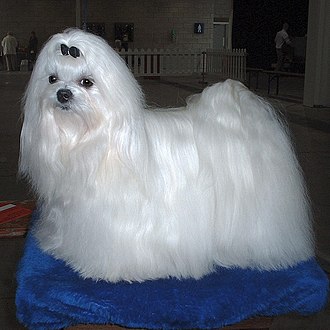
The Maltese Bichon is one of the oldest and most recognizable companion dogs in the world: A little dog with a thick white coat, long and silky, made to live close to his family. It weighs barely 10 to 15 pounds [3 to 4 kg], fits on any floor, and compensates for its diminutive size with a huge, alert, affectionate personality. If you’re looking for a lap mate, cheerful and very sociable, the Maltese Bichon is one of the great references among toy breeds. Here’s the complete guide to really getting to know him before you decide.
Is that the Maltese Beef for you?
Before you fall in love with that face, you should know what you’re committing to. The Maltese is a pure companion dog: it needs little space and little exercise, but it requires a lot of human presence and constant fur maintenance. It’s not an ornamental dog that takes care of itself. These two boxes summarize the good and what you should be clear about.
In favour .
- Mini size: ideal for flat and city.
- Very affectionate and close to his family.
- It barely loosens hair and is considered quite hypoallergenic.
- Sociable, cheerful and playful even as an adult.
- Good alarm dog for his size.
- It needs little exercise: it fits in with older or sedentary people.
To be taken into account
- Long hair requires almost daily brushing and frequent hairdressing.
- Tendency to tear spots around the eyes.
- Loneliness is bad for you – you may suffer from separation anxiety.
- It’s fragile: it’s not the best dog for very young children.
- You run the risk of “little dog syndrome” if you’re not polite.
- Prone to knee dislocation and dental problems.
Character and temperament
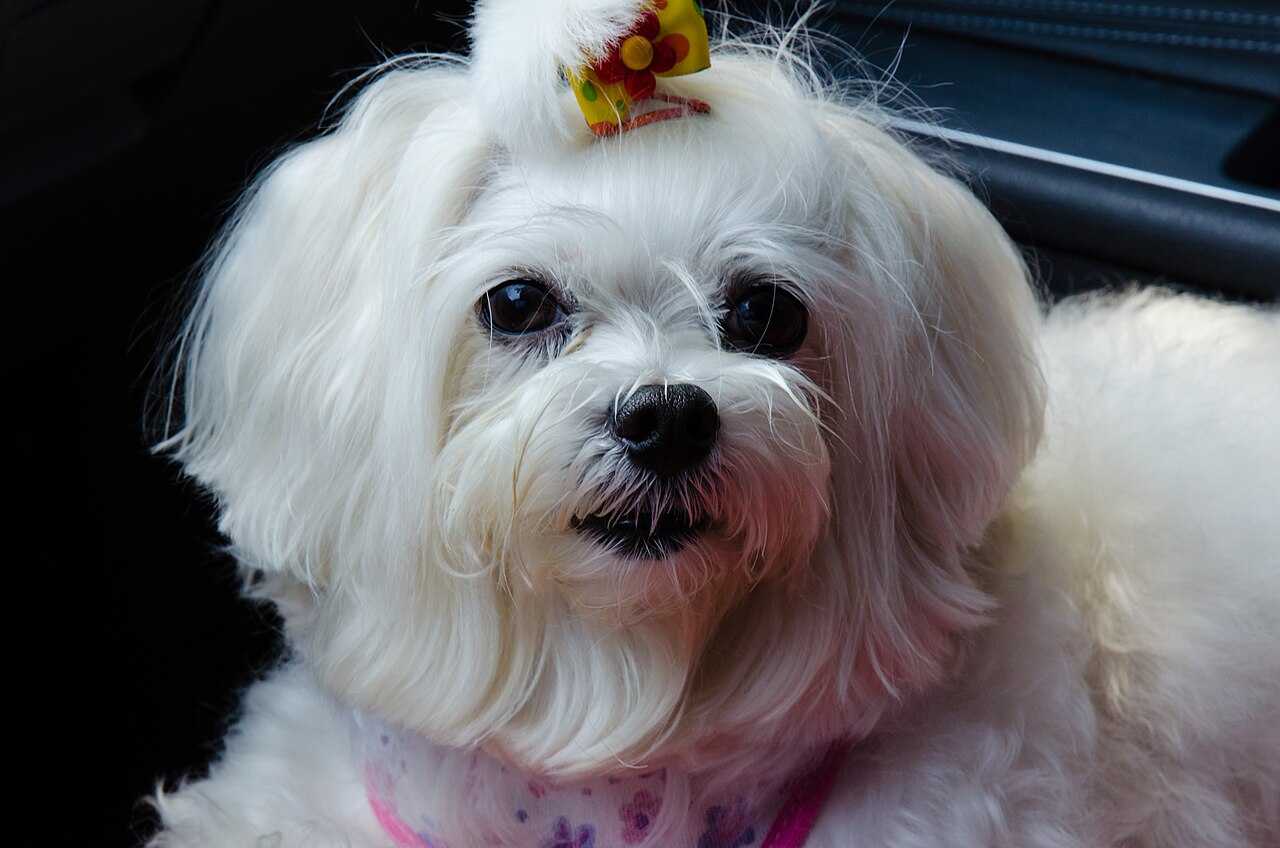
The Maltese Bichon is first and foremost a lap dog in the best sense of the word. It is lively, alert and deeply affectionate, with that eternal puppy-like expression that lasts a lifetime. It loves to be in company, participate in what the family does and, if it can, sleep on top of you. Behind its delicate appearance is a cheerful, curious and quite self-assured dog.
Despite its size, it has good surveillance instinct: It warns with barking of any noise or visitor, making it an effective alarm dog, just like the Yorkshire Terrier or Chihuahua. He’s smart and very receptive to the game: He learns tricks easily and enjoys mental challenges. In Stanley Coren’s ranking of canine intelligence, he ranks in the middle (59th), but that reflects his independence more than his actual ability to learn.
The flip side of so much attachment is that it needs boundaries from a puppy. An overprotected and never corrected Maltese can become bossy, barking and capricious, popularly known as “little dog syndrome”. It is not the fault of the breed, but of treating it like a stuffed animal instead of a dog.
Coexistence: children, other pets, flat and loneliness
- With children: gets along very well with older children and teenagers who know how to treat it with respect. Due to its fragility (thin bones, few kilos), it is not the best option with very young children who can catch it or fall on it unintentionally.
- With other pets: is well socialized and can live comfortably with other dogs and cats and should be introduced to other animals early so that it does not become nervous or reactive.
- On the floor: is one of the apartment dogs par excellence. Its size and domestic character make it perfectly adapted to living in small spaces, always with its daily walks.
- In the face of loneliness:‘s weakness is that it is built for companionship and is uncomfortable being alone for long hours; it can develop separation anxiety, barking, and destructive behaviors.
Education and training
The Maltese is a smart dog that responds very well to positive reinforcement: rewards, caresses and play. Forget about harsh methods; with such a sensitive dog they are counterproductive. Consistency and patience give better results than strength.
Two priorities in their education. One, the early socialization: expose them from puppyhood to people, noises, other dogs and different situations so that they grow up balanced and not afraid. Two, mark clear rules from the outset to avoid excessive barking and whims; just because it’s small doesn’t mean it can break the rules.
It is very skilled at tricks: it can learn to do pirouettes or to stand on its hind legs, because its playful nature pushes it to collaborate. The most delicate point is usually the learning of the bathroom: like many toy dogs, it may be more difficult to control the sphincters, so a strict hygiene routine and a lot of patience are desirable.
Exercise and activity
The Maltese is very comfortable here. Being so small, it does not need large doses of exercise: with one or two daily walks and playing time at home it covers its needs abundantly. This makes it a perfect companion for older people or for those who cannot take long walks.
Now, “little exercise” is not “no exercise at all”. Walking not only helps you move, but also helps you socialize, smell, and mentally stimulate yourself, which is key to your balance.
Care: fur and hygiene
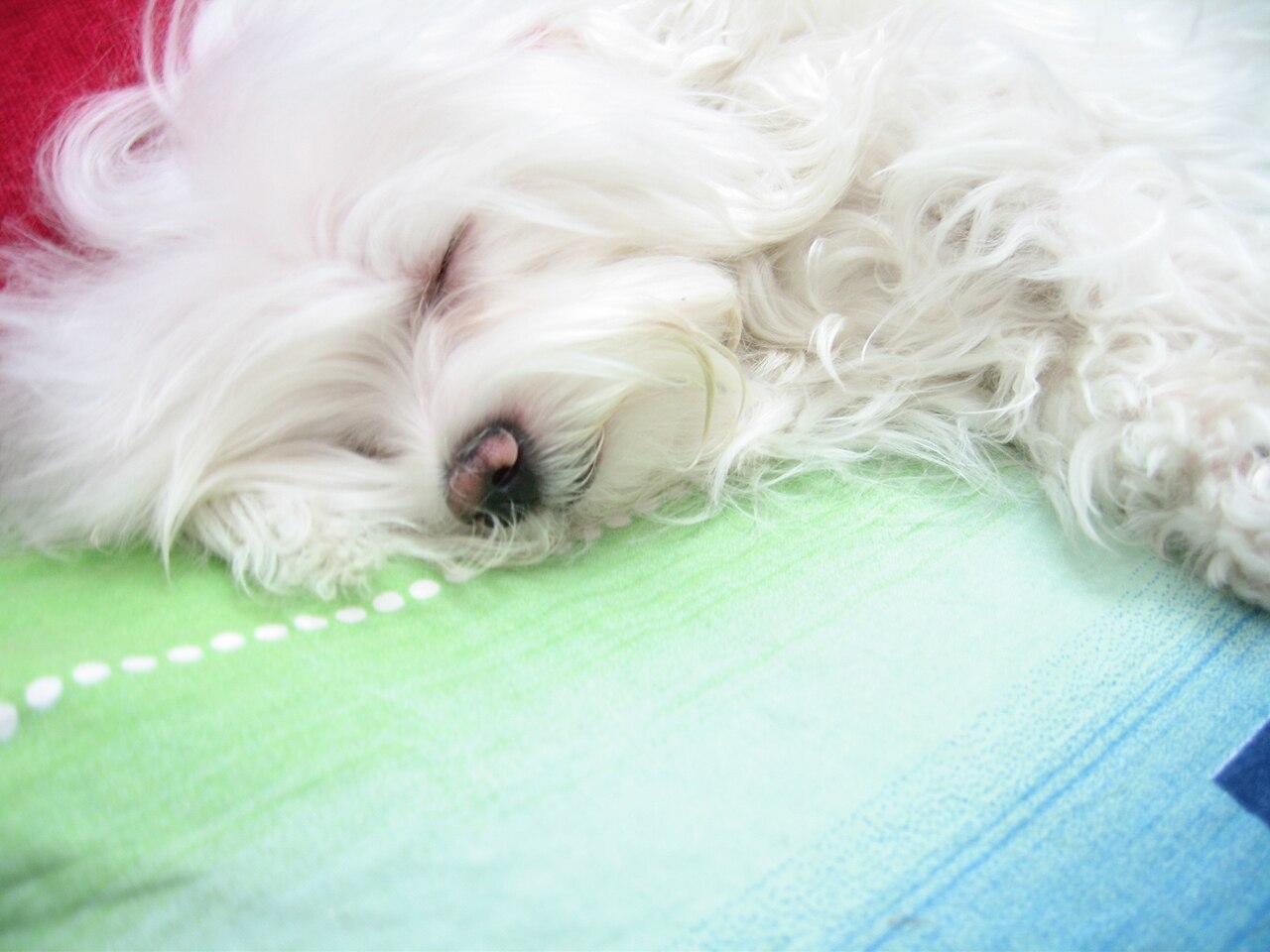
The coat is the great challenge of this breed and the reason why many people underestimate its maintenance. The Maltese has long, smooth and silky hair, without undercoat, which tends to tangle if neglected.
Many owners opt for the so-called “puppy cut”, which leaves the hair short, easy to maintain and gives it that eternal breeding air. Those who dress it in the long coat (especially at exhibitions) even resort to hair packaging techniques to protect it.
The bath should not be excessive: every once in a while is enough, always with specific products and drying it well to avoid knots. Special attention to the eyes and tears: the tear leaves brownish-red spots on the white hair of the face, so it is advisable to clean the area daily.
Foodstuffs
As a small, lightweight dog, the Maltese needs a good quality, well-balanced diet of premium feed adapted to mini breeds or a well-formulated natural home diet, always with the right proportion of proteins, fats and hydrates; keep in mind that their needs are not those of a person.
The key is watch the rations.: in a dog so often, a few grams of excess are noticed, and overweight aggravates problems like knee dislocation. Split the food into several servings, better than one large plate. Some specimens have food allergies that improve by adjusting the diet. And remember the foods prohibited for any dog: chocolate, grapes and raisins, onions and garlic, among others.
Health and life expectancy
The Maltese Bichon is, in general, a robust and long-lived dog for its size. Its life expectancy is around 12 or 13 years, and even more with good care: recent studies in the UK place the average around 13 years, above many dogs of similar size.
- Dislocation of the patella: kneecap displacement; common in mini dogs and worsens with overweight.
- Eye problems and tearing: hair type can irritate the eye and promote conjunctivitis and tear staining.
- Dental problems: buildup of tartar and loss of parts, common in toy breeds.
- Cardiovascular disease and persistent arterial disease (PDA): among the heart conditions to watch in the race.
- Hepatic problems: also described in some specimens.
The main causes of death recorded in health surveys include cancer, old age, heart disease and kidney failure.Regular veterinary checks, weight control and dental hygiene are the best prevention.
Physical appearance
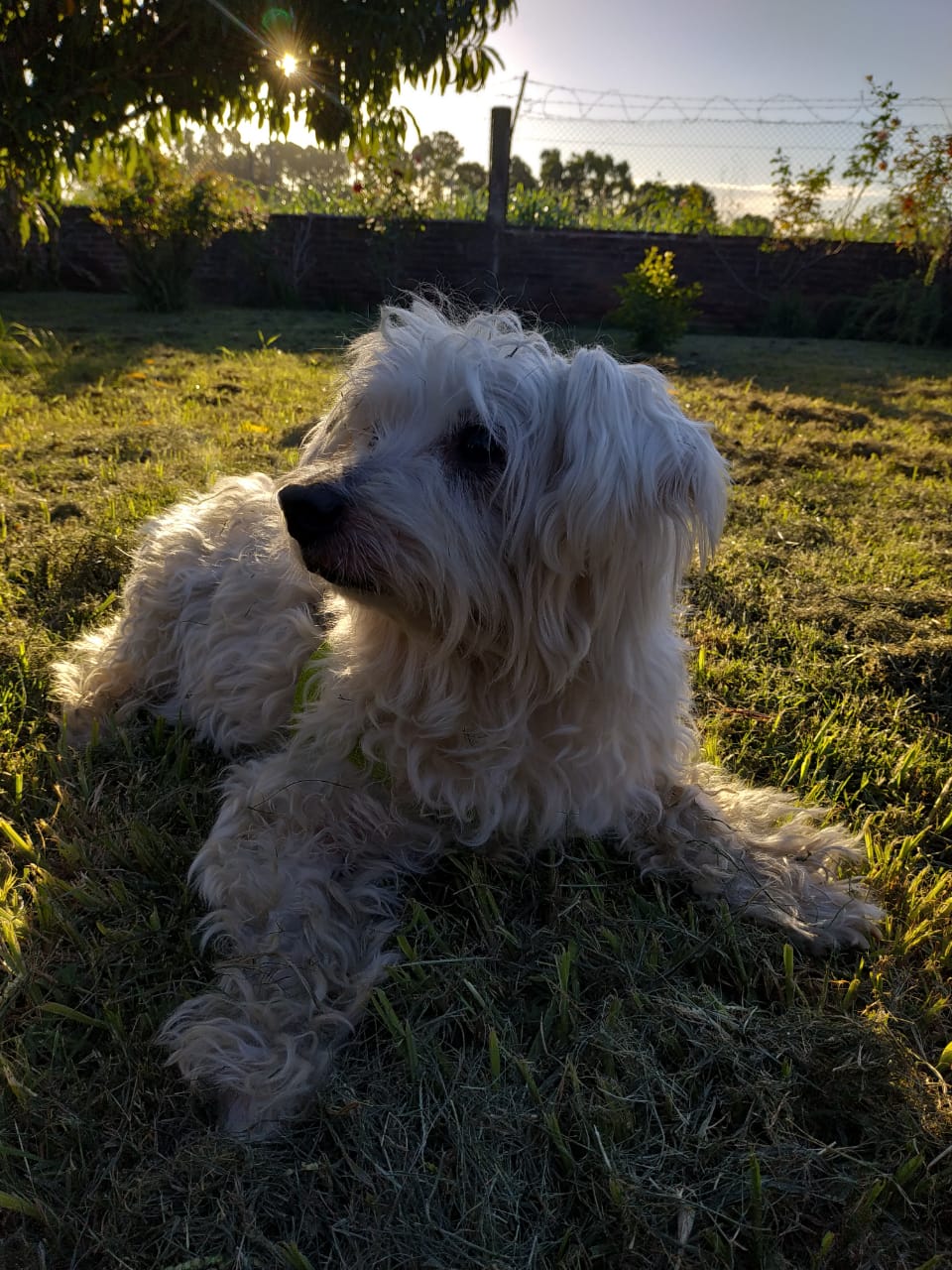
The Maltese is a small-sized dog with a compact body and an elegant appearance. The males measure between 21 and 25 cm at the withers and the females between 20 and 23 cm, with a usual weight of 3 to 4 kg. The American line, which includes the so-called “Maltese Toy”, is even smaller, with specimens between 1,2 and 2,8 kg.
Its distinctive feature is the pure white coat(a slight ivory hue is allowed), long, thin and silky, without curls or inner layer, which falls to both sides of the body from a line running along the back and almost reaches the ground. The head is medium-sized with a rounded skull, black nose and large, oval, dark brown eyes, with an attentive and sweet expression. The ears are long, sloping and covered with hair, attached to the head. The tail, elegant and crowded, curves over the back. Short, straight legs complete its silhouette.
Origin and history
Few races boast such an ancient history. The Maltese bison originated in the central Mediterranean and its name is traditionally associated with the island of Malta, although some classical authors link it rather to the Adriatic island of Mljet (Melita in Latin). The FCI itself recalls that the term could derive from the Semitic word malat(“refuge” or “port”), the root of many place names, so the exact origin is still the subject of debate.
What is clear is that very similar dogs have accompanied humans since antiquity. Phoenician traders are believed to have spread their ancestors across the Mediterranean more than 2,000 years ago, and they are depicted in Greek pottery from the fifth century B.C. next to the word melitae. Aristotle already mentioned about 370 B.C. Some Melitaei Catelli, tiny dogs highly prized as lap pets among the Greeks and Romans.
The modern Maltese, however, established itself as a breed in the Victorian era, crossing and selecting varieties of small dogs related to the bichon. It won prizes at 19th-century English exhibitions and gradually imposed the requirement of an exclusively white cloak. The American Kennel Club recognized it in 1888 and the FCI accepted it definitively under the patronage of Italy in the mid-20th century; the current standard dates from the late eighties. Today it is classified in Group 9 of the FCI (pet dogs), Section 1, Bichones.
Curiosities
- For Stanley Coren, the Maltese and its ancient variety were perhaps among the first dogs to be used as pure human companions.
- The cynical philosopher Diogenes of Sinope even referred to himself as a “Maltese dog”.
- In the 17th and 18th centuries, some breeders tried to miniaturize it so much that, according to Linnaeus, it grew to the size of a squirrel; the breed was on the verge of extinction.
- It barely changes hair and is considered to be largely hypoallergenic, along with its relatives the Poodle and the Bichón Frisé.
- In 1837, painter Edwin Landseer painted a small white Maltese as a gift from Queen Victoria to her mother.
If you’re drawn to the world of bison and small white-coated companion dogs, you’ll be interested to compare the Maltese to its closest relatives: the cheerful Bichón Frisé, the Cuban Bichón Habanero, the gentle Cotton of Tulear, and the quirky Löwchen.
Frequently Asked Questions about the Maltese Bichon
How long does a Maltese live?
It usually lives between 12 and 13 years, and sometimes longer with good care.Recent studies in the UK place its average at around 13 years, above many similarly sized dogs.
Does the Maltese Bichon shed a lot of hair?
No, because it has only one coat of hair and no undercoat, it barely shaves, which is why it’s considered quite hypoallergenic, although that doesn’t exempt it from almost daily brushing to avoid knots.
How much does a Maltese weigh and measure?
It weighs between 3 and 4 kg. Males measure 21 to 25 cm at the withers and females 20 to 23 cm. The American line or “toy” is even smaller, between 1.2 and 2.8 kg.
Is it a good breed to live on a flat?
Yes, it’s one of the apartment dogs par excellence, its mini size and its domestic nature fit in small spaces, provided it has its daily walks and company.
Why are his eyes stained brown?
They are the tear stains, common in the breed. The tear stain the white hair of the face brown-red. They are controlled by cleaning the area daily and checking for possible irritations or conjunctivitis.
Can you stay alone for many hours?
It’s not ideal, it’s built for companionship, and it can’t handle prolonged loneliness, and it can develop separation anxiety, barking, and destructive behavior.
Is he good with kids?
It gets along very well with older and respectful children, but with very young children you have to be careful: it is a fragile dog that can be injured by sudden handling or falls.
How much exercise do you need?
With one or two daily walks and playtime at home, he has enough, making him ideal for older or less active people.