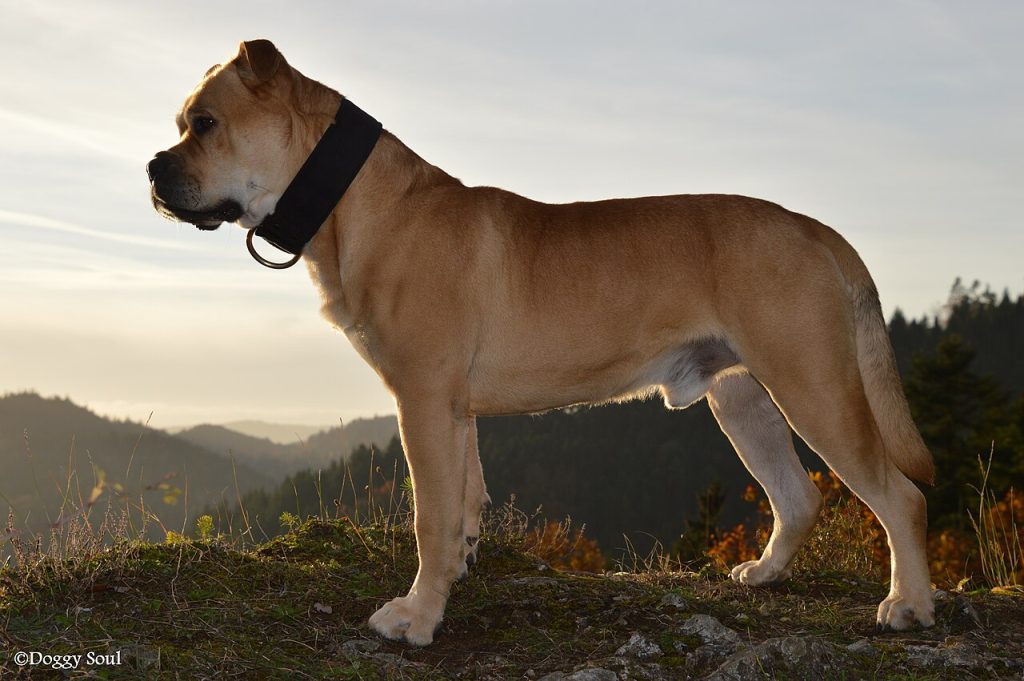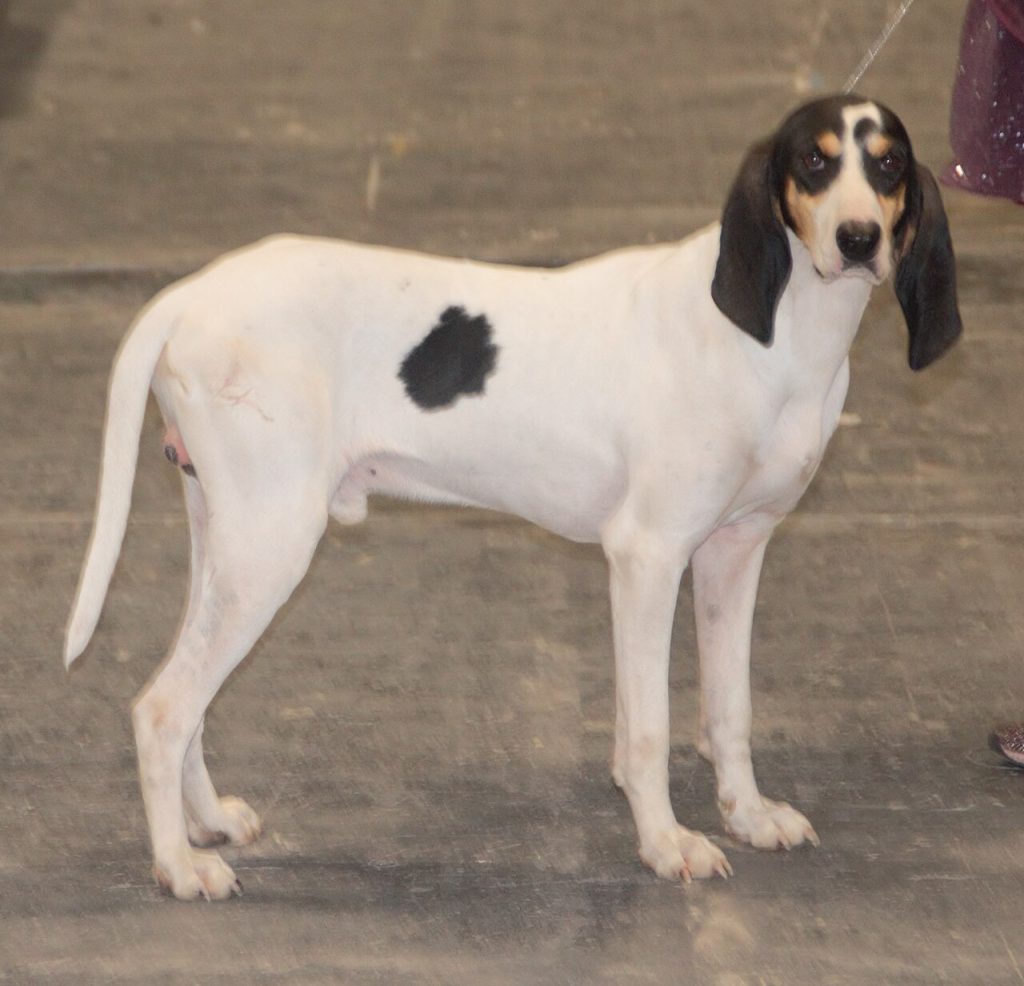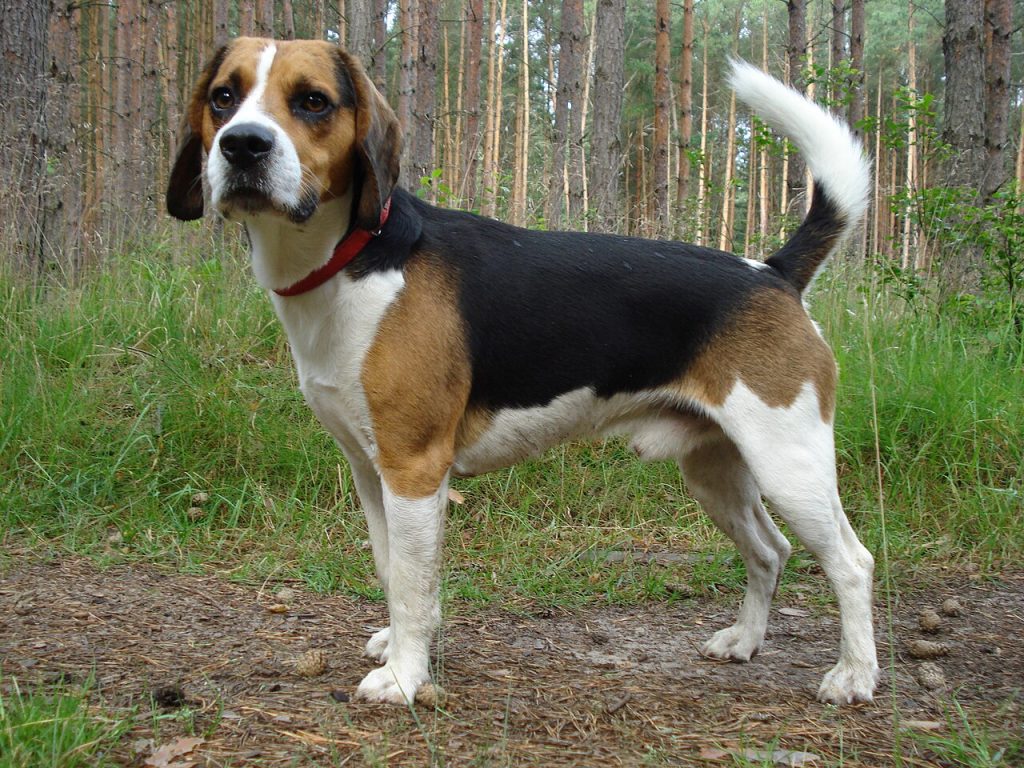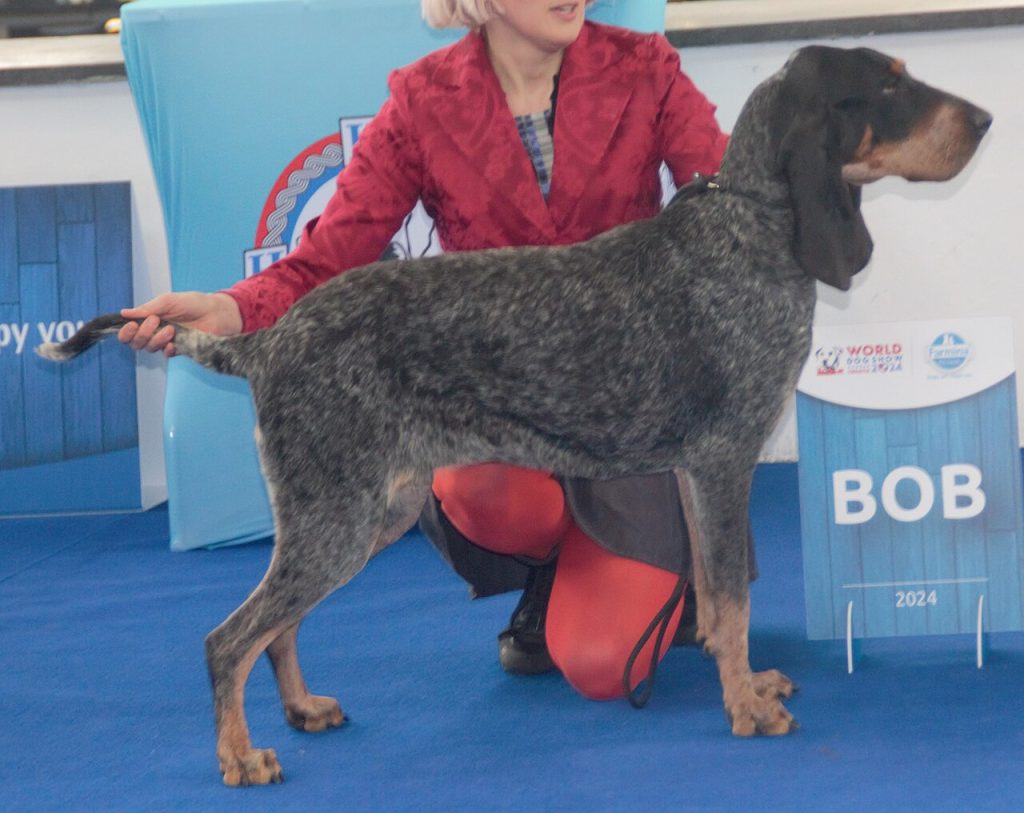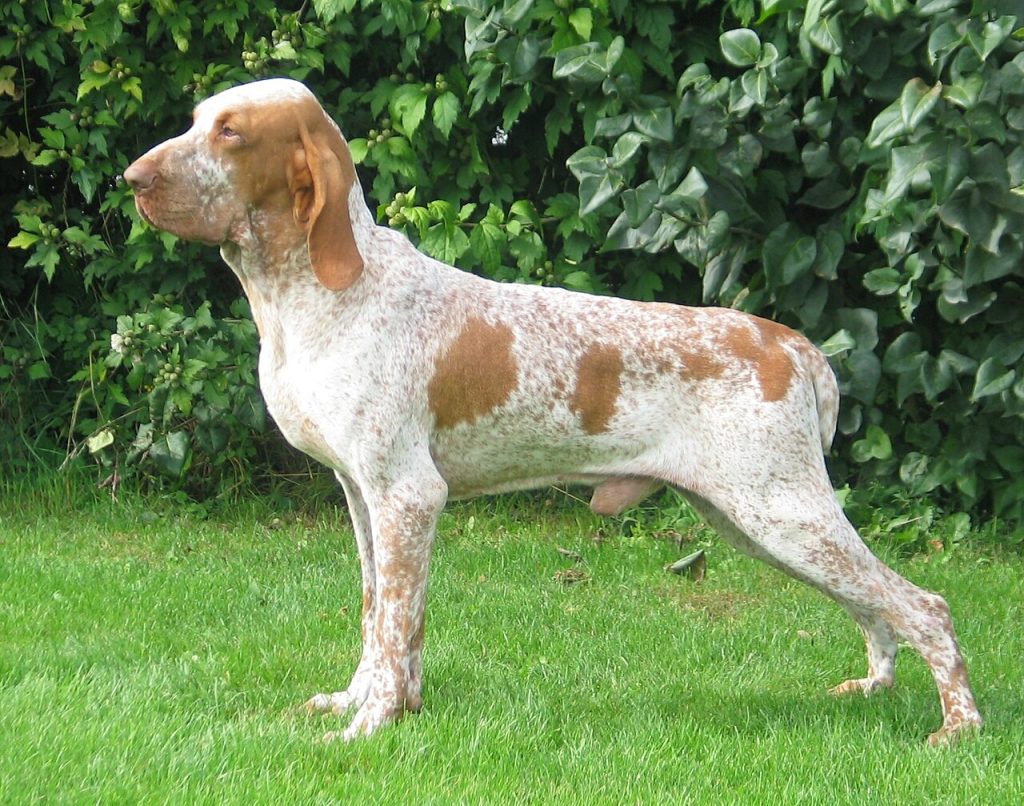
The Braco Italiano is one of Europe’s oldest and most elegant show dogs: A serious hunter in the field and a sweet, quiet companion at home. With its angular head, long ears, and unmistakable extended trot, the Braco Italiano combines the power of a large working dog with a surprisingly gentle and close-knit family nature. If you’re looking for a sporty, noble, classic-looking dog, this Italian breed deserves your attention.
Is the Italian Braco for you?
The Braco Italiano is a large specimen dog designed to move. It shines with active families who enjoy the outdoors, who have time for daily exercise, and who value a caring, sensitive, and very outgoing companion. It’s not a breed to keep locked up or left alone for long hours: It needs exercise, contact and purpose. In return, it returns you a huge loyalty and a peaceful coexistence inside the house.
In favour .
- Sweet, docile character and very close to the family.
- Intelligent and cooperative; learns quickly with good treatment.
- Quiet and balanced indoors when he’s well exercised.
- Short coat, easy to maintain.
- Resilient, athletic and versatile on the field.
- He usually gets along well with children and other dogs.
To be taken into account
- He needs plenty of daily exercise; he gets frustrated if he gets bored.
- He has a hard time with prolonged loneliness; he’s a lot of people.
- Marked hunting instinct: always active tracking and display.
- Long and droopy ears require frequent inspection.
- Large size: requires space and a suitable car.
- It sucks more than dry-nosed breeds.
Character and temperament

If there’s one thing that defines the Italian Braco, it’s its dual nature. In the countryside it is a serious, passionate dog of great endurance, capable of working for hours with its head on the hunt. At home it’s just the opposite: A calm, affectionate dog with a gentle, submissive look, that expression so characteristic that it captures the breed’s own standard. Few sample breeds disconnect work and rest so well.
He’s an intelligent dog with an excellent capacity for understanding. He is endowed with remarkable sensitivity: It captures the tone of voice, moods and atmosphere of the house, making it a very connected companion to its people, but also a dog that suffers from harsh methods. It tends to be sociable and non-confrontational, without the nervous spark of other hunting breeds. Of course, his kinetic passion is always present: An interesting scent can grab your full attention in an instant.
Coexistence: children, other pets, flat and loneliness
With children: The Italian Braco is usually an excellent family dog. Its docile and patient character fits well with homes with children, always with logical supervision for its size and energy, which can cause it to pull or push the smallest ones unintentionally.
With other dogs: being a pack and group working breed, it tends to get along well with other dogs and integrate without major drama.
With other pets: should be realistic here. We are talking about a show dog with a highly developed hunting instinct, so birds, rabbits or rodents can arouse their predatory interest. Coexistence with cats is possible if it grows with them, but requires management.
On the floor: can live on the floor as long as you really meet its need for exercise; indoors it is quiet.
Soledad: is its weak point. The Braco Italiano is very people-oriented and has a bad habit of spending long hours alone. Without companionship or stimulation it can develop anxiety, boredom and destructive behaviors.
Education and training
It is one of the great advantages of the breed: the Italian Braco is docile and easy to train. Its intelligence and desire to please make it learn quickly when the method is consistent and kind. It responds wonderfully to positive reinforcement, short sessions and play, and closes in with harshness, yelling or punishment, which only manage to turn off such a sensitive dog.
Prioritizes from puppy socialization (people, dogs, noises, environments), the call or recall– fundamental in a dog with so much smell – and impulse control. Your instinct for sampling and tracking should be channeled into specific activities: smell work, search games or, if you’re hunting, your natural work in the field. A Braco with a busy mind is a polite dog; a bored one will seek his own amusement.
Exercise and activity
Let’s not fool ourselves: this is a field athlete. The Italian Braco needs plenty of quality daily exercise, far beyond a simple walk around the block. Think of one or two hours of long activity, combining wide walks, running, exploration with smell and play. It is an ideal companion for hiking, canicross, bike and, of course, for hunting, its original function.
As important as physical exercise is the mental one. Being a working dog, it is grateful to have tasks: tracks, search games, advanced obedience or olfactory sports. Covering only the body and forgetting the head leaves this breed halfway through. A properly exercised Italian Braco transforms into the calm and balanced dog that is so praised inside the house.
Care: fur and hygiene

The Braco Italiano has a short, dense, shiny coat that is resolved with a weekly brushing to remove the dead hair and distribute the natural fat from the skin.
The real focus of hygiene is on the ears: They’re long, wide and falling, they’re poorly ventilated and they’re prone to accumulating moisture and wax, which favors otitis. Check and clean them regularly, especially after swimming or outdoors. Complete the routine with nail trimming, dental cleaning, and eye and lip care. After the mount days, a check of pads, ears and between the fingers for spikes and ticks is highly recommended.
Foodstuffs
As a large, active and deep-chested dog, the Braco Italiano needs a complete and balanced diet, adjusted to its age, weight and, above all, to its actual level of activity: It’s not the same eating a hunting dog in season as a companion dog at rest. Monitor body condition to avoid both overweight and thinness, and divide food into two servings a day instead of one.
This last recommendation is not aesthetic. Being a large dog with a deep chest, it is advisable to take precautions against gastric dilation-torsion(the feared torsion of the stomach): distribute the rations, use feeders that slow down the intake and avoid intense exercise just before and after eating.
Health and life expectancy
The Braco Italiano is, in general, a rustic and resistant dog, faithful to its past as a working dog. Its life expectancy is around 12 to 14 years.
- Hip and elbow dysplasia: Common joint problems in large breeds; important to choose lines with official X-rays.
- Otitis and ear infections: derived from their long, drooping ears; they are prevented by regular hygiene.
- Gastric dilation and torsion: vital urgency in deep-breasted dogs; its signs should be known.
- Eye problems: entropy and ectropion (eyelids inward or outward) may occur in the breed.
- Dental health: has been described in the breed as a hereditary enamel defect (amelogenesis imperfecta), so taking care of the mouth is key.
Regular veterinary checkups, daily vaccination and deworming, weight control and ear care are the best recipe for a long and healthy life.
Physical appearance
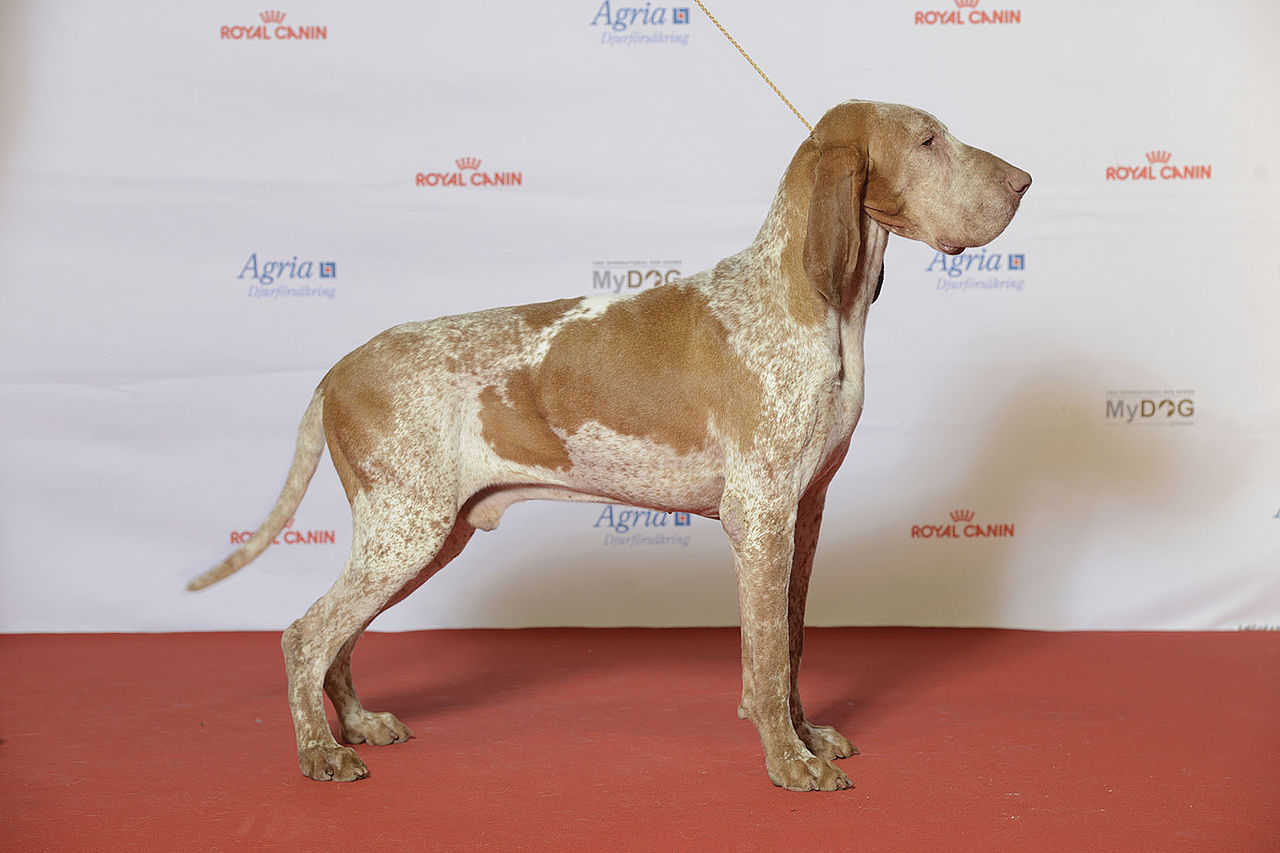
The Braco Italiano is a large dog with a nearly square build: the height at the withers is almost equal to the length of the body. It is vigorous but never heavy, with a noble and athletic silhouette.
Its head is one of its most distinctive features: angular, narrow and with divergent craniofacial axes, topped by a bulky truffle, dangling upper lips and long ears s that, without stretching, reach almost to the tip of the nose.
The hair is short, dense and bright. As for colour, the standard supports white; white with orange or amber spots; white with orange dots (molasses); white with brown spots; and roan-brown. The Italian classification summarizes it in two broad layers: white-orange(white and orange) and roan-brown(brownish brown). The black and the tricolor are considered elimination fouls. The typical movement is an extended, fast, high-thrust jog.
Origin and history
The Braco Italiano is the traditional show dog of the Italian peninsula, originating in northern Italy. It is a very old breed: dogs very similar to the current ones appear already in paintings of the XIV century, and together with the Spinone Italiano form the pair of national show breeds of the country.
It belongs to a type of sample dog that emerged in the Late Middle Ages in the Mediterranean basin, from the selection of silent tracking dogs trained to show partridges and quail. It evolved into the so-called cane of the net or “net dog”, which stood motionless in front of the piece while hunters covered it with a net. For centuries there were two varieties: a heavier one (the bracco of great blood) adapted to the plain, and a lighter one adapted to the mountain.
The arrival of the English show dogs caused a decline in their breeding – a fate similar to that of Spanish breeds such as the Burgos retriever or the Navarro sheepdog – which brought the breed to the brink of extinction in World War II. It was saved thanks to the work of breeders such as Paolo Ciceri, considered the father of the modern Italian Braco, and later Cesare Bonasegale. The single standard was approved in 1949 and that same year the Società Amatori Bracco Italiano (SABI) was born; the International Cinological Federation officially recognized the breed in 1956. Today, about 700 puppies a year are registered in Italy and the breed has spread throughout Europe, America and, little by little, throughout the Hispanic world.
Curiosities
- Its old name, cane of the net(net dog), recalls the time when it was hunted by immobilizing birds under a net.
- It is one of the oldest specimen breeds in the world: it already appears in 14th-century frescoes.
- The first dog registered in the book of origins of the Italian Kennel Club was, precisely, a Braco Italiano.
- Together with the Spinone Italiano, it represents the national game heritage of Italy.
- Its extended and elegant trot is so characteristic that it is especially valued in race trials.
- It belongs to FCI Group 7 (sample dogs), braco-type continental section.
If you are attracted to the profile of the Italian Braco – a large, noble, sporting show dog – you may also be interested in other related hunting and tracking breeds. Check out the Vizsla, the Weimaraner, the Pointer, and, for its unmistakable long-eared hound look, the Bloodhound.
Frequently asked questions about the Braco Italiano
Is the Braco Italiano a good family dog?
Yes. It is a docile, patient and very attached dog, which usually fits very well in active families and with children. It needs company and exercise, but in return it is calm and affectionate inside the house.
How much exercise does an Italian Braco need?
It’s an athletic hunting dog that requires one or two long hours of daily activity between extensive walks, running, and olfactory work.
Can you have an Italian Braco on the floor?
It’s quiet indoors, but it’s not a breed for sedentary owners or very small spaces.
Does the Braco Italiano shed a lot of hair?
A weekly brushing is enough to control dead hair and keep the coat shiny and healthy.
Is it easy to train the Italian Braco?
It’s intelligent, docile and willing to please, so it learns quickly with positive reinforcement and short sessions, but it responds poorly to harshness and punishment, which turn off such a sensitive dog.
How long does an Italian Braco live?
With proper nutrition, exercise, weight control, and regular veterinary checkups, you can enjoy a long and healthy life.
How tall and how much does an Italian Braco weigh?
Males measure between 58 and 67 cm at the withers and females between 55 and 62 cm, with an approximate weight of 25 to 40 kg in proportion to height.
Does the Braco Italiano get along with other dogs and pets?
With small pets (birds, rodents, sometimes cats) you have to be careful for their instinct to sample and hunt; early socialization helps a lot.