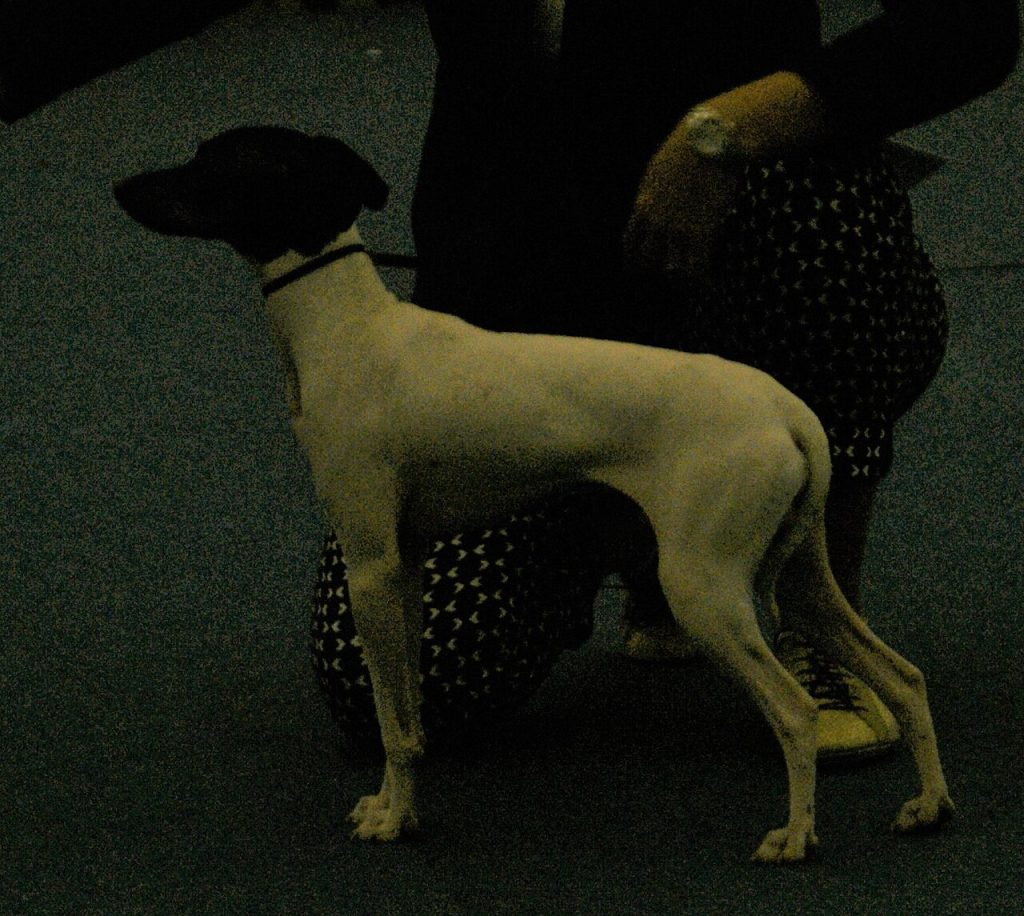
The Terrier Japonés(日本テリア, Nihon Teria) is a small terrier born in the ports of Japan, elegant, lively and very rare: One of the world’s lesser-known native Japanese dogs. With its black head, mottled white body, and short, velvety hair, the Japanese Terrier is a cheerful, clean, and deeply attached companion to its family. If you’re looking for a small, alert, unusual companion dog, this guide will tell you if the Japanese Terrier is right for you.
Is the Japanese Terrier for you?
The Japanese Terrier was designed exclusively as a companion dog, and that marks its character: it wants to be with its people, is clean, occupies little and requires little hair care. Instead, it is a sensitive, frivolous and very unavailable breed. Before you fall in love with it, look at both sides of the scale.
In favour .
- Small, clean and perfect for flooring.
- Minimal hair care: short hair that is hardly noticeable at home.
- Cheerful, affectionate and very family-oriented.
- Intelligent and sensitive: captures the mood of its owners.
- Good warning dog without exaggerating.
- He’s usually healthy and long-lived.
To be taken into account
- Extremely rare: almost impossible to get outside Japan.
- Very chilly for his fine hair; he needs a coat in the winter.
- Sensitive to loneliness: not a dog to be left alone for many hours.
- He needs mental stimulation or he gets bored and barks.
- Rodent-hunting instinct inherited from his origins.
- Little information and few reference breeders.
Character and temperament

The standard of the International Kennel Federation describes the Japanese Terrier as a dog “of lively and cheerful character”, “agile and lively temperament”, and it is a very accurate definition: we are dealing with an alert, curious and energetic terrier, but with an elegant and balanced point that differentiates it from more stubborn or noisy terriers.
It’s, first and foremost, a companion dog. Unlike the Fox Terrier from which it descends, the Japanese Terrier was bred from the beginning to live close to people, not to work in the field. Hence his affectionate nature and his enormous attachment: It enjoys contact, follows its family around the house and is credited with remarkable sensitivity, to the point that it is said to ⁇ read ⁇ its owners’ moods and respond with facial expressions.
Along with that sweetness, it retains a discreet guardian instinct: it warns when someone comes, but it is not an aggressive or suspicious dog by nature.
Coexistence: children, other pets, flat and loneliness
The Japanese Terrier is an excellent floor dog. Its small size, cleanliness and short hair make it comfortable in small spaces, and its sociable character fits well in families.
other pets usually gets along well if socialized as a puppy. It should be remembered that it was originally used to hunt rats and mice, so it can awaken its chase instinct with rodents and very small animals; with other dogs the coexistence is usually good.
Its big sensitive point is the loneliness. It’s a companion dog and it’s very clingy: leaving it alone for too many hours a day gives it boredom, anxiety and barking. If you spend whole days outside without anyone to accompany it, this is not the ideal breed.
Education and training

It is an intelligent dog and eager to please, which greatly facilitates its education. It responds greatly to positive reinforcement: rewards, play and friendly tone. Being so sensitive, harsh methods or shouts are counterproductive; it closes and loses confidence.
It is advisable to work from puppy two fronts: the socializing(people, dogs, noises, environments) so that he grows safe, and the tolerance for being alone in progressive doses, to prevent separation anxiety to which he is prone.
As a good terrier, he has his character and needs clear and consistent boundaries, but not harsh ones.
Exercise and activity
The Japanese Terrier is energetic but not tireless. With one or two walks a day of good pace plus playtime it covers its physical needs in excess. What it really needs, in addition to exercise, is mental stimulation: intelligence games, learning tricks, looking for objects. It is an alert dog that gets bored if it has nothing to do, and boredom translates into barking and mischief.
Because it is so chilly, in winter you have to adapt the outings: shelter, shorter walks if it is very cold and avoid humidity.
Care: fur and hygiene
Here the Japanese Terrier is one of the most comfortable dogs that exist. Its hair is short, smooth, thin and shiny, with an almost velvety texture (only a couple of millimeters long). A weekly brushing to remove the dead hair and punctual baths when it gets dirty are sufficient. It sheds little hair and gives off little smell.
The key care is not the brush, but the protection against cold: that scarce coat does not insulate well, so you need a coat in winter and a warm place to sleep indoors. As with any dog, complete the routine with ear, tooth and nail checks, and skin care, which in this breed can be sensitive.
Foodstuffs
It has no special dietary needs beyond those of a small and active dog. The ideal is a quality food adapted to its size, age and activity level, divided into two daily doses and with the amounts adjusted to avoid overweight, which in small dogs takes a toll on joints and heart.
Since the breed may present allergies and skin sensitivities, it is advisable to monitor food tolerance and consult the veterinarian if itching, poor digestion or skin problems occur, if a specific diet is appropriate.
Health and life expectancy

The Japanese Terrier is, in general, a healthy and robust breed, something common in small dogs that have not been genetically manipulated enough.
With good care, proper feeding, cold protection, and regular veterinary checkups, it usually enjoys a long life, in the order of 12 to 15 years. Choosing a responsible breeder to perform hearing tests on puppies is the best way to reduce risks.
Physical appearance
It is a small, light and well-balanced dog, with a stylized and elegant appearance. It measures approximately between 30 and 33 cm to the cross and weighs around 2 to 4 kg. It has a high cross, short back and deep but not very wide chest, which gives it a slender silhouette.
The head is flat and narrow, with oval eyes of medium size and dark brown color, and small, thin, high implantation ears in the shape of ⁇ V ⁇ , half-fallen forward. The tail has traditionally been amputated (an increasingly restricted practice in many countries).
Origin and history
The history of the Japanese Terrier begins in the ports of Nagasaki. It is believed that around the 17th century, Dutch traders brought small smooth-haired terriers – of the Smooth Fox Terrier type – to Japan on their ships.
Towards the end of the Meiji era, at the beginning of the 20th century, these dogs began to be seen on the streets of Kobe, where they were nicknamed ⁇ Terrier of Kobe ⁇ .
The Second World War was a terrible blow: As with almost all non-military breeds, numbers plummeted and the breed never regained its former popularity. Today it’s still very rare even in Japan. In a step toward its international recognition, the October 13, 2020 the American Kennel Club admitted the Japanese Terrier to its Foundation Stock Service, the prior registration for breeds not yet fully recognized.
Curiosities
- It is one of the a few terriers native to Asia and one of the lesser known Japanese breeds in the world.
- He was nicknamed the Mikado Terrier of Kobe in his most prestigious years in that city.
- Unlike almost all terriers, he was never a field dog.: was bred from the start as a companion animal.
- Her hair became even shorter (around 1 mm) before the war, but she looked for something longer so as not to damage the skin.
- It is said to be able to ⁇ read ⁇ mood its owner and respond with gestures and expressions.
- The number of registered births has fallen to just a few dozen a year, raising fears for its continuation.
If you are attracted to the Japanese Terrier because of its size, cheerfulness, and companionship, you may be interested in other breeds with a similar spirit, such as the Yorkshire Terrier, another small, family-oriented terrier; the Chihuahua, a perfect flatmate; the versatile Caniche; or the intelligent Teckel.
Frequently Asked Questions About the Japanese Terrier
Is the Japanese Terrier a rare breed?
Yes, a lot. Even in Japan it is difficult to find: the annual registrations of the Japan Kennel Club have come to move around a few dozen puppies a year, and outside Japan it is almost unknown.
Is he a good dog to live on?
Yes, it’s small, clean and has very short hair, and it adapts well to a floor whenever it has daily walks and company. Its weak point is the cold: with such a thin coat, it needs a blanket in winter and a warm corner of the house.
Does the Japanese Terrier bark a lot?
It has a warning instinct and will tell you when someone is coming, but it is not a compulsive barker if it has been trained since puppyhood and is not bored.
How much exercise do you need?
It is a lively and alert terrier: one or two good walks a day plus playtime are all it takes, but it also needs mental stimulation.
Do you get along with children and other pets?
With children who know how to treat it with respect, it is a cheerful and playful companion; due to its size, it is advisable to supervise the game with the smallest.
What kind of hair care do you need?
Her hair is short, smooth and fine, almost velvety; with a weekly brushing and punctual baths is enough.
What health problems might you have?
In general, it is a healthy and long-lived breed. It is mainly associated with deafness (sometimes congenital) and allergies or skin sensitivities.
How long does a Japanese Terrier live?
Like many small terriers, it usually enjoys a long life, around 12 to 15 years with good care, proper feeding and protection from cold.