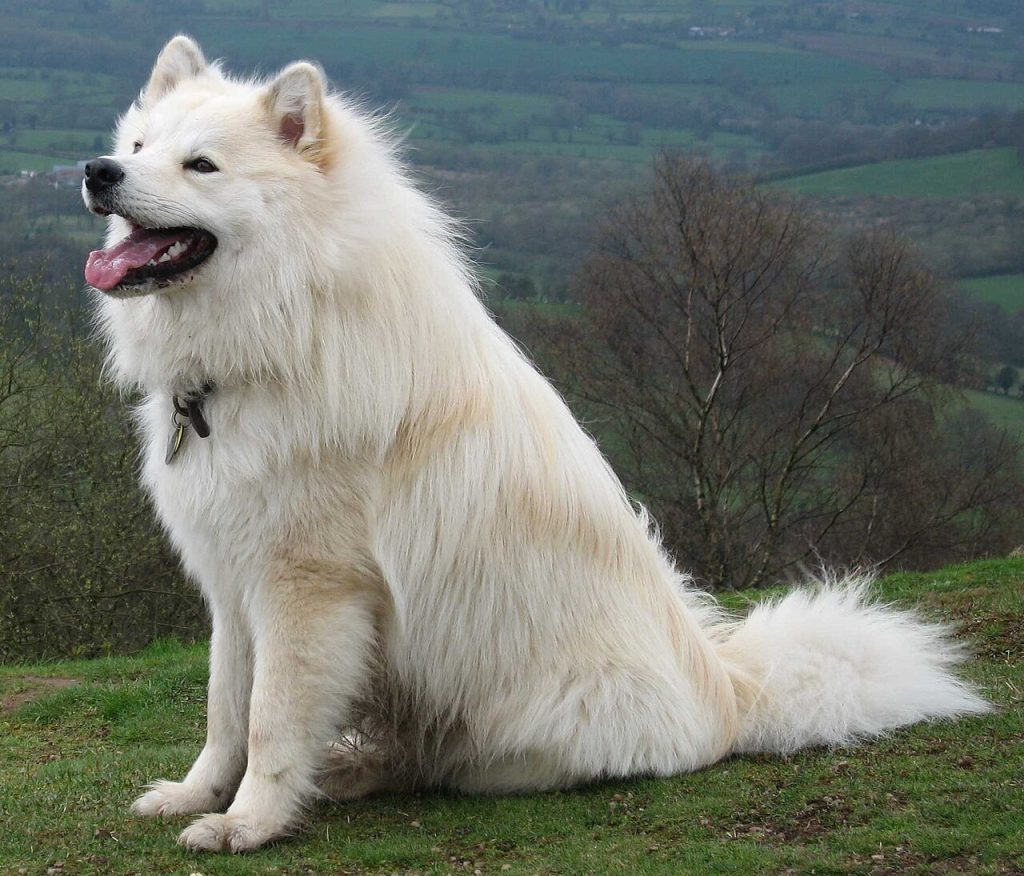
The Finnish Lapland dog(Suomenlapinkoira) is a medium-sized, plump-coated Nordic spitz-type dog bred for centuries by the Sami people to guide and control reindeer herds in the extreme cold of Lapland. Friendly, smart and surprisingly treatable, it is today one of Finland’s most beloved breeds and an excellent family companion for whom to give head and movement. In this guide you will find everything you need to know about the Finnish Lapland Dog before sharing your life with one.
Is the Finnish Lapland Dog for you?

The Finnish Lapland is a company-minded herding dog. It learns fast, is affectionate to the point of exaggeration with its family and endures the cold like few, but it also carries the legacy of centuries of guiding reindeer: it barks, needs to move and has its own criteria. Before you decide, look honestly at which box you fit in best.
In favour .
- Balanced temperament, kind and very sociable with the family.
- Very intelligent and willing to collaborate: he learns easily.
- Great with kids and tolerant of other pets.
- Medium size and manageable, neither big nor tiny.
- Sturdy and rustic, adapted to the intense cold.
- A striking coat that, though abundant, requires moderate maintenance.
To be taken into account
- He barks easily: it’s part of his shepherd instinct.
- Intense seasonal change twice a year.
- He needs daily exercise and, above all, mental stimulation.
- He may try to “drive” children or pets by biting their heels.
- It suffers from heat: it is not a dog for very hot climates without care.
- Independent: collaborative, but not an obedient robot.
Character and temperament
If we had to sum up the Finnish Lapland Dog in one word, it would be balanced. It is a cheerful, brave and alert dog, without the tensions or distrust of other Nordic working dogs. With its people it shows deep affection and seeks to be part of family life; it is not made to live isolated in a garden, although physically it can bear it.
His origins as a reindeer herder gave him two traits that today define his character: a practical intelligence geared to solving situations and a natural prudence in the face of the unknown. In Lapland, a dog that approached a frightened reindeer carelessly could take a fatal bite, so the breed learned to read the environment and keep a cool head. Hence, many respond to the new experience with calm observation before approaching, without becoming shy or aggressive.
It is a sensitive and expressive dog, very communicative through barking and varied sounds. That “vocalization” was part of its work and is still very present: it warns, comments and protests. It is not a tough guard, but it is a good alarm dog. With strangers it is usually reserved at first and cordial afterwards.
Coexistence: children, other pets, flat and loneliness

With children. The Finnish Lapland is one of the most suitable Nordic dogs for families with children. He is patient, playful and tolerant, and enjoys the hustle and bustle of a home with children. The only nuance to watch out for is her herding instinct: Some birds tend to “drive” their young by tapping or nibbling on their heels when they run. It’s corrected with early education and supervising the most moving games.
With other pets. usually gets along well with other dogs and, raised from puppyhood with them, also with cats and other domestic animals.
On the floor. can live on the floor as long as its needs for exercise and companionship are met, but you have to be realistic with two points: it barks easily (something to consider with nearby neighbors) and lets loose a lot of hair in the mud.
In the face of solitude. is a very attached dog to his family and does not take well long and frequent absences. Chronic loneliness can lead to barking and boredom.
Education and training
Training a Finnish Lapland Dog is generally a rewarding experience: He’s smart, he wants to please and he picks things up fast. That said, he’s not a dog of blind obedience. It retains the independence of the working dog that had to make decisions away from its shepherd, so it responds much better to positive reinforcement, variety and play than to monotonous repetition or harsh methods, which block it.
Early socialization is key. A puppy well exposed to people, noises, surfaces and other animals becomes a safe and sociable adult. It is also advisable to teach early to manage barking, because it is a strong feature of the breed: it is not about eliminating it, but channeling it with orders of “silence” and avoiding reinforcing it unintentionally.
Being a sensitive dog, it appreciates short, cheerful sessions and appetizing rewards. It excels in activities that combine head and body, and responds wonderfully to clicker training.
Exercise and activity
It is not a hyperactive dog, but it does need real daily exercise and, more important, mental stimulation. A couple of good walks a day, some playtime, and some olfactory or obedience work keep boredom at bay, which in this breed usually translates into barking and mischief.
Because of its history and head, the Finnish Lapland Dog excels in dog sports and activities. It competes well in agility, obedience, rallying, mushing (harness shooting), karting, flyball, tracking (tracking) and, of course, in herding tests, where its instinct comes out.
Two practical warnings for its coat: in summer, exercise it in the cooler hours and with water on hand, because its double coat protects it from the cold but makes it vulnerable to heat stroke; and in winter, on the other hand, it is when it enjoys it most.
Care: fur and hygiene
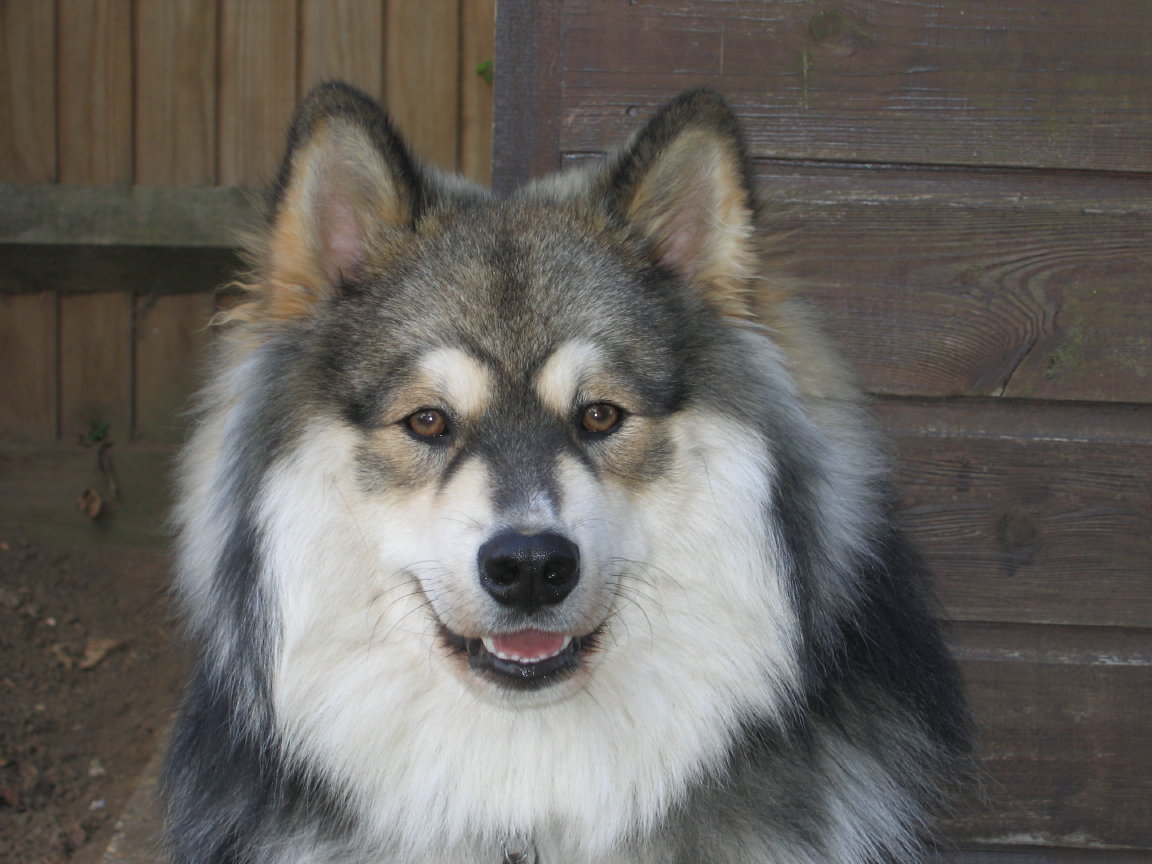
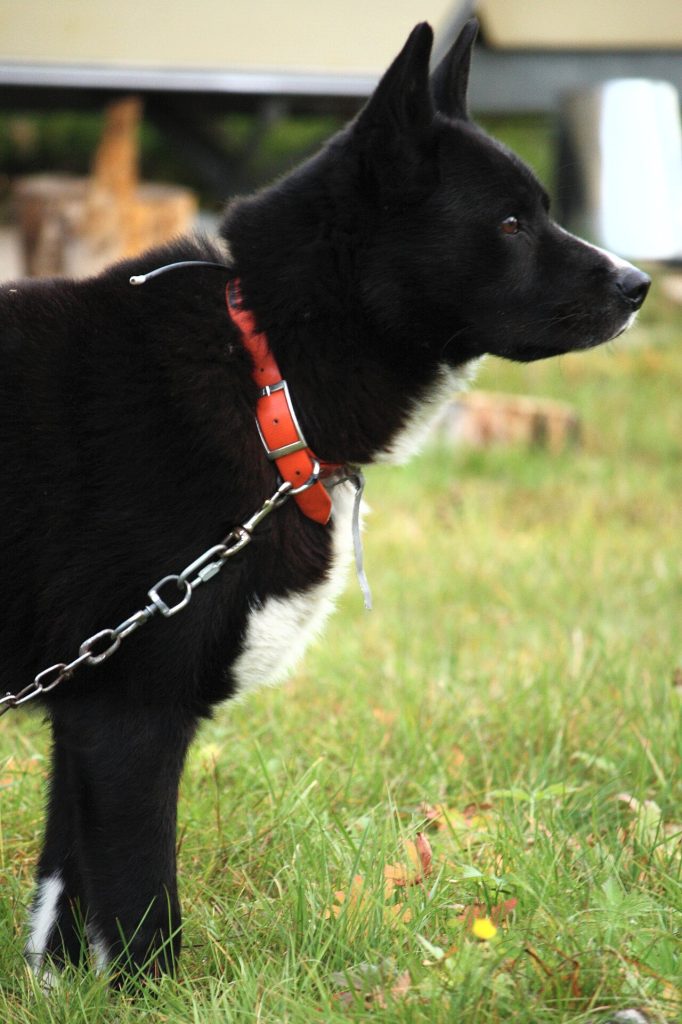
The coat is its hallmark: double coat, with a short, very dense woolly undercoat and a longer, straight, water-resistant cover coat. In males, the abundant mane of the neck and head gives them an almost lion-like look.
The good news is that, despite the apparatus, its maintenance is moderate. It is enough with a weekly brushing most of the year to keep it clean and untangled. The exception are the two seedlings per year, in which it releases the undercoat massively: during those weeks you will need daily brushing and good doses of patience with the fluff throughout the house.
It is not advisable to bathe it excessively or, much less, shave it: its double layer also protects it from heat and sun, and shaving alters this function and can grow badly.
Foodstuffs
The Finnish Laplander has no exotic dietary needs, but as a rustic working dog, it appreciates a quality diet adapted to its size, age and activity level.
It is advisable to monitor rations: being an efficient dog and not overly large, it tends to gain weight if it is overfed or overfed with sweets, something that is easy to get out of control when using rewards in training (deduce them from the daily ration). Fresh water that is always available is especially important in summer because of its sensitivity to heat. Divide the food into two daily servings in the adult and follow the breeder and veterinarian’s guidelines in the puppy.
Health and life expectancy
It is a rustic and generally healthy breed, with a life expectancy around 12 to 15 years. However, as in any pedigree dog, there are some hereditary diseases that responsible breeders control through testing before crossing.
- Patients who are at high risk of progressive generalized retinal atrophy (GPRA/prcd-PRA). An inherited eye disease that can cause blindness, usually of late onset (between 1 and 8 years).
- Cataratas. With relatively high incidence in Finland and considered hereditary; rare in the UK and US
- Otras. Cases of epilepsy, hypothyroidism, degenerative myelopathy and Pompe disease (glucogenosis type II) have been described.
The recommendation is always the same: go to a reputable breeder who will perform the relevant health tests (eyes, thyroid, genetic tests) and show you the results of the parents.
Physical appearance
The Finnish Lapland Dog is a medium-sized spitz-type dog, of strong and harmonious build, with the robustness of an animal bred for the cold.
According to the standard, males measure between 46 and 52 cm to the cross and females, slightly less, between 41 and 47 cm. The weight is around 15 to 24 kg depending on the size of the specimen (a typical male of about 49 cm weighs around 17-19 kg).
The tail, covered with long and thick hair, is curved over the back in spitz style, although it can fall off when the dog is at rest.
Origin and history
The history of the Finnish Lapland Dog is inseparable from that of the Sami people, the indigenous people of Lapland today divided between Finland, Sweden, Norway and Russia. For centuries, the Sami depended on reindeer herding, and for that task they developed dogs with elongated bodies, long hair, and a curved tail over the back when moving. The Finnish Lapland is the most direct heir of those long-haired herding dogs, preferred as winter guides of the herds.
On a genetic level, the race is part of a very old group: belongs to sub-clad d1 of mitochondrial DNA, exclusive to northern Scandinavia and shared by all breeds of Sami origin (Swedish Lapland Dog, Lapland Shepherd, Jämthund, Norwegian Moose Hunter…). This lineage comes from an ancient cross between a wolf and a dog after domestication, underscoring its deep Norse roots.
Modern standardization came after many ups and downs. Norwegians and Swedes began to establish Lapland dogs before World War II; in the postwar period, a worm outbreak brought these breeds to the brink of extinction. Finland established its first standard in 1945. After the unification of Finnish dog clubs in the 1960s, the breed was redefined in 1966-1967, separating two sibling dogs: the Lapland Shepherd (shorter-haired, fixed in 1966) and the Finnish Lapland Dog itself (long-haired, defined in 1967). The arrival of snowmobiles, which changed the way of life of Sami herders, accelerated that distinction. Today the FCI classifies it in Group 5 (spitz type and primitive dogs).
Curiosities
- In Finland only two breeds are legally allowed to live in outdoor kennels in winter: the Finnish Lapland Dog and the Lapland Shepherd.
- It is one of the most popular breeds in its country of origin, but remains relatively rare outside the Nordic countries.
- The light-haired “glasses” around the eyes are a much-appreciated distinguishing feature, more pronounced than in its relative the Keeshond.
- Its Finnish name, Suomenlapinkoira, literally means “dog of Finnish Lapland”.
- He is tremendously “talky”: he uses a wide repertoire of barking and sounds to communicate, a legacy of his work with reindeer.
If you are attracted to the Finnish Lapland Dog because of its Nordic character, intelligence, and spectacular coat, you may also be interested in other similar breeds, such as the Samoyedo, another mild-tempered, white-coated arctic spitz; the Siberian Husky, a hardy, cold-working dog; the fast-paced, versatile Border Collie, a reference in herding; or the Shepherd of Shetland, another small, smart, furry shepherd.
Frequently asked questions about the Finnish Laplander
Is the Finnish Laplander a good dog for families with children?
Yes, it is one of the most recommended Nordic breeds for families. It is patient, playful and tolerant. The only point to watch is its herding instinct, which can lead to “driving” children by tapping on their heels; it is corrected with early education and play supervision.
Does he bark a lot?
Yes, it is a vocal breed by nature: barking was part of its work with the reindeer. It is very communicative and warns easily. It cannot be eliminated completely, but it can be channeled by teaching it from puppyhood commands to be silent and avoiding reinforcing it unintentionally.
How much hair does it lose and how much care does it need?
It has a very dense double coat, but its maintenance is moderate: a weekly brushing is enough most of the year.
Can he live in a flat?
It can, as long as its daily exercise and need for companionship are covered. Two things must be taken into account in the face of neighbors: it barks easily and sheds a lot of hair on the buds. A cool environment with outdoor access is its ideal, but it is adaptable.
How long does the Finnish Laplander live?
It is a rustic and generally healthy breed; choosing a breeder who performs health tests (eyes, thyroid, PRA genetic tests) is the best guarantee of longevity.
Is it easy to train?
It is very intelligent and wants to please, so it learns quickly, but retains the independence of a working dog. It responds much better to positive reinforcement, play and short sessions than to harsh methods. It is suitable even for patient and constant first-time owners.
Can you handle the heat?
Not particularly. Its double coat is designed for the Arctic and makes it vulnerable to heat stroke. In summer, you have to exercise it in cool hours, provide it with shade and plenty of water, and never shave it, because the coat also protects it from the sun.
What was it originally used for?
For reindeer herding by the Sami people in Lapland. It was the long-haired dog preferred as a winter guide of the herds, and still today retains a strong herding instinct and remarkable resistance to cold.