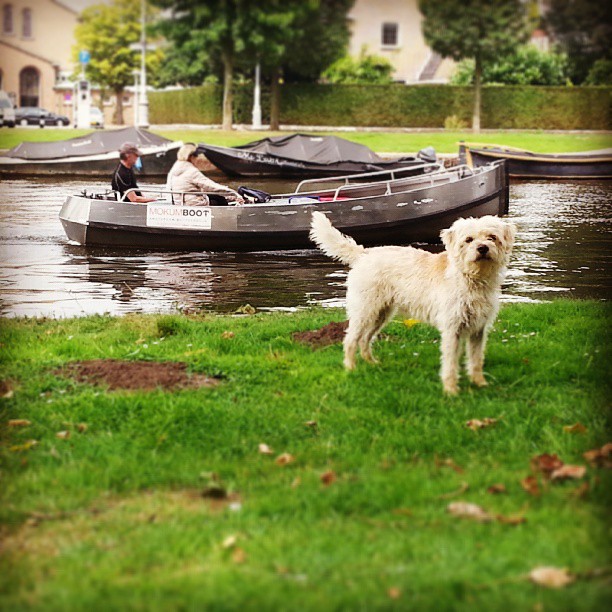
The Ratonero Holandés(Dutch: Hollandse Smoushond, also called Dutch Smoushond or Dutch Ratter) is a small, rustic, ragged-haired dog that was born in stables in the Netherlands as a rat and mouse hunter. Related to the Pinscher and the Schnauzer, it is a very rare and little-known breed outside its homeland, but conquers those who treat it for its bearded and endearing appearance and its cheerful and family character. If you’re looking for a small, healthy, personalized companion, here’s the complete guide to the Dutch Mouse Hunter.
Is the Dutch Mousetrap for you?

The Dutch Mouse Dog is a small, balanced and emotionally low maintenance companion dog: neither too nervous nor too apathetic. It fits very well into families and people who want a caring, manageable and playful dog. Its biggest drawback is not its character, but its rarity: finding a specimen outside the Netherlands can be an odyssey.
Points in favour
- Small size and adaptable to the floor.
- Cheerful, sociable and very familiar.
- Rustic breed, generally healthy and long-lived.
- Hair that sheds little and doesn’t need constant styling.
- Average energy: easy to satisfy.
To be taken into account
- Very rare: few layers and waiting lists.
- It retains its rodent-hunting instinct.
- He doesn’t like prolonged loneliness.
- He needs periodic stripping.
- He may display some terrier stubbornness.
Character and temperament
The Dutch Mouse Dog is described as a cheerful, friendly and deeply attached to his family. Unlike many farm terriers, it is not a bunch of nerves: it combines the vivacity of the scavenger with a calm and balanced background inside the house. It is sociable, affectionate and likes to participate in home life, following its people from room to room.
That blend of liveliness and serenity is just what those who rebuilt the race were looking for: A functional dog but most of all a pleasant companion. He is alert, alert, and alert to what is happening at the door, but he is not a compulsive or aggressive barker. Well socialized, it is a stable, confident dog with a very sympathetic expressiveness thanks to its bearded face.
Coexistence: children, other pets, flat and loneliness
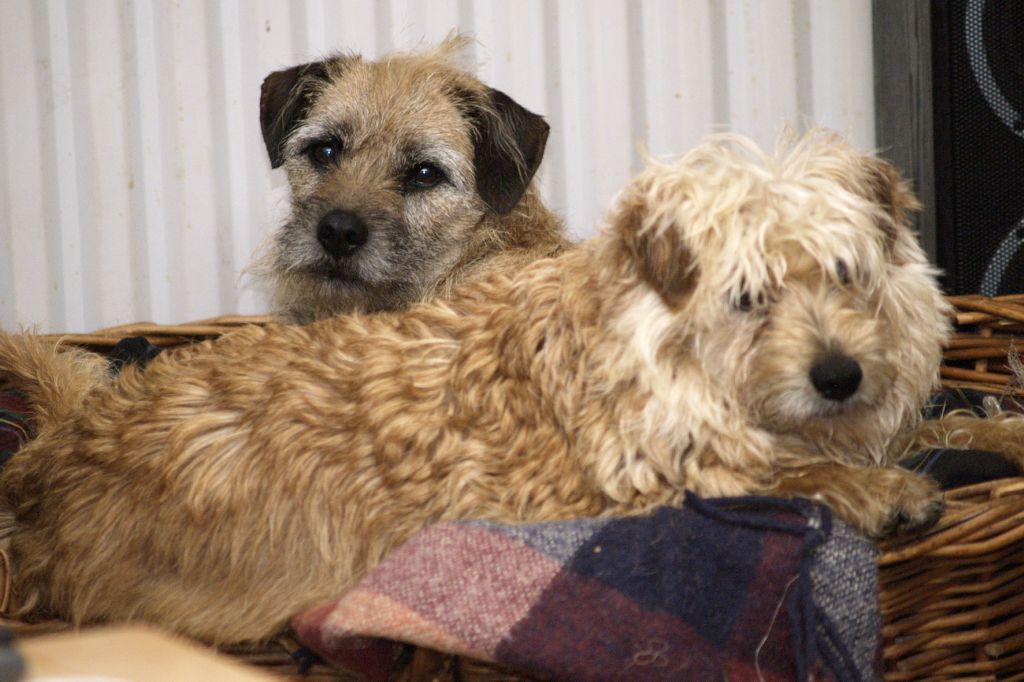
With children:‘s affectionate and playful nature makes it a good companion for families, always with the usual rules of respect between children and dogs.
With other pets: usually gets along well with other dogs if it has been socialized. The nuance is in its origin as a rat hunter: in front of rodents or other very small animals its prey instinct can be awakened, so coexistence with hamsters, rabbits or birds requires supervision and common sense.
On the floor: is an ideal indoor dog for urban life. Its size and balanced character allow it to be comfortable in small spaces whenever it goes out for a walk and has company.
Soledad: is a weak point. Very attached to his family, it is not good to stay alone for too many hours; if you are going to spend a long time without company, it can get bored and frustrated.
Education and training
The Dutch Mouse is intelligent and eager to please, which makes their upbringing easier. It responds very well to positive reinforcement: Rewards, play, and reinforcement of the behaviors we want. As a good descendant of farm dogs, it can show moments of independence or stubbornness, so it works better with short, motivating and consistent sessions than with boring repetition or imposition.
The early socialization is the best investment: exposing him as a puppy to people, dogs, noises and different environments results in a safe and calm adult.
Exercise and activity

Its energy level is average. It is not an athlete who needs miles of running, but it is also not a sedentary dog: it enjoys two or three walks a day, playtime and some activity that puts its sense of smell and its head to work. Search games, interactive toys and small obedience challenges delight it and help it expend mental energy.
This moderate demand is one of its great advantages: it is easy to keep satisfied for normal families, active older people or those who do not want a hyperactive dog.
Care: fur and hygiene
The seal of identity of the Dutch Mouse Dog is its hard, rough and unkempt hair, about 4-7 cm, which gives it that air of dog ⁇ unkempt ⁇ .
- Cepillado: a couple times a week to avoid tangles and remove dead hair.
- Stripping (manual setting): unlike other dogs, its wirehair should not be machine shaved, but the dead hair pulled out by hand a couple of times a year to preserve the rough texture and color.
- Baños: only when it’s dirty; excess bathing softens rustic hair.
- Basic hygiene: check and clean ears, nail check, and very important in small breeds, regular dental hygiene.
- Face and beard: It is advisable to clean the beard after meals to keep it clean.
Foodstuffs
As a small, active dog, the Dutch Terrier needs a quality diet well suited to its size, age and activity level. A good feed for small breeds serves as well as a quality wet or mixed diet, always with animal protein as the basis and measured rations to avoid overweight, a frequent problem in much-loved small breeds that receive too many prizes.
It is advisable to divide the food into two servings a day, to monitor the weight (it is easy to notice under the untidy hair by feeling the ribs) and to always have fresh water available.
Health and life expectancy
The Dutch Mouse Dog is generally a rustic and healthy dog, inheriting its functional origin from farms and stables. It does not carry a long list of famous hereditary diseases, partly because of its selection towards functionality.
The great challenge of the breed is not a particular pathology, but its very small census: With so few specimens, maintaining genetic diversity and avoiding inbreeding is a major concern, and that’s why responsible breeding through the breed club is critical. As with any small dog, it is advisable to monitor dental health, possible kneecap dislocation and eye health, and keep vaccinations, deworming and veterinary checkups up to date.
Physical appearance
The Dutch Mouse Dog is a small dog of almost square build and robust for its size. It measures approximately between 35 and 42 cm at the cross and weighs at most around 9 to 10 kg. Its silhouette is that of a compact, agile and natural looking puppy.
The most characteristic is its head, wide and short-sighted from above, topped by small, triangular, high-inserted ears that fall flat forward glued to the cheeks. The coat is hard, rough and unkempt, 4 to 7 cm, yellow in all its shades in colour, preferably dark straw; the ears, beard, mustache and eyebrows may be somewhat darker, which accentuates its sympathetic bearded expression. The mantle, waterproof, protects it well from the elements.
Origin and history
The Dutch Mousetrap was born without a breeding plan: It came from my own work. They were the little hard-haired dogs that lived in stables and squares in the Netherlands keeping them free of rats and mice. It is related to the type Pinscher and Schnauzer; in fact, one hypothesis places its origin in yellow-tone specimens that appeared in the litters of Schnauzer and that, instead of being discarded, gave rise to a dog of their own.
The name smous refers to its shaggy hair and bearded face. The surname ⁇ Dutch ⁇ was added to distinguish it from the similar-looking Belgian Griffin. At the beginning of the 20th century it gained admirers who decided to fix it as a breed, and in 1905 the Dutch Smoushond Club was founded to document and register it, as it was already in danger of disappearing.
The Segunda Guerra Mundial almost wiped out the race. From 1973, a group of breeders undertook its reconstruction with the few remaining specimens, many already crossed with other breeds; much of that recovery was supported by crosses with Border Terrier. The effort paid off and the Fédération Cynologique Internationale (FCI) definitely recognized the race rebuilt in 1981. Today it is on the Group 2 of the FCI(Pinscher and Schnauzer), Section 1.3 ⁇ Smoushonds ⁇ , with standard number 308.
Curiosities
- Dutch artist Rien Poortvliet collected an illustration of the breed in his book Dogs(1996), a small tribute to a dog closely linked to Dutch culture.
- Its modern recovery relied on crosses with the Border Terrier, which explains why some specimens recall that British terrier.
- It is so little known outside the Netherlands that many dog lovers have never seen one in person.
- He is also known as ⁇ Dutch Ratter ⁇ (Dutch ratter) for his original work hunting rodents in the stables.
- It should not be shaved: its beautiful yellow color and the roughness of the hair depend on hand-arranging, not on the machine.
If you are interested in the Dutch Mouse, you may want to compare its size, character and care with other small, mouse-type or companion breeds: the Yorkshire Terrier, Teckel, Caniche or Shih Tzu share with it that small, family and indoor dog life.
Frequently Asked Questions About the Dutch Mouse
Is the Dutch Mousetrap a rare breed?
The Dutch Smoushond is one of the rarest breeds in Europe and is hardly known outside the Netherlands. It was on the brink of extinction in the 20th century and today its population is still very small, with breeding concentrated mainly in the Netherlands.
Is he good with kids and other pets?
By nature it is a cheerful dog, sociable and very attached to its family, which makes it a good companion for homes with children who know how to treat it with respect. With other dogs it usually cohabits well if it is socialized.
How tall and how much does a Dutch Mouser weigh?
It is a small and compact dog: around 35-42 cm at the withers and a maximum weight around 9-10 kg. Its construction is almost square and robust for its size, typical of a rustic farm dog.
How long does the Dutch Mousetrap live?
As a small, rustic and functional breed, its life expectancy is typically around 12-15 years. Adequate nutrition, daily exercise, weight control, and regular veterinary checkups help it make the most of that entire journey.
Do you need a lot of exercise?
It enjoys daily walks, play and some mental activity, but it is not a hyperactive dog or demands demanding sports routines. With two or three walks a day and play at home it is satisfied, which makes it very manageable for most families.
Do you have to brush your hair a lot?
Its coat is hard, rough and loose, wire-like. It sheds relatively little hair, but needs regular brushing (a couple of times a week) and a manual arrangement of the dead hair (stripping) a couple of times a year to maintain texture.
Does it fit well on a floor?
Because of its size and well-balanced character, it is perfectly adapted to life on the floor, whenever it receives its walks and company.
Is it easy to educate?
As a good farm terrier he can show some stubbornness, so he responds better to short, fun and consistent sessions than to imposition.