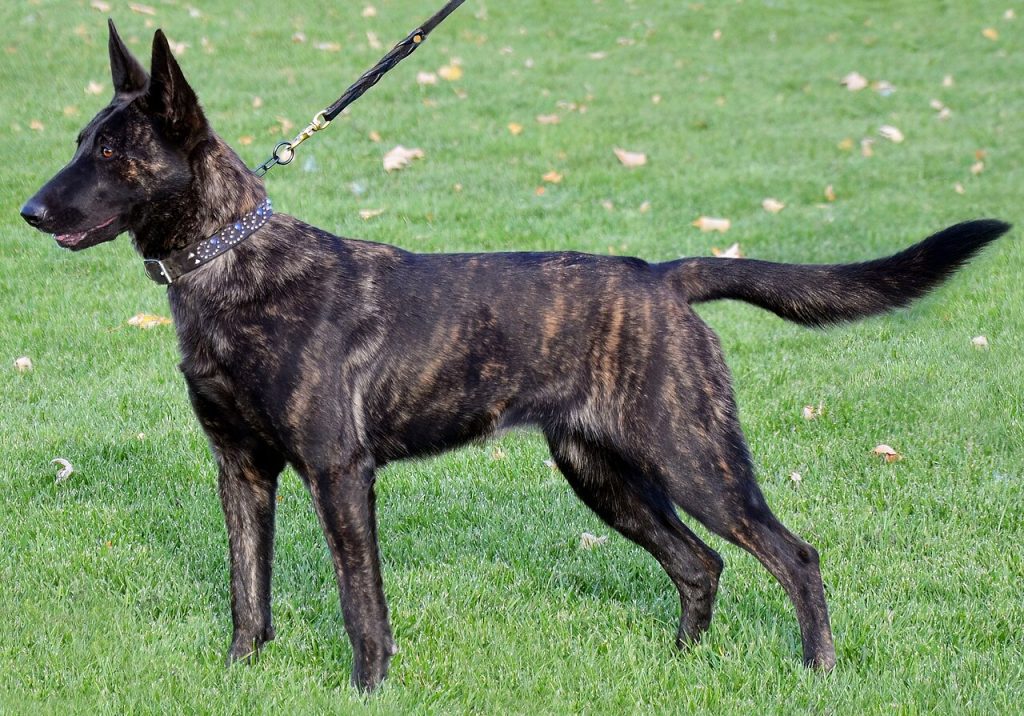
The Pastor Holandés(in Dutch Hollandse Herder) is one of the most capable and, at the same time, least known working dogs in Europe. A versatile shepherd born in the countryside of the Netherlands, he is today a born athlete of ragged fur, a keen mind and an unwavering loyalty to his family. If you are looking for a companion who is intelligent, tireless and full of character, the Dutch Shepherd deserves your full attention, but you should know what you’re getting into before you take the plunge.
Is the Dutch Shepherd for you?
The Dutch Shepherd is not a dog for everyone. It is a brilliant and devoted companion, but also a working breed with a need for mental and physical activity that many homes cannot meet.
In favour .
- Exceptional intelligence and ability to learn: learn almost anything.
- Total loyalty and strong bond with his family.
- Healthy and rustic: few genetic problems compared to other breeds of its size.
- Multipurpose: herding, dog sports, obedience, tracking and protection.
- Simple hair maintenance in the short hair variety.
- Watchful and attentive, good watchdog without being a compulsive barker.
To be taken into account
- Very high energy: you need intense exercise and work to do every day.
- Without stimulation, one becomes bored and destructive behaviors appear.
- Independent and strong character: not the best choice for someone inexperienced.
- Rare breed: serious breeders are hard to find outside the Netherlands.
- Shepherding instinct: may try to “drive” children or other animals.
- It doesn’t go well with a sedentary life or long hours of solitude.
Character and temperament

The breed standard describes the Dutch Shepherd as affectionate, obedient, easy-going, alert, loyal and trustworthy, with an intelligent expression and a character full of vitality.
It is a loyal, reliable, alert and vigilant dog, but also active, independent, intelligent and intuitive. This independence, inherited from generations of shepherds who had to make decisions alone in the countryside, makes the Dutch Shepherd think for himself. He’s not a dog who waits for instructions for everything: If he understands what he is asked to do, he solves it, and if he has nothing to do, he invents his own task (rarely one you like).
With his family he is deeply affectionate and deeply connected. It is neither aggressive nor shy by nature; balance is one of the qualities that the Dutch breed cherishes. Yes, he is a dog of character, with self-confidence and energy that should be channeled from a puppy. Well socialized and exercised, it is a calm and adaptable companion inside the house; neglected, it becomes a ball of nerves.
Coexistence: children, other pets, flat and loneliness
With children: The Dutch Shepherd is usually playful, attentive and tolerant of the children in his family, whom he tends to protect. Like all herding breeds, it may manifest the instinct to “drive” by chasing or nibbling on heels when the young run and scream; it is something that is redirected with education, supervision and proper play. Children should be taught to respect the dog and never leave interactions unattended.
With other pets: was raised with other dogs and cats from a young age, and his prey and herding instincts call for early socialization and calm introductions, especially with small or very nervous animals.
On the floor: can live in an apartment as long as its enormous need for exercise and mental stimulation is met. It is not a “garden” dog that entertains itself: what it really needs is to go out, work and be with its people.
Soledad: is one of its weaknesses. It is designed to collaborate with its human and has a hard time with long days in solitude. Boredom and lack of activity easily lead to barking, wrecking and anxiety. It is not the ideal breed for someone who spends all day outside the house.
Education and training
The Dutch Shepherd is considered one of the easiest dogs to train precisely because of its intelligence and willingness to cooperate: with well-planned work, the results are remarkable. It learns quickly, retains well and enjoys teamwork with its guide.
The secret is the positive reinforcement and consistency. It needs a firm and serene owner who offers it clear and decisive leadership, never based on harshness or violence. Its independent nature means that punishments and coercive methods are counterproductive: they close it or confront it. Short, varied, motivating sessions with rewards (food or play) get the best out of it.
The early socialization is non-negotiable: exposing the puppy to people, dogs, noises, surfaces and different environments during its first weeks shapes the balanced adult that this breed can be.
Exercise and activity

The Dutch Shepherd is, above all, an athlete. Like his cousin the Belgian Shepherd, he is a rustic dog with a lot of energy than you need intense exercise daily. He is not satisfied with a couple of short walks: he asks for running, play, olfactory work and challenges that test his head as much as his legs.
As a reference, think of one or two long hours of daily activity that combine physical exercise (running, fetching the ball, accompanying you on a bike or hiking) with mental exercise (search games, obedience, tricks, dog sports).
The warning is always the same: a Dutch Shepherd with his needs covered is a balanced, calm and very adaptable dog at home; a bored Dutch Shepherd becomes destructive and difficult to handle.
Care: fur and hygiene
Maintenance depends on the coat variety:
- Short hair: is the simplest. A weekly brushing is enough to remove dead hair, with an increase during seasonal mowing, in which it is advisable to brush more often.
- Long hair: is smooth, rough to the touch, and has abundant woolly undercoat. It needs more frequent brushing to avoid tangles, especially on collar, “pants” and tail.
- Hard hair: dense and rough coat with marked mustache and eyebrows. Requires stripping work (manual starting of dead hair) a couple of times a year and regular brushing; it is not advisable to grind it.
The three breeds share a woolly undercoat that insulates well from cold and moisture. Beyond brushing, the care is that of any healthy dog: bathing only when it gets really dirty, checking and cleaning ears, cutting nails when they don’t wear out on their own, and a good dental hygiene routine.
Foodstuffs
Being an active and muscular dog, the Dutch Shepherd appreciates a complete and quality diet, adjusted to its age, weight and, above all, to its actual level of exercise.
Divide the food into two servings a day for the adult (the puppy eats more often) and respect the quantities from the manufacturer or those indicated by your veterinarian. In deep-breasted breeds it is wise to avoid strenuous exercise just before and after eating. Always keep fresh water available, monitor your weight – obesity strains your joints and heart – and use a portion of your daily allowance as a reward for exercising so as not to add extra calories.
Health and life expectancy
The Dutch Shepherd is, as a whole, a healthy and resilient breed: most of its genetic problems appear with low frequency, something unusual in dogs of its size.
- Hip and elbow dysplasia: present at low rates (around 9% hip and 5.5% elbow according to the Orthopedic Foundation for Animals records), but justifying breeding only from breeders with their tests.
- Allergies (atopia) and inflammatory bowel disease: was among the confirmed problems, along with myositis masticatoria, pannus (chronic keratitis) and cryptorchidism.
- Goniodisplasia: mainly affects the hard hair variety; it can restrict eye drainage and, in certain cases, cause blindness.
- Myositis (inflammatory myopathy) is caused by: is an autosomal recessive inherited disease, genetically mapped in 2018, that causes progressive muscle inflammation. It usually appears between 3 and 8 months of age with a “rabbit jump” gait and stiffness of the hindquarters.
The key is to go to a responsible breeder who carries out the relevant health tests, and to keep up with veterinary checks, vaccination, deworming and weight control.
Physical appearance

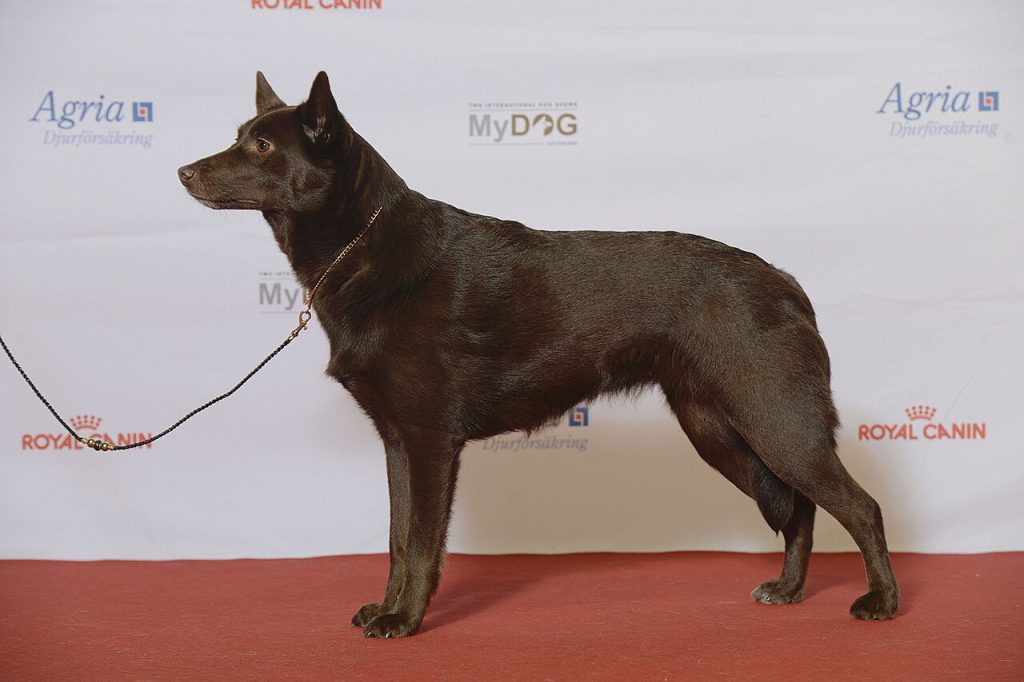
The Dutch Shepherd is a large-sized, muscular, strongly built and well-proportioned dog, with an overall athletic and functional air reminiscent of the German Shepherd, although somewhat lighter.
The head is jagged, with a flattened skull and a slightly marked stop !; the eyes are dark, medium and almond-shaped, with an intelligent look, and the ears, rather small, are held upright and directed forward when the dog is attentive. The nose is always black and the bite, scissor. The body is compact, with a short, straight back, deep chest, and a tail that at rest falls slightly curved to the corvelion.
Its most distinctive feature is the mantle. There are three varieties– short hair, long hair, and hard hair – all with abundant woolly undercoat. The color is always triggered(brindle) on a gold or silver base, which can range from an almost clear sand tone to reddish brown. The black mask is preferred and excessive white on the chest or legs is penalized. That striped pattern is precisely what was chosen in 1914 to differentiate the breed from its German and Belgian relatives.
Origin and history
The Dutch Shepherd originated naturally as a herding dog in the rural areas of the Netherlands. It shares ancestry with the Belgian Shepherd and the primitive German Shepherd: They were dogs from the same Central European region that were separated, in part, by the creation of the Belgian state in 1830. For centuries, these dogs were selected for their usefulness, not their beauty, so there was no fixed physical description.
His job was anything but simple. They watched the flocks of sheep from invading the grain crops, patrolling the sides of roads and fields; escorted the cattle to markets and ports; kept the hens away from the orchard on the farm, gathered the cows for milking, pulled the milk carts and warned of the arrival of strangers. A true Dutch country SUV.
The first standard was drafted in 1898, when any color was still supported; in 1914 it was decided to restrict it to the greyhound to distinguish the breed from the German Shepherd and Belgian Shepherds. By 1900 herds of sheep had almost disappeared from the Netherlands, and the versatility of the Dutch Shepherd turned it back into a training dog: police, tracking, search and even guide dog.
The breed was on the verge of the extinction in the 40s and 50s: World War II paralyzed breeding, many dogs starved to death or were taken to Germany, and numerous bloodlines were lost. The later reconstruction needed to expand the genetic stock; the Belgian Malinois and, in 1959, a Laekenois were used to reinforce the hard-haired variety. The FCI didn ‘t officially recognize the breed until 1960. Even today it is still a rare dog, highly prized by law enforcement but scarce as a pet outside its country of origin.
Curiosities
- The “less famous” cousin: is often confused with the Dutch Shepherd with the Malinois, with pit bull-type fierce dogs or even with wolves, because of its coat and bearing.
- Almost a survivor: barely a handful of breeders prevented the breed from disappearing after the war; the Dutch club encourages breeding all specimens that meet the standard to diversify the genetic pool.
- Three dogs in one: their short, long and hard hair varieties have such different aspects that many do not imagine that they belong to the same breed.
- Elite worker:‘s intelligence and balance have taken him to law enforcement and military bodies halfway around the world, where he competes directly with the Belgian Shepherd Malinois.
- Living memory: is one of the few breeds that has barely changed in over a century; today’s Dutch Shepherd is almost identical to that of 100 years ago.
If you are attracted to the Dutch Shepherd for his intelligence and energy, you will surely enjoy meeting other herding and working breeds with a similar profile. Check out the Pastor Alemán, his closest and most popular relative; the tireless Border Collie, the absolute benchmark of canine intelligence; the versatile Pastor Australiano; or, among the protection and work dogs, the elegant Dóberman.
Frequently Asked Questions About the Dutch Shepherd
Is the Dutch Shepherd a good dog for beginners?
It is not the best choice for an inexperienced person. It is very intelligent and loyal, but its very high energy and independent character require a constant owner, with time and resources to train and exercise it daily. Whoever can give it that will find an extraordinary companion.
How much exercise does a Dutch Shepherd need?
A lot. At least one or two long hours of physical and mental activity a day – running, playing, sniffing, obedience work or some dog sport. Without enough exercise, you get bored and develop destructive behaviors.
How is it different from the Belgian Malinois Shepherd and the German Shepherd?
They share ancestors and a similar air, but the Dutch Shepherd is distinguished above all by its ever-tight coat and by head details fixed to the standard.
Do you get along with children and other pets?
Yes, it is usually playful, tolerant, and protective of the children in its family, and it gets along well with other pets if socialized as a puppy.
How long does a Dutch Shepherd live?
Its life expectancy is around 11 to 14 years, and it is generally a healthy and rustic breed, with few frequent genetic problems, especially if it comes from a breeder who performs health tests.
How many coat types does the breed have?
Three: short hair, long hair, and hard hair. Short hair is the easiest to maintain; long hair needs frequent brushing; and hard hair requires stripping a couple of times a year. All varieties are tan.
Can he live in a flat?
Yes, as long as your great need for exercise and mental stimulation outside the home is met.
Is it hard to train?
On the contrary, it is one of the easiest dogs to train because of its intelligence and willingness to cooperate. It responds better than almost any other breed to positive reinforcement, short and varied sessions, and calm leadership; harsh methods, on the other hand, are counterproductive.