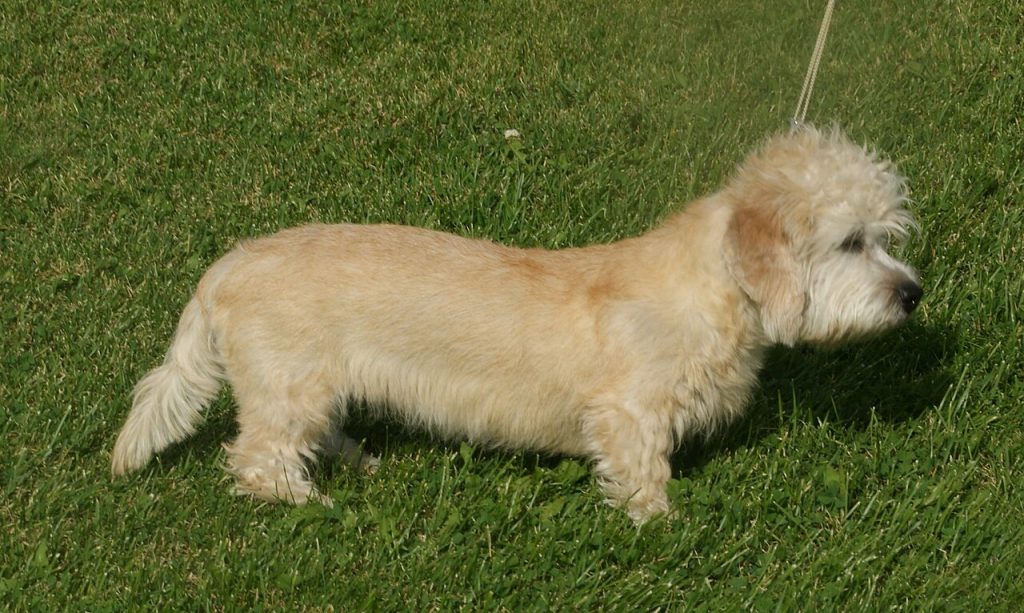
The Dandie Dinmont Terrier is a rarity with capital letters: a Scottish terrier with a long, short body, large head crowned by a silky mane and wise old man’s gaze, which also holds the curious record of being the only dog breed named after a novel character. Small, brave, and far more serene than the average terrier, it is now one of Britain’s most endangered breeds. If you’re looking for a companion with character, history and an unmistakable physique, this is your dog.
Is the Dandie Dinmont Terrier for you?
The Dandie Dinmont Terrier is a quiet companion dog within a stubborn hunter’s body. It fits with those who want a terrier with personality but without the hyperactivity of many of their cousins, and who do not mind taking care of a coat that needs maintenance. It is not an easy dog to find, so it also requires patience to find a good breeder.
In favour .
- Calmer and more docile than most terriers, good house dog.
- Small and manageable size, suitable for flooring.
- Affectionate and loyal, excellent company and a good alarm dog.
- It sheds little hair; it is usually well tolerated by allergy sufferers.
- Unique physique and fascinating history: a dog with its own stamp.
To be taken into account
- Long body: risk of back problems, you have to watch jumps and weight.
- Stubborn and independent; education demands constancy.
- A hardened excavator can tear down a garden in minutes.
- Crepe coat that demands periodic brushing and stripping.
- Very scarce breed: breeders difficult to find and possible waiting list.
Character and temperament

Anyone expecting the typical nervous, barking terrier will be pleasantly surprised. The Dandie Dinmont is considered one of the most docile and balanced terriers, a dog that combines the bravery and determination of its pack with an unusual calmness among burrowers. At home he is quiet, affectionate and very attached to his family, to the point of following his reference person from room to room.
That doesn’t mean he’s a soft dog. Underneath that endearing look is a pure-bred terrier: stubborn, determined and with a self-esteem that doesn’t match his size. It is reckless, able to stand up to a fox or even to dogs much older than itself, and retains a very keen hunting instinct. Its famous low, deep voice, surprising for such a small dog, also makes it an effective alarm dog to warn of anything new.
It is, in short, a strong-willed dog with good manners, and it does its best in a home that values its independence, cherishes it, and does not try to turn it into an obedient robot.
Coexistence: children, other pets, flat and loneliness
With the family the Dandie Dinmont is a loyal and affectionate companion. He gets along well with children, especially with the older ones who understand how to treat a dog; with the younger ones it is always advisable to supervise, especially to prevent them from getting it wrong or letting it jump from the sofa, because its long back is delicate.
It can learn to live with cats if it grows up with them, but its hunting instinct is still there: with small pets such as hamsters, mice or rabbits you have to be careful and keep them apart.
As for housing, its size and quiet temperament make it perfectly compatible with floor living, as long as it covers its daily walks. It tolerates loneliness better than many terriers, but it is not a dog to be left alone for long journeys: if bored, it can pull on its natural talent to dig and rearrange the garden to its liking.
Education and training
Training a Dandie Dinmont Terrier is an exercise in patience and sense of humor. It is intelligent and learns quickly, but it is also independent and stubborn: if it does not see the meaning of an order, it will simply decide to ignore it. Punishment and harshness do not work with it; on the contrary, they make it more stubborn and suspicious.
The key is positive reinforcement, short, fun sessions, and most of all, perseverance. It is good to start early with socialization, exposing him to people, noises, other dogs, and various situations so that he grows up safe and balanced. Working the call from a puppy is important, because his hunting instinct can make him run off after a trail. With consistency and motivation, this terrier responds much better than his reputation for stubbornness would suggest.
Exercise and activity

The Dandie Dinmont has a medium energy: neither is it a tireless athlete nor a sedentary dog. It only needs one or two daily walks at a good pace and some playing time to stay fit and happy. It greatly enjoys sniffing, exploring and searching, so tracking and sniffing games are an excellent way to fatigue it mentally.
An important precaution must be taken because of its anatomy: avoid repeated jumps from heights (couches, beds, steep stairs) and overweight, two factors that put a strain on your elongated spine. Regular, moderate exercise on suitable surfaces is better than intense, abrupt sessions. With his physical and mental needs met, he is a dog who knows how to relax and lie down at home without constant war.
Care: fur and hygiene
The coat of the Dandie Dinmont is one of its hallmarks and also its main maintenance task. It is a curly hair, a characteristic mixture of hard hair on the outside and soft hair on the inside, which can reach about 5 cm in length.

It is advisable to brush it several times a week to avoid tangles, especially on the forehead, ears and legs. To preserve the texture and color of the hair, the breed asks for hand grooming or stripping(ripping of dead hair) several times a year, a technique that many owners delegate to a dog groomer with experience in terriers. Machine-cutting softens the coat and dulls the color, so it is not recommended on carefully cared for specimens.
The rest of the hygiene is the usual: checking and cleaning the hanging ears, checking the length of the nails, maintaining good dental hygiene and bathing only when necessary to avoid drying the skin.
Foodstuffs
He has no exotic dietary needs, but his physique forces him to watch one specific point: his weight. Every extra kilo is an extra burden on his long back, so control of the scale is a priority. The ideal is a complete and quality food, adjusted to his age, size and activity level, distributed in measured rations and without abusing rewards.
It is advisable to avoid overweight from a puppy, to divide the food into two servings per day for the adult and to always have fresh water available.
Health and life expectancy
Thanks to the work of breed clubs, the Dandie Dinmont Terrier does not carry large widespread health problems, and its average life expectancy ranks among the 11 and 13 years.
The most characteristic is the back: its elongated body predisposes it to problems in the intervertebral discs, which can “slip” and cause a herniated disc. Depending on the affected area, symptoms range from pain to, in the most severe cases, loss of mobility.
Secondary conditions that are monitored in the breed include hypothyroidism, primary angle-closure glaucoma – for which specialized clubs recommend periodic gonioscopy throughout the dog’s life – and Cushing’s syndrome. It also carries a slightly higher-than-average cancer risk. Choosing a responsible breeder who monitors the health of his breeders is the best guarantee.
Physical appearance
The Dandie Dinmont Terrier is unmistakable. It is a small but robust dog and surprisingly heavy for its size: it measures between 20 and 28 cm to the cross and weighs 8 to 11 kg. Its silhouette is that of a long, low and slightly curved body, supported by short legs, with a muscular neck developed from its hunting past.
The head is large and crowned with a patch of soft, silky hair, a detail that gives it that endearing and dignified look at once. The eyes are large, dark and expressive, and the ears hang from the sides of the face. The cloak is presented in two traditional colors with its own name: peaches(blueish black to silverish grey) and mustard(redish brown to almost white cream on the head). The definitive color settles around eight months, although the dog does not fully mature physically until two years of age.
Origin and history
The origins of the Dandie Dinmont go back to the working dogs of the North West of the Scottish Borders, the border between Scotland and England. Already in the 17th century, terriers were used to hunt badgers and otters. Their exact ancestry is uncertain – there has been talk of kinship with the Border Terrier or of crosses between the Skye Terrier and other local terriers – but the dogs of the Allen family, in Northumberland, in the early 18th century, are known to be among their ancestors.
The breed lived in relative anonymity until 1814, when Sir Walter Scott published his novel Guy Mannering. It features a farmer named Dandie Dinmont who owns a herd of terriers whom he names Pepper and Mustard after the color of their hair. The character was inspired by a real breeder, James Davidson, who used those same names for his dogs and is today considered the father of the modern breed. The book’s success made these terriers so popular that they eventually adopted the character’s name. By the mid-19th century the breed was already known as the Dandie Dinmont Terrier and much sought after, and even participated in the development of the Bedlington Terrier.
Officially, the breed is recognized by the FCI within the Group 3 (Terriers), Section 2, that of small-sized terriers.
Curiosities
- A novel name. is the only dog breed in the world to be named after a fictional character, Guy Mannering‘s Dandie Dinmont.
- Pepper and Mustard. Its two colors, pepper and mustard, come directly from the names the farmer in the novel called his dogs.
- The voice of a big dog. Its bark is surprisingly loud and deep for such a small dog, inherited from its hunting days.
- A tireless excavator. is capable of digging remarkable holes in a very short time, I remember when he chased his prey underground.
- A race on the edge. In some quarters of 2003 just 21 puppies were recorded across the UK, a figure that illustrates how close it has come to disappearing.
If you are attracted to the Dandie Dinmont Terrier because of its manageable size, character and distinctive physique, you may also be interested in other similar breeds. It shares its long, short body and burrowing past with the Teckel, and its terrier spirit with the Yorkshire Terrier. As a small companion dog with a strong personality, it also remembers the Shih Tzu and the Pug.
Frequently asked questions about the Dandie Dinmont Terrier
Is the Dandie Dinmont Terrier weird or what?
The British Kennel Club has included it since 2006 on its list of Vulnerable Native Breeds, reserved for breeds from the United Kingdom and Ireland with fewer than 300 puppies registered per year.[1] In 2004 only 90 puppies were registered across the UK, compared to the nearly 10,000 of the West Highland White Terrier.[2] Finding a serious breeder may require patience and a waiting list.[3]
How long does a Dandie Dinmont Terrier live?
Their average life expectancy is between 11 and 13 years, and with a controlled weight, adequate exercise to care for their back, and regular veterinary checkups, many survive well beyond that range.
Is the Dandie Dinmont Terrier good with children?
It is a solid and affectionate terrier, quieter than the average of its group, and fits well in families with older children who know how to treat it with respect.
How tall and how much does a Dandie Dinmont Terrier weigh?
It is a small but compact dog and surprisingly heavy for its size: it measures between 20 and 28 cm at the withers and weighs 8 to 11 kg.
Does the Dandie Dinmont Terrier shed a lot of hair?
It sheds little hair and many guides include it among the recommended breeds for allergy sufferers, although no dog is 100% hypoallergenic.
Why is it called the Dandie Dinmont Terrier?
It is the only dog breed named after a fictional character. Dandie Dinmont is a farmer from Sir Walter Scott’s novel Guy Mannering (1814), who owned terriers called Pepper and Mustard.
What health problems does the Dandie Dinmont Terrier have?
Its weak point is the back: the elongated body predisposes it to herniated intervertebral discs. It is also monitored for hypothyroidism, primary closed-angle glaucoma (clubs recommend periodic gonioscopy) and Cushing’s syndrome, in addition to a slightly above-average risk of cancer.
Is the Dandie Dinmont Terrier adapted to living in a flat?
Yes. It is quiet at home, manageable in size, and does not need large extensions, so it fits well on a floor whenever it has its daily walks and some activity.