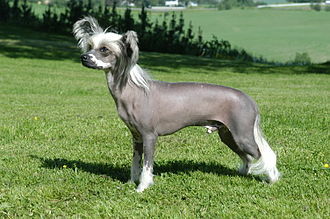
The Crestado Chino is one of the most unique companion dogs in existence: A thick, elegant and extraordinarily close to his family toy that comes in two very different versions, the naked and the furry. Behind its exotic appearance is a cheerful, sensitive companion ideal for flat life. In this guide you’ll find everything you need to know about the Chinese Crested before you share your life with one.
Is Chinese Crested for you?
The Chinese Crested is a companion dog in the most literal sense: it lives for and to be with its people. It is perfect for those who are looking for a small, affectionate and adapted to urban life dog, but it is not the best option for those who spend many hours outside the house or want a dog ⁇ easy ⁇ to take care of himself. Before you decide, weigh its lights and shadows.
Points in favour
- Very affectionate and close to his family.
- Small size, ideal for flooring.
- It sheds little or no hair; good choice for sensitive people.
- Cheerful, sociable and playful.
- Smart and easy to motivate with awards.
- A long-lived and generally healthy breed.
Points to Consider
- The hairless variety needs protection from the sun and cold.
- He takes loneliness badly: he’s not a dog to be alone all day.
- Skin and teeth (in hairless animals) require constant care.
- He’s physically delicate; watch out for bumps and falls.
- He can be reserved or shy if he doesn’t socialize well.
Character and temperament

If we had to sum up the character of the Chinese Crested Dog in one word, it would be company. It is a dog that turns to its family, looking for contact and lap, and that usually chooses a reference person to follow throughout the house.
It is a cheerful, lively and playful dog, with a clownish point that amuses those who live with it. At the same time it is very sensitive: He captures the mood of his people and doesn’t take kindly to scolding or harsh methods. With strangers he may be somewhat reserved or shy at first, especially if he has not been well socialized, although he is rarely aggressive. Intelligent and attentive, it learns fast and enjoys doing tricks and participating in whatever it takes to keep its human around.
Coexistence: children, other pets, flat and loneliness
The Chinese Crested adapts very well to almost any home, provided it receives companionship and attention.
- With children: is affectionate and playful with the little ones, but being a fragile dog it is advisable to supervise play and teach children to treat it gently, especially the hairless variety, whose skin is easily scratched.
- The well-socialized With other pets: is easy to get along with other dogs and even cats.
- On the floor: is an ideal dog for an apartment. It occupies little space, makes little noise in general and is content with daily walks and play at home to be happy.
- In the face of loneliness: is its big weakness. The Chinese Crested is very bad at being alone for long hours and can develop separation anxiety, with barking or wrecking. It’s not the right breed if no one is going to be home all day.
Education and training
The Chinese Crested is intelligent and eager to please, a combination that greatly facilitates its education. It quickly learns the basic rules and tricks, and responds wonderfully to positive reinforcement: rewards, caresses and play. What it does not tolerate is harshness. Being such a sensitive dog, screaming or punishment blocks it and deteriorates confidence, just the opposite of what is sought.
Early socialization is the best investment: Introducing him as a puppy to different people, dogs, noises and situations helps him overcome his natural shyness and become a balanced adult. It is also advisable to work from the beginning the tolerance to loneliness in small doses and, as in all toys, do not neglect the learning of control of sphincters, which in small dogs requires a little more patience and constancy.
Exercise and activity

Although its delicate appearance may be deceiving, the Chinese Crested is an agile and active dog that loves to run, jump and play. It is not, however, a high-energy breed: with one or two walks a day and playtime at home it covers its physical needs abundantly.
It is surprisingly athletic for its size and excels in canine sports such as agility or obedience tests, where it can show off its intelligence and its fondness for learning tricks. Of course, you have to adapt the activity to the climate: In the summer it is advisable to avoid the strong sun on hairless specimens, and in the winter to protect them from the cold with a coat, because their lack of coat leaves them unprotected against extreme temperatures.
Care: fur and hygiene

The care of the Chinese Crested is entirely dependent on its variety, and it is good to be clear because they are two different worlds.
The hairless variety barely needs brushing, but in return its skin demands almost cosmetic care. You have to moisturize it with mild creams, protect it from the sun with sunscreen in summer and keep it warm in winter. Blackheads and small pimples similar to human acne are also common, especially during puberty, which are controlled with proper hygiene and regular bathing. It retains strands of hair on its head (crest), legs (socks) and tail (feather), which require little maintenance.
The hairy or powderpuff variety has a long, silky, double coat that keeps growing and tends to tangle. It needs frequent brushing, several times a week, and regular baths to keep it clean and unkempt; many owners choose to trim it to make it easier to wear.
In both varieties it is necessary to pay attention to a specific detail of the breed: they have the rabbit foot, with longer fingers, which makes the irrigation of the nail reach more deeply.
Foodstuffs
As a good little dog, the Chinese Crested Dog needs quality food formulated for toy breeds, with croquettes of a size suitable for its small mouth.
In the hairless variety, good nutrition is felt directly on the skin: The omega fatty acids from a quality feed help keep you healthy. Dental care plays an extra role here, for many hairless specimens have weaker teeth; offering cleaner food and biters is helpful. And, as always, fresh water available and consult your veterinarian if you have any questions about your diet.
Health and life expectancy
The Chinese Crested is a long-lived breed: a British study from 2024 put its average life expectancy at 13.4 years, above the average of purebred dogs, and it is not uncommon for it to exceed that figure with good care.
- Dental problems: especially in the hairless variety, absent, crowded or decay-prone teeth are common.
- Eye problems: the breed has a higher incidence of primary lens dislocation (PLL), progressive retinal atrophy (PRA), and dry eye (dry keratoconjunctivitis).
- Dislocation of the patella: common in many toy breeds, causes the kneecap to dislocate.
- In the case of dogs, the following conditions shall be observed: a rare inherited neurological disorder shared with the Kerry Blue Terrier.
- Of a fat content, by weight, exceeding 13% is prone to sunburn, dryness, acne and, in some cases, allergies.
The best guarantee is to go to responsible breeders who perform genetic and ophthalmological tests on the breeders, in addition to maintaining regular veterinary checks throughout the dog’s life.
Physical appearance
The Chinese Crested is a small and of fine bones dog, with elegant lines and graceful air. It measures around the 23 to 33 cm to the cross and usually weighs between 3 and 6 kg. It has a thin head, docile-expressing almond-like eyes and large, erect ears that give it a very alert appearance (in powderpuffs they sometimes fall off).
Its great hallmark is the duality of mantles. The without hair variety has soft, bare skin on almost the entire body, with strands of hair on the head (the crest that gives the breed its name), on the legs (the ⁇ socks ⁇ ) and on the tail (the plume). The with hair or powderpuff variety, on the other hand, has a double, long silky coat that covers the entire body. There is no standard color: Chinese Crested is acceptable in any colour and combination, from light to black.
Origin and history
Despite its name, it is most likely the Chinese Crested was not born in China. Hairless dogs have appeared in many places around the world, and the same genetic mutation it shares with the Mexican Xoloitzcuintle points to a common origin, placing the birthplace of the modern breed more likely in Mexico, or perhaps Africa, than in Asia.
Spanish explorers found these dogs in Mexico and other parts of Central and South America as early as the 16th century, and British, French, and Portuguese sailors found them in different parts of Africa and Asia during the 18th and 19th centuries. The connection to China probably comes from maritime trade: These dogs traveled on ships and ended up being associated with Chinese routes.
Race as we know it was forged in the 20th century. In the 1950s, the American Debora Wood created the ⁇ Crest Haven ⁇ kennel and began systematically recording the lineages; her work was joined by the dogs of the famous artist Gypsy Rose Lee. Those two lines are the basis of all present-day Chinese Crested. The The breed was recognized by the International Kennel Federation (FCI) in 1987. and the American Kennel Club did it in 1991. Today it is classified in Group 9 of the FCI (pet dogs), in the section of hairless dogs.
Curiosities
- A hairless Chinese Crested named Sam won the “World’s Ugliest Dog” contest three years in a row, from 2003 to 2005, and became a minor celebrity.
- The hairlessness is due to a incomplete dominant and lethal in homozygosis gene: embryos that inherit the gene by duplicate do not develop, so all hairless Crested are carriers of a single copy.
- As a result, both hairless and hairy chicks may be born in the same litter, and both are vital for a healthy offspring.
- Their naked skin is cared for in much the same way as that of humans: hydration, sunscreen, and even acne treatments.
- Many hairless specimens lack some premolars, something the standard does not consider a defect.
- The mutation responsible for hairlessness was not scientifically identified until 2008.
Other races you might be interested in
If you’re attracted to the Chinese Crested, you might want to meet other breeds with a similar profile. If you’re looking for toy dogs just as attached and adapted to floor life, check out the Chihuahua and the Bichón Maltés. If you’re interested in the world of hairless dogs and their American origins, don’t miss the Xoloitzcuintle, a direct genetic relative of the Crested. And if you value a small, cheerful, lightweight companion, the Bichón Frisé is another excellent choice.
Frequently Asked Questions About the Chinese Crested
Is the Chinese Crested hypoallergenic?
No breed is 100% hypoallergenic, but the Chinese Crested is among the dogs that usually cause the least problems to sensitive people. The hairless variety barely has hair to loosen and the hairy variety (powderpuff) loses very little.
Do we have to put sunscreen on hairless Chinese Crested?
The naked skin of the hairless Chinese Crested is sunburned just like ours, especially on fair-skinned specimens. On sunny days, it is advisable to apply a sunscreen suitable for dogs or babies in exposed areas and avoid the central hours of the day. In winter, on the other hand, thank a jersey because it is cold.
Are the hairless variety and the powderpuff different breeds?
No, they are the same breed. The difference depends on a single incomplete dominant effect gene: hairless and hairless puppies can be born in the same litter. They share the same standard except in the mantle and are bred and exposed together. In fact, hairy specimens are essential for a healthy offspring, because the hairless gene is lethal when inherited by duplication.
Does the Chinese Crested bark a lot?
It is a vigilant and alert dog, so it can sound the alarm at noises or visitors, but it is not the most barking toy. With early socialization and teaching it from puppyhood to stay calm, barking is kept at bay. Boredom and prolonged loneliness are the most common causes of excessive barking.
Do you get along with children and other dogs?
Yes, it is affectionate and sociable with family and other animals if socialized well. Of course, it is a small and delicate dog, especially the hairless variety, so it is advisable to supervise play with very young children to avoid bumps, falls or scratches on its skin.
How much exercise does a Chinese Crested need?
It is not a high-energy dog: with one or two daily walks and playtime at home it covers its needs. It is agile and loves to run and jump, so it enjoys agility or obedience games, but adapts perfectly to life on the floor as long as it receives company and mental stimulation.
How long does the Chinese Crested live?
It is a long-lived breed. A British study from 2024 estimated an average life expectancy of 13.4 years, above the average for purebred dogs. With good care, proper feeding and veterinary checkups it is common for them to reach 13-15 years or more.
Does the hairless Chinese Crested need less hair care?
Less brushing, yes, but no less care: your skin requires constant care. You need to hydrate it, protect it from the sun and cold and watch for blackheads and granites, similar to human acne. The hairy variety does not need to care for the skin, but it does need frequent brushing to avoid knots.